Pico de Gallo Canning Recipe
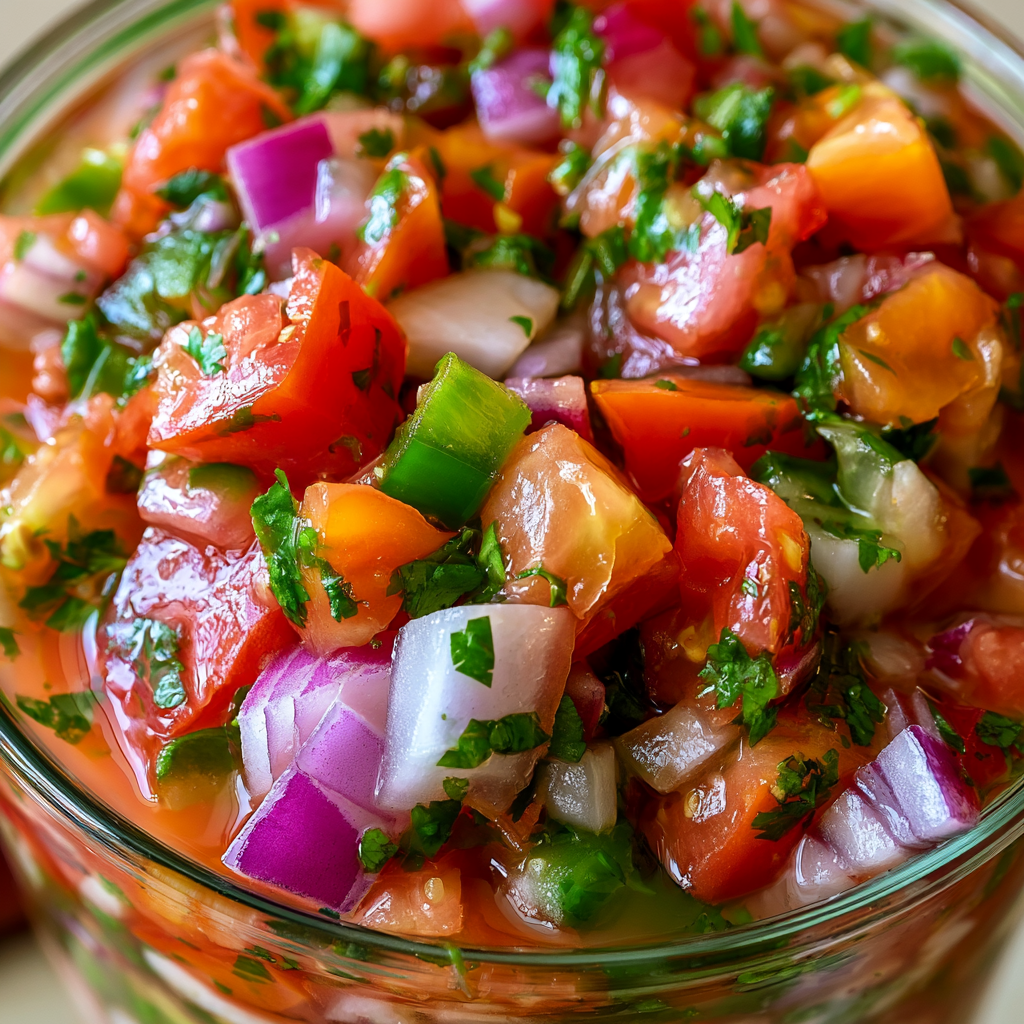
A tomato-based pico de gallo prepared with Roma tomatoes, white onion, jalapeño, cilantro, bottled lime juice, and pickling salt. The mixture is briefly simmered before being packed into jars.
Pin it to remember it!
Print Recipe
Ingredients
- 1 medium white onion cut into a fine dice
- ½ cup commercially bottled lime juice
- 2 tablespoons fresh cilantro finely chopped
- 2 pounds Roma tomatoes cut into ¼-inch cubes
- 1 teaspoon pickling salt
- 1 large jalapeño pepper seeded and finely minced for moderate heat
Instructions
- Wash the jars, lids, and screw bands thoroughly. Following the supplied method, hold the jars in water heated to 180°F for 10 minutes and keep them hot until filling.
- Rinse the tomatoes, onion, and jalapeño thoroughly.
- Cut the Roma tomatoes into approximately ¼-inch pieces. Finely dice the white onion. Remove the jalapeño seeds and ribs for a moderate level of heat, then mince the pepper finely.
- Finely chop the cilantro and arrange all prepared ingredients so they are ready before cooking begins.
- Place the prepared tomatoes and onion in a saucepan over medium-high heat.
- As the vegetables begin to heat, incorporate the minced jalapeño, chopped cilantro, ½ cup bottled lime juice, and 1 teaspoon pickling salt.
- Stir thoroughly until the ingredients are evenly distributed, then bring the mixture to a full rolling boil.
- Reduce the heat once boiling and maintain a gentle simmer for 3 minutes, stirring periodically to promote even heating.
- Using a ladle, transfer the hot pico de gallo into the prepared hot jars, allowing ½ inch of headspace between the food and the top of each jar.
- Slide a clean bubble-removal tool or appropriate nonreactive utensil around the inside of each jar to release trapped air.
- Clean the rims carefully with a damp cloth so no food residue remains where the lids must seal.
- Position the lids on the jars and apply the screw bands until fingertip tight. The bands should be secure without being excessively tightened.
- Following the originally supplied directions, place the filled jars in a boiling-water canner with the water reaching 1–2 inches above the tops of the jars.
- Return the water to a vigorous boil and maintain the boil for the entire stated processing period.
- The supplied processing schedule is 15 minutes at elevations from 0–1,000 feet, 20 minutes from 1,001–6,000 feet, and 25 minutes above 6,000 feet. Use these processing times for shelf-stable preservation only when they correspond to a tested canning recipe for the same ingredients, proportions, and jar size.
- At the end of processing, switch off the heat and leave the jars in the canner for 5 minutes before lifting them from the water.
- Remove the jars carefully with a jar lifter and place them upright on a clean, heat-resistant surface with enough room between them for air circulation.
- Allow the jars to remain undisturbed for 12–24 hours while they cool completely.
- After cooling, press the center of each lid gently. A properly vacuum-sealed lid should remain firm and should not move up and down when pressed.
- Refrigerate any jar that fails to seal. The supplied recipe recommends consuming an unsealed refrigerated jar within 2–3 weeks.
Notes
Commercially bottled lime juice is specified because bottled juice provides standardized acidity compared with the natural variation found in freshly squeezed citrus juice.
Pickling salt is used instead of ordinary table salt to help prevent cloudiness in preserved foods.
For shelf-stable storage, the complete recipe—including quantities of tomatoes, peppers, onions, acid, jar size, and processing schedule—should correspond to a laboratory-tested home-canning formula from a reliable preservation authority. Do not reduce the bottled lime juice or increase the quantities of tomatoes, onion, or jalapeño in a tested salsa-canning recipe.