
This Pico de Gallo Canning Recipe combines Roma tomatoes, jalapeño, white onion, cilantro, and bottled lime juice for a bright, savory salsa that can be refrigerated or canned only when matched to a verified tested formula.
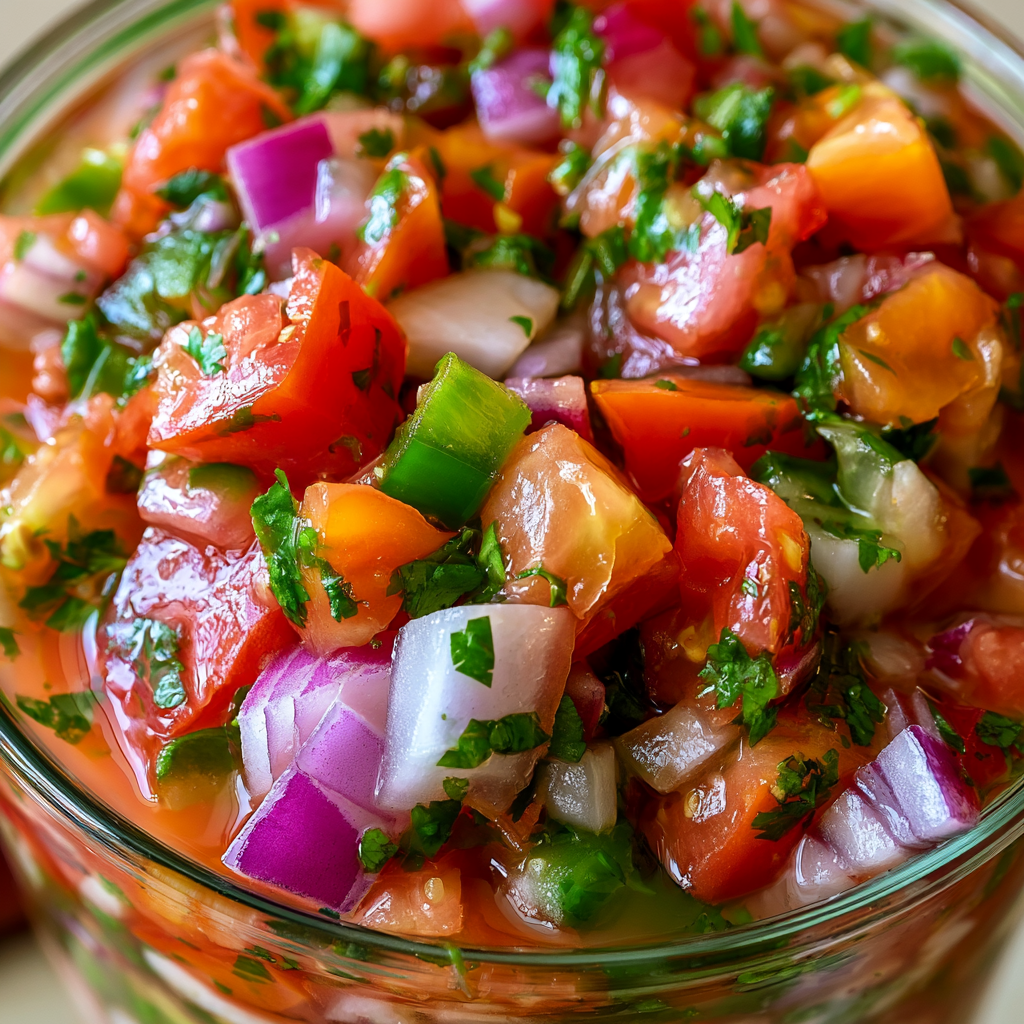
If you love fresh tomato salsa but want a make-ahead option, this version gives you that familiar mix of juicy tomatoes, sharp onion, mild jalapeño heat, cilantro, and lime. The vegetables cook only briefly, so the mixture keeps more character than a long-simmered tomato sauce.
The preparation itself is straightforward. Everything is chopped first, brought to a full boil, simmered for just a few minutes, and then transferred into hot jars. That short cooking process makes it practical when you have a good supply of Roma tomatoes to use.
The important difference between ordinary pico de gallo and preserved salsa is acidity. Shelf-stable salsa must follow a scientifically tested balance of vegetables and acid. Treat the quantities and processing details below as shelf-stable canning directions only when they match a current tested formula from a reliable home-preservation authority. Otherwise, prepare the salsa and keep it refrigerated.
Pico de Gallo Canning Ingredients
Roma tomatoes: Two pounds of Roma tomatoes form the base of the salsa. Their firm flesh makes them particularly convenient for cutting into small, consistent pieces.
White onion: One medium finely diced onion adds the crisp, savory bite that balances the tomatoes and lime.
Jalapeño pepper: One large seeded and minced jalapeño provides moderate heat without overwhelming the other ingredients.
Fresh cilantro: Two tablespoons of finely chopped cilantro bring the familiar fresh herbal flavor associated with pico de gallo.
Commercially bottled lime juice: One-half cup supplies acidity and bright citrus flavor. Bottled juice is specifically used because its acidity is standardized.
Pickling salt: One teaspoon seasons the salsa while helping avoid the cloudiness that ordinary table salt can sometimes cause in preserved foods.

Cooking Steps
STEP 1: Wash the jars, lids, and screw bands thoroughly. Following the supplied preparation method, hold the jars in water heated to about 180°F for 10 minutes and keep them hot until you are ready to fill them. Wash the tomatoes, onion, jalapeño, and cilantro while the jars are heating.
STEP 2: Cut the Roma tomatoes into roughly 1/4-inch pieces and finely dice the white onion. Remove the seeds and ribs from the jalapeño for moderate heat, then mince it finely. Chop the cilantro and measure the bottled lime juice and pickling salt so everything is ready before the pan goes on the stove.
STEP 3: Add the tomatoes and onion to a saucepan over medium-high heat. Stir in the jalapeño, cilantro, bottled lime juice, and pickling salt. Bring the mixture to a full rolling boil, stirring so the vegetables and lime juice are evenly distributed. Reduce the heat and simmer gently for about 3 minutes.
STEP 4: Ladle the hot mixture into hot prepared jars, leaving 1/2 inch of headspace. Run a clean bubble-removal tool or another suitable nonreactive utensil around the inside of each jar to release trapped air. Wipe the jar rims clean, position the lids, and tighten the bands only until fingertip tight.
STEP 5: For shelf-stable canning, continue only if these ingredients, vegetable-to-acid proportions, jar size, and processing directions correspond to a scientifically tested salsa formula. Place the jars in a boiling-water canner with 1 to 2 inches of water covering their tops. The supplied schedule calls for 15 minutes at 0 to 1,000 feet elevation, 20 minutes at 1,001 to 6,000 feet, and 25 minutes above 6,000 feet. After processing, turn off the heat and leave the jars in the canner for 5 minutes before removing them.
STEP 6: Transfer the jars to a heat-resistant surface and leave space around them for air circulation. Do not disturb them for 12 to 24 hours. Once completely cool, check each lid. A properly sealed lid should remain firm when pressed in the center rather than flexing up and down. Refrigerate any jar that does not seal.
Serving Ideas for Pico de Gallo
This tomato salsa works especially well with simple foods that let its lime, cilantro, and jalapeño flavors stand out.
- Spoon it over tacos, burrito bowls, or grilled meat just before serving.
- Serve it with tortilla chips as a quick appetizer or snack.
- Add a spoonful alongside quesadillas, rice and beans, or other Mexican-inspired meals for extra tomato flavor and acidity.
Because this version is briefly cooked, its texture will be softer than completely raw pico de gallo. Serving it chilled can help give it a refreshing contrast against warm tacos, rice, or grilled foods.
Recipe Tips
- Keep the vegetables consistent in size. Small, even tomato and onion pieces heat more uniformly and make the finished salsa easier to spoon from the jar.
- Do not reduce the bottled lime juice for canning. The acid-to-vegetable balance is an important part of a tested salsa preservation method.
- Measure vegetables before changing the heat level. If you are following a tested canning formula, do not increase the total amount of jalapeño, onion, or tomatoes beyond the quantities specified in that formula.
Can I safely water-bath can this pico de gallo?
Only when the complete formula matches a scientifically tested home-canning recipe. Salsa is a mixture of acidic tomatoes and lower-acid vegetables, so changing the amount of onion, pepper, tomato, or acid can affect safety. When verification is uncertain, keep the finished pico de gallo refrigerated instead of storing it at room temperature.
Why does this recipe use bottled lime juice?
Commercially bottled lime juice has standardized acidity, while the acidity of freshly squeezed limes naturally varies. That consistency matters when acid is part of a tested preservation formula. Bottled lime juice also gives the salsa a bright citrus note that balances the tomato and onion flavors.
Can I make the pico de gallo less spicy?
Yes. The supplied recipe already removes the jalapeño seeds and ribs for a moderate level of heat. You can make a refrigerated batch milder by adjusting the pepper to your preference. For shelf-stable canning, however, keep the vegetable proportions exactly as directed by the tested formula you are following.
What should I do if a jar does not seal?
Move an unsealed jar to the refrigerator rather than storing it in the pantry. The supplied instructions recommend using an unsealed refrigerated jar within 2 to 3 weeks. Do not treat a failed seal as shelf-stable, even when all of the other jars appear to have sealed correctly.

How to Store & Reheat
For refrigerated storage, keep the pico de gallo covered and cold. According to the supplied method, a processed jar that fails to seal should be refrigerated and used within 2 to 3 weeks.
Shelf-stable storage should only be used when the complete ingredients, quantities, jar size, acidity, and processing schedule match a current scientifically tested canning formula. Once that has been confirmed and the jars have sealed properly, follow the storage recommendations supplied with that tested recipe rather than assigning a pantry life from these instructions alone.
This recipe card does not provide a validated freezer-storage timeline, so freezing should not be used as a substitute for tested shelf-stable canning instructions. Freezing can also soften the tomatoes and onion after thawing, which changes the fresh pico-style texture.
Reheating is not necessary. Pico de gallo is typically served chilled or allowed to lose some of its refrigerator chill before serving. Give the contents a gentle stir after opening so the tomatoes, lime juice, onion, jalapeño, and cilantro are evenly distributed before spooning it onto your meal.
Pico de Gallo Canning Recipe
Ingredients
- 1 medium white onion cut into a fine dice
- ½ cup commercially bottled lime juice
- 2 tablespoons fresh cilantro finely chopped
- 2 pounds Roma tomatoes cut into ¼-inch cubes
- 1 teaspoon pickling salt
- 1 large jalapeño pepper seeded and finely minced for moderate heat
Instructions
- Wash the jars, lids, and screw bands thoroughly. Following the supplied method, hold the jars in water heated to 180°F for 10 minutes and keep them hot until filling.
- Rinse the tomatoes, onion, and jalapeño thoroughly.
- Cut the Roma tomatoes into approximately ¼-inch pieces. Finely dice the white onion. Remove the jalapeño seeds and ribs for a moderate level of heat, then mince the pepper finely.
- Finely chop the cilantro and arrange all prepared ingredients so they are ready before cooking begins.
- Place the prepared tomatoes and onion in a saucepan over medium-high heat.
- As the vegetables begin to heat, incorporate the minced jalapeño, chopped cilantro, ½ cup bottled lime juice, and 1 teaspoon pickling salt.
- Stir thoroughly until the ingredients are evenly distributed, then bring the mixture to a full rolling boil.
- Reduce the heat once boiling and maintain a gentle simmer for 3 minutes, stirring periodically to promote even heating.
- Using a ladle, transfer the hot pico de gallo into the prepared hot jars, allowing ½ inch of headspace between the food and the top of each jar.
- Slide a clean bubble-removal tool or appropriate nonreactive utensil around the inside of each jar to release trapped air.
- Clean the rims carefully with a damp cloth so no food residue remains where the lids must seal.
- Position the lids on the jars and apply the screw bands until fingertip tight. The bands should be secure without being excessively tightened.
- Following the originally supplied directions, place the filled jars in a boiling-water canner with the water reaching 1–2 inches above the tops of the jars.
- Return the water to a vigorous boil and maintain the boil for the entire stated processing period.
- The supplied processing schedule is 15 minutes at elevations from 0–1,000 feet, 20 minutes from 1,001–6,000 feet, and 25 minutes above 6,000 feet. Use these processing times for shelf-stable preservation only when they correspond to a tested canning recipe for the same ingredients, proportions, and jar size.
- At the end of processing, switch off the heat and leave the jars in the canner for 5 minutes before lifting them from the water.
- Remove the jars carefully with a jar lifter and place them upright on a clean, heat-resistant surface with enough room between them for air circulation.
- Allow the jars to remain undisturbed for 12–24 hours while they cool completely.
- After cooling, press the center of each lid gently. A properly vacuum-sealed lid should remain firm and should not move up and down when pressed.
- Refrigerate any jar that fails to seal. The supplied recipe recommends consuming an unsealed refrigerated jar within 2–3 weeks.