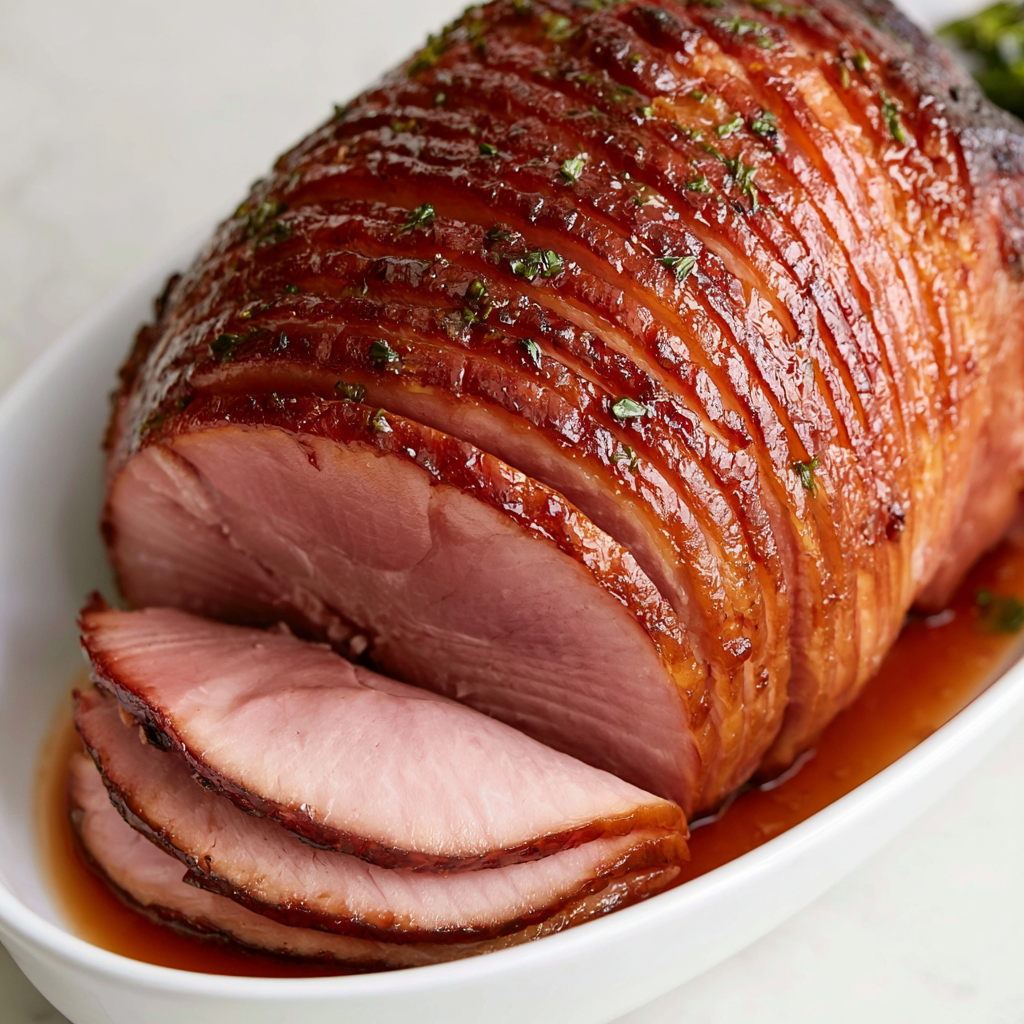
Mustard Glazed Spiral Ham
This oven-warmed spiral ham is finished with a rich honey-Dijon glaze made with brown sugar, butter, and freshly ground black pepper. Gentle covered roasting keeps the meat moist, while a brief burst of high heat caramelizes the glaze into a glossy, sweet-and-tangy coating.
Pin it to remember it!
Print Recipe
Ingredients
For the Ham
- 1 cup water
- 1 fully cooked bone-in spiral-cut ham, weighing 8–10 lb
For the Mustard Glaze
- 1/2 cup honey
- 2 –3 tablespoons Dijon mustard
- 4 tablespoons unsalted butter
- 1/2 teaspoon freshly ground black pepper
- 1/2 cup firmly packed brown sugar
Instructions
- Take the fully cooked spiral ham out of the refrigerator approximately 1 hour before it goes into the oven, but do not leave it at room temperature for more than 2 hours. Allowing some of the chill to dissipate promotes more even heating.
- If desired, lightly score the exterior of the ham with a sharp knife in a diamond-shaped pattern.
- Position an oven rack in the lower third of the oven so the ham will sit near the center while roasting. Preheat the oven to 325°F (163°C).
- Remove all wrapping and packaging from the ham. Set it cut-side down in a large roasting pan, or use a 9×13-inch baking pan if the ham fits comfortably.
- Add 1 cup of water to the bottom of the pan. Seal the pan securely with aluminum foil, overlapping two sheets when necessary to create a tight covering.
- Bake the covered ham at 325°F for approximately 10–12 minutes per pound, stopping when roughly 30 minutes of the calculated baking time remain.
- For an 8-pound ham, bake for about 50 minutes before proceeding to the glazing stage. A 9-pound ham will require approximately 1 hour, while a 10-pound ham will need about 1 hour and 10 minutes at this stage.
- Keeping the ham covered during this gradual heating period helps retain moisture and reduces the likelihood of drying.
- While the ham is warming, melt the butter in a small saucepan over medium heat.
- Stir in the firmly packed brown sugar, honey, Dijon mustard, and freshly ground black pepper. Continue stirring only until the brown sugar has completely dissolved.
- Do not allow the mixture to simmer or boil, as excessive heating can cause the glaze to become overly firm as it cools.
- Remove the prepared glaze from the heat and set it aside, or hold it over very low warmth until needed.
- When approximately 30 minutes of baking time remain, carefully take the ham from the oven and remove the foil.
- Brush about one-third of the honey-mustard glaze generously over the ham, working some of it between the individual spiral-cut slices.
- Cover the roasting pan again with foil and return the ham to the 325°F oven for another 30 minutes.
- After this period, check the internal temperature in the center of the ham without allowing the thermometer to touch the bone. The ham should register 145°F.
- If it has not yet reached the required temperature, keep it covered and continue heating in additional 10–15-minute intervals, checking again after each interval.
- Once the ham has reached 145°F internally, remove it from the oven and uncover it.
- Brush another one-third of the glaze generously over the surface, again allowing some of the mixture to settle between the spiral slices.
- Raise the oven temperature to 425°F (218°C). Return the ham to the oven without the foil and bake for 5–10 minutes, just until the exterior becomes glossy and the glaze caramelizes.
- Remove the caramelized ham from the oven. Using a pastry brush, collect a few tablespoons of the flavorful liquid from the roasting pan and stir it into the remaining glaze to loosen its consistency.
- Brush the sides of the ham with this thinned glaze if desired, or reserve it for serving alongside the sliced meat.
- Allow the ham to rest for approximately 5 minutes before slicing and serving warm.
Notes
Keep the roasting pan tightly covered during the initial baking stages to help preserve moisture.
When checking the ham's internal temperature, insert the thermometer into the thickest central portion without touching the bone.
Avoid boiling or simmering the glaze while preparing it, since overheating the sugar mixture may cause it to harden.
The final 5–10 minutes at 425°F are intended only to caramelize the exterior, so monitor the ham closely during this stage to prevent the glaze from scorching.