
This mustard glazed spiral ham is a reliable holiday main with tender, juicy slices and a glossy honey-Dijon coating. Gentle covered baking keeps the ham moist, while high heat caramelizes the brown sugar glaze beautifully.
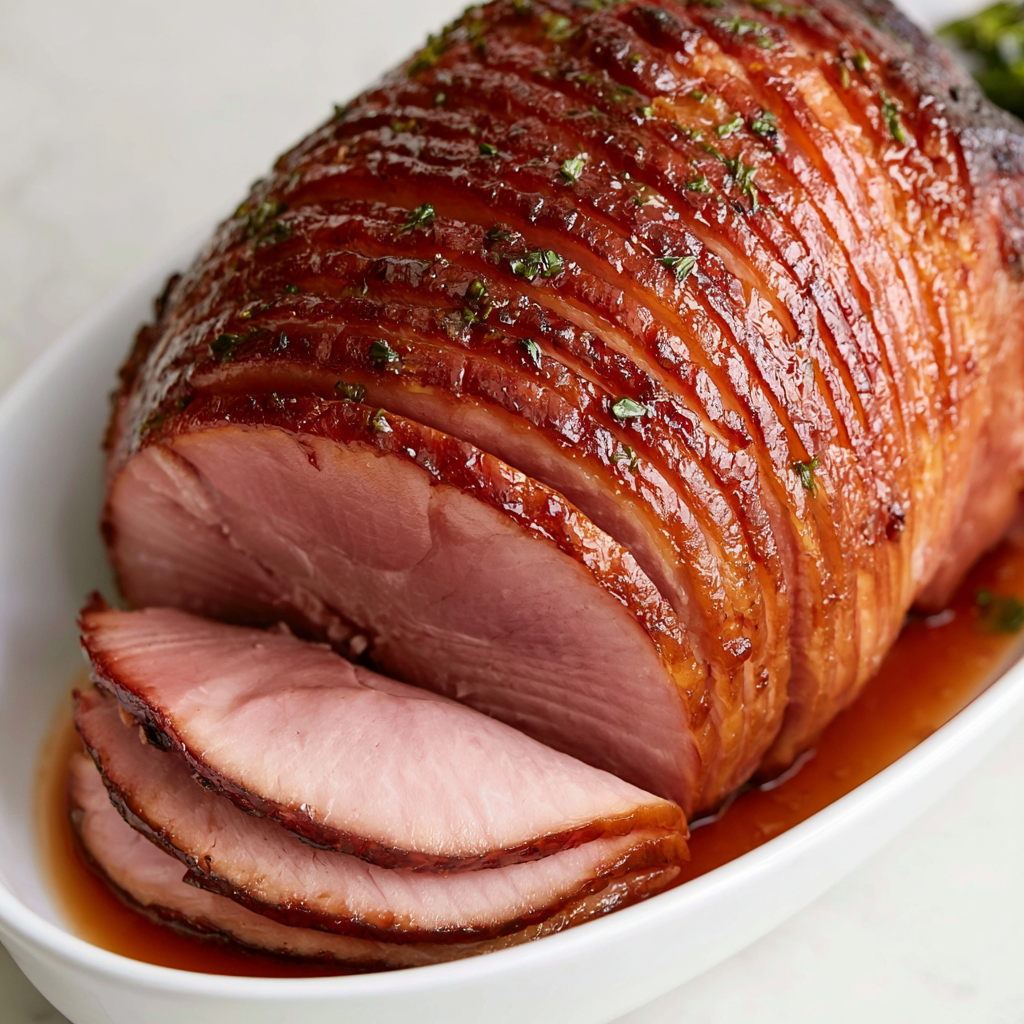
Spiral ham is especially convenient when you need an impressive centerpiece without complicated preparation. Because the ham is already fully cooked and pre-sliced, most of the work is simply warming it carefully and adding layers of sweet, tangy glaze at the right time.
The combination of honey, Dijon mustard, brown sugar, and butter gives you plenty of contrast. Honey brings smooth sweetness, mustard cuts through the richness, and the brown sugar creates those lightly caramelized edges that make the outside particularly flavorful.
The biggest secret is avoiding excessive heat during the main baking time. Keeping the roasting pan tightly covered allows the ham to warm gradually without losing too much moisture. Then, once it reaches the proper internal temperature, a short uncovered finish at 425°F gives the glaze its glossy, sticky surface.
Mustard Glazed Spiral Ham Ingredients
You only need a short list of ingredients for this centerpiece, which makes it particularly useful for Thanksgiving, Christmas, Easter, or a large Sunday dinner.
- Bone-in spiral-cut ham: An 8–10 pound fully cooked ham provides the main dish and already has slices cut into it, making glazing and serving easier.
- Water: Added to the roasting pan to create a moist environment while the ham warms under foil.
- Honey: Provides smooth sweetness and helps create a glossy glaze.
- Dijon mustard: Balances the honey and sugar with tangy, savory depth.
- Brown sugar: Melts into the glaze and caramelizes during the final high-temperature baking period.
- Unsalted butter: Gives the mustard glaze a richer consistency and helps the ingredients blend smoothly.
- Black pepper: Adds a subtle savory bite that prevents the glaze from tasting overly sweet.

Cooking Steps
STEP 1: Remove the fully cooked spiral ham from the refrigerator about 1 hour before baking. This gives the center a chance to lose some of its refrigerator chill, which promotes more even heating. Do not leave the ham at room temperature for more than 2 hours.
STEP 2: Position a rack in the lower third of your oven and preheat it to 325°F. Remove all packaging from the ham and arrange it cut-side down in a roasting pan large enough to hold it comfortably. Pour the water into the bottom of the pan, then cover the pan tightly with aluminum foil.
STEP 3: Warm the covered ham for about 10–12 minutes per pound. You do not need to complete the full estimated cooking time before glazing. Instead, stop when approximately 30 minutes remain. For an 8-pound ham, this usually means roughly 50 minutes of initial heating, while larger hams will need a little longer.
STEP 4: While the ham warms, prepare the glaze. Melt the butter gently in a small saucepan over medium heat. Add the brown sugar, honey, Dijon mustard, and black pepper. Stir until the sugar dissolves and the ingredients form a smooth mixture. Keep the heat controlled and remove the pan before the glaze begins to boil.
STEP 5: Take the partially heated ham from the oven and carefully remove the foil. Brush roughly one-third of the honey-Dijon mixture over the surface. Work some glaze gently between the spiral slices so the flavor reaches more than just the outside. Cover the pan again and bake for another 30 minutes.
STEP 6: Check the internal temperature by inserting an instant-read thermometer into the thickest central portion of the ham without touching the bone. Once it reaches 145°F, remove the foil and brush another generous layer of glaze across the surface. If the ham needs additional heating, keep it covered and return it to the 325°F oven in 10–15-minute intervals.
STEP 7: Raise the oven temperature to 425°F. Return the uncovered glazed ham to the oven for about 5–10 minutes. Watch it closely during this stage because the honey and brown sugar can move from caramelized to scorched quickly. Remove the ham when the exterior looks glossy and lightly caramelized.
STEP 8: Stir a few spoonfuls of the flavorful roasting-pan juices into the remaining glaze to loosen it. Brush this over the ham or serve it alongside the slices. Allow the finished ham to rest for about 5 minutes before serving so it stays juicy as you transfer the slices to a platter.
Can I prepare spiral ham ahead of time?
You can prepare the glaze a little ahead and refrigerate it separately, but the ham is at its best when warmed and glazed shortly before serving. If you make the glaze in advance, warm it gently until it becomes brushable again rather than bringing it to a boil.
Helpful Tips
- Keep the foil tight during the main bake. Spiral-cut meat has a lot of exposed surface area, so covering the roasting pan helps prevent those slices from drying out before the center is thoroughly heated.
- Use a thermometer instead of relying only on time. Ham size, starting temperature, roasting-pan material, and individual ovens can all affect heating time. Check the thickest section without touching the bone.
- Watch the final glaze closely. Honey and brown sugar caramelize quickly at 425°F. The last few minutes are meant to color the exterior, not continue cooking the ham for an extended period.
How do I keep spiral ham from drying out?
The most important step is keeping the roasting pan covered while the ham warms at 325°F. The water in the bottom of the pan also helps maintain a moist roasting environment. Avoid leaving the ham uncovered for long periods, and stop heating once it has reached the target internal temperature.
Perfect Pairings
A glazed ham works well with both rich holiday sides and simpler vegetables, so you can adjust the meal depending on the occasion.
- Roasted potatoes: Crisp, savory potatoes provide a welcome contrast to the sweet honey-mustard glaze.
- Green vegetables: Roasted green beans, Brussels sprouts, or lightly seasoned broccoli can balance the richness of the ham.
- Creamy casserole-style sides: Scalloped potatoes or another mild, creamy side complement the salty-sweet meat particularly well for a holiday dinner.
Can I use more Dijon mustard?
Yes. The amount can be adjusted within the 2–3 tablespoon range depending on how tangy you want the glaze. Using the larger amount gives the coating a more pronounced mustard flavor and helps balance the honey and brown sugar without changing the basic preparation.

How do I know when a spiral ham is heated through?
Insert a meat thermometer into the thickest central portion of the ham while avoiding the bone. For this preparation, the ham is ready for its final glazing stage once the center reaches 145°F. If it is below that temperature, cover it again and continue heating before caramelizing the exterior.
Storage & Reheating
Once dinner is finished, refrigerate leftover ham promptly. Transfer the slices to an airtight container or wrap them securely so they do not dry out. Stored properly, cooked ham is generally best used within about 3–4 days in the refrigerator.
For longer storage, portion the meat into freezer-safe containers or bags and freeze it. Separating the ham into meal-sized portions makes it easier to thaw only what you need later. For best quality, use frozen leftovers within about 1–2 months.
When reheating, gentle heat is preferable because spiral ham can dry quickly. Place slices in a covered baking dish with a small spoonful of water or reserved pan juices and warm them in a moderate oven until heated through. Individual portions can also be reheated carefully in the microwave using short intervals.
If you have leftover glaze, refrigerate it separately in a covered container. Warm it gently and spoon a small amount over reheated slices to restore some of the sweet, tangy flavor without overheating the meat.
Should spiral ham be baked cut-side down?
Yes. Positioning the spiral ham cut-side down helps protect the exposed sliced surface during the longer covered portion of baking. It also gives the ham a stable base in the roasting pan. You can still brush glaze between the slices once you uncover the ham during the glazing stages.
This method gives you a straightforward centerpiece that works particularly well when oven space and preparation time matter. By warming the ham slowly under foil, glazing it in stages, and saving the highest heat for the very end, you get moist slices with a deeply flavored honey-Dijon finish rather than a dried-out holiday ham.
Mustard Glazed Spiral Ham
Ingredients
For the Ham
- 1 cup water
- 1 fully cooked bone-in spiral-cut ham, weighing 8–10 lb
For the Mustard Glaze
- 1/2 cup honey
- 2 –3 tablespoons Dijon mustard
- 4 tablespoons unsalted butter
- 1/2 teaspoon freshly ground black pepper
- 1/2 cup firmly packed brown sugar
Instructions
- Take the fully cooked spiral ham out of the refrigerator approximately 1 hour before it goes into the oven, but do not leave it at room temperature for more than 2 hours. Allowing some of the chill to dissipate promotes more even heating.
- If desired, lightly score the exterior of the ham with a sharp knife in a diamond-shaped pattern.
- Position an oven rack in the lower third of the oven so the ham will sit near the center while roasting. Preheat the oven to 325°F (163°C).
- Remove all wrapping and packaging from the ham. Set it cut-side down in a large roasting pan, or use a 9×13-inch baking pan if the ham fits comfortably.
- Add 1 cup of water to the bottom of the pan. Seal the pan securely with aluminum foil, overlapping two sheets when necessary to create a tight covering.
- Bake the covered ham at 325°F for approximately 10–12 minutes per pound, stopping when roughly 30 minutes of the calculated baking time remain.
- For an 8-pound ham, bake for about 50 minutes before proceeding to the glazing stage. A 9-pound ham will require approximately 1 hour, while a 10-pound ham will need about 1 hour and 10 minutes at this stage.
- Keeping the ham covered during this gradual heating period helps retain moisture and reduces the likelihood of drying.
- While the ham is warming, melt the butter in a small saucepan over medium heat.
- Stir in the firmly packed brown sugar, honey, Dijon mustard, and freshly ground black pepper. Continue stirring only until the brown sugar has completely dissolved.
- Do not allow the mixture to simmer or boil, as excessive heating can cause the glaze to become overly firm as it cools.
- Remove the prepared glaze from the heat and set it aside, or hold it over very low warmth until needed.
- When approximately 30 minutes of baking time remain, carefully take the ham from the oven and remove the foil.
- Brush about one-third of the honey-mustard glaze generously over the ham, working some of it between the individual spiral-cut slices.
- Cover the roasting pan again with foil and return the ham to the 325°F oven for another 30 minutes.
- After this period, check the internal temperature in the center of the ham without allowing the thermometer to touch the bone. The ham should register 145°F.
- If it has not yet reached the required temperature, keep it covered and continue heating in additional 10–15-minute intervals, checking again after each interval.
- Once the ham has reached 145°F internally, remove it from the oven and uncover it.
- Brush another one-third of the glaze generously over the surface, again allowing some of the mixture to settle between the spiral slices.
- Raise the oven temperature to 425°F (218°C). Return the ham to the oven without the foil and bake for 5–10 minutes, just until the exterior becomes glossy and the glaze caramelizes.
- Remove the caramelized ham from the oven. Using a pastry brush, collect a few tablespoons of the flavorful liquid from the roasting pan and stir it into the remaining glaze to loosen its consistency.
- Brush the sides of the ham with this thinned glaze if desired, or reserve it for serving alongside the sliced meat.
- Allow the ham to rest for approximately 5 minutes before slicing and serving warm.