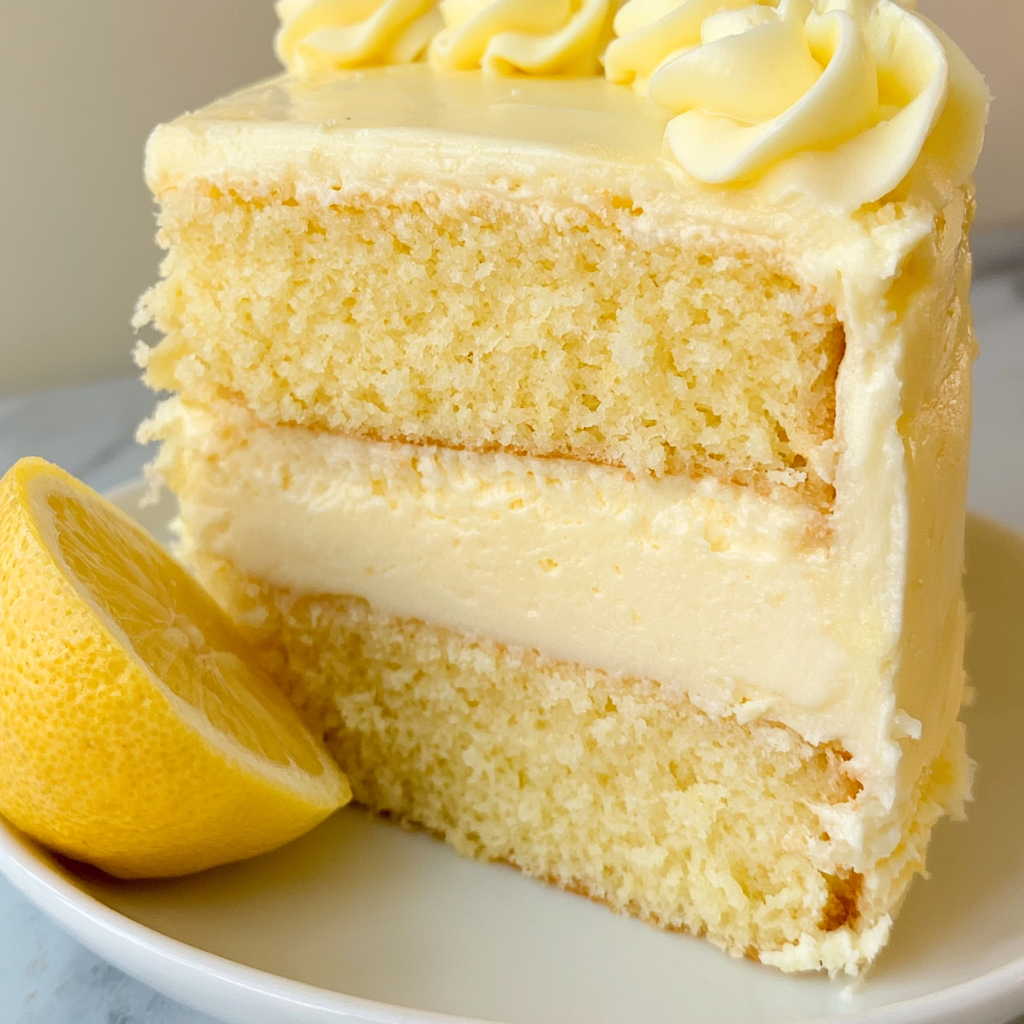
Lemon Cheesecake Cake
This lemon cheesecake cake combines two tender lemon cake layers with a rich, citrus-scented cheesecake center and a smooth lemon cream cheese frosting. Fresh lemon juice, zest, and lemon extract provide bright flavor throughout, while the chilled cheesecake layer creates a creamy contrast to the soft cake.
Pin it to remember it!
Print Recipe
Ingredients
Cheesecake Layer
- 3/4 cup full-fat sour cream
- 1 teaspoon lemon extract
- 3 large eggs brought to room temperature, approximately 70°F
- 3 tablespoons all-purpose flour
- 16 ounces full-fat cream cheese slightly softened
- 1/4 teaspoon salt
- 1 cup white granulated sugar
Lemon Cake Layers
- 1/4 cup freshly squeezed lemon juice
- 3 cups cake flour
- Finely grated zest from 2 lemons
- 1 1/4 cups buttermilk
- 3 large eggs
- 1/2 teaspoon baking soda
- 1 tablespoon lemon extract
- 1 1/2 sticks 12 tablespoons unsalted butter, softened
- 2 teaspoons baking powder
- 1/4 cup vegetable oil
- 1/2 teaspoon salt
- 2 cups granulated sugar
Lemon Cream Cheese Frosting
- 1 teaspoon lemon extract
- 6 to 6 1/2 cups confectioners’ sugar
- 2 sticks unsalted butter only slightly softened to approximately 65°F
- Yellow gel food coloring optional
- 16 ounces full-fat cream cheese barely softened
- Finely grated zest from 1 lemon approximately 1 1/2 teaspoons, optional
For Assembly and Decorating
- Disposable piping bag fitted with a 2D piping tip
- Small offset spatula
- Prepared lemon cake layers
- Chilled cheesecake layer
- Prepared lemon cream cheese frosting
Instructions
- Place a pan containing approximately 1 inch of water on a lower oven rack. This provides moisture during baking and helps reduce the likelihood of cracks forming in the cheesecake.
- Preheat the oven to 300°F.
- Cut a parchment-paper circle to fit the base of a 9-inch springform pan and line the bottom of the pan.
- Place the slightly softened cream cheese in a mixing bowl and beat until completely smooth.
- Add the granulated sugar, salt, and all-purpose flour. Mix on low speed until evenly incorporated.
- Blend in the sour cream and lemon extract until the mixture is uniform.
- Add the room-temperature eggs one at a time, mixing after each addition until incorporated.
- Transfer the cheesecake batter to the parchment-lined springform pan.
- Position the springform pan on the oven rack directly above the pan of water. Bake for 45 minutes, or until the cheesecake is set around the edges while retaining a slight jiggle in the center.
- Turn the oven off and leave the cheesecake inside for an additional 30 minutes, keeping the oven door slightly open so the cheesecake can cool gradually.
- Remove the cheesecake and allow it to finish cooling on the countertop. Once cooled, cover it and freeze for 2–3 hours, or refrigerate for at least 5–6 hours. Refrigerating overnight is also suitable.
- Preheat the oven to 350°F. Grease and flour two 9 × 2-inch round cake pans.
- In a medium bowl, whisk the cake flour, baking powder, baking soda, salt, and fresh lemon zest together for approximately 30 seconds. Set the dry mixture aside.
- In a separate bowl, stir together the buttermilk, vegetable oil, freshly squeezed lemon juice, and lemon extract.
- Using a stand mixer, beat the softened unsalted butter until smooth.
- Gradually incorporate the granulated sugar and continue beating until the butter mixture becomes pale, light, and fluffy.
- Add the eggs individually, mixing thoroughly after each one.
- Add the dry and liquid mixtures alternately. Begin with the flour mixture, follow with the buttermilk mixture, and continue until everything has been added, using three additions of the dry mixture and two additions of the liquid mixture. Finish with the dry ingredients.
- Mix only until the batter is combined; avoid excessive mixing.
- Distribute the batter evenly between the two prepared cake pans.
- Bake for 20–24 minutes, or until a toothpick inserted into the center emerges clean or with only a few moist crumbs attached.
- Allow the cake layers to rest in their pans for 10 minutes, then carefully turn them out onto cooling racks and let them cool completely.
- Place the slightly softened butter in the mixer bowl and beat until smooth.
- Cut the barely softened cream cheese into smaller pieces. Add the pieces to the butter and mix until the frosting base becomes smooth and creamy.
- Blend in the lemon extract. Add the optional fresh lemon zest at this stage if a stronger citrus note is desired.
- Gradually incorporate 6 to 6 1/2 cups of powdered sugar, beating until the frosting reaches a smooth, fluffy consistency.
- For a brighter yellow appearance, blend in a small quantity of yellow gel food coloring if desired.
- Keep the frosting slightly chilled for the best spreading and piping consistency. If preparing it in advance, refrigerate it and remix briefly before decorating the cake.
- Set one completely cooled lemon cake layer on a serving plate or cake pedestal.
- Apply a thin coating of lemon cream cheese frosting across the top of the cake layer.
- Carefully run a thin knife around the perimeter of the chilled cheesecake to release it from the springform pan. Warming the knife with hot water can make this process easier and help reduce sticking.
- Release and remove the springform pan sides. Carefully invert the chilled cheesecake onto the frosted lemon cake layer.
- Remove the base of the springform pan and gently peel away the parchment paper.
- If the cheesecake extends beyond the edges of the lemon cake, carefully trim the excess with a warmed knife so the layers are even.
- Spread another thin coating of lemon cream cheese frosting over the cheesecake layer.
- Position the second lemon cake layer over the cheesecake.
- Cover the top and sides of the assembled cake with the remaining lemon cream cheese frosting. If either the cake or frosting becomes too soft while decorating, chill it as needed before continuing.
- Finish the cake using the small offset spatula. If decorative piping is desired, transfer frosting to a disposable piping bag fitted with a 2D piping tip and add the final decorations.
Notes
Freshly grated lemon zest provides the strongest citrus aroma and is particularly effective in the lemon cake batter.
The pan of water beneath the cheesecake supplies gentle moisture to the oven and helps minimize cracking without placing the springform pan directly into a water bath.
For the firmest cheesecake layer during assembly, refrigerate it for at least 5–6 hours or overnight, or freeze it for 2–3 hours.
The cream cheese and butter used for the frosting should remain only slightly softened. Excessively warm ingredients can produce frosting that is too loose for spreading and piping.
Avoid microwaving the cream cheese or butter to soften them, as excessive heat can negatively affect the frosting consistency.
A knife warmed in hot water can be useful both for releasing the cheesecake from the pan and for neatly trimming the cheesecake layer when necessary.