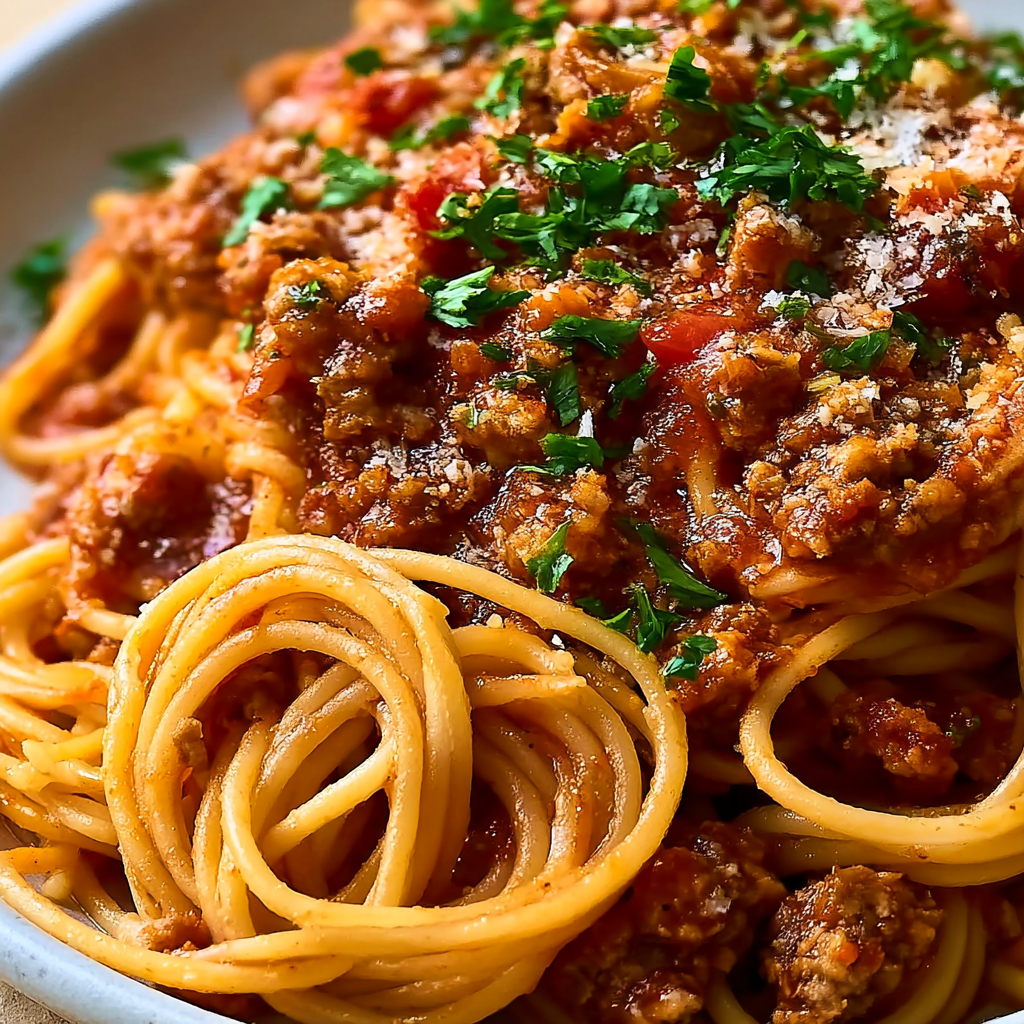
Italian Spaghetti with Meat Sauce
A hearty Italian-style spaghetti dish featuring ground beef simmered slowly with tomatoes, mushrooms, aromatic vegetables, red wine, beef broth, herbs, and warm spices. The extended simmer develops a deep, robust sauce that coats the pasta thoroughly before serving with Parmesan and fresh parsley.
Pin it to remember it!
Print Recipe
Ingredients
For the Beef and Tomato Sauce:
- 1 can 6 oz tomato paste
- 4 celery stalks cut into approximately 1/4-inch pieces
- 1 cup dry red wine preferably one suitable for drinking
- 2 bay leaves
- 1 lb ground beef 85% lean, browned and drained
- 1 teaspoon dried basil
- 1 can 15 oz beef broth
- 4 –6 whole cloves
- 2 tablespoons granulated sugar
- 1 yellow onion diced into roughly 1/4-inch pieces
- 1 teaspoon freshly ground black pepper
- 2 cans sliced mushrooms drained, or 8 oz fresh mushrooms, sliced
- 1 teaspoon dried oregano
- 4 fresh garlic cloves finely minced
- 1 can diced tomatoes preferably San Marzano
- 1/4 cup fresh parsley finely chopped into approximately 1/8-inch pieces
- 1 teaspoon kosher salt
- 1 can tomato sauce
For Serving:
- 1 lb dry spaghetti
- Freshly grated Parmesan cheese
- Fresh parsley for garnish
Instructions
- Dice the onion and celery into approximately 1/4-inch pieces. Finely mince the garlic and chop the fresh parsley.
- Meanwhile, place the ground beef in a large, heavy-bottomed pot over medium-high heat. Cook for approximately 5–7 minutes, breaking the meat into smaller pieces as it browns, until no pink remains.
- Carefully drain away the excess fat while keeping the browned beef in the pot.
- Add the chopped onion and celery to the browned beef. Cook over medium heat for 5–7 minutes, stirring from time to time, until the vegetables become tender and aromatic.
- Stir in the minced garlic and continue cooking for another 30 seconds to 1 minute, just until fragrant. Avoid allowing the garlic to burn.
- Pour the diced tomatoes, tomato sauce, tomato paste, drained mushrooms, dry red wine, and beef broth into the pot.
- Stir thoroughly until the ingredients are evenly combined and the tomato paste has completely blended into the liquid.
- Increase the heat to medium-high and bring the sauce mixture to a boil.
- Once boiling, add the whole cloves, bay leaves, sugar, dried basil, dried oregano, kosher salt, and black pepper.
- Stir well, reduce the heat to low, and partially cover the pot. Allow the sauce to simmer gently for 3 hours, stirring approximately every 30 minutes.
- Approximately 15–20 minutes before the sauce has finished simmering, bring a large pot of salted water to a rolling boil.
- Add the dry spaghetti and cook according to the package directions until al dente, leaving the pasta slightly firm when bitten.
- Before draining, reserve approximately 1 cup of the starchy pasta cooking water. Drain the spaghetti in a colander.
- Remove the finished sauce from the heat. Using a slotted spoon or small strainer, carefully remove and discard the bay leaves and whole cloves.
- Transfer the drained spaghetti directly into the sauce and stir until every strand is evenly coated.
- If the sauce is thicker than desired, incorporate a small amount of the reserved pasta water until the preferred consistency is reached.
- Divide the spaghetti and meat sauce among individual bowls or plates.
- Finish each serving generously with freshly grated Parmesan cheese and a light scattering of fresh parsley.
Notes
- Freshly grated Parmesan provides a smoother texture than pre-grated varieties, which may contain anti-caking ingredients.
- A dry red wine that is pleasant enough to drink contributes to the depth of the finished sauce.
- San Marzano tomatoes may be used for the diced tomatoes as specified in the original preparation.
- The bay leaves and whole cloves should be removed before serving so they do not remain in individual portions.