
Italian spaghetti with meat sauce is a hearty, comforting pasta dinner with browned beef, tomatoes, mushrooms, red wine, and aromatic vegetables simmered into a deeply flavored sauce. The long, gentle cook makes it reliable for weekends, family dinners, and make-ahead meals.
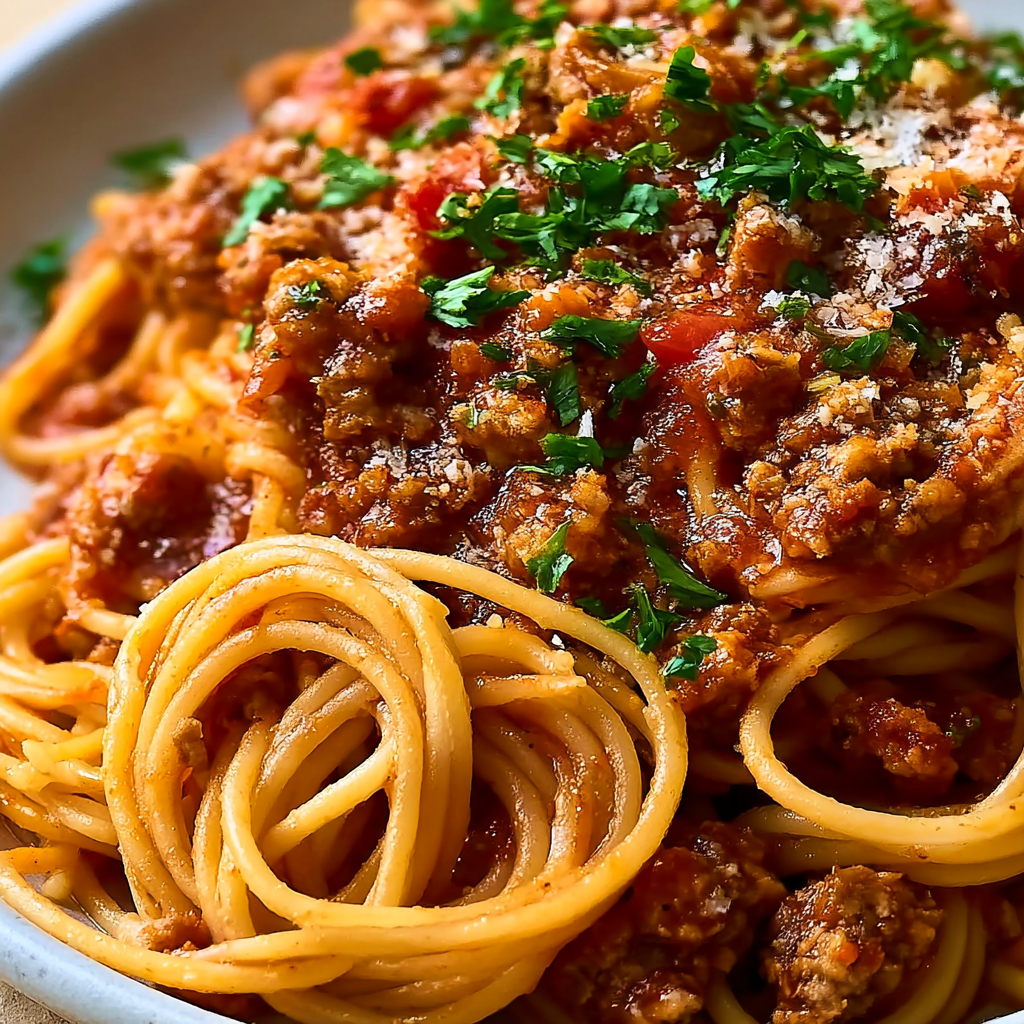
When you want a spaghetti dinner that tastes like it has had plenty of time to develop, this is a great one to put on the stove. The beefy tomato sauce gets its character from onion, celery, garlic, mushrooms, herbs, beef broth, and dry red wine, giving every forkful plenty of savory flavor.
What really makes this sauce work is the slow three-hour simmer. Instead of rushing the tomatoes and seasonings, you give them time to meld with the browned beef and vegetables. Whole cloves add subtle warmth in the background, while oregano, basil, bay leaves, and parsley keep the sauce aromatic.
It is also a practical meal for feeding a family because most of the cooking time is hands-off. Once the sauce is simmering, you only need to stir it occasionally before cooking the spaghetti and bringing everything together at the end.
Italian Spaghetti Recipe Ingredients
Ground beef: An 85% lean beef gives the sauce a hearty texture and enough richness without becoming excessively greasy.
Spaghetti: The classic pasta shape for carrying the thick beef and tomato sauce.
Diced tomatoes and tomato sauce: Create the main tomato base and provide both texture and body.
Tomato paste: Concentrates the tomato flavor and helps give the finished sauce a thicker consistency.
Yellow onion: Adds gentle sweetness and savory depth as it cooks with the beef.
Celery: Brings another aromatic layer and softens into the sauce during the long simmer.
Fresh garlic: Adds a stronger savory aroma than dried garlic and complements the tomatoes and herbs.
Mushrooms: Add earthy flavor and extra texture. Either drained canned mushrooms or sliced fresh mushrooms work.
Dry red wine: Adds depth and complexity while balancing the richness of the beef.
Beef broth: Loosens the tomato mixture while reinforcing its savory beef flavor.
Dried basil and oregano: Provide familiar Italian-inspired herbal notes throughout the sauce.
Bay leaves and whole cloves: Slowly infuse the sauce with fragrance and a gentle warm-spice note.
Granulated sugar: Softens some of the acidity from the tomatoes and wine.
Fresh parsley: Adds freshness to the cooked sauce and makes a simple garnish at serving time.
Parmesan cheese: A freshly grated finishing cheese that adds a salty, savory contrast to the tomato sauce.
Helpful Tips
- Brown the ground beef thoroughly before adding the vegetables. That initial browning develops flavor that remains noticeable even after the long simmer.
- Keep the sauce at a gentle simmer rather than a vigorous boil. Slow bubbling gives the vegetables time to soften and helps prevent too much liquid from evaporating.
- Count the cloves when adding them so you know exactly how many to retrieve before serving. The bay leaves and whole cloves should both come out of the finished sauce.
Step-by-Step Italian Spaghetti
STEP 1: Prepare the onion, celery, garlic, and parsley before you begin cooking. Heat a large, heavy pot over medium-high heat, add the ground beef, and cook for about 5 to 7 minutes. Break the meat into small pieces as it cooks, then drain away excess fat once the beef is fully browned.
STEP 2: Add the diced onion and celery directly to the beef. Reduce the heat to medium and cook for another 5 to 7 minutes, stirring occasionally, until the vegetables begin to soften. Add the minced garlic and cook briefly, just until you can smell its aroma.
STEP 3: Stir the diced tomatoes, tomato sauce, tomato paste, mushrooms, red wine, and beef broth into the pot. Take a moment to thoroughly work the tomato paste into the liquids so you do not have concentrated pockets remaining in the sauce.
STEP 4: Bring the mixture to a boil, then season it with the bay leaves, whole cloves, sugar, dried basil, dried oregano, kosher salt, and black pepper. Reduce the heat to low and partially cover the pot.
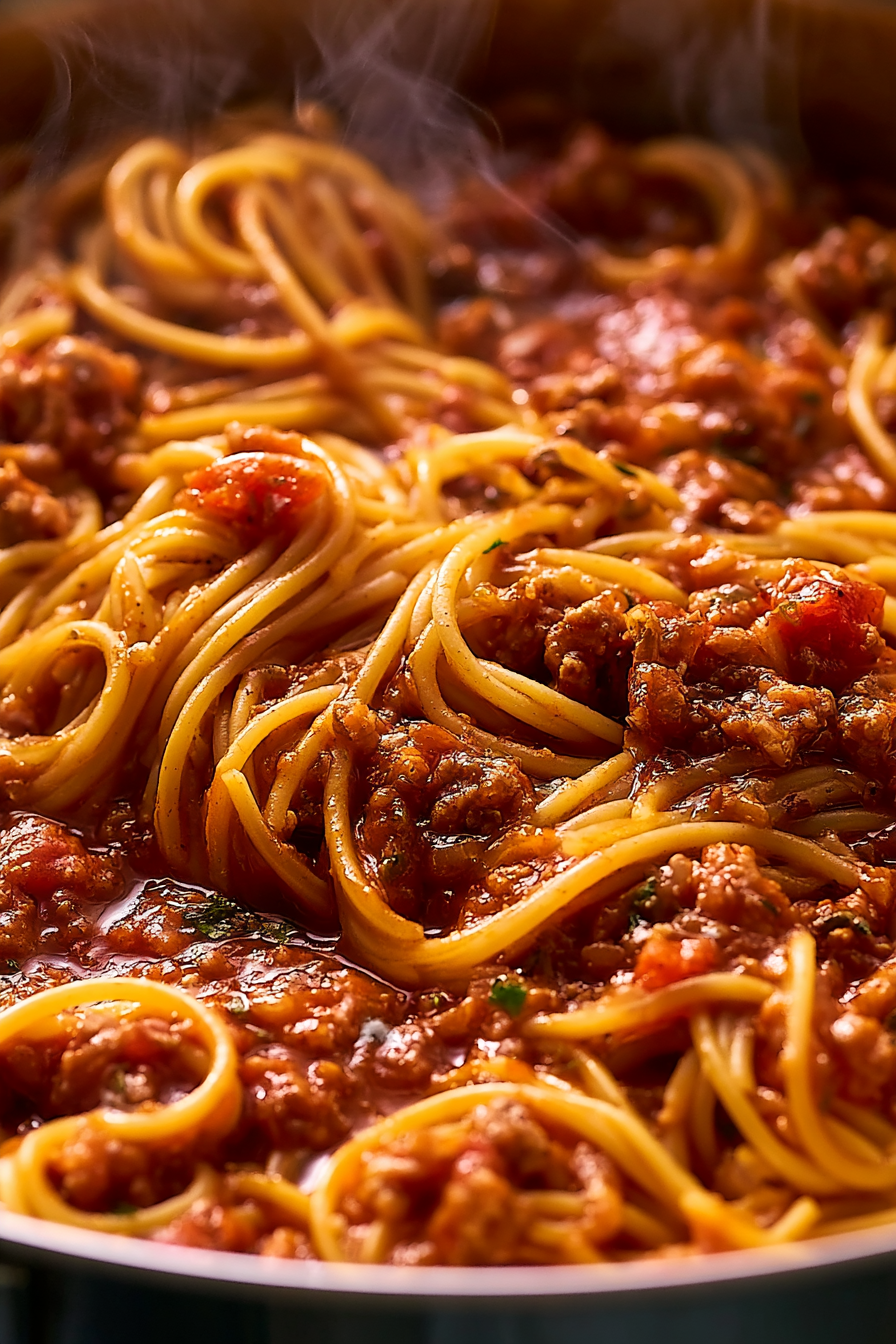
STEP 5: Let the meat sauce gently simmer for about 3 hours. Stir roughly every 30 minutes, scraping along the bottom of the pot as needed. The sauce should gradually become richer, thicker, and more cohesive as the beef, vegetables, tomatoes, wine, and seasonings cook together.
STEP 6: When the sauce has about 15 to 20 minutes left, bring a large pot of well-salted water to a boil. Cook the spaghetti until al dente according to the package directions. Scoop out about 1 cup of pasta water before draining so you have it available for adjusting the sauce.
STEP 7: Remove the sauce from the heat and carefully locate and discard both bay leaves and all of the whole cloves. Add the drained spaghetti to the sauce and toss until the noodles are evenly coated. Loosen the mixture with a splash of reserved pasta water if necessary, then serve with Parmesan and fresh parsley.
Serving Ideas for Italian Spaghetti
A simple green salad makes an excellent partner for this rich pasta because its fresh vegetables provide contrast without competing with the slow-cooked sauce. A lightly dressed Caesar-style salad also works particularly well with the Parmesan finish.
Garlic bread is another natural choice. A crisp piece of bread is useful for scooping up the bits of tomato and meat sauce left behind on the plate.
For a vegetable side, try roasted broccoli, zucchini, or green beans. Keeping the vegetable preparation fairly simple lets the deeply flavored spaghetti remain the centerpiece of the meal.
Can I make the meat sauce ahead of time?
Yes. In fact, a long-simmered meat sauce is particularly convenient for advance preparation. Cook the sauce completely, cool it promptly, and refrigerate it in a covered container. Reheat it gently on the stovetop before cooking fresh spaghetti and combining the two.
Do I have to use red wine?
The red wine contributes flavor and acidity, so omitting it will change the character of the sauce. If you prefer not to cook with wine, you can replace it with additional beef broth. The finished sauce will still work, though it will have a slightly different depth of flavor.
Why are whole cloves added to spaghetti sauce?
Whole cloves provide a subtle warm spice note rather than making the sauce overtly sweet or spicy. Because they are potent, only a few are needed. Add them whole so they slowly infuse the sauce, then remove every clove before serving.
Can I use fresh mushrooms instead of canned?
Absolutely. Use about 8 ounces of sliced fresh mushrooms in place of the drained canned mushrooms. Fresh mushrooms will release some moisture as they cook, but the long simmer gives that liquid plenty of time to reduce into the sauce.
Should I mix the spaghetti into the sauce?
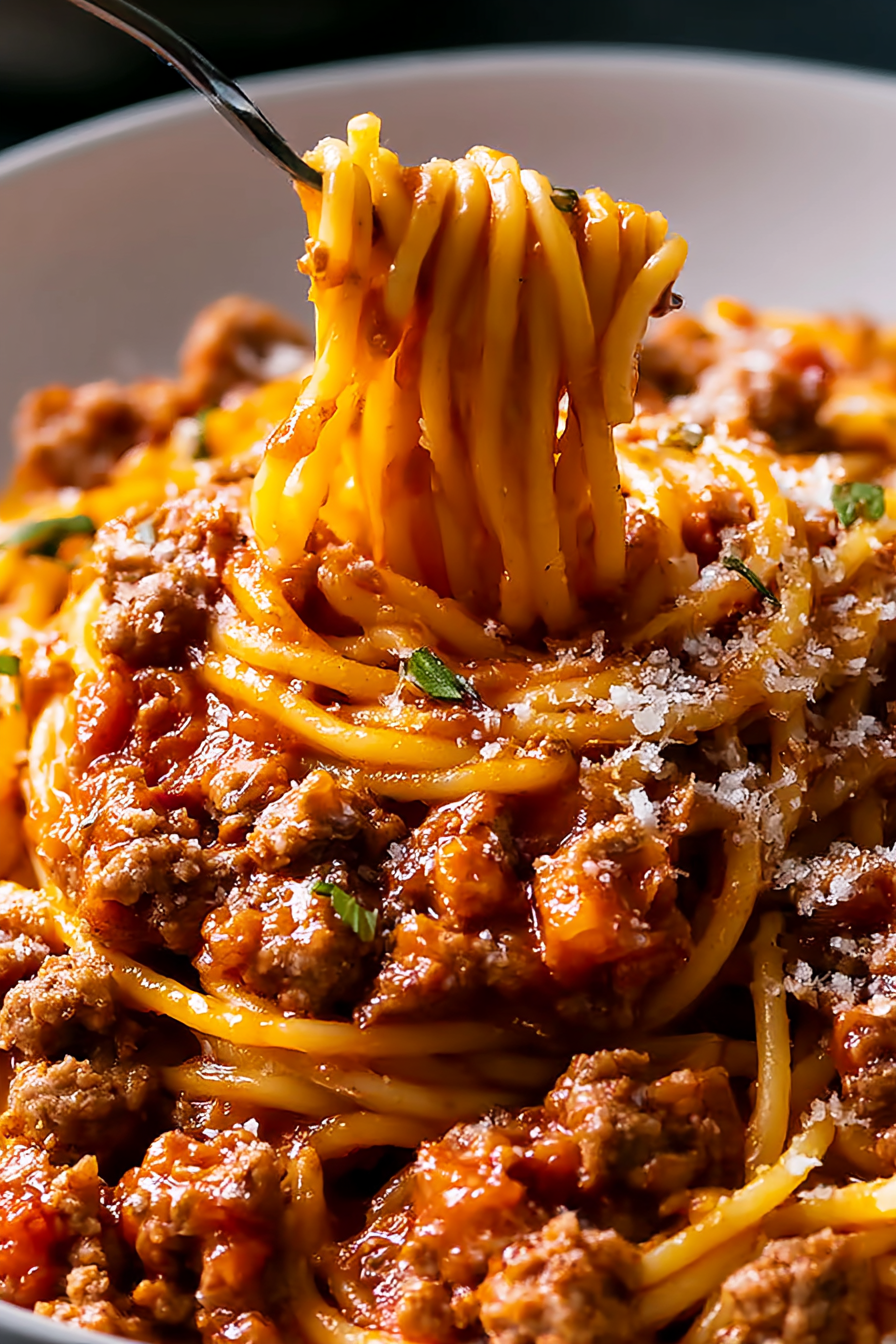
Mixing the freshly drained spaghetti directly into the sauce helps coat every strand instead of leaving the noodles plain underneath a spoonful of sauce. Reserved pasta water can also help the sauce cling smoothly to the spaghetti if it has become especially thick.
Keeping Leftovers Fresh
Transfer leftover spaghetti and meat sauce to an airtight container once it has cooled. Refrigerate it for up to 3 to 4 days. Because the pasta continues absorbing sauce while stored, the leftovers may be noticeably thicker the following day.
For reheating, warm individual portions in the microwave or place the spaghetti in a covered saucepan over low to medium-low heat. Add a small splash of water or beef broth if the sauce needs loosening, then stir periodically until everything is hot throughout.
The meat sauce itself is also suitable for freezing. For the best texture, freeze the sauce separately from the spaghetti in an airtight freezer-safe container for up to about 3 months. Thaw it overnight in the refrigerator and reheat gently on the stovetop, then cook a fresh batch of spaghetti for serving.
Freshly grated Parmesan and chopped parsley are best added after reheating rather than before storage. This keeps the garnish fresher and gives the reheated pasta the same finished touch as the original meal.
Italian Spaghetti with Meat Sauce
Ingredients
For the Beef and Tomato Sauce:
- 1 can 6 oz tomato paste
- 4 celery stalks cut into approximately 1/4-inch pieces
- 1 cup dry red wine preferably one suitable for drinking
- 2 bay leaves
- 1 lb ground beef 85% lean, browned and drained
- 1 teaspoon dried basil
- 1 can 15 oz beef broth
- 4 –6 whole cloves
- 2 tablespoons granulated sugar
- 1 yellow onion diced into roughly 1/4-inch pieces
- 1 teaspoon freshly ground black pepper
- 2 cans sliced mushrooms drained, or 8 oz fresh mushrooms, sliced
- 1 teaspoon dried oregano
- 4 fresh garlic cloves finely minced
- 1 can diced tomatoes preferably San Marzano
- 1/4 cup fresh parsley finely chopped into approximately 1/8-inch pieces
- 1 teaspoon kosher salt
- 1 can tomato sauce
For Serving:
- 1 lb dry spaghetti
- Freshly grated Parmesan cheese
- Fresh parsley for garnish
Instructions
- Dice the onion and celery into approximately 1/4-inch pieces. Finely mince the garlic and chop the fresh parsley.
- Meanwhile, place the ground beef in a large, heavy-bottomed pot over medium-high heat. Cook for approximately 5–7 minutes, breaking the meat into smaller pieces as it browns, until no pink remains.
- Carefully drain away the excess fat while keeping the browned beef in the pot.
- Add the chopped onion and celery to the browned beef. Cook over medium heat for 5–7 minutes, stirring from time to time, until the vegetables become tender and aromatic.
- Stir in the minced garlic and continue cooking for another 30 seconds to 1 minute, just until fragrant. Avoid allowing the garlic to burn.
- Pour the diced tomatoes, tomato sauce, tomato paste, drained mushrooms, dry red wine, and beef broth into the pot.
- Stir thoroughly until the ingredients are evenly combined and the tomato paste has completely blended into the liquid.
- Increase the heat to medium-high and bring the sauce mixture to a boil.
- Once boiling, add the whole cloves, bay leaves, sugar, dried basil, dried oregano, kosher salt, and black pepper.
- Stir well, reduce the heat to low, and partially cover the pot. Allow the sauce to simmer gently for 3 hours, stirring approximately every 30 minutes.
- Approximately 15–20 minutes before the sauce has finished simmering, bring a large pot of salted water to a rolling boil.
- Add the dry spaghetti and cook according to the package directions until al dente, leaving the pasta slightly firm when bitten.
- Before draining, reserve approximately 1 cup of the starchy pasta cooking water. Drain the spaghetti in a colander.
- Remove the finished sauce from the heat. Using a slotted spoon or small strainer, carefully remove and discard the bay leaves and whole cloves.
- Transfer the drained spaghetti directly into the sauce and stir until every strand is evenly coated.
- If the sauce is thicker than desired, incorporate a small amount of the reserved pasta water until the preferred consistency is reached.
- Divide the spaghetti and meat sauce among individual bowls or plates.
- Finish each serving generously with freshly grated Parmesan cheese and a light scattering of fresh parsley.
Notes
- Freshly grated Parmesan provides a smoother texture than pre-grated varieties, which may contain anti-caking ingredients.
- A dry red wine that is pleasant enough to drink contributes to the depth of the finished sauce.
- San Marzano tomatoes may be used for the diced tomatoes as specified in the original preparation.
- The bay leaves and whole cloves should be removed before serving so they do not remain in individual portions.