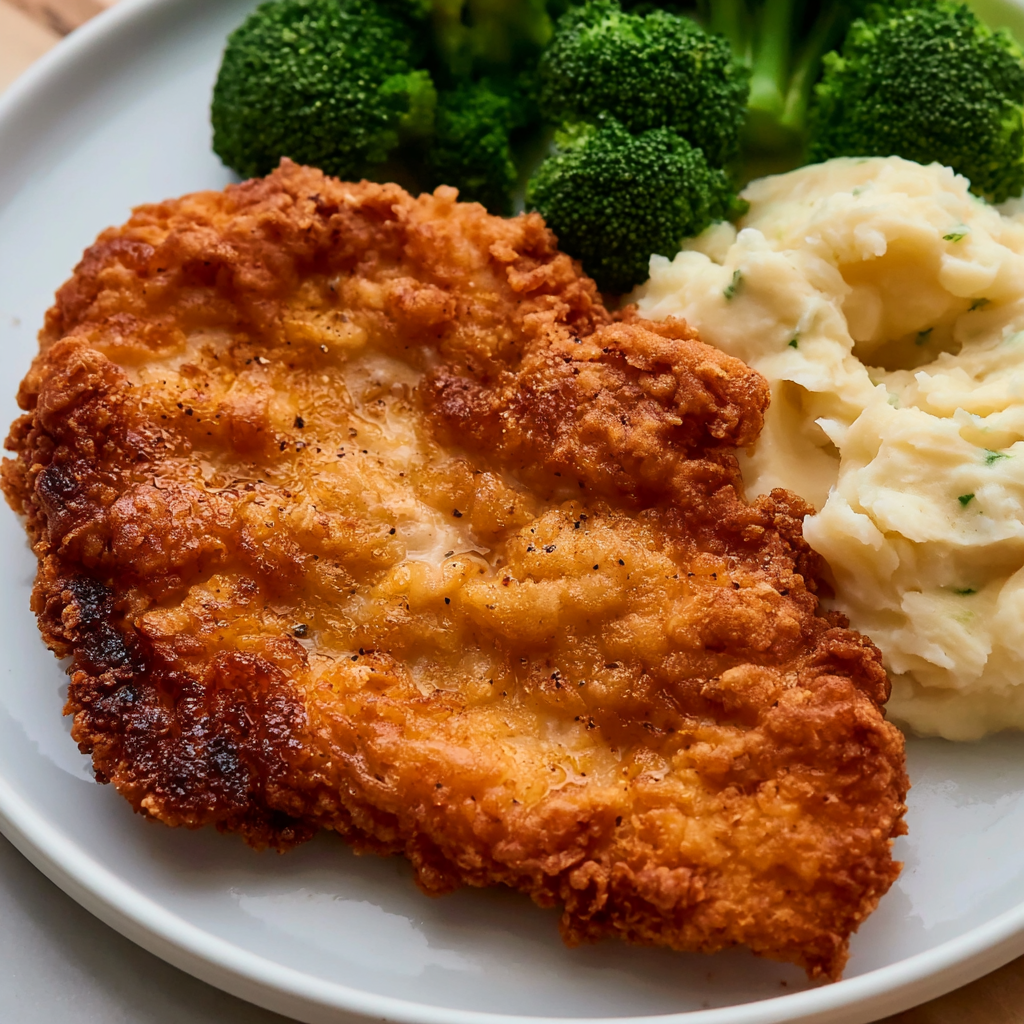
Fried Chicken Fillet
Tender chicken breast fillets are soaked in a cayenne-spiced buttermilk marinade, coated in a seasoned flour crust, and fried until deeply golden and crisp. The extended marinating period helps produce exceptionally moist, tender chicken beneath the crunchy exterior.
Pin it to remember it!
Print Recipe
Ingredients
For the Buttermilk Marinade
- 2 cups buttermilk any preferred brand
- ½ teaspoon cayenne pepper
- 3 boneless chicken breast halves approximately 6–8 ounces each
For the Seasoned Coating
- 2 cups self-rising flour
- ½ teaspoon paprika
- 1½ teaspoons coarsely ground black pepper preferably freshly ground
- ½ teaspoon garlic salt
- ¼ teaspoon fine salt
- ½ teaspoon seasoned salt
- ½ teaspoon ground black pepper
For the Egg Mixture
- 1 tablespoon Frank’s RedHot sauce
- 3 large eggs brought to room temperature
For Frying
- 2 cups corn oil or another neutral frying oil such as canola or vegetable oil
Instructions
- Slice each chicken breast horizontally through the center to create two thin, evenly sized fillets. This produces six pieces and encourages uniform cooking.
- Transfer the chicken to a bowl and pour in the buttermilk. Add the cayenne pepper and stir gently until the seasoning is evenly dispersed and every fillet is fully submerged.
- Cover the bowl and refrigerate the chicken for at least 24 hours. The buttermilk gradually tenderizes the meat while contributing a mild, pleasant tang.
- When ready to prepare the coating, combine the fine salt, ground black pepper, paprika, garlic salt, and seasoned salt in a small bowl. Stir until evenly blended, then set aside.
- Crack the eggs into a separate bowl. Add the Frank’s RedHot sauce and whisk thoroughly until the mixture is smooth and uniformly colored.
- In a third bowl or shallow dish, mix the self-rising flour with the coarsely ground black pepper.
- Remove the marinated chicken from the refrigerator. Lift out each fillet and allow the excess buttermilk to drain away.
- Season both sides of every chicken piece with the prepared spice blend, pressing the seasonings lightly against the surface so they remain in place.
- Working with one fillet at a time, immerse the seasoned chicken in the egg and hot sauce mixture until completely coated.
- Immediately transfer the fillet to the seasoned flour. Turn it several times and gently press the flour onto the chicken to create a thorough, well-adhered coating.
- Arrange the breaded chicken on a clean plate and leave it undisturbed for 5–10 minutes. This brief resting period helps the coating set before frying.
- Pour the corn oil into a large, heavy skillet or deep-sided pan. Heat the oil to 350°F, checking the temperature with a cooking thermometer for accuracy.
- Carefully lower the coated chicken into the hot oil. Fry in batches when necessary to prevent overcrowding, which can reduce the oil temperature and soften the crust.
- Cook each fillet for 7–10 minutes on the first side. Turn it once, then continue frying for another 7–10 minutes, or until the exterior is deeply golden and the thickest portion of the chicken registers 165°F.
- Using tongs or a slotted spoon, transfer the finished chicken to a wire rack positioned over a baking sheet. Paper towels may also be used, although a rack provides better airflow and helps preserve the crisp underside.
- Allow the fried chicken fillets to rest for 2–3 minutes before serving so the internal juices can redistribute.
Notes
Maintain the frying oil as close to 350°F as possible. Oil that is insufficiently heated may create a greasy coating, while excessively hot oil can brown the crust before the chicken is fully cooked.
For the most tender result, retain the full 24-hour marinating period.
A wire rack is preferable to paper towels because it allows air to circulate beneath the chicken, helping the coating remain crisp.