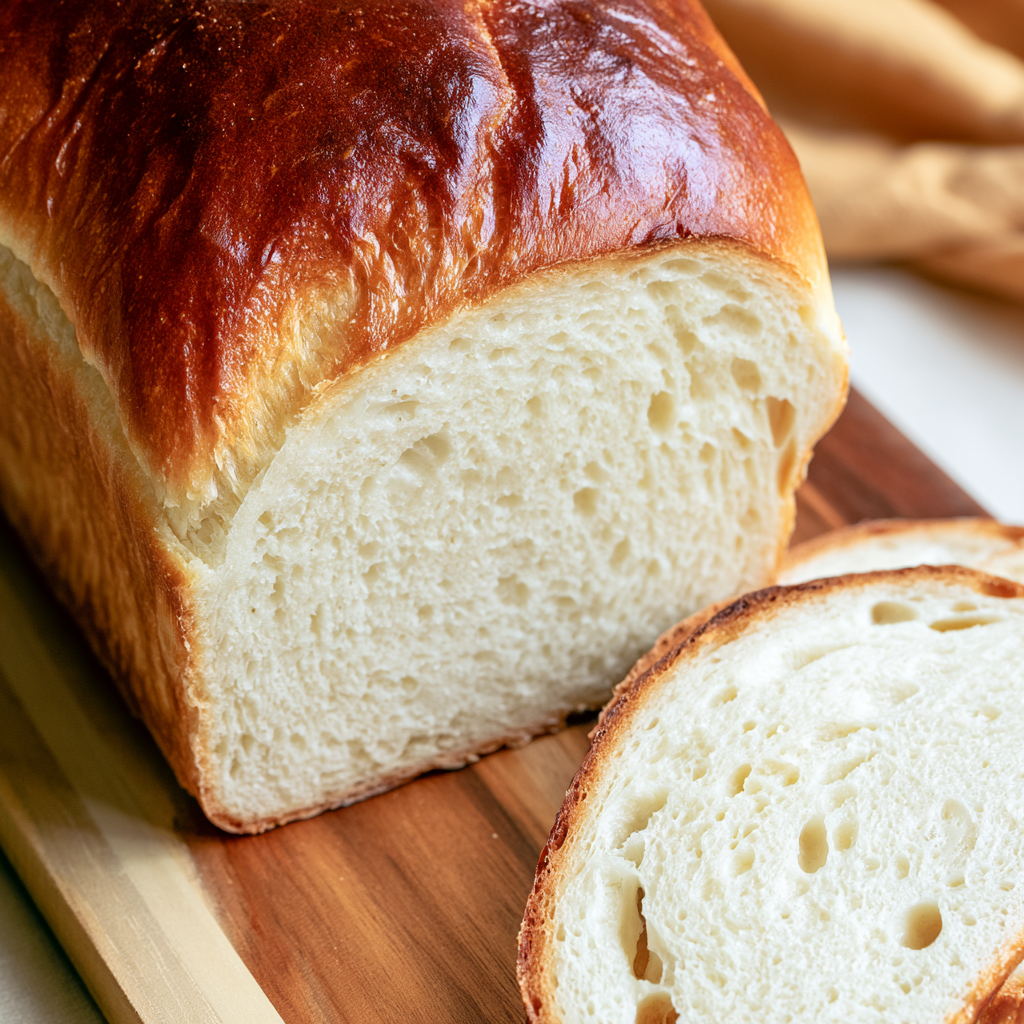
Cottage Cheese Sourdough Bread
This cottage cheese sourdough bread combines a naturally leavened dough with blended cottage cheese and egg whites, producing a protein-rich loaf with a tender interior and a beautifully browned crust. A series of kneading, stretching, folding, and slow proofing stages develops the dough before it is baked with steam for an improved finish.
Pin it to remember it!
Print Recipe
Ingredients
- 3/4 cup cottage cheese
- 2 1/4 cups bread flour
- 1 large egg for the egg wash
- 1 1/2 teaspoons salt
- 3/4 cup egg whites
- Hot water as needed to create steam during baking
- 3 tablespoons neutral-flavored oil such as canola or grapeseed oil
- 1/4 cup active bubbly sourdough starter
Instructions
- Blend the cottage cheese mixture. Place 185 grams of cottage cheese and 185 grams of egg whites in a small blender. Process until completely smooth and uniform.
- Combine the wet ingredients. Transfer the blended cottage cheese mixture to a mixing bowl. Add 150 grams of active sourdough starter and 30 grams of neutral oil, then mix thoroughly until evenly incorporated.
- Form the dough. Add 325 grams of bread flour and 10 grams of salt. Stir until the ingredients come together into a rough, shaggy dough. Cover the bowl and allow the dough to rest for 30 minutes.
- Begin kneading. After the first rest, knead the dough for 2–3 minutes using a pulling and slapping technique. Cover the bowl again and leave the dough undisturbed for another 30 minutes.
- Repeat the kneading stage. Knead for an additional 2–3 minutes in the same manner. Cover and rest for another 30 minutes.
- Complete the first stretch and fold. Lift and stretch the dough before folding it back over itself, working from each cardinal direction. Complete approximately 6–8 folds in total. Cover and rest for 30 minutes.
- Perform the second stretch and fold. Repeat the folding process, this time completing 4–6 folds. Cover the dough and allow it to rest for another 30 minutes.
- Add an optional third fold. If desired, perform one additional stretch-and-fold session using 4 folds. Cover and rest the dough for another 30 minutes.
- Shape the loaf. Lightly dust a work surface with flour and turn the dough onto it. Gently pat it into a rectangular shape.
- Form a log. Fold the left and right sides toward the center, then roll the dough into a log. Pinch the seams firmly closed.
- Transfer to the loaf pan. Place the shaped dough seam-side down in a greased 9 × 5-inch loaf pan. Lightly coat the surface with oil to help prevent the covering from sticking.
- Proof the dough. Cover the loaf and leave it to ferment until the dough fills the pan and reaches the rim or rises slightly above it. This stage generally requires approximately 8–12 hours.
- Prepare for baking. Preheat the oven to 350°F (175°C). At the same time, bring water to a boil in a kettle or saucepan.
- Apply the egg wash. Uncover the proofed loaf and brush its surface with an egg wash prepared from one whole egg or one egg yolk.
- Create steam and bake. Position an oven-safe pan beside the loaf and carefully pour the boiling water into it. Bake the bread for 45–50 minutes, or until the center of the loaf reaches an internal temperature of 190°F (88°C).
- Cool the loaf. Leave the baked bread in its pan for 5–10 minutes. Remove it from the pan and transfer it to a wire cooling rack.
- Allow the crumb to set. Cool for at least 30 minutes before slicing.
Notes
For the strongest rise, use sourdough starter that is active and visibly bubbly.
The third stretch-and-fold round is optional and may be omitted.
Proofing time can vary with room temperature and starter activity; use the height of the dough in the loaf pan as the primary indication that it is ready to bake.
Allowing the bread to cool before slicing helps the interior finish setting and prevents the crumb from becoming compressed.