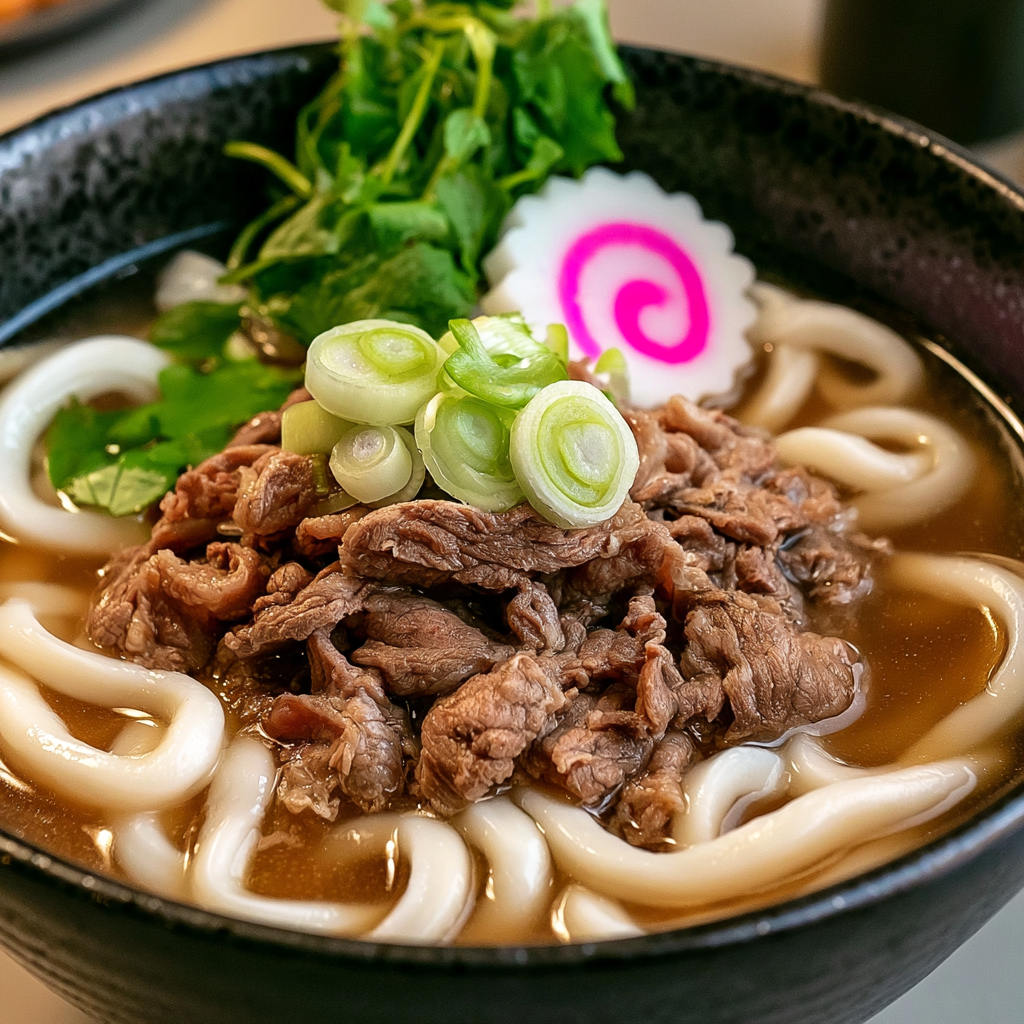
Beef Udon Noodles
A warming Japanese noodle dish featuring thick udon strands in a savory broth, topped with tender soy-glazed beef, lightly caramelized negi, and optional traditional garnishes.
Pin it to remember it!
Print Recipe
Ingredients
Broth — Method 1
- 2½ cups Japanese dashi soup stock
- 1 teaspoon granulated sugar
- 1½ tablespoons soy sauce
- ⅛ teaspoon Diamond Crystal kosher salt
- 1 tablespoon mirin
Broth — Method 2
- 1 tablespoon mirin
- 2⅓ cups water
- ⅓ cup concentrated mentsuyu noodle soup base
Beef and Vegetables
- 6 –8 ounces thinly sliced beef such as ribeye, cut into bite-sized strips
- 1 tablespoon soy sauce
- ½ Tokyo negi white section only, or 2 green onions, sliced diagonally into 1-inch pieces
- 1 tablespoon neutral cooking oil such as canola or grapeseed oil
- 2 teaspoons granulated sugar
Noodles and Garnishes
- 4 pieces narutomaki fish cake sliced diagonally, optional
- 2 portions fresh or frozen udon noodles
- Shichimi togarashi optional, for serving
- 1 green onion thinly sliced
- 4 sprigs mitsuba thinly sliced, optional
Instructions
- For the traditional broth, pour the dashi into a medium saucepan and bring it to a boil over medium heat. Reduce the heat and allow it to simmer gently for 2–3 minutes.
- Add the soy sauce, mirin, sugar, and kosher salt to the dashi. Stir until the seasonings are fully incorporated. Cover the saucepan, switch off the heat, and keep the broth warm.
- To prepare the quicker broth variation, combine the concentrated mentsuyu, water, and mirin in a saucepan. Bring the mixture to a gentle simmer over medium heat, then cover the pan and remove it from the heat.
- While the broth is heating, cut the white portion of the Tokyo negi, or the green onions, diagonally into 1-inch sections.
- Thinly slice the mitsuba and the additional green onion intended for garnish. If using narutomaki, cut each piece diagonally.
- Slice the beef into manageable strips approximately 1½–2 inches wide. Arrange all prepared toppings nearby for convenient assembly.
- Warm the neutral oil in a frying pan over medium heat. Add the sliced negi and sauté until softened and lightly browned.
- Place the beef in the pan and cook until no pink remains.
- Sprinkle the sugar over the beef, then add the soy sauce. Continue stir-frying until the meat and negi are evenly coated with a glossy seasoning. Remove the pan from the heat.
- Meanwhile, bring a large pot of water to a rolling boil. Cook the udon according to the package directions. Frozen udon generally requires about 1 minute to heat through.
- Drain the noodles thoroughly and divide them evenly between two serving bowls.
- Ladle the hot broth over the udon. Top each bowl with the cooked beef and negi, followed by the narutomaki, mitsuba, and sliced green onion.
- Finish with shichimi togarashi for a mild spicy accent, if desired, and serve immediately.
Notes
Browning the negi thoroughly enhances its natural sweetness and complements the savory beef.
An additional scattering of fresh green onion may be added just before serving for extra color and freshness.
Diamond Crystal kosher salt is recommended because salt density varies among brands. Adjust the amount carefully when using another type of salt.