
Beef Udon Noodles make a warming, satisfying meal with springy noodles, delicate Japanese broth, and tender soy-glazed beef. It comes together in about 35 minutes and offers two practical broth methods for busy weeknight cooking.
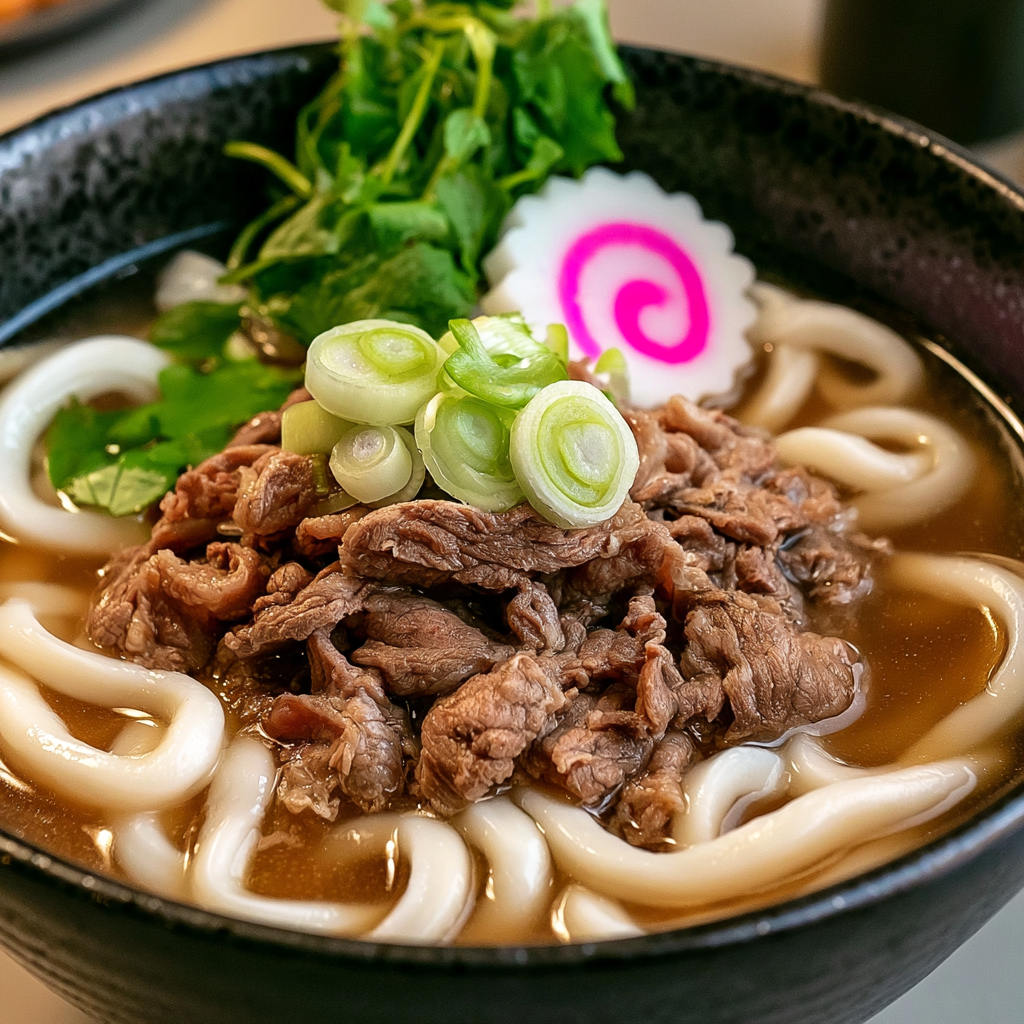
This is the kind of comforting noodle bowl you can turn to when you want something hearty without preparing a complicated dinner. Thick udon strands soak up the savory broth, while the beef and lightly browned negi add richness to every bite.
The dish works because each component brings a different texture and flavor. The broth is clean and deeply savory, the noodles remain soft and pleasantly chewy, and the sugar-soy glaze gives the beef a glossy finish without making it overly sweet.
You can prepare the traditional version with dashi or use concentrated mentsuyu for a faster shortcut. Both approaches create a balanced bowl that is simple enough for a weekday meal but polished enough to serve when you want something especially cozy.
Beef Udon Noodles Ingredients
Udon noodles: Use two portions of fresh or frozen udon. Frozen noodles are especially convenient because they usually need only a minute or two in boiling water before they are ready to serve.
Thinly sliced beef: Ribeye or another tender, thinly sliced cut works well. Six to eight ounces is enough for two generous bowls when cut into manageable strips.
Japanese dashi: Traditional dashi forms the light, savory foundation of the first broth option. You will need about 2½ cups.
Mentsuyu noodle soup base: Concentrated mentsuyu provides a convenient alternative to homemade or prepared dashi. Dilute it with water and a little mirin according to the recipe proportions.
Soy sauce: Soy sauce seasons both the broth and the beef. Adding it in stages keeps the flavors distinct rather than making the entire bowl taste uniformly salty.
Mirin: This sweet Japanese cooking wine softens the sharper edges of the soy sauce and adds subtle depth to the broth.
Granulated sugar: A small amount balances the broth, while a slightly larger addition helps the beef develop its glossy, lightly caramelized coating.
Tokyo negi or green onions: The white portion is sautéed with the beef until tender and lightly browned. Additional sliced green onion can be reserved for a fresh garnish.
Neutral cooking oil: Canola, grapeseed, or vegetable oil allows the negi and beef to brown without introducing a strong competing flavor.
Kosher salt: Only a small amount is needed for the traditional broth. Because different salts vary in density, begin conservatively and adjust after tasting.
Optional garnishes: Narutomaki fish cake, mitsuba, and shichimi togarashi give the finished bowls a more traditional appearance and extra layers of flavor.

Cooking Steps
STEP 1: Choose your preferred broth method. For the traditional version, place 2½ cups of dashi in a medium saucepan and bring it to a gentle boil. Lower the heat and let it simmer for 2 to 3 minutes so the stock is fully heated without reducing too much.
STEP 2: Season the dashi with soy sauce, mirin, sugar, and a small pinch of kosher salt. Stir until the sugar dissolves, then cover the pan and keep the broth warm over very low heat. Taste carefully before adding more salt because the soy sauce already contributes plenty of seasoning.
STEP 3: For the quicker broth option, combine approximately 2⅓ cups of water with ⅓ cup concentrated mentsuyu and 1 tablespoon mirin. Bring it to a gentle simmer, cover the saucepan, and remove it from the heat until you are ready to assemble the bowls.
STEP 4: Prepare the toppings while the broth warms. Cut the white portion of the Tokyo negi or green onions diagonally into short sections. Slice the beef into strips, then prepare the mitsuba, extra green onion, and narutomaki if you are including them.
STEP 5: Heat a tablespoon of neutral oil in a frying pan over medium heat. Add the larger pieces of negi and cook until they soften and begin to brown around the edges. Allowing the negi to caramelize slightly brings out its sweetness and gives the finished noodle soup more depth.
STEP 6: Add the thinly sliced beef to the pan and cook just until the pink color disappears. Sprinkle in the sugar, pour in the soy sauce, and continue tossing until the beef and negi are evenly coated in a shiny glaze. Remove the pan from the heat promptly so the beef stays tender.
STEP 7: Bring a separate pot of water to a rolling boil and prepare the udon according to the package instructions. Frozen udon usually needs only about a minute to loosen and heat through. Drain the noodles thoroughly and divide them between two deep serving bowls.
STEP 8: Ladle the hot broth over the noodles, then arrange the glazed beef and browned negi on top. Finish with sliced green onion, mitsuba, narutomaki, and a light shake of shichimi togarashi. Serve immediately while the broth is steaming and the udon is at its springiest.
How to Store & Reheat
Beef udon is at its best immediately after assembly because udon noodles continue absorbing broth as they sit. For better leftovers, store the broth, cooked beef, and noodles in separate airtight containers whenever possible.
The broth and beef can be refrigerated for up to 3 days. Cooked udon is best used within 1 to 2 days because its texture gradually becomes softer. Allow every component to cool before sealing the containers, but do not leave them at room temperature for an extended period.
To reheat, warm the broth in a saucepan until it reaches a steady simmer. Add the beef during the final minute, just long enough to heat it without overcooking it. Loosen the noodles separately in hot water, drain them, and assemble the bowls as you would when freshly prepared.
Freezing the assembled soup is not recommended because the udon may become overly soft after thawing. The broth and cooked beef can be frozen separately for up to 2 months, although freshly cooked beef will have the most tender texture.
Can I use frozen udon noodles?
Yes. Frozen udon is an excellent choice because it generally has a thick, pleasantly chewy texture and requires very little preparation. Add it directly to boiling water and cook only until the strands separate and become hot, usually about one minute.
Avoid boiling frozen udon longer than necessary. Overcooking can make the noodles too soft before they are added to the hot broth.
Helpful Tips
- Brown the negi before adding the beef. Those caramelized edges provide sweetness that complements the salty soy glaze and savory broth.
- Keep the broth below a vigorous boil after seasoning it. Gentle heat preserves its clean flavor and helps prevent too much liquid from evaporating.
- Prepare every garnish before cooking the noodles. Udon is best served immediately, so having the toppings ready prevents the noodles from sitting and softening.
What cut of beef works well for udon?
Thinly sliced ribeye is a reliable option because its marbling keeps it tender during quick cooking. Sirloin, strip steak, or thinly sliced beef labeled for hot pot can also work.
Whichever cut you choose, slice it thinly across the grain. Partially chilling the beef first can make clean, even slicing easier.

Serving Ideas for Beef Udon Noodles
A bowl of beef udon is substantial enough to serve on its own, but a simple side can make the meal feel more complete.
Japanese cucumber salad: A crisp, lightly seasoned cucumber salad brings acidity and freshness that balance the warm broth and glazed beef.
Steamed or sautéed greens: Bok choy, spinach, or tender cabbage adds color and a mild vegetable component without overpowering the noodle soup.
Vegetable tempura: A small serving of crisp tempura provides contrast against the soft udon and delicate broth. Serve it beside the soup rather than placing it in the broth so it remains crisp.
Can I make the broth in advance?
Yes. Either broth option can be prepared up to 3 days ahead and stored in a covered container in the refrigerator. Reheat it gently while you cook the beef and udon.
Taste the broth again after reheating. If it has reduced or tastes stronger than expected, stir in a small amount of water before serving.
Is mentsuyu the same as dashi?
Not exactly. Dashi is a Japanese soup stock that acts as a flavor foundation, while mentsuyu is a concentrated noodle-seasoning base that typically already contains dashi, soy sauce, mirin, and other seasonings.
Using mentsuyu saves time because several broth ingredients are combined in one product. Since concentration levels vary, check the package directions and adjust the water if needed.
How can I control the spice level?
The broth and soy-glazed beef are generally mild. Most of the heat comes from the optional shichimi togarashi added at the table.
For a completely mild bowl, leave it out. For gentle warmth, add a small pinch after assembling the soup. Serving the spice separately allows everyone to season their own bowl.
Beef Udon Noodles
Ingredients
Broth — Method 1
- 2½ cups Japanese dashi soup stock
- 1 teaspoon granulated sugar
- 1½ tablespoons soy sauce
- ⅛ teaspoon Diamond Crystal kosher salt
- 1 tablespoon mirin
Broth — Method 2
- 1 tablespoon mirin
- 2⅓ cups water
- ⅓ cup concentrated mentsuyu noodle soup base
Beef and Vegetables
- 6 –8 ounces thinly sliced beef such as ribeye, cut into bite-sized strips
- 1 tablespoon soy sauce
- ½ Tokyo negi white section only, or 2 green onions, sliced diagonally into 1-inch pieces
- 1 tablespoon neutral cooking oil such as canola or grapeseed oil
- 2 teaspoons granulated sugar
Noodles and Garnishes
- 4 pieces narutomaki fish cake sliced diagonally, optional
- 2 portions fresh or frozen udon noodles
- Shichimi togarashi optional, for serving
- 1 green onion thinly sliced
- 4 sprigs mitsuba thinly sliced, optional
Instructions
- For the traditional broth, pour the dashi into a medium saucepan and bring it to a boil over medium heat. Reduce the heat and allow it to simmer gently for 2–3 minutes.
- Add the soy sauce, mirin, sugar, and kosher salt to the dashi. Stir until the seasonings are fully incorporated. Cover the saucepan, switch off the heat, and keep the broth warm.
- To prepare the quicker broth variation, combine the concentrated mentsuyu, water, and mirin in a saucepan. Bring the mixture to a gentle simmer over medium heat, then cover the pan and remove it from the heat.
- While the broth is heating, cut the white portion of the Tokyo negi, or the green onions, diagonally into 1-inch sections.
- Thinly slice the mitsuba and the additional green onion intended for garnish. If using narutomaki, cut each piece diagonally.
- Slice the beef into manageable strips approximately 1½–2 inches wide. Arrange all prepared toppings nearby for convenient assembly.
- Warm the neutral oil in a frying pan over medium heat. Add the sliced negi and sauté until softened and lightly browned.
- Place the beef in the pan and cook until no pink remains.
- Sprinkle the sugar over the beef, then add the soy sauce. Continue stir-frying until the meat and negi are evenly coated with a glossy seasoning. Remove the pan from the heat.
- Meanwhile, bring a large pot of water to a rolling boil. Cook the udon according to the package directions. Frozen udon generally requires about 1 minute to heat through.
- Drain the noodles thoroughly and divide them evenly between two serving bowls.
- Ladle the hot broth over the udon. Top each bowl with the cooked beef and negi, followed by the narutomaki, mitsuba, and sliced green onion.
- Finish with shichimi togarashi for a mild spicy accent, if desired, and serve immediately.