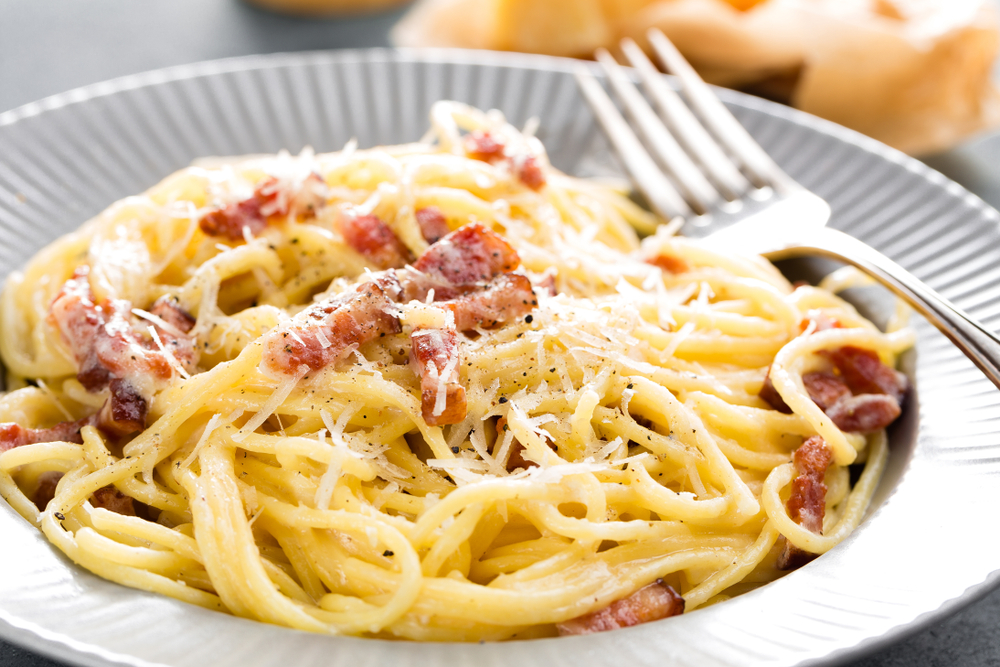
Authentic Carbonara with Guanciale
A truly classic Roman pasta dish, this authentic Carbonara offers a luxurious texture and rich depth of flavor without a trace of cream. Prepared in under 30 minutes, this method relies on quality ingredients—room temperature eggs, sharp cheese, and fatty guanciale—to deliver a velvety, cohesive sauce that clings perfectly to the pasta. A refined dish ideal for weeknights or when craving genuine Italian comfort.
Pin it to remember it!
Print Recipe
Servings: 6
Ingredients
- 4 large eggs brought to room temperature before use
- 1 pound of dried pasta of your choosing spaghetti, rigatoni, or similar
- 16 ounces guanciale cut into small rectangular pieces roughly 1/4 inch thick and 1/3 inch wide
- 2 cups finely shredded Pecorino Romano Parmigiano-Reggiano, or a combination of both cheeses
- Freshly crushed black pepper to taste
- Kosher salt for seasoning the pasta water
- Reserved pasta cooking liquid about 1/2 cup
Instructions
- Bring a large stockpot of water to a vigorous boil. Add salt generously—approximately 2 tablespoons per 500 grams of pasta—so the water resembles the salinity of seawater.
- In a mixing bowl, whisk the eggs thoroughly until completely smooth. Fold in the grated cheese and a liberal dose of freshly ground black pepper to form a thick, paste-like consistency. Set aside.
- Place the diced guanciale into a cold skillet without adding oil. Turn the heat to medium and allow the fat to render slowly. Cook for 5 to 7 minutes until the edges are crisp and golden but not overly crunchy. Remove from heat. With a slotted spoon, transfer the guanciale to a plate and retain around 2 tablespoons of the rendered fat in the skillet.
- Add your pasta to the boiling water and cook until it reaches a firm, al dente texture, following the time on the package. Before draining, reserve half a cup of the starchy cooking water.
- Immediately transfer the drained pasta to the skillet containing the warm guanciale fat. Toss well to coat the strands evenly. Remove the skillet from any heat source entirely to prevent the eggs from cooking too quickly.
- Gradually add the egg-cheese mixture to the pasta, mixing rapidly with tongs or stirring briskly to form a smooth, glossy sauce. Add a small amount of the reserved pasta water as needed to achieve a creamy consistency that coats the pasta evenly.
- Stir the cooked guanciale into the pasta, setting aside a few crisp pieces for final garnishing. Serve straightaway, topping each plate with an extra sprinkle of cheese and a final grind of black pepper.
Notes
- For best results, choose guanciale over pancetta or bacon—its high fat content and rich flavor are essential for authentic Roman flavor.
- Allow eggs to reach room temperature to prevent curdling and ensure a smooth emulsion when combined with hot pasta.
- Always remove the pan from heat before integrating the egg mixture; residual warmth is sufficient to create a velvety sauce.
- Vigorously tossing the pasta during mixing is crucial for proper emulsification and a glossy finish.
- Don’t skip the reserved pasta water—it’s key to adjusting sauce thickness without compromising flavor.
- Use freshly cracked black pepper generously, as it plays a central role in the flavor profile.
- Carbonara should be served immediately for the best texture and taste—once ready, plate and enjoy without delay.