
This lemon meringue pie cheesecake layers creamy lemon filling, buttery graham cracker crust, homemade lemon curd, and glossy toasted meringue into one impressive make-ahead dessert with bright citrus flavor.
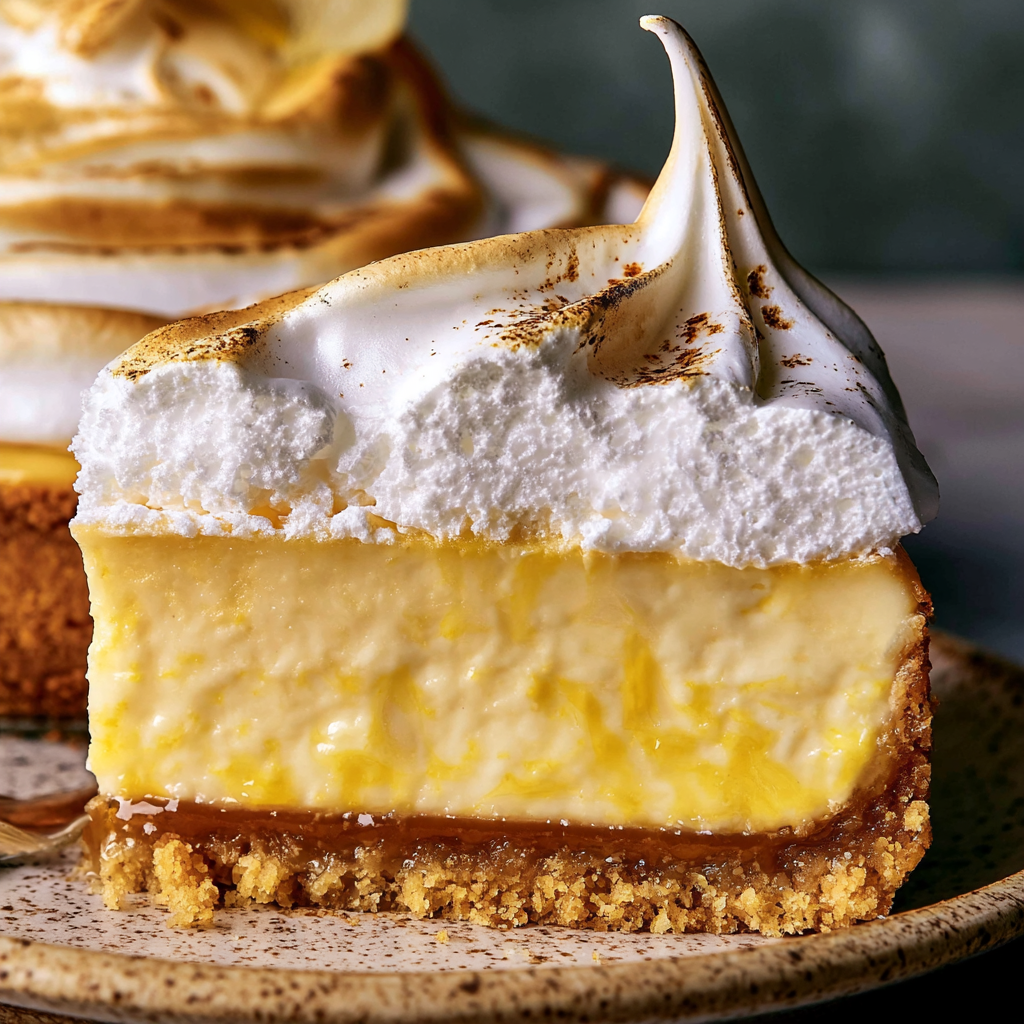
When you want a centerpiece dessert that feels familiar but still looks special, this cheesecake delivers. It combines the tangy filling and fluffy topping of classic lemon meringue pie with the rich, smooth texture of a baked cheesecake.
The marbled lemon curd brings citrus flavor throughout the filling instead of limiting it to the surface. A thin layer beneath the meringue adds another fresh, tart contrast to the sweet vanilla topping.
Although the dessert requires several stages, each one can be completed without rushing. The lemon curd can be prepared days ahead, and the cheesecake benefits from an overnight chill, making it a practical choice for holidays, birthdays, and dinner parties.
Lemon Meringue Pie Cheesecake Ingredients
Fresh lemons: Both the juice and finely grated zest give the curd and cheesecake their bright, natural citrus flavor.
Granulated sugar: Sweetens the lemon curd, cheesecake filling, and meringue while helping balance the acidity of the lemons.
Large eggs: Whole eggs thicken the curd and provide structure for the cheesecake filling.
Salted butter: Creates a smooth, rich lemon curd and binds the graham cracker crumbs together.
Vanilla extract or vanilla bean paste: Softens the sharpness of the lemon and adds a fragrant finish to the curd, filling, and meringue.
Graham cracker crumbs: Form the buttery, lightly crisp base that supports the creamy layers.
Full-fat cream cheese: Provides the dense but silky foundation of the cheesecake filling. It should be completely softened before mixing.
Full-fat sour cream: Loosens the cream cheese mixture and contributes a smoother, more delicate consistency.
Egg whites: Whip into the light meringue topping after being gently heated with sugar.
Cream of tartar: Stabilizes the egg whites so the finished meringue holds its decorative peaks.
Fine salt: Balances the sweetness and strengthens the vanilla and lemon flavors.

How to Make This Lemon Meringue Pie Cheesecake
STEP 1: Begin with the lemon curd so it has enough time to chill. Rub the lemon zest into the sugar in a non-metal saucepan until the sugar feels slightly moist and smells strongly of citrus. Whisk in the beaten eggs, lemon juice, and salt. Cook over low heat while whisking continuously until the mixture reaches about 175°F and coats the back of a spoon. Strain the curd, then whisk in the butter and vanilla. Cover its surface and refrigerate for at least 3 hours.
STEP 2: Heat the oven to 350°F and coat a 9-inch springform pan with nonstick cooking spray. Stir the graham cracker crumbs and melted butter together until the crumbs are uniformly moistened. Press the mixture firmly across the base and slightly up the sides of the pan. Bake for 10 minutes, then leave the crust to cool before wrapping the outside of the pan with foil.
STEP 3: Make the cheesecake filling with room-temperature ingredients. Rub the lemon zest into the sugar, then beat the softened cream cheese until smooth. Add the lemon sugar and mix until evenly incorporated, scraping the bowl as needed. Beat in the eggs one at a time, using only enough mixing to combine each addition. Finish with the sour cream, vanilla, and lemon juice.
STEP 4: Transfer about 2½ cups of the plain cheesecake filling to a separate bowl. Fold 1 cup of cold lemon curd into this portion. Spoon alternating amounts of the plain and lemon-curd batters over the cooled crust. Pass a butter knife gently through the filling to form visible swirls without blending the two mixtures completely.
STEP 5: Place the springform pan inside a slightly larger cake pan, then set both inside a roasting pan. Carefully pour boiling water into the roasting pan so it surrounds the protective cake pan. Bake for 1 hour 40 minutes to 2 hours 12 minutes. The outer area should be set, but the center should still move slightly when the pan is nudged.
STEP 6: Turn off the oven and leave the cheesecake inside with the door partially open for 1 hour. This gradual cooling period helps protect the surface from sudden temperature changes. Remove the cheesecake from the water bath, cool it fully on a wire rack, cover the pan, and refrigerate overnight.
STEP 7: Release the cold cheesecake from the springform pan and move it to a serving plate. Spread a thin layer of chilled lemon curd over the top. Heat the egg whites, sugar, cream of tartar, and salt over gently simmering water while whisking until the mixture reaches 175°F and no sugar granules remain. Beat with the vanilla for 4–5 minutes, or until the meringue is glossy and forms stiff peaks. Spoon it over the cheesecake, shape the surface, and carefully toast it with a kitchen torch.
Why does cheesecake need a water bath?
A water bath surrounds the cheesecake with gentle, humid heat. This allows the filling to bake more evenly and reduces the risk of a dry edge, sunken center, or cracked surface. Placing the springform pan inside a larger cake pan also gives it extra protection from water seepage.
Perfect Pairings
Serve each chilled slice with a few fresh raspberries, blueberries, or sliced strawberries. Their natural tartness complements the lemon without competing with the meringue.
A cup of lightly sweetened tea is another good match. Black tea, Earl Grey, or chamomile can balance the richness of the cream cheese filling.
For a simple dessert table, pair the cheesecake with fresh fruit and a bowl of softly whipped cream. Keep the additional desserts light because the cheesecake is already rich and satisfying.
Helpful Tips
- Bring the cream cheese, sour cream, and eggs to room temperature before mixing. Cold ingredients are more difficult to blend and may leave small lumps in the filling.
- Avoid beating the batter excessively after adding the eggs. Too much incorporated air can make the cheesecake rise rapidly and then sink while cooling.
- Chill the cheesecake overnight before adding the final curd and meringue layers. A fully chilled center is easier to decorate and produces much cleaner slices.
Can I prepare the lemon curd in advance?
Yes. The lemon curd can be refrigerated in an airtight container for up to 4 days. Pressing plastic wrap directly against its surface prevents a skin from developing. Stir the chilled curd gently before folding it into the cheesecake batter or spreading it over the top.
How do I know when the cheesecake is finished baking?
The outer few inches should look set and slightly puffed, while the center should still have a controlled wobble. It should move as one section rather than appearing liquid. The center will continue to firm as the cheesecake rests in the warm oven and chills overnight.

Can I make the entire cheesecake ahead of time?
The baked cheesecake can remain covered in its springform pan in the refrigerator for up to 2 days before decorating. For the freshest appearance, prepare and toast the meringue closer to serving. This keeps the topping glossy, defined, and less likely to release moisture.
Why is my meringue not forming stiff peaks?
Grease, traces of egg yolk, or undissolved sugar can prevent the whites from whipping correctly. Clean the bowl and whisk with vinegar before beginning, separate the eggs carefully, and heat the mixture until the sugar is completely dissolved. Beat it immediately while it is still warm.
Keeping Leftovers Fresh
Store leftover cheesecake in a covered container in the refrigerator for 3–4 days. Because meringue can absorb moisture and soften, avoid pressing plastic wrap directly against the topping. A tall cake container or loosely fitted cover will protect the decorative surface.
Serve the cheesecake cold or allow an individual slice to stand at room temperature for about 10 minutes before eating. It should not be reheated because heat will soften the filling and cause the meringue to lose its structure.
For freezing, the plain baked cheesecake can be frozen before the lemon-curd surface layer and meringue are added. Chill it completely, wrap it securely, and freeze it for up to 1 month. Thaw it overnight in the refrigerator, then decorate it with fresh curd and meringue before serving.
Freezing the fully assembled dessert is not recommended. The lemon curd may release moisture after thawing, and the meringue can become soft or uneven. Preparing those final layers after thawing gives the cheesecake a much cleaner finish.
Lemon Meringue Pie Cheesecake
Ingredients
For the lemon curd
- 6 tablespoons salted butter divided into small cubes
- 4 large eggs brought to room temperature
- Finely grated zest of 2 large lemons
- ¾ cup plus 1 tablespoon freshly squeezed lemon juice preferably from 4–5 lemons
- ½ teaspoon vanilla extract
- ¾ cup plus 2 tablespoons granulated sugar
- Small pinch of salt
For the graham cracker crust
- ½ cup plus 2 tablespoons salted butter melted and allowed to cool slightly
- 3 cups finely ground graham cracker crumbs
For the lemon cheesecake filling
- 32 ounces full-fat cream cheese softened to room temperature
- ⅓ cup plus 1 tablespoon lemon juice
- 2 teaspoons vanilla extract
- Finely grated zest of 2 large lemons
- 4 large eggs at room temperature
- ¾ cup full-fat sour cream at room temperature
- 1½ cups granulated sugar
For assembly
- 1 cup prepared and chilled lemon curd
For the meringue topping
- 4 large egg whites at room temperature, approximately 70°F
- ½ teaspoon cream of tartar
- 2 teaspoons vanilla bean paste or vanilla extract
- ⅛ teaspoon salt
- 1 cup granulated sugar
Instructions
- Place the finely grated lemon zest and granulated sugar in a non-metal saucepan. Rub the zest into the sugar with your fingertips until the mixture becomes fragrant and the citrus oils have been released.
- Beat the eggs in a separate small bowl, then set them aside. Position a fine-mesh strainer over a clean medium bowl.
- Add the lemon juice, beaten eggs, and salt to the zest-infused sugar. Whisk until the ingredients are thoroughly blended.
- Set the saucepan over low heat and cook for approximately 10–14 minutes, whisking continuously. Continue until the curd reaches 175°F and is thick enough to leave a coating on the back of a spoon.
- Remove the saucepan from the heat. Pour the curd through the prepared strainer to eliminate any cooked egg particles or lumps.
- Immediately add the vanilla extract and cubed salted butter. Whisk until the butter has melted completely and the curd is smooth.
- Press plastic wrap directly against the surface to prevent a skin from forming. Refrigerate for at least 3 hours before using. The curd may be prepared up to 4 days in advance.
- Preheat the oven to 350°F. Coat a 9-inch springform pan with nonstick cooking spray and confirm that the removable base is securely locked in place.
- Combine the graham cracker crumbs with the melted salted butter. Stir until the crumbs are evenly moistened and resemble damp sand.
- Transfer the mixture to the prepared pan. Compress it firmly across the base and extend it slightly up the sides.
- Bake for 10 minutes. Remove the crust from the oven and allow it to cool.
- After the pan has cooled, wrap the exterior base with foil in preparation for the water bath.
- Ensure that the cream cheese, eggs, and sour cream have reached room temperature before mixing.
- Combine the lemon zest and granulated sugar in a small bowl. Massage the zest into the sugar until the mixture becomes aromatic and slightly sandy in texture.
- Beat the softened cream cheese in a large mixing bowl for 1–2 minutes, or until creamy and uniform.
- Add the lemon-sugar mixture and continue beating for another 1–2 minutes. Stop periodically to scrape the bottom and sides of the bowl.
- Incorporate the eggs one at a time at medium speed. Scrape the bowl after each addition and avoid excessive mixing.
- Add the vanilla extract, sour cream, and lemon juice. Mix only until the filling is evenly combined.
- Transfer 2½ cups of the plain cheesecake batter to a medium bowl. Gently fold 1 cup of chilled lemon curd into this portion.
- Alternate spoonfuls of the plain batter and lemon-curd batter over the baked crust. Draw a butter knife through the two mixtures to create a marbled pattern without fully blending them.
- Bring a large pot of water to a boil.
- Place the filled springform pan inside a 10-inch cake pan. Position both pans inside a large roasting pan.
- Set the roasting pan on the oven rack. Carefully pour boiling water into the roasting pan so that it surrounds the outer cake pan without entering it.
- Bake at 350°F for 1 hour 40 minutes to 2 hours 12 minutes. The outer portion should appear set, while the center should retain a gentle wobble.
- Turn off the oven and leave the cheesecake inside. Prop the oven door slightly open and allow the cheesecake to cool gradually for 1 hour.
- Carefully remove the pans from the oven. Lift out the springform pan and discard any exterior foil.
- Set the cheesecake on a wire rack and allow it to cool completely at room temperature.
- Cover the cooled pan with foil and refrigerate overnight. The chilled cheesecake may be stored in the pan for up to 2 days before adding the topping.
- Before preparing the meringue, wipe the mixing bowl and utensils with vinegar to remove any traces of grease.
- Release the chilled cheesecake from the springform pan and transfer it to a serving plate. Spread a thin layer of lemon curd evenly across the surface.
- Combine the egg whites, granulated sugar, cream of tartar, and salt in a clean glass or metal bowl.
- Set the bowl over a saucepan containing approximately 1 inch of gently simmering water. Make certain that the base of the bowl does not touch the water.
- Whisk continuously for approximately 8 minutes, or until the mixture registers 175°F. The sugar should be fully dissolved and the egg whites gently heated.
- Remove the bowl from the saucepan and add the vanilla bean paste or vanilla extract.
- Beat the mixture on high speed for 4–5 minutes, until the meringue is glossy and forms stiff peaks.
- Immediately spoon the meringue over the cheesecake. Shape decorative peaks and swirls with the back of a spoon.
- Carefully toast the surface with a kitchen torch, following the torch manufacturer’s safety instructions.
- Slice and serve the cheesecake promptly after the meringue has been toasted. For the neatest portions, cut the dessert while it is thoroughly chilled.
- Transfer leftovers to an airtight container and refrigerate for 3–4 days.