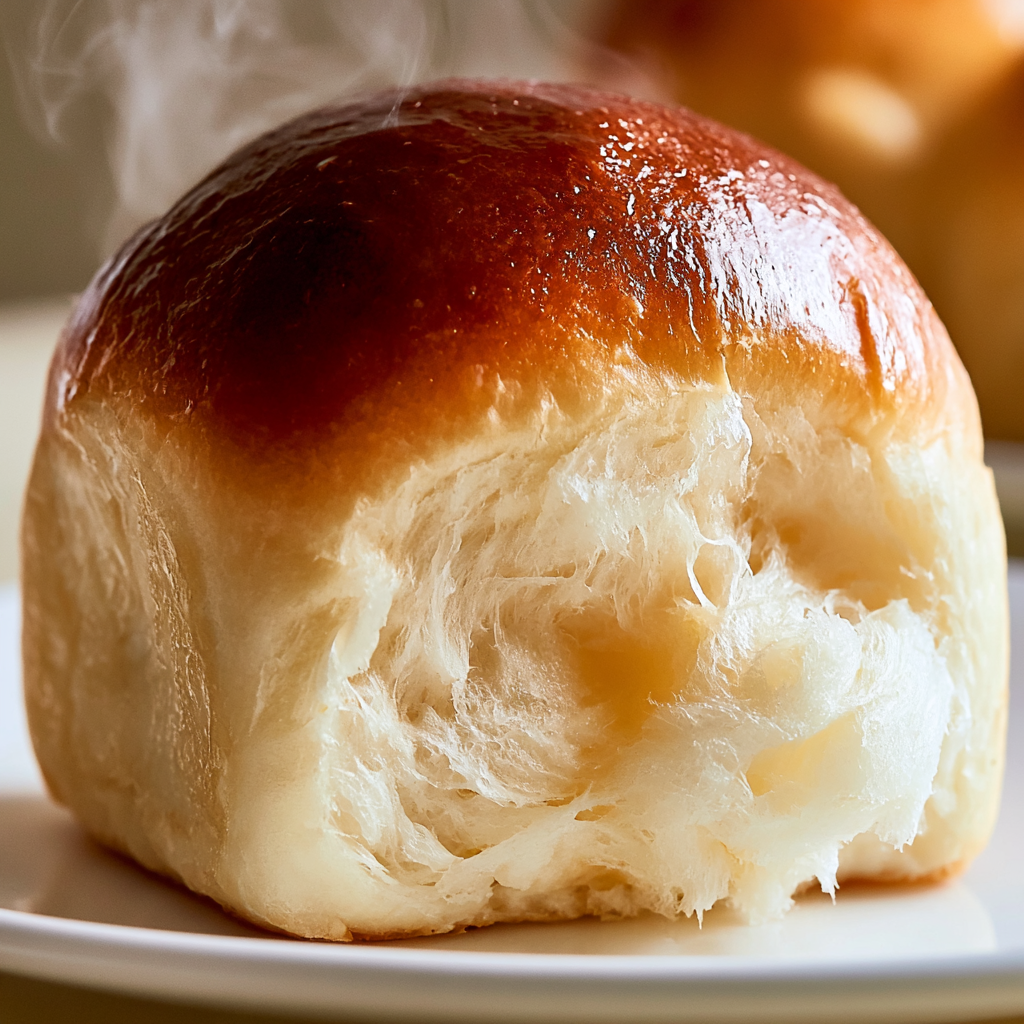
Old Fashioned Dinner Rolls
Soft, tender, and richly buttered, these old-fashioned dinner rolls are prepared with honey, eggs, and butter for a delicate crumb and classic homemade flavor. Two generous rising periods give the dough a light texture, while a final coating of melted butter keeps the golden tops soft and flavorful.
Print
Pin
Zutaten
For the dough:
- ½ cup salted butter softened to room temperature
- ¼ cup honey preferably raw
- 2 large eggs brought to room temperature
- 2½ teaspoons salt
- 4 teaspoons fresh active dry yeast
- 2 cups warm water between 100°F and 110°F
- 7 cups all-purpose flour
For finishing:
- 3 –4 tablespoons butter melted, for brushing over the rolls
For the bowl and pan:
- Oil as needed, for lightly coating the rising bowl
- Grease as needed, for preparing the baking pan
Anleitungen
- Pour the warm water into a large mixing bowl. Add the honey and stir until it has completely dissolved.
- Scatter the active dry yeast evenly over the sweetened water. Leave the mixture undisturbed for 5 minutes so the yeast can bloom and become active.
- While the yeast is resting, cut the softened salted butter into small pieces.
- After the 5-minute activation period, add the butter pieces, room-temperature eggs, and salt to the yeast mixture. Gradually incorporate the all-purpose flour while stirring until a cohesive dough forms.
- Knead the dough by hand for 7–10 minutes. Alternatively, knead it in a stand mixer at medium speed for 5–7 minutes. Continue until the dough is smooth and elastic. The finished dough should feel slightly tacky without being excessively sticky.
- Lightly oil a large bowl and transfer the kneaded dough into it. Turn the dough once so that a thin coating of oil covers its surface, helping prevent the exterior from drying during the rise.
- Loosely cover the bowl with plastic wrap or a damp kitchen towel. Place it in a warm location away from drafts and allow the dough to rise for approximately 1 hour, or until it has roughly doubled in volume.
- Transfer the risen dough to a clean work surface that has been lightly dusted with flour.
- Portion the dough into 30 equally sized pieces. Dividing the dough into halves and then progressively smaller sections can make it easier to obtain consistently sized portions.
- Shape each portion into a compact, smooth ball. Cup your hand around the dough and roll it gently toward yourself to create surface tension. This technique produces evenly shaped rolls with a tidy, traditional appearance.
- Grease a 9 × 13-inch baking pan or another similarly sized baking dish. Arrange the 30 shaped dough balls inside, leaving only a small amount of space between them so they can expand as they rise.
- Cover the pan loosely with plastic wrap or a damp kitchen towel. Let the rolls rise in a warm place for approximately 1 hour, until noticeably puffy and touching one another.
- Approximately 10–15 minutes before the second rise is complete, preheat the oven to 375°F.
- Place the fully risen rolls in the preheated oven and bake at 375°F for 15–16 minutes, until the tops have developed a golden-brown color and the rolls are cooked through while remaining tender. When tapped on the bottom, they should produce a slightly hollow sound.
- Remove the pan from the oven. While the rolls are still hot, generously brush their tops with the melted butter.
- Serve the rolls warm for their softest texture and fullest flavor.
Notizen
Keep the water between 100°F and 110°F when activating the yeast. Water that is excessively hot can damage the yeast, while cooler water may slow its activity.
Use active dry yeast that is fresh and within its expiration date to encourage a dependable rise.
Room-temperature butter and eggs incorporate more smoothly into the dough.
The dough is intended to remain slightly tacky after kneading; avoid adding unnecessary flour solely to make it completely dry.
A warm, draft-free environment promotes an even rise during both proofing stages.
Brushing the freshly baked rolls with melted butter adds richness while helping the crust remain soft.