
This Yogurt Christmas Cookies Recipe makes tender, soft-centered holiday cookies with Greek yogurt and butter, a simple chilled dough, and smooth buttercream frosting that is perfect for colorful Christmas decorating.
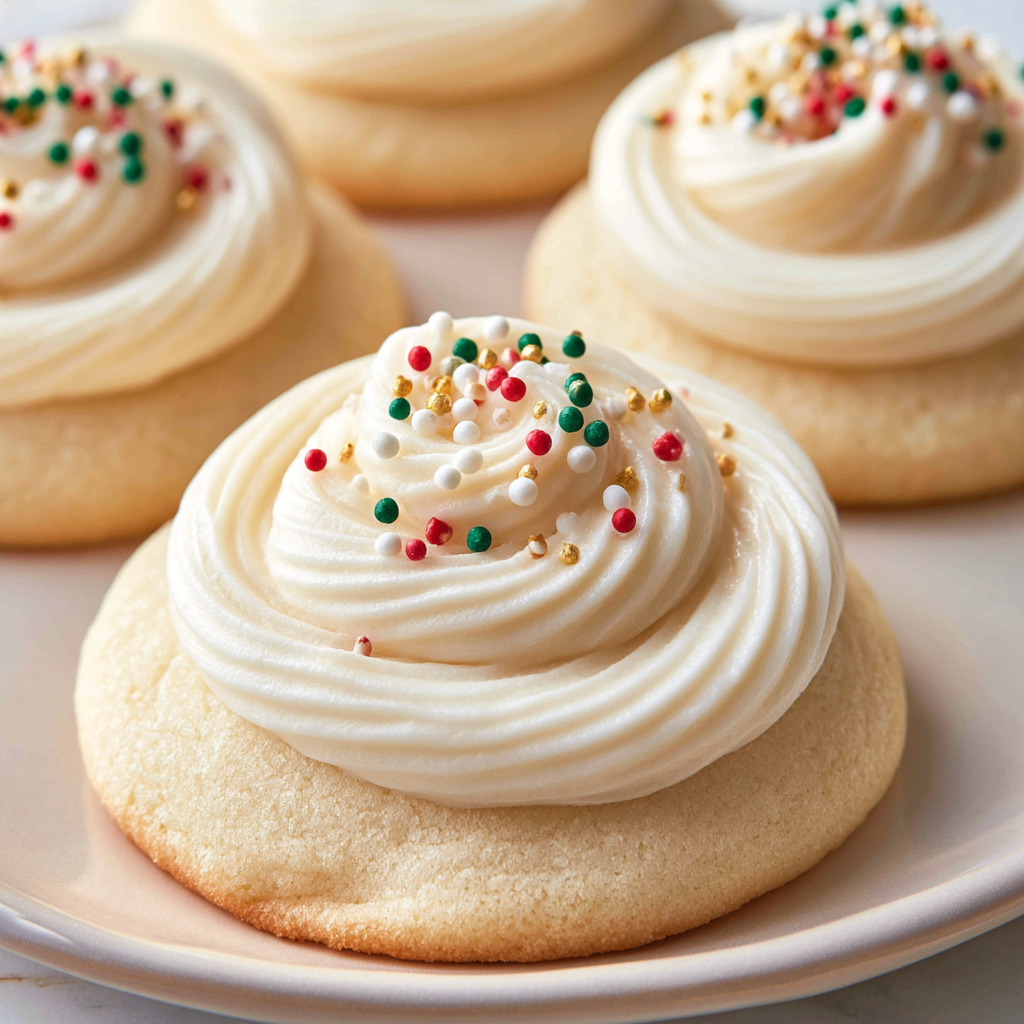
These cookies are a great choice when you want a festive baking project that feels special without requiring complicated techniques. Greek yogurt gives the dough a pleasantly tender texture, while softened butter and sugar create a light base that keeps the finished cookies soft rather than crisp.
The dough does need a good chill before rolling, but that resting time makes the sticky mixture much easier to handle. Once chilled, you can roll it fairly thick, cut out the cookies, and bake them just until set so they stay pale and soft.
Finish them with a generous layer of homemade buttercream and whatever food coloring suits your holiday theme. They work especially well for Christmas cookie trays, decorating afternoons, dessert tables, or homemade edible gifts.
Yogurt Christmas Cookies Ingredients
You only need a straightforward cookie dough and a simple buttercream topping. Keeping the butter properly softened and using full-fat Greek yogurt will help give the cookies their intended texture.
Full-fat Greek yogurt provides moisture and tenderness while helping create the soft consistency that makes these cookies distinctive.
Unsalted butter is used in both the dough and frosting. Bring it to room temperature so it creams smoothly with the sugar.
Granulated sugar sweetens the cookie dough and helps the butter mixture become light and fluffy during mixing.
Medium egg adds structure and helps bind the wet and dry ingredients together.
All-purpose flour provides the main structure for the cookies while still allowing them to stay tender when the dough is not overmixed.
Baking powder gives the cookies gentle lift as they bake.
Baking soda works alongside the baking powder to support the cookie texture.
Vanilla essence adds a familiar sweet aroma that pairs naturally with the buttery dough and frosting.
Powdered sugar forms the base of the smooth buttercream. Sifting it first helps prevent small lumps.
Food coloring lets you customize the frosting for Christmas or any other seasonal occasion.

How to Make These Yogurt Christmas Cookies
STEP 1: Whisk the flour with the baking powder and baking soda so the leavening is distributed evenly. In a separate large bowl, beat the softened butter and granulated sugar for several minutes. You want the mixture to become lighter in color and noticeably fluffy before adding anything else.
STEP 2: Pour the lightly beaten egg into the creamed butter mixture and add the vanilla. Beat just until everything looks evenly combined. Begin adding the flour mixture in several additions, alternating it with the Greek yogurt so the dough comes together gradually instead of becoming difficult to mix.
STEP 3: Stop mixing as soon as a smooth, sticky dough forms. The dough is supposed to feel quite soft at this stage, so resist the temptation to work in a large amount of additional flour. Cover it securely and refrigerate for at least 2 hours. This chilling time firms the butter and makes rolling much more manageable.
STEP 4: When you are ready to bake, preheat the oven to 350°F (175°C). Remove only half of the dough from the refrigerator so the remaining portion stays cold. Lightly flour your work surface and rolling pin, then roll the dough into a moderately thick sheet. Avoid rolling it paper-thin because thicker cookies retain more of their soft texture.
STEP 5: Use a large round cutter to cut the chilled dough into cookies. Transfer them carefully to a baking sheet and leave a little space between each one. Gather the scraps gently and reroll them without repeatedly working the dough.
STEP 6: Bake each batch for about 10 to 12 minutes. Watch the color rather than waiting for deep browning. These cookies should come out while they still look relatively pale and soft. Transfer them to a wire rack and allow them to cool completely before you begin frosting.
STEP 7: For the buttercream, beat the softened butter until fluffy. Gradually add the sifted powdered sugar and continue beating until smooth. If the frosting seems too stiff to spread comfortably, mix in only a very small amount of milk at a time. Divide the frosting if you want multiple colors, then tint each portion with food coloring.
STEP 8: Spread a generous spoonful of buttercream over each completely cooled cookie. Decorate them however you like, then leave the frosted cookies undisturbed long enough for the topping to settle before arranging or serving them.
Can I make the cookie dough ahead of time?
Yes. Because this dough already requires at least 2 hours of refrigeration, preparing it ahead works well. Keep it tightly covered in the refrigerator so the surface does not dry out. When you are ready to bake, work with one portion at a time and keep the rest cold.
Helpful Tips
- Give the dough enough chilling time. It will initially be sticky, and the full refrigeration period makes a major difference when you begin rolling and cutting.
- Keep the cookies fairly thick. Rolling the dough too thin can reduce the soft, tender texture these yogurt cookies are meant to have.
- Take them out before they brown deeply. A pale appearance is desirable here. Leaving them in the oven until noticeably golden can produce a firmer cookie than intended.
Why is Greek yogurt used in Christmas cookies?
Greek yogurt contributes moisture while helping the baked cookies stay tender. Full-fat yogurt is especially useful because its richer consistency works well with the butter-based dough. It also creates a slightly softer dough, which is why chilling before rolling is an important part of the process.
What to Serve with Yogurt Christmas Cookies
These festive cookies fit naturally onto a holiday dessert table, but a few simple pairings can make them especially enjoyable.
- Hot chocolate complements the soft cookies and sweet buttercream and makes an especially cozy pairing during colder holiday gatherings.
- Coffee or tea balances the sweetness of the frosting and works well when serving the cookies after a meal.
- A mixed Christmas cookie platter lets you pair these soft frosted cookies with firmer or crunchier cookies for a more varied dessert spread.
How do I keep the dough from sticking while rolling?
Start with thoroughly chilled dough and use a lightly floured work surface. You can also dust the rolling pin with a small amount of flour. Add only as much as necessary to prevent sticking because incorporating too much extra flour can make the finished cookies less tender.
Working with half of the dough at a time is also helpful. The second portion stays firm in the refrigerator instead of becoming warm and sticky while you cut the first batch.

How to Store & Reheat
Allow the buttercream to settle before placing the cookies into a storage container. Arrange them carefully in an airtight container, separating layers with parchment paper if necessary so the frosting stays neat.
For short-term storage, keep the finished cookies refrigerated for about 4 to 5 days. The cold environment helps protect the buttercream, especially since it is made primarily with butter. Let the cookies sit at room temperature briefly before serving so both the cookie and frosting can soften.
For longer storage, freeze the baked cookies for up to about 2 months. For the cleanest results, freezing the cookies before frosting is preferable. Place the fully cooled cookies in a freezer-safe container with parchment between layers, then thaw them at room temperature before decorating.
Already frosted cookies can also be frozen, although the appearance of the buttercream may change slightly after thawing. Freeze them in a single layer until the frosting is firm before stacking them carefully in a freezer-safe container.
Reheating is generally unnecessary for these cookies, particularly once they have been frosted. They are designed to be enjoyed at room temperature rather than hot. Simply remove refrigerated cookies shortly before serving and allow them to lose their chill naturally.
Can I frost the cookies while they are still warm?
It is better to wait until they are completely cool. Even slightly warm cookies can soften or melt the butter in the frosting, causing it to slide or become greasy. Cooling on a wire rack also prevents residual heat from becoming trapped underneath the cookies.
How do I know when yogurt cookies are done?
Look for cookies that appear set around the edges but remain fairly pale overall. They should still feel soft when they first come from the oven. With a baking time of roughly 10 to 12 minutes at 350°F, avoiding significant browning is one of the most important ways to preserve their tender texture.
The cookies continue settling as they cool, so they do not need to feel completely firm before you remove them from the baking sheet. Once fully cooled and covered with smooth buttercream, they become festive, tender Christmas cookies that are ready for decorating, gifting, or adding to your holiday dessert table.
Yogurt Christmas Cookies Recipe
Ingredients
For the Cookies:
- 160 g full-fat Greek yogurt preferably for the best texture
- 75 g unsalted butter softened to room temperature
- 1 medium egg lightly beaten
- 250 g all-purpose flour
- 1/2 teaspoon vanilla essence
- 110 g granulated sugar
- 1/4 teaspoon baking soda
- 1 teaspoon baking powder
For the Frosting:
- Food coloring as desired
- 150 g powdered sugar sifted until free of lumps
- 90 g unsalted butter softened
Instructions
- Combine the all-purpose flour, baking powder, and baking soda in a bowl, stirring until the leavening agents are evenly distributed.
- In a separate large mixing bowl, beat the softened butter with the granulated sugar for several minutes, continuing until the mixture appears pale, light, and fluffy.
- Blend in the lightly beaten egg and vanilla essence until they are fully incorporated.
- Add the flour mixture gradually, alternating it with portions of Greek yogurt. Mix only until the ingredients come together into a smooth but noticeably sticky dough.
- Cover the dough securely with plastic wrap and refrigerate it for a minimum of 2 hours.
- Preheat the oven to 350°F (175°C).
- Take half of the chilled dough from the refrigerator, leaving the remaining portion cold until needed.
- Lightly flour the work surface, then roll out the dough to a moderately thick layer rather than making it excessively thin.
- Cut the dough with a large round cookie cutter and arrange the shapes on a baking sheet, leaving adequate space between each cookie.
- Place the baking sheet in the preheated oven and bake for 10–12 minutes.
- Remove the cookies while they are still relatively soft and before they develop significant browning.
- Repeat the rolling, cutting, and baking process with the remaining refrigerated dough.
- Transfer the baked cookies to a wire rack and allow them to cool completely before applying the frosting.
- Beat the softened butter in a bowl for several minutes until it becomes light and fluffy.
- Add the sifted powdered sugar little by little while continuing to beat the mixture until the frosting is smooth.
- If necessary, incorporate a small amount of milk to modify the frosting consistency. Blend in food coloring as desired until the preferred shade is achieved.
- After the cookies are entirely cool, spoon a generous amount of buttercream onto each one and spread it evenly across the surface.
- Decorate the frosted cookies as desired, then allow the buttercream to set before serving.