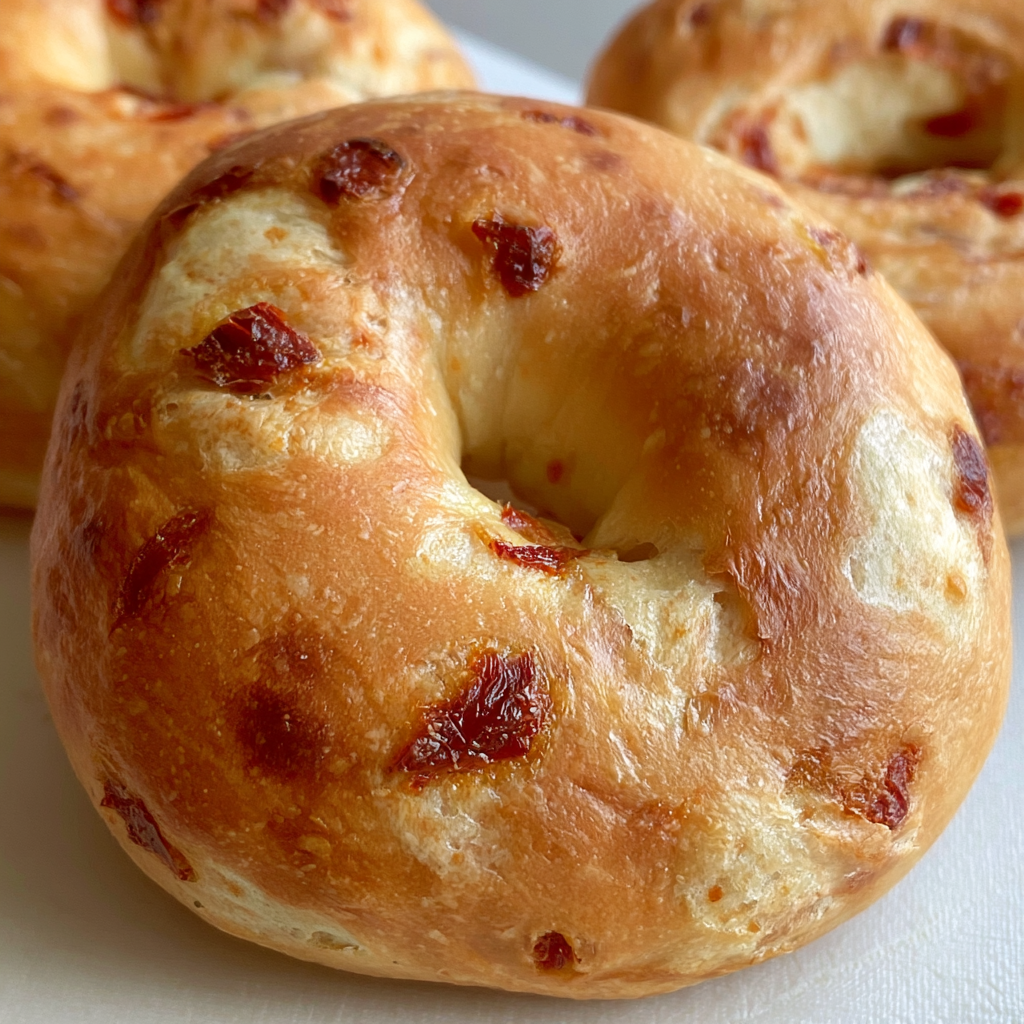
Sun-Dried Tomato Bagels
These naturally leavened sourdough bagels incorporate finely chopped sun-dried tomatoes throughout a firm bread-flour dough. A lengthy room-temperature fermentation followed by overnight refrigeration develops a deeper flavor, while boiling before baking produces the characteristically chewy bagel crust and tender interior.
Pin it to remember it!
Print Recipe
Ingredients
For the Bagel Dough:
- 1/2 cup active sourdough starter
- 1 1/2 teaspoons sea salt
- 1/3 cup sun-dried tomatoes thoroughly drained and finely diced
- 3/4 cup warm water approximately 105–115°F
- 1/3 cup whole wheat flour
- 1 tablespoon honey
- 2 3/4 cups bread flour
For Assembly:
- Eggs as needed for the egg wash
Instructions
- Drain 1/3 cup of sun-dried tomatoes thoroughly, particularly if they have been packed or soaked in oil. Chop them into small, fine pieces so they can disperse evenly through the dough without contributing excess oil.
- Place the bread flour, whole wheat flour, warm water, active sourdough starter, honey, sea salt, and prepared sun-dried tomatoes in a medium mixing bowl. Mix by hand for approximately 2 minutes, or until the ingredients come together into a cohesive ball of dough.
- Cover the bowl and allow the dough to rest for 30 minutes. This resting period gives the flour time to absorb the moisture and allows gluten development to begin.
- Knead the rested dough for 2–3 minutes, continuing until its exterior becomes relatively smooth.
- Transfer the dough to a covered container and leave it at room temperature for 6–8 hours, or until it has approximately doubled in volume.
- For additional dough strength and improved crumb structure, 3 optional sets of stretch-and-folds may be performed during this initial fermentation. Space the sets approximately 1–1 1/2 hours apart. During each set, stretch each side of the dough and fold it over itself, rotating the container as you work.
- Turn the fermented dough out onto a work surface and divide it into 6–8 equal portions. For more precise sizing, each piece should weigh approximately 80–120 grams.
- Form each portion into a ball by drawing the edges or corners upward and folding them toward the center. Make an opening through the middle of each ball, then carefully stretch and rotate the dough until it forms an evenly shaped ring.
- Arrange the formed bagels inside a greased container or on a greased baking sheet, allowing enough room between each one for expansion. Cover them securely to prevent the surfaces from drying.
- Leave the shaped bagels at room temperature for 1–2 hours, or until they appear noticeably puffy.
- Keep the bagels covered and transfer them to the refrigerator for an overnight cold fermentation. The extended chilled proof develops additional flavor while contributing to the finished texture.
- The following day, preheat the oven to 425°F (220°C). Line a clean baking sheet with parchment paper.
- Bring a large, wide pot of water to a full boil. Carefully lower 1–2 bagels into the water at a time, ensuring they have sufficient room to float freely.
- Boil the bagels for 1 minute on the first side, turn them over, and boil for another 1 minute. Lift them from the water with a slotted spoon and allow excess water to drain before transferring them to the parchment-lined baking sheet.
- Brush the tops of the boiled bagels with egg wash. This coating produces a glossy appearance and encourages the exterior to become attractively crisp.
- Bake for 20–23 minutes, or until the bagels develop a rich golden-brown color.
- Allow the baked bagels to cool for at least 10 minutes before slicing. This brief resting period helps retain moisture within the crumb and makes the bagels easier to cut cleanly.
- Serve sliced with cream cheese or another preferred topping.