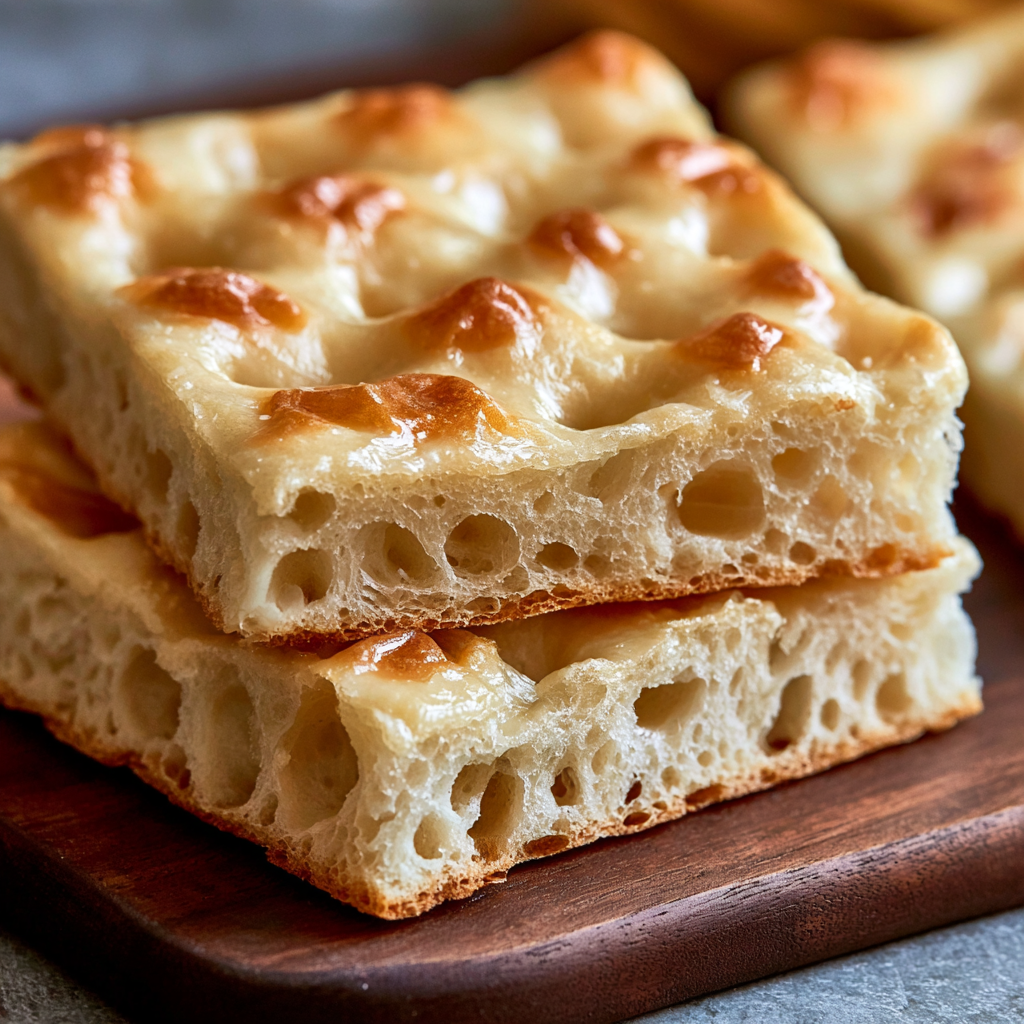
Focaccia Genovese
A traditional Ligurian-style focaccia distinguished by its tender, airy crumb, golden surface, and characteristic deep dimples filled with an olive oil and salt brine. The dough is enriched with olive oil, malt, and lard for a supple texture and authentic flavor.
Pin it to remember it!
Print Recipe
Ingredients
For the Dough
- 12 ounces water
- ½ ounce dry malt or 1 ounce liquid malt
- 2 teaspoons fine salt
- 2 tablespoons extra-virgin olive oil
- 19 ounces high-protein bread flour or strong Tipo 00 flour preferably W 320
- 1 ounce lard ideally Lardo di Colonnata di Cinta Senese
- 2 teaspoons active dry yeast
For the Brine and Finish
- 2 ounces extra-virgin olive oil divided between the baking trays
- 1 teaspoon fine salt
- Slightly less than ½ cup water
Instructions
- Place the flour, active dry yeast, and dry malt in a large mixing bowl or the bowl of a stand mixer. If using liquid malt, reserve it to add with the water. Stir thoroughly so the yeast and malt are distributed evenly throughout the flour.
- Gradually pour in the 12 ounces of water while mixing by hand or with the paddle attachment of a stand mixer. Add the liquid malt at this stage when substituting it for dry malt.
- Continue mixing until a cohesive dough begins to form. Add the extra-virgin olive oil and work it into the dough until fully incorporated.
- Add the lard and mix until it is completely absorbed and no visible pieces remain.
- Lastly, incorporate the fine salt. Continue mixing until the salt has dissolved into the dough. Adding the salt at the end prevents it from interfering with the initial activity of the yeast.
- Knead the dough until it becomes smooth, soft, and elastic. With a stand mixer, change to the dough hook and knead on low speed, approximately setting 2, for about 10 minutes.
- When kneading by hand, transfer the dough to a lightly floured surface and work it for approximately 15 minutes, or until supple and uniform.
- Cover the dough and leave it undisturbed for 10 minutes to allow the gluten to relax.
- Knead it again for approximately 3 minutes, forming a smoother and more even ball. Finish with a gentle stretch and fold to strengthen the dough structure.
- Gently stretch the dough, fold it over itself, and shape it into a firm, rounded ball.
- Cover it with an inverted bowl or a clean kitchen towel and let it rest on the work surface for 30 minutes.
- Divide the dough into two equal portions, each weighing approximately 500 grams. Lightly stretch each portion, roll it into shape, and pinch the seam closed.
- Position the dough pieces seam-side down, cover them, and allow them to rest for another 30 minutes.
- Dust the work surface and dough lightly with flour. Using a rolling pin, carefully extend each portion until it is close to the dimensions of its baking tray.
- Coat the trays lightly with some of the measured olive oil. Transfer the dough to the prepared trays and gently adjust each piece so it fits the pan.
- Apply a light dusting of flour to the surface, cover the trays, and rest the dough for 30 minutes. This resting period allows the gluten to relax before the final shaping.
- Keep the dough covered in the trays and allow it to proof for an additional 1 hour.
- While it proofs, dissolve 1 teaspoon of fine salt in slightly less than ½ cup of water to prepare the brine.
- Remove the coverings. Press firmly into the dough with your fingertips to create deep, evenly spaced indentations, gently stretching the dough outward as you work.
- Carefully pierce any unusually large air pockets with a toothpick or thin cake tester.
- Pour the 2 ounces of extra-virgin olive oil over the dough, dividing it equally between the two trays. Pour half of the prepared brine onto each focaccia.
- Use your hands to spread the oil and salted water evenly across the entire surface, ensuring that the liquid settles into the deep dimples.
- Leave the trays uncovered and allow the dough to complete its final proof for 45 minutes.
- Preheat a conventional, non-fan oven to 450°F (230°C).
- Add thinly sliced onions, olives, or other desired toppings before baking, when using them.
- Place the trays in the lower third of the oven. Alternatively, position them directly on a preheated pizza stone.
- Bake for 15 minutes, taking care not to exceed the stated baking time.
- Remove the focaccia from the oven and let it cool briefly before slicing and serving.
Notes
For the traditional Genovese texture, press the fingertips deeply into the dough so the oil and brine collect inside the indentations.
A small quantity of additional extra-virgin olive oil may be brushed over the focaccia immediately after baking for a richer finish.
Lardo di Colonnata di Cinta Senese provides the most traditional flavor, although high-quality plain lard may be used when it is unavailable.