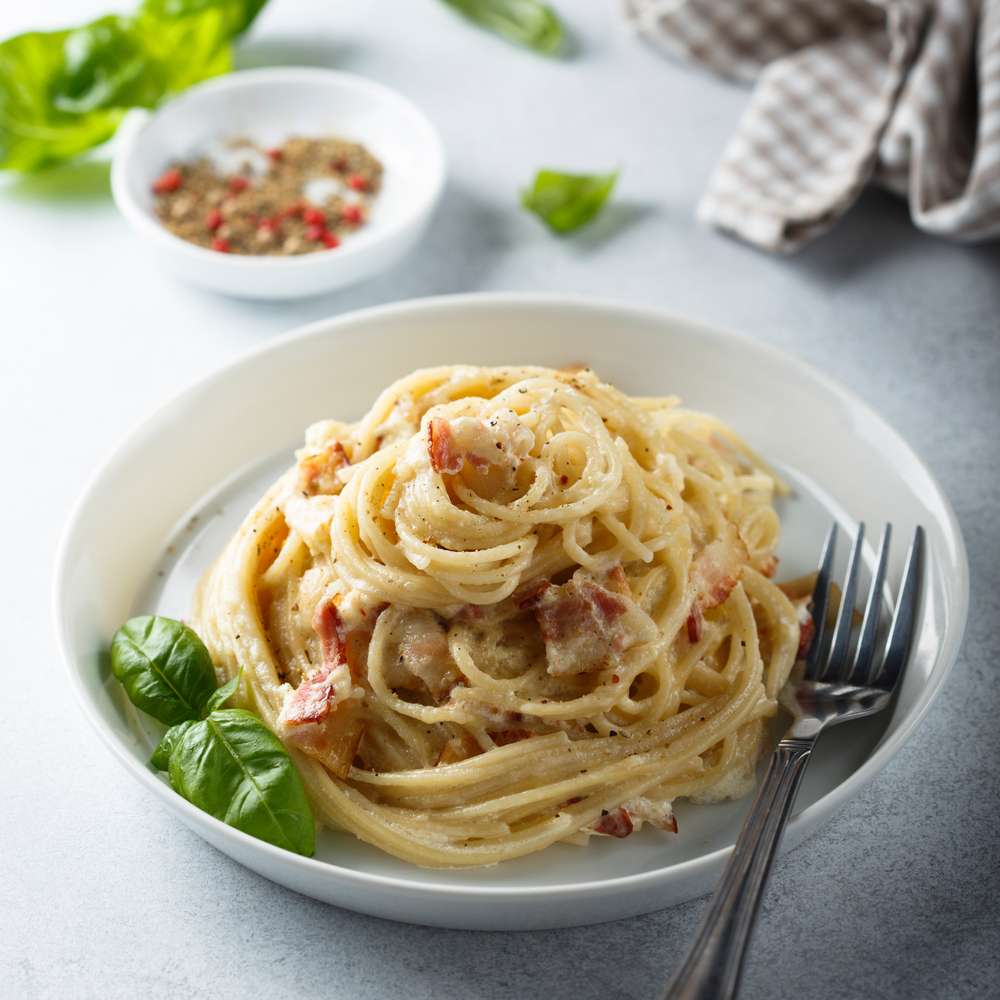
Carbonara Pasta
This authentic Italian carbonara is a timeless dish prepared without the use of cream. A rich, velvety sauce is created by combining raw egg with piping hot pasta and finely grated aged cheese, resulting in a silken texture that clings beautifully to each strand. For best results, serve this dish immediately in pre-warmed bowls to preserve its luxurious consistency.
Pin it to remember it!
Print Recipe
Ingredients
- 2 whole large eggs room temperature
- 1 garlic clove very finely chopped (optional)
- 175 grams 6 oz of guanciale, skin removed and sliced into small batons (alternatively, use pancetta or slab bacon)
- 1 tablespoon coarse salt for boiling pasta water
- 2 large egg yolks
- 100 grams about 3.5 oz parmigiano reggiano, tightly packed after fine shredding (can substitute pecorino romano or parmesan)
- 1/4 teaspoon freshly ground black pepper
- 400 grams 14 oz spaghetti
- 1/2 cup reserved hot pasta water
Optional for garnish:
- Additional parmigiano reggiano freshly grated
- Finely chopped fresh parsley
Instructions
- Slice the guanciale into strips about 0.5 cm thick. Set aside while preparing the other ingredients.
- In a large mixing bowl, combine the whole eggs and additional yolks. Whisk until fully blended, then incorporate the finely shredded cheese and ground black pepper. Set this mixture aside.
- In a large pot, bring approximately 4 liters (4 quarts) of water to a rolling boil. Season generously with the coarse salt. Add the spaghetti and cook according to the package instructions until al dente.
- Before draining the pasta, reserve approximately 1 cup of the starchy cooking water. Drain the pasta promptly.
- While the pasta cooks, heat a non-stick skillet over medium-high heat. Add the guanciale and cook for 4–5 minutes until golden and crisp, allowing the rendered fat to accumulate in the pan. If using garlic, stir it in during the final minute of cooking.
- Transfer the hot, drained pasta directly into the skillet with the guanciale. Toss well to ensure the pasta is fully coated with the rendered fat.
- Quickly move the pasta and all pan contents into the bowl with the egg-cheese mixture. Immediately pour in 1/2 cup of the reserved pasta water. Using the handle of a wooden spoon, stir the pasta vigorously for about a minute until the sauce thickens into a creamy consistency that envelops the noodles.
- Serve the pasta promptly in warmed serving bowls. If desired, sprinkle with additional grated cheese, a dash of pepper, and a small amount of chopped parsley.
Notes
- Guanciale is the traditional choice for this dish and imparts a rich, savory depth. If unavailable, use thick-cut bacon or pancetta for a worthy alternative. Ensure it’s streaky for adequate fat content.
- Large eggs typically weigh between 55–60 grams (2 oz).
- For best results, use cheese you’ve grated yourself, as pre-shredded varieties often contain anti-caking agents that interfere with melting.
- Although garlic is not customary in traditional carbonara, it adds a subtle layer of flavor if desired.
- This dish is best consumed immediately. While leftovers can be refrigerated for up to three days, the sauce may lose its original texture.