Caramelized Pumpkin Pie
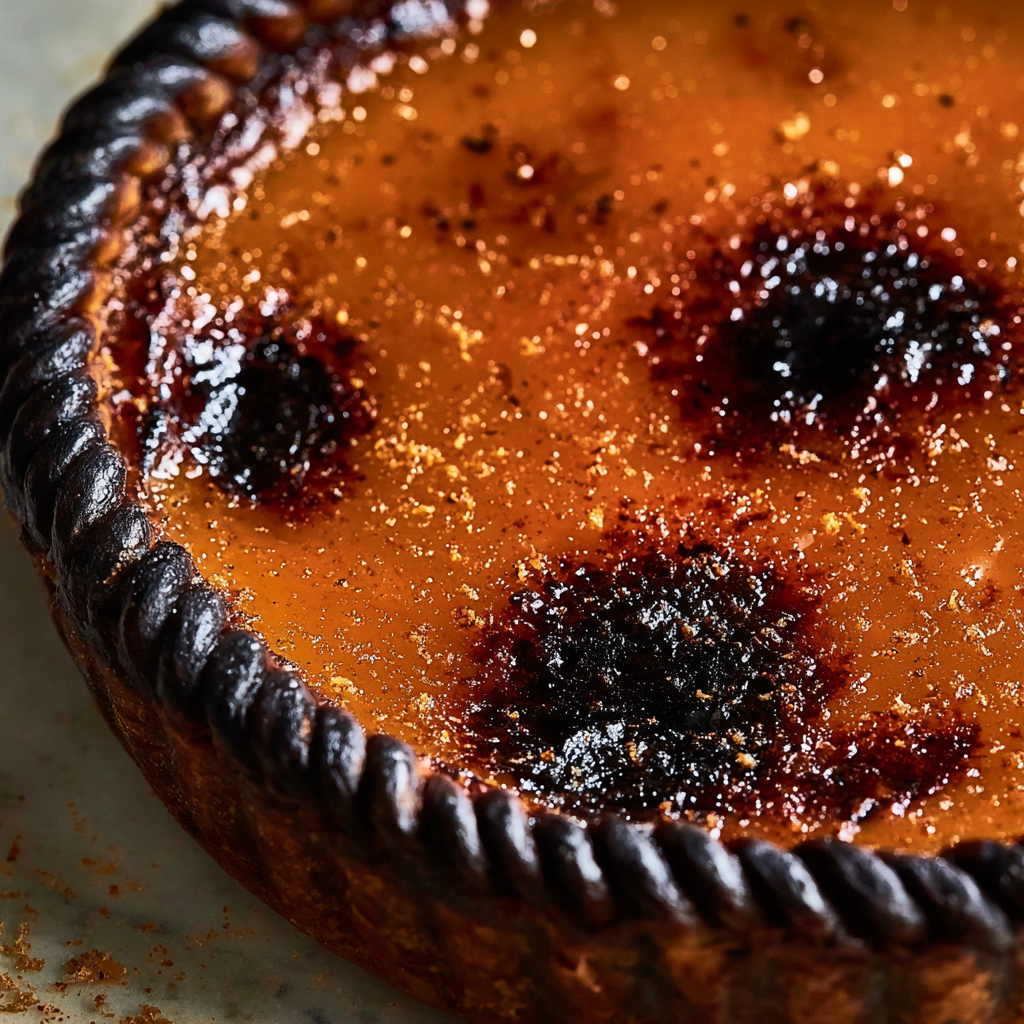
Caramelized Pumpkin Pie combines a crisp cocoa pastry shell with roasted and gently smoked pumpkin, warming spices, bourbon, sour cream, and a maple-enriched custard. A decorative twisted crust frames the pie, while a final layer of torched granulated sugar creates a brittle, deeply caramelized brûlée surface.
Pin it to remember it!
Print Recipe
Ingredients
Chocolate Pastry Crust
- ½ cup cold unsalted butter divided into 1-tablespoon-size pieces
- ¼ cup unsweetened cocoa powder
- 1 large egg yolk
- 1¼ cups plus 1 tablespoon all-purpose flour sifted for a more delicate pastry
- 2 tablespoons ice-cold water
- ¼ teaspoon fine salt
- 1 tablespoon vinegar
- ¼ cup granulated sugar
- ¼ cup chilled coconut oil kept solid
Smoked Pumpkin
- Olive oil enough to lightly coat the pumpkin
- Wood-smoking chips preferably applewood or pecan
- 2 cups peeled pumpkin wedges cut into approximately 1-inch pieces
Pumpkin Filling
- 3 large eggs
- ¼ teaspoon ground nutmeg
- ½ cup full-fat sour cream
- ⅛ teaspoon cayenne pepper
- 1 teaspoon ground cinnamon
- 2 tablespoons bourbon
- ¼ teaspoon ground allspice
- 1 cup prepared pumpkin purée
- ½ teaspoon ground ginger
- ½ teaspoon salt
Maple Component and Brûlée Topping
- ¼ cup heavy cream
- Granulated sugar as needed for the caramelized surface
- ½ cup pure maple syrup preferably Grade A
For Assembly
- 1 large egg beaten for brushing the pastry
- All-purpose flour as needed for dusting the work surface
Instructions
- Place the sifted all-purpose flour, cocoa powder, granulated sugar, and salt in a food processor. Pulse briefly until the dry ingredients are evenly blended.
- Add the chilled butter pieces and solid coconut oil. Pulse only until the mixture develops a coarse, crumbly texture while retaining a few small, pea-sized pieces of fat.
- Add the egg yolk and pulse again just until incorporated.
- Combine the vinegar with the ice water. With the processor pulsing, gradually drizzle the liquid into the mixture. Stop as soon as the dough begins to come together. It should remain relatively dry but hold its shape when pressed between your fingers.
- Transfer the pastry mixture to a lightly floured work surface. Press it down gently, then divide it into four sections.
- Stack the four portions, placing any loose or crumbly pieces between the layers, and press the stack together.
- Repeat the stacking and pressing process twice more so the pastry becomes cohesive and evenly layered.
- Form the dough into a disk approximately 1 inch thick. Wrap it securely in plastic wrap and refrigerate for at least 1 hour.
- Heat the oven to 425°F (220°C). Coat the peeled pumpkin pieces lightly with olive oil and arrange them across a rimmed baking sheet.
- Roast for approximately 20 minutes, stopping when the pumpkin has become only slightly tender.
- Reduce the oven temperature to 250°F (120°C). Move the roasted pumpkin to a smoker, or place it in a foil-sealed roasting arrangement with the wood chips.
- Smoke the pumpkin for 30–45 minutes. Check the wood after approximately 20 minutes to make certain it does not ignite, adding soaked chips or liquid when necessary.
- Cool the smoked pumpkin completely. Remove any remaining flesh from the skins, then blend the flesh with a hand blender until completely smooth. Measure 1 cup of the resulting purée for the filling.
- Increase or adjust the oven temperature to 350°F (175°C). Remove one-quarter of the chilled chocolate dough and reserve it for the decorative edge.
- On a floured work surface, roll the remaining dough into a round approximately 12 inches in diameter. Carefully transfer it to a 9-inch pie dish, easing the pastry into the base and sides without stretching it. Trim away the excess dough and combine those trimmings with the reserved portion.
- Divide the reserved pastry into four equal pieces. Roll each piece into a rope approximately 12 inches long. Twist the ropes together in pairs and arrange the two twists around the rim of the pie to create a decorative border. Press gently to secure them.
- Refrigerate the assembled crust for 1 hour, or place it in the freezer for 15 minutes.
- Cover the chilled pastry with parchment paper and fill it with pie weights. Bake for about 20 minutes, until the exposed edges appear dry.
- Remove the parchment and pie weights, then continue baking for another 7 minutes, or until the base of the pastry also looks dry.
- Brush the bottom and sides of the crust with the beaten egg. Sprinkle granulated sugar over the decorative border, then bake for an additional 3 minutes to set the egg coating.
- Briefly chill the baked crust again before filling if a firmer, crisper shell is desired.
- In a large mixing bowl, whisk together 1 cup of the smoked pumpkin purée, sour cream, bourbon, cinnamon, ginger, nutmeg, allspice, salt, cayenne pepper, and the 3 large eggs. Continue whisking until the mixture is uniformly smooth.
- Pour the maple syrup into a small saucepan and bring it to a boil. Lower the heat and simmer for approximately 3 minutes, until it thickens slightly and small wisps or puffs of steam become visible.
- Remove the saucepan from the heat. Add the heavy cream in three separate portions, stirring thoroughly after each addition until smooth.
- Slowly pour the hot maple-cream mixture into the pumpkin mixture while whisking continuously. Continue until the custard is smooth and silky.
- Set the blind-baked chocolate crust on a rimmed baking sheet. Pour the prepared pumpkin-maple filling evenly into the pastry shell.
- Bake at 350°F (175°C) for approximately 50 minutes, rotating the pie halfway through the baking period. The outer portion of the filling should be set, while the center should retain a slight jiggle.
- Transfer the finished pie to a wire cooling rack and allow it to cool completely. Full cooling is important for the custard to develop its properly set, creamy consistency.
- Immediately before serving, cover the cooled filling with an even, generous coating of granulated sugar.
- Pass a kitchen torch steadily over the sugar, keeping the flame moving across the entire surface until the crystals melt and transform into a dark golden-brown, glass-like caramel crust.
- Allow the brûléed topping to stand for several minutes so the caramel can cool and harden before the pie is sliced.