
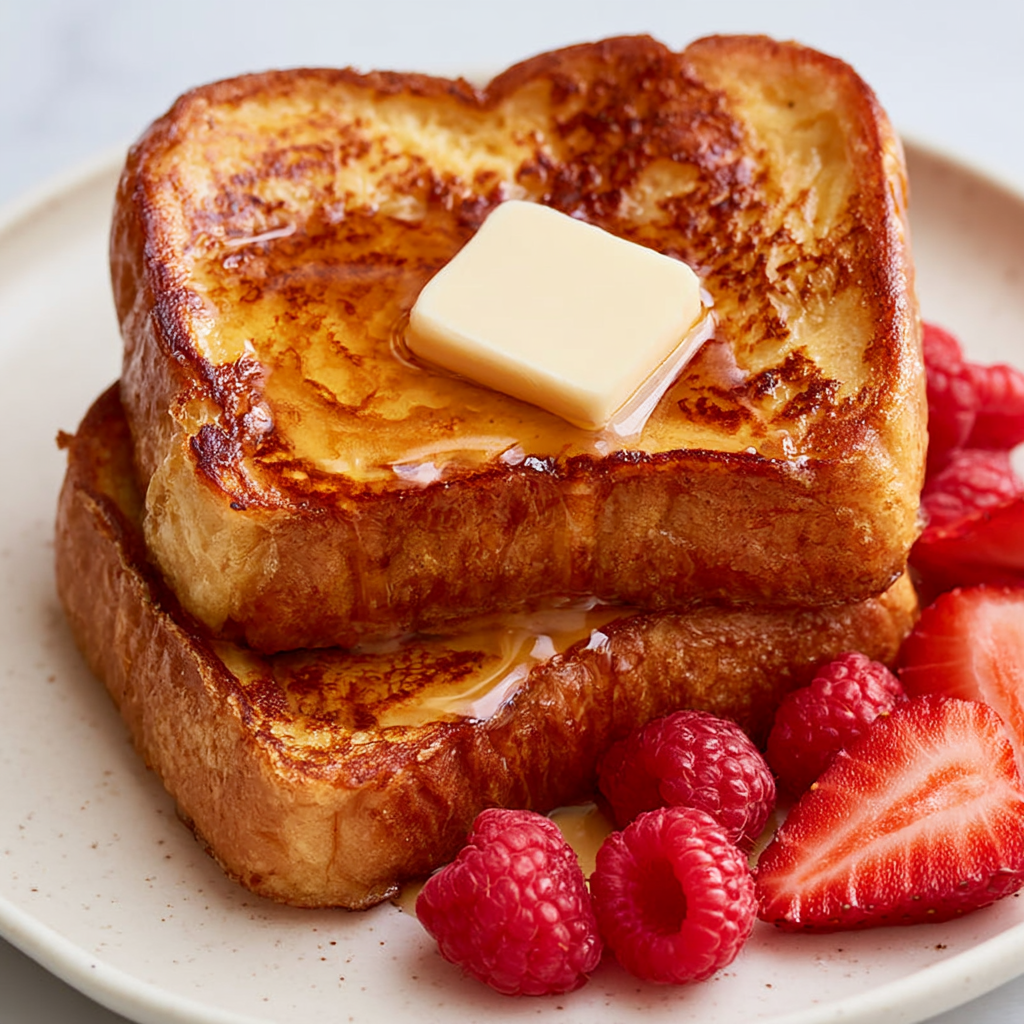
Vanilla French Toast is a quick, comforting breakfast with golden edges, a soft custardy center, and warm vanilla flavor. Day-old bread absorbs the lightly sweetened egg mixture beautifully, making this a reliable choice for weekend brunch or an everyday family breakfast.

When you want a breakfast that feels special without requiring a long ingredient list, this is a dependable option. The custard comes together in minutes, and the slices cook quickly on a hot griddle.
The key is giving the bread enough time to absorb the vanilla custard without leaving it submerged so long that it becomes fragile. Thick-cut, slightly dry bread works particularly well because it holds plenty of custard while staying easy to flip.
Serve the finished slices straight from the griddle with warm maple syrup and butter, or add fresh berries and a dusting of powdered sugar when you want a more colorful brunch plate.
Vanilla French Toast Ingredients
You only need a handful of familiar breakfast staples for this recipe. The quality and condition of the bread matter almost as much as the custard itself.
- Day-old sandwich bread: Slightly dry bread absorbs the egg mixture more effectively without becoming overly soft. Thick slices are especially useful for creating a tender center with a nicely browned exterior.
- Large eggs: Form the foundation of the custard and help the French toast set as it cooks.
- 2% milk: Loosens the egg mixture so it can soak evenly into the bread while keeping the custard light.
- Vanilla extract: Provides the main aromatic flavor and gives each slice its classic sweet vanilla character.
- Granulated sugar: Adds gentle sweetness and helps encourage browning on the griddle.
- Salt: A small amount balances the sweet ingredients and strengthens the vanilla flavor.
- Butter: An optional topping that melts beautifully over freshly cooked slices.
- Pure maple syrup: Adds sweetness and pairs naturally with the vanilla custard.
- Fresh berries: Optional for freshness, color, and a lighter contrast to the warm toast.
- Powdered sugar: A simple finishing touch for serving.

Step-by-Step Vanilla French Toast
STEP 1: Crack the eggs into a wide, shallow bowl or baking dish. Add the milk, sugar, vanilla extract, and salt. Whisk thoroughly until the yolks and whites are completely incorporated and the mixture looks smooth and even.
STEP 2: Set the day-old bread beside the custard so you can soak each piece just before cooking. A shallow dish makes this much easier because the bread can lie flat and absorb the mixture across its entire surface.
STEP 3: Place one slice of bread in the vanilla custard and let it soak for roughly 30 seconds. Turn it carefully and soak the opposite side for another 30 seconds. The bread should feel heavier and thoroughly moistened but should still hold together when lifted.
STEP 4: Lightly grease a griddle or large skillet and warm it over medium heat. Give the cooking surface enough time to heat before adding the soaked bread. Moderate heat helps the center cook through before the outside becomes too dark.
STEP 5: Transfer the soaked slices to the hot griddle, leaving a little space between them. Avoid crowding the pan, since having enough room makes the pieces easier to turn and promotes more even browning.
STEP 6: Cook the first side for about 2 to 3 minutes. Once the underside is evenly golden and releases easily from the griddle, flip the slice and cook the second side until golden brown and the custard in the center has fully set.
STEP 7: Continue soaking and cooking the remaining bread in batches. Lightly grease the griddle again whenever necessary. Serve each batch warm with your preferred combination of butter, maple syrup, berries, and powdered sugar.
What to Serve with Vanilla French Toast
French toast can be a complete breakfast with little more than maple syrup, but a few simple sides can turn it into a fuller brunch.
- Fresh fruit or berries: Strawberries, blueberries, raspberries, or a mixed fruit plate add freshness alongside the warm custardy bread.
- Eggs: Scrambled, fried, or softly cooked eggs provide a savory contrast when you want a more substantial breakfast.
- Breakfast potatoes: Crisp potatoes work well for a weekend brunch when you want something savory beside the sweet toast.
Why Is Day-Old Bread Better for French Toast?
Day-old bread has lost some of its original moisture, so it can absorb more custard without immediately becoming mushy. This makes it easier to achieve a soft interior while keeping each slice sturdy enough to lift, flip, and serve.
Fresh bread can still work, but you may need to shorten the soaking time slightly if the slices are especially soft.
Helpful Tips
- Keep the heat moderate. Medium heat gives the egg mixture inside the bread time to cook while allowing the outside to brown gradually rather than burn.
- Adjust soaking time to the bread. Thick, dry slices can handle a longer soak, while softer or thinner bread usually needs less time in the custard.
- Cook in batches when needed. Leaving space around each slice makes flipping easier and helps every piece develop more consistent color.
How Do I Know When French Toast Is Done?
Look for a uniformly golden-brown surface on both sides and a center that feels set rather than wet or loose. A typical slice takes around 2 to 3 minutes per side over medium heat, although thicker bread may require slightly longer.
If the outside is browning before the inside cooks, reduce the heat rather than trying to cook the toast faster.
Can I Make the Custard Ahead of Time?
Yes. You can whisk together the eggs, milk, sugar, vanilla, and salt ahead of time and keep the mixture covered in the refrigerator until you are ready to cook.
Whisk it again briefly before soaking the bread because some ingredients may settle while the custard rests.
How Can I Keep French Toast Warm for Serving?
If you are preparing several batches, keep the cooked pieces warm while you finish the remaining slices. Arrange them in a single layer whenever possible so they do not trap too much steam and become overly soft.
For the best texture, avoid holding them for much longer than necessary. French toast tastes best when served shortly after it leaves the griddle.

Can I Use Fresh Bread Instead of Day-Old Bread?
You can, although very soft fresh bread absorbs liquid quickly and may be more difficult to handle. Dip fresh slices for a shorter period and lift them carefully.
Thicker bread generally gives you a little more flexibility because it can absorb the custard without breaking apart as easily.
Keeping Leftovers Fresh
Allow leftover French toast to cool before transferring it to an airtight container. Store it in the refrigerator for up to 3 days, keeping the toppings separate so the bread does not become soggy.
For longer storage, arrange cooled slices in a freezer-safe container with parchment between layers and freeze them for up to 2 months. Separating the slices makes it easier to remove only as many as you need.
To reheat refrigerated French toast, warm it in a skillet over medium-low heat until heated through, turning once so both sides warm evenly. A toaster oven or conventional oven also works well and can help restore some of the surface texture.
Frozen slices can be thawed overnight in the refrigerator before reheating, or reheated directly from frozen with a little additional cooking time. Add maple syrup, butter, berries, and powdered sugar only after reheating so the toppings stay fresh and the toast remains pleasantly warm.
Vanilla French Toast
Ingredients
Vanilla Custard
- 4 large eggs
- 2 teaspoons vanilla extract
- 1/8 teaspoon salt
- 1 cup 2% reduced-fat milk
- 2 tablespoons white granulated sugar
French Toast
- 12 slices day-old sandwich-style bread preferably thick-cut for a better texture
Optional Toppings
- Fresh assorted berries
- Pure maple syrup
- Butter
- Powdered sugar for dusting
Instructions
- Crack the eggs into a shallow dish and whisk them together with the reduced-fat milk, granulated sugar, vanilla extract, and salt. Continue whisking until the ingredients are thoroughly blended into a uniform custard mixture.
- Place each slice of day-old sandwich bread into the prepared custard, coating both surfaces completely. Leave each side in the mixture for approximately 30 seconds, allowing the bread to become well saturated and noticeably heavier without becoming so soft that it breaks apart.
- Adjust the soaking period slightly according to the thickness and dryness of the bread. Gently pressing each slice into the custard can help it absorb the mixture evenly.
- Lightly grease a griddle and preheat it over medium heat. Arrange the soaked bread slices on the heated surface without overcrowding.
- Cook the first side for approximately 2–3 minutes, or until it develops an even golden-brown color. Turn each slice over and cook the second side until similarly golden and fully cooked through. Prepare the French toast in batches when necessary.
- Serve the French toast immediately while hot. Top as desired with butter, maple syrup, assorted fresh berries, and a light coating of powdered sugar.