
Shrimp Lo Mein is weeknight magic: springy noodles, snappy vegetables, and juicy shrimp tossed in a glossy, savory sauce. This version leans restaurant-style with balanced soy, a kiss of sesame, and that addictive wok-kissed aroma, yet it stays budget-friendly and fast. Ready in 20 minutes, it’s generous, flexible, and unfailingly crowd-pleasing.
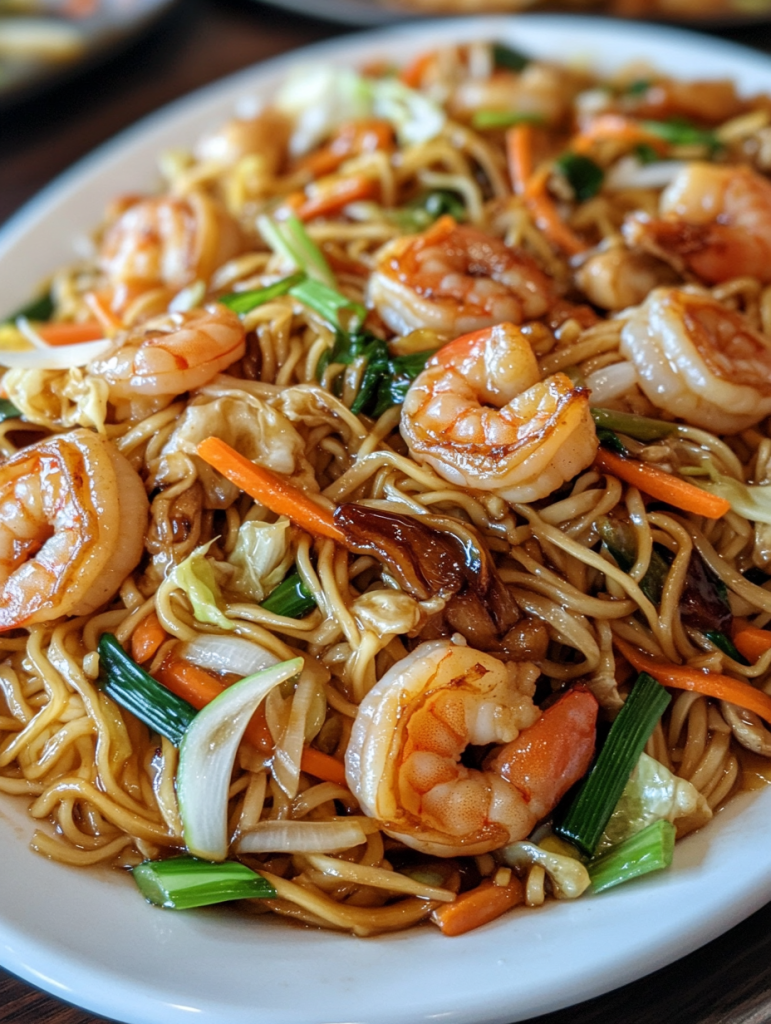
We start by briefly velveting the shrimp so every bite pops. Then we flash-stir-fry garlic, ginger, and a tangle of cabbage, carrots, scallions, and mushrooms. Undercooked lo mein finishes in the pan as the sauce thickens to a silky coat. Finally, bean sprouts add a fresh crunch right before serving.
Ingredients for Shrimp Lo Mein, Simplified
- Shrimp is a sweet, bouncy protein that stays juicy with a quick velvet.
- Lo mein noodles provide a chewy backbone, and you should cook them slightly under so they finish in the pan.
- Light soy, dark soy, and oyster sauce deliver salty brightness, deep color, and a savory umami gloss.
- Shaoxing wine adds restaurant-level depth and an aromatic lift to the stir-fry.
- Sesame oil gives a nutty finish and helps the noodles separate cleanly.
- Aromatics such as garlic, ginger, and scallion whites create savory fragrance in seconds.
- Vegetables like cabbage, carrot, and shiitake bring crunch, color, and natural sweetness.
- Bean sprouts and scallion greens add a fresh snap right at the end.
- Neutral oil allows a high-heat sear without clashing with other flavors.
- Cornstarch with a pinch of baking soda makes shrimp tender and silky while giving the sauce light body.
Noodle texture sets the tone
Great lo mein starts with properly cooked noodles. Boil them 1–2 minutes shy of done, then rinse briefly to stop cooking and drain very well.
Excess surface water dilutes the sauce, so let them dry. Toss with a touch of sesame oil so strands stay separate while you prep. In the wok, high heat plus movement lets the noodles drink in sauce without turning mushy, preserving that takeout-style spring.
Fast-Track Instructions for Shrimp Lo Mein
Marinate the shrimp briefly with soy, white pepper, baking soda, Shaoxing, cornstarch, and a little oil. Sear hot and fast, then remove to a plate.
Stir-fry garlic, ginger, and sturdy vegetables until just wilted. Add undercooked noodles, return the shrimp, and pour in the premixed sauce.
Toss over high heat until everything is glossy and evenly coated. Finish with bean sprouts and scallion greens, then serve immediately.
Velveting makes shrimp juicy, not rubbery
A tiny pinch of baking soda changes the shrimp’s pH so it stays snappy. Meanwhile, cornstarch and oil form a protective film that locks in moisture.
Marinate about 15 minutes, then sear over high heat just until opaque. Pull the shrimp out before finishing the vegetables and noodles, and use the final toss to reheat them gently in the sauce.

Pro Tips & Easy Variations
- Use your largest burner and preheat the wok or skillet until it shimmers for speed and sear.
- For deeper color, add a splash more dark soy while tossing the noodles.
- To boost savoriness without extra salt, add a small pinch of sugar to balance the soy trio.
- Swap vegetables by season, such as snow peas in spring or bell peppers in summer.
- Slice all vegetables to similar thickness so everything stir-fries evenly.
- Add chili crisp or sambal for an effortless kick during the final toss.
Sauce balance brings depth and sheen
Think of the sauce as a triangle: light soy for salinity, dark soy for color and mild sweetness, and oyster sauce for savory body. A touch of sugar rounds the edges, while white pepper adds gentle warmth.
Mix the liquids with a little water and cornstarch before cooking so it pours smoothly and thickens on cue. If the wok feels dry, add a teaspoon or two of water to create steam that helps the sauce cling without turning heavy.
How to Store Leftovers
Cool the lo mein quickly in a shallow container, then refrigerate within an hour. The noodles will continue to absorb sauce, so leftovers taste best within 2 days.
For freezing, portion into meal-size packs and thaw overnight before reheating. If you anticipate leftovers, hold back a handful of bean sprouts and scallion greens to add fresh after reheating.
Reheating keeps noodles springy, not soggy
Reheat in a hot skillet with a teaspoon of oil and a splash of water. Toss just until steamy so the noodles re-plump without breaking.
Microwaving also works in short bursts. Add a few drops of water, cover, and stir between intervals to distribute heat, then finish with reserved sprouts and scallion greens for brightness.
Frequently Asked Questions (FAQ)
Can I use frozen shrimp?
Yes. Thaw overnight in the refrigerator or under cold running water, then pat very dry before marinating.
I don’t own a wok—will a skillet work?
A large 12-inch heavy skillet works well. Preheat thoroughly, cook in batches if needed, and avoid overcrowding.
How can I make this gluten-free?
Use gluten-free lo mein-style noodles and tamari instead of soy sauce. Choose a certified gluten-free oyster sauce, and use dry sherry if needed.
How do I make it spicy?
Stir in chili crisp, sambal oelek, or Chinese chili oil during the final toss. For a smoky kick, add a pinch of ground Sichuan pepper with the aromatics.
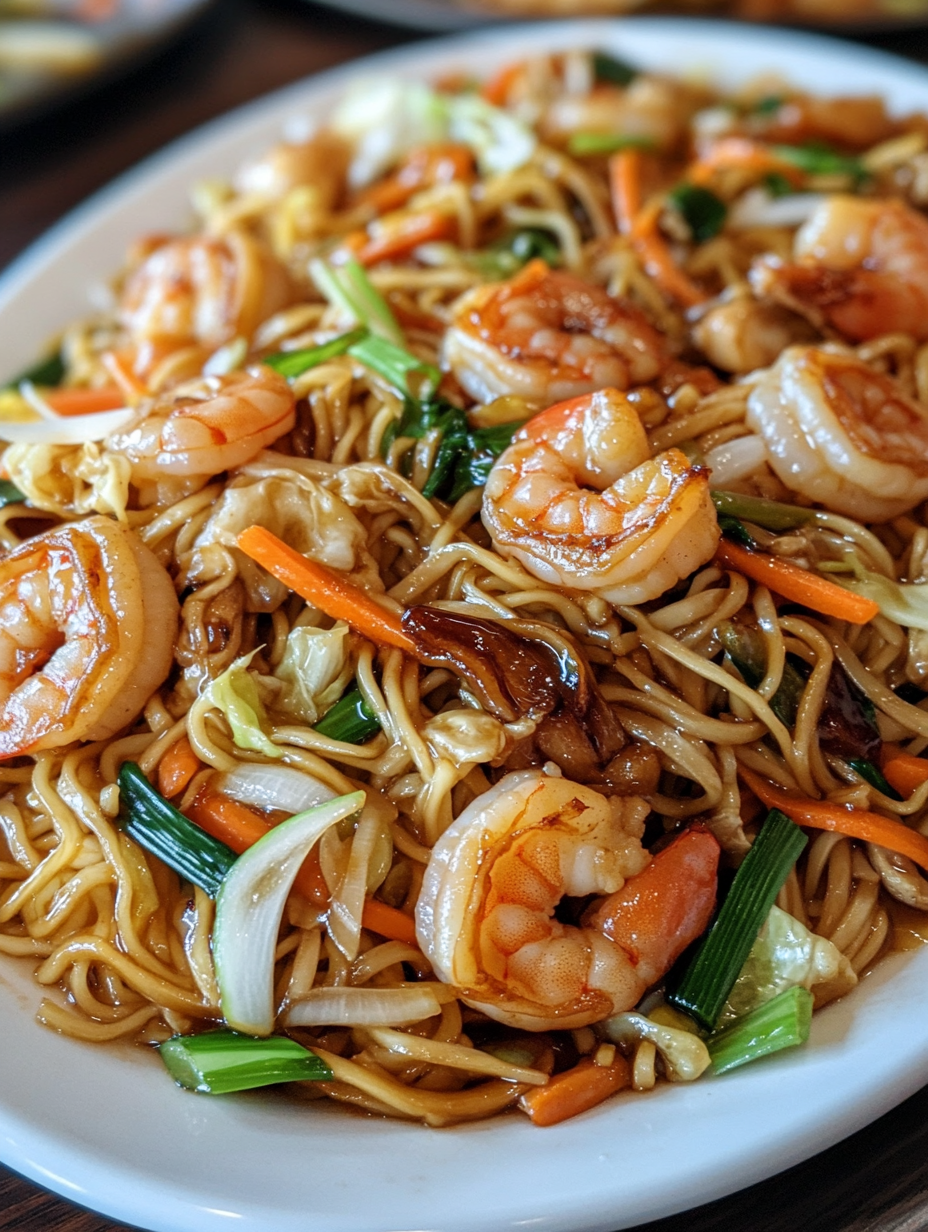
Shrimp Lo Mein
Ingredients
Shrimp Marinade
- 1 tablespoon light soy sauce
- 1/2 tablespoon avocado oil or other neutral oil
- 1/4 teaspoon baking soda
- 1/2 teaspoon salt
- 1/4 teaspoon white pepper
- 1 pound shrimp peeled and deveined
- 1/2 tablespoon cornstarch
Sauce
- 1 tablespoon oyster sauce
- 1/2 tablespoon cornstarch
- 1 tablespoon Shaoxing wine
- 1/4 teaspoon white pepper
- 1/4 teaspoon MSG optional
- 1 tablespoon water
- 1 tablespoon dark soy sauce
- 2 tablespoons light soy sauce
- 1 teaspoon sesame oil
- 1/2 tablespoon sugar
Vegetables
- 2 cups bean sprouts
- 6 shiitake mushrooms thinly sliced
- 1 carrot julienned
- 5 scallions chopped, whites and greens separated
- 3 cups cabbage shredded
- 1/2 white onion sliced
- 1 tablespoon fresh ginger finely minced
- 5 cloves garlic minced
Noodles
- 16 ounces lo mein noodles fresh or dried
- 1/2 teaspoon sesame oil optional, for tossing noodles
- 3 tablespoons avocado oil or neutral oil of choice
Instructions
- Place the shrimp in a bowl and combine with light soy sauce, salt, white pepper, baking soda, cornstarch, and neutral oil. Allow the shrimp to marinate for 15 minutes while the remaining components are prepared.
- Wash and slice all vegetables, keeping scallion greens separate from the whites. Set aside.
- In a separate bowl, mix all sauce ingredients thoroughly until smooth and set aside for later use.
- Cook the lo mein noodles until just shy of al dente, about 2 minutes less than the package instructions suggest. Drain, rinse immediately under cold water, drain again, and toss with sesame oil to prevent clumping.
- Heat 3 tablespoons of neutral oil in a wok over high heat. Add the marinated shrimp and sear for 2–3 minutes or until just cooked through. Remove from the wok and set aside.
- Using the remaining oil in the wok, quickly sauté the minced garlic and ginger for about 15 seconds until fragrant. Add the scallion whites, then stir in the carrot, cabbage, onion, and mushrooms. Cook until slightly softened but still crisp.
- Return the noodles and shrimp to the wok, then pour in the prepared sauce. Toss thoroughly to ensure even coating. Stir-fry for another 1–2 minutes until the sauce thickens and clings to the noodles and ingredients.
- Finish by folding in the bean sprouts and scallion greens. Toss briefly, remove from heat, and serve immediately.
Notes
Avoid olive oil due to its low smoke point and flavor profile, which may not complement Chinese dishes.
MSG is optional and can be omitted based on preference.
Feel free to substitute or add vegetables based on availability—just ensure all are cut into similar sizes for even cooking.
Undercook the noodles slightly, as they will finish cooking when stir-fried with the sauce and vegetables.
Always rinse noodles in cold water immediately after boiling to stop the cooking process and preserve the ideal texture.