
Rustic old fashioned beef stew is a hearty stovetop dinner with tender beef chuck, red potatoes, carrots, pearl onions, and celery simmered in a deeply savory broth. Tomato paste, Worcestershire sauce, herbs, and a touch of allspice give the stew plenty of slow-cooked flavor, while a simple cornstarch slurry creates a rich, comforting consistency.
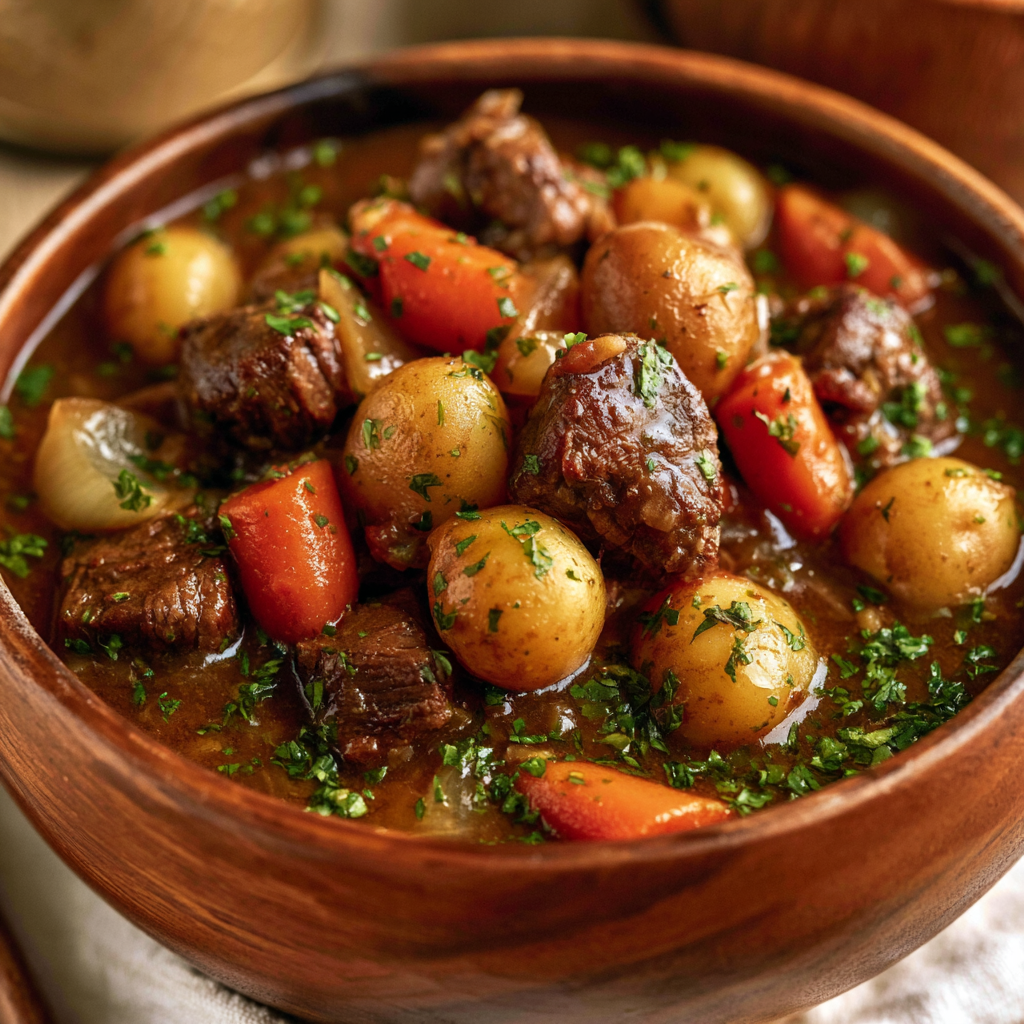
This is the kind of meal that works especially well when you want something warm and filling without relying on complicated techniques. Most of the work happens at the beginning, when the beef is browned and the savory base is built. After that, the pot can gently simmer while the meat and vegetables become tender.
The combination of beef broth, Worcestershire sauce, garlic, tomato paste, and dried herbs creates a flavorful base that becomes richer as it cooks. Red potatoes hold up nicely during the long simmer, while carrots, celery, and pearl onions give every bowl plenty of texture.
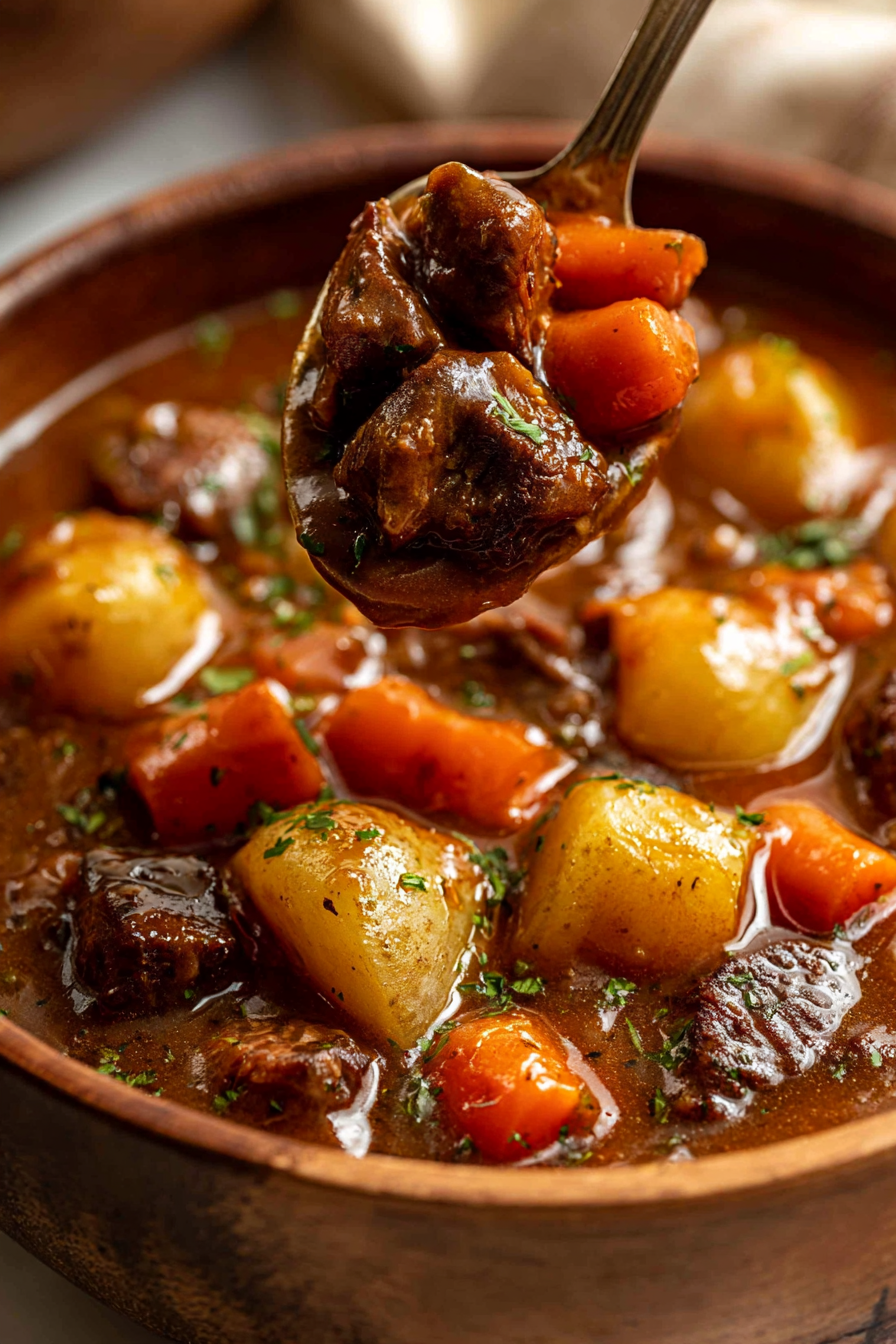
A final thickening step makes the broth substantial enough to coat the beef and vegetables without turning the stew overly heavy. Serve it steaming hot with crusty bread for a classic, satisfying dinner.
Rustic Old Fashioned Beef Stew Ingredients
You only need familiar stew ingredients to build plenty of flavor in this one-pot meal.
- Beef chuck: The main protein and an excellent choice for long simmering because it becomes increasingly tender as it cooks.
- Cornstarch: Used both to lightly coat the beef before browning and to thicken the finished stew.
- Salt and black pepper: Provide the basic seasoning for the beef.
- Olive oil: Helps the beef develop a flavorful browned exterior.
- Garlic: Adds an aromatic savory note to the stew base.
- Tomato paste: Concentrates the broth and contributes deeper savory flavor.
- Beef broth: Forms the primary cooking liquid and carries the flavors of the beef, vegetables, and seasonings.
- Worcestershire sauce: Adds depth and a pleasantly savory, tangy character.
- Red potatoes: Become tender while maintaining enough structure for a chunky stew.
- Pearl onions: Add mild onion flavor without disappearing completely into the broth.
- Carrots: Bring sweetness and a firm-tender texture.
- Celery: Adds another layer of traditional stew flavor.
- Granulated sugar: A small amount balances the stronger savory and acidic ingredients.
- Dried basil, oregano, and parsley: Give the broth a familiar herbaceous background.
- Paprika: Adds mild warmth and rounds out the seasoning.
- Ground allspice: Provides a subtle warming note that suits the long-cooked beef.
- Cold water: Mixed with cornstarch to create the final thickening slurry.
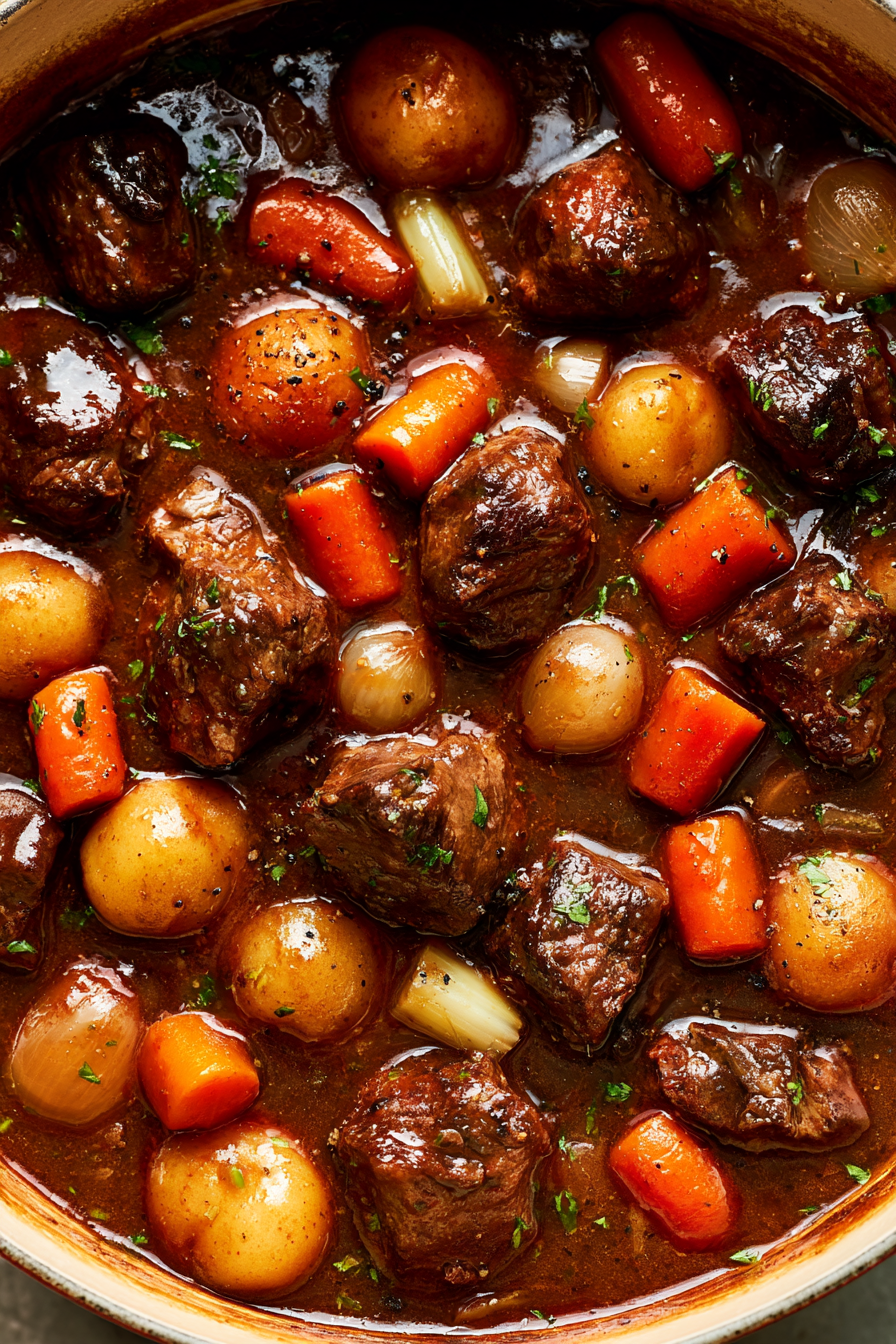
Cooking Steps
STEP 1: Cut the beef chuck into evenly sized cubes if it is not already prepared. Toss the pieces with cornstarch, salt, and black pepper until the surface of the meat is lightly and evenly coated. This coating helps the beef brown and also contributes a little body to the broth.
STEP 2: Heat the olive oil in a large heavy-bottomed pot or Dutch oven over medium-high heat. Add the beef and brown it for about 5 minutes, turning the pieces so several sides make contact with the hot pan. Avoid lowering the heat too much, since good browning creates important flavor for the finished stew.
STEP 3: Stir the minced garlic and tomato paste into the browned beef. Cook for another minute or two, stirring frequently. The garlic should become fragrant, while the tomato paste should darken slightly as it cooks against the bottom of the pot.
STEP 4: Pour in the beef broth and Worcestershire sauce, scraping the bottom of the pot to loosen any browned bits. Add the potatoes, pearl onions, carrots, and celery, followed by the sugar, basil, oregano, parsley, paprika, and allspice. Stir well so the seasonings are distributed throughout the liquid.
STEP 5: Bring the stew up to a boil, then immediately reduce the heat to maintain a gentle simmer. Cover the pot and cook for approximately 90 to 120 minutes. Stir occasionally, especially near the bottom of the pot. The stew is ready for thickening once the beef is tender and the vegetables are fully cooked.
STEP 6: Stir together the remaining cornstarch and cold water until you have a completely smooth slurry. Slowly pour it into the simmering stew while stirring. Continue cooking uncovered for a few minutes so the starch can activate and the broth can thicken.
STEP 7: Taste the stew before serving and adjust the salt or black pepper as needed. Ladle the beef, vegetables, and thickened broth into bowls and serve while piping hot.
What to Serve with Rustic Old Fashioned Beef Stew
Crusty bread is one of the simplest and most useful pairings because it can soak up the thick, savory broth left at the bottom of each bowl.
Dinner rolls or biscuits also work nicely if you want something soft and buttery alongside the stew.
A simple green salad can provide a fresher contrast to the rich beef and tender vegetables without competing with the flavors of the main dish.
Can I make beef stew ahead of time?
Yes. Beef stew is particularly well suited to advance preparation because the flavors have time to mingle as it rests. Cook the stew completely, cool it promptly, and refrigerate it in a covered container. Reheat it gently on the stovetop when you are ready to serve.
How do I know when the beef is tender enough?
The beef should yield easily when pressed or pierced with a fork. If it still feels firm or chewy after 90 minutes, continue simmering it gently. Chuck becomes tender through time rather than high heat, so an additional 20 to 30 minutes may make a noticeable difference.
Why is my beef stew not thick enough?
The final cornstarch slurry is what gives this stew its substantial consistency. Make sure the cornstarch is mixed with cold water before adding it. Once stirred into the hot stew, allow the mixture to simmer uncovered for several minutes so it has enough time to thicken.
Can I use another type of potato?
You can, although red potatoes are especially convenient because they generally retain their shape during a long simmer. Other waxy or all-purpose potatoes can work as well. Cut them into fairly substantial pieces so they do not break down before the beef becomes tender.
Should beef stew simmer covered or uncovered?
Keep the pot covered during most of the 90 to 120 minute cooking period. This limits evaporation while the beef tenderizes. Once you add the cornstarch slurry near the end, remove the lid so you can monitor the thickness and allow a little excess moisture to evaporate.
Helpful Tips
- Brown the beef rather than simply steaming it. Keep the pot hot and give the meat enough contact with the cooking surface to develop color, since those browned bits contribute significantly to the broth.
- Maintain a gentle simmer. Vigorous boiling can make the beef tougher and may cause the potatoes and vegetables to break apart before the chuck becomes tender.
- Add the slurry gradually. The broth continues thickening as it simmers, so stir it in and give it a few minutes before deciding whether the consistency is right.
How to Store & Reheat
Allow leftover stew to cool before transferring it to airtight containers. Store it in the refrigerator for up to 3 to 4 days. Because the broth is already thickened, it may become noticeably thicker after chilling.
For longer storage, divide the stew into freezer-safe containers and freeze for up to 2 to 3 months. Leave a little space at the top of each container for expansion. Keep in mind that potatoes can become somewhat softer after freezing and thawing, although the stew will still be suitable for reheating.
Thaw frozen stew overnight in the refrigerator whenever possible. Reheat individual or larger portions in a saucepan over low to medium-low heat, stirring occasionally until the beef and vegetables are hot throughout. If the refrigerated broth has thickened more than you prefer, add a small splash of beef broth or water while reheating.
For serving, finish each bowl with a little fresh parsley if you have it available and place plenty of crusty bread on the table. The tender chuck, chunky vegetables, and rich broth make this rustic beef stew substantial enough to stand on its own as a complete comforting meal.
Rustic Old Fashioned Beef Stew
Ingredients
For the Beef and Stew Base
- 4 cups beef broth
- 2 garlic cloves finely minced
- ¼ cup Worcestershire sauce
- 2 lb beef chuck cut into cubes
- 2 tablespoons olive oil
- ¼ teaspoon ground black pepper
- 2 tablespoons tomato paste
- 1 teaspoon salt
- 2 tablespoons cornstarch
For the Vegetables and Seasonings
- 4 celery ribs sliced
- ½ teaspoon dried oregano
- 10 oz pearl onions
- ¼ teaspoon ground allspice
- 4 medium carrots cut into slices
- ½ teaspoon paprika
- 1½ lb red potatoes diced
- ½ teaspoon dried parsley
- 1 teaspoon granulated sugar
- ½ teaspoon dried basil
For Thickening
- ¼ cup cold water
- 2 tablespoons cornstarch
Instructions
- Coat and season the beef. Place the cubed beef chuck in a bowl with 2 tablespoons cornstarch, 1 teaspoon salt, and ¼ teaspoon black pepper. Toss thoroughly until every piece of beef is evenly covered with the seasoned cornstarch mixture.
- Brown the meat. Warm 2 tablespoons olive oil in a large pot or Dutch oven over medium-high heat. Add the coated beef and cook for approximately 5 minutes, stirring frequently so the pieces develop an even brown crust on all sides.
- Develop the savory base. Add the minced garlic and tomato paste directly to the browned beef. Cook for 1–2 minutes while stirring, allowing the garlic to become aromatic and the tomato paste to deepen slightly in color.
- Add the broth, vegetables, and seasonings. Pour the beef broth and Worcestershire sauce into the pot. Scrape across the bottom to release the browned, caramelized bits. Add the diced red potatoes, pearl onions, sliced carrots, and celery. Season with the granulated sugar, basil, oregano, parsley, paprika, and ground allspice, then stir until everything is evenly distributed.
- Simmer until tender. Increase the heat and bring the stew to a boil. Once boiling, reduce the heat to low and cover the pot. Maintain a gentle simmer for 90–120 minutes, stirring occasionally to keep the ingredients from sticking and to promote even cooking. The beef should become tender as the stew develops a fuller flavor.
- Thicken the broth. Combine the remaining 2 tablespoons cornstarch with ¼ cup cold water in a small bowl, stirring until smooth and completely dissolved. Slowly add the slurry to the simmering stew while stirring continuously. Leave the pot uncovered and continue cooking over low heat for a few additional minutes, until the broth reaches the preferred thickness.
- Finish and serve. Taste the finished stew and add additional salt or black pepper if necessary. Ladle into bowls and serve while hot.