
Roasted Turkey Thighs are a practical choice when you want juicy, flavorful turkey without roasting a whole bird. Herb butter, garlic, sage, rosemary, and paprika season the meat beautifully, while onion, celery, and thyme create savory pan drippings underneath.
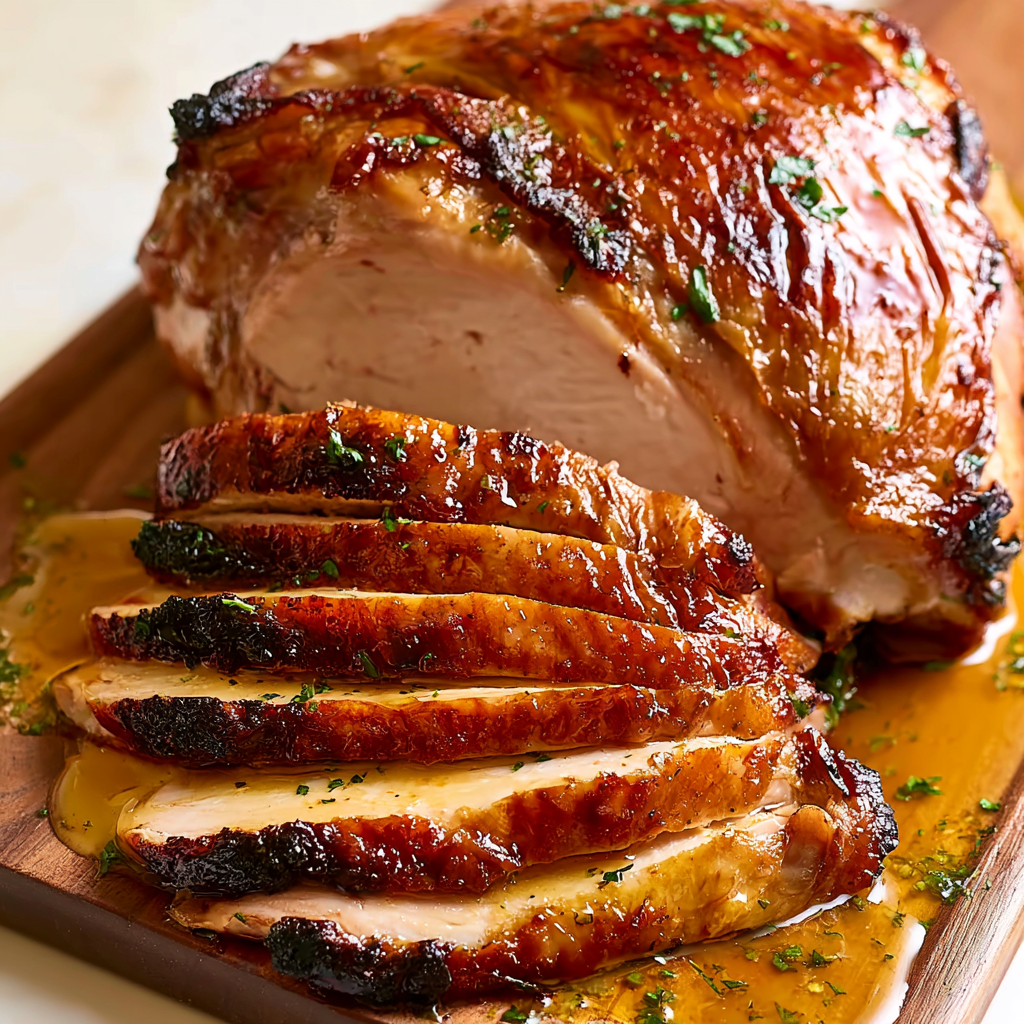
If you love the comforting flavors of a traditional turkey dinner but do not need an entire bird, turkey thighs are a great option. They give you plenty of tender dark meat, beautifully browned skin, and a shorter roasting time that works just as well for Sunday dinner as it does for a smaller holiday meal.
The real advantage here is the herb butter. Tucking some beneath the skin helps season the meat directly, while the butter spread over the outside encourages rich browning. Starting the turkey at a higher temperature gives the skin a head start, then reducing the heat allows the thighs to finish roasting gently without drying out.
A simple layer of onion, celery, and fresh thyme underneath the turkey also does double duty. The vegetables perfume the meat as it roasts and catch the buttery turkey juices, leaving you with flavorful drippings that can be spooned over the meat or turned into gravy.
Roasted Turkey Thighs Ingredients
You only need a handful of familiar ingredients to build plenty of savory flavor.
- Turkey thighs: Two to three pounds of bone-in turkey thighs provide juicy dark meat and plenty of flavorful skin for roasting.
- Unsalted butter: Forms the rich base of the herb mixture and helps the turkey brown as it cooks.
- Fresh garlic: Adds a strong savory note that works particularly well with turkey and fresh herbs.
- Fresh sage: Gives the turkey that unmistakable traditional poultry-seasoning aroma.
- Rosemary: Adds a woodsy, fragrant flavor that stands up well to dark turkey meat.
- Fresh parsley: Brings freshness to the richer butter mixture.
- Paprika: Adds mild flavor and helps deepen the golden color of the roasted skin.
- Salt and black pepper: Essential for seasoning both the surface and the meat beneath the skin.
- Onion: Roasts beneath the turkey and contributes sweetness and savory depth to the drippings.
- Celery: Adds another classic poultry flavor to the aromatic roasting bed.
- Fresh thyme: Complements the sage and rosemary while seasoning the vegetables and pan juices.

Cooking Steps
STEP 1: Pat the turkey thighs thoroughly dry with paper towels. There is no need to rinse raw turkey, and keeping the surface dry also helps promote better browning. Season the thighs generously with salt and freshly ground black pepper, including a little seasoning beneath the skin when you can do so without tearing it.
STEP 2: Combine the softened unsalted butter with the minced garlic, sage, rosemary, parsley, and paprika. Stir until the herbs and seasonings are evenly distributed throughout the butter. If you are preparing ahead, the herb butter can be refrigerated and then softened before using.
STEP 3: Carefully loosen the turkey skin from the meat by sliding your fingers underneath it. Spread part of the herb butter directly over the meat, then rub the remaining butter over the exterior of the thighs. For deeper flavor, refrigerate the seasoned turkey for several hours or overnight. If cooking immediately, you can move straight to roasting.
STEP 4: Preheat your oven to 400°F. Scatter the quartered onion, diced celery, and fresh thyme across the bottom of a roughly 3-quart baking dish. Arrange the turkey thighs on top with the skin facing upward so hot air can circulate around the exposed surface.
STEP 5: Roast the turkey at 400°F for about 30 minutes. This initial higher-temperature roast helps render some of the fat beneath the skin and encourages a deeper golden finish.
STEP 6: Reduce the oven temperature to 325°F and continue roasting for approximately another hour. Begin checking sooner if your turkey thighs are on the smaller side. If the skin is becoming darker than you prefer, loosely tent the turkey with foil while the meat finishes cooking.
STEP 7: Check doneness with an instant-read thermometer inserted into the thickest part of the thigh without touching the bone. The turkey should reach at least 165°F. Remove the baking dish from the oven and allow the thighs to rest for 10 to 15 minutes before carving so the juices have time to settle back into the meat.
Helpful Tips
- Dry the skin well. Surface moisture works against browning, so thoroughly patting the turkey dry before adding butter makes a noticeable difference.
- Use a thermometer rather than relying on time alone. Turkey thighs vary in thickness, so temperature is the most reliable way to determine when they are cooked.
- Save the pan juices. The butter, turkey drippings, onion, celery, and thyme create a flavorful base that can be strained and used for gravy.
Can I prepare turkey thighs the night before?
Yes. Season the thighs and rub them with the herb butter, then cover and refrigerate them for up to 24 hours. This is particularly convenient for holiday cooking because most of the hands-on preparation can be finished before you need to turn on the oven.
For more even cooking, take the baking dish from the refrigerator while the oven preheats rather than transferring an ice-cold dish directly into a hot oven.
What temperature should turkey thighs reach?
Turkey is considered safely cooked when the thickest part reaches at least 165°F. Insert the thermometer into the meatiest part of the thigh and avoid touching the bone, since contact with the bone can give you a misleading temperature reading.
Dark meat can remain juicy even when cooked somewhat beyond 165°F, but checking the temperature promptly helps you avoid unnecessarily overcooking it.
How do I get crispy skin on turkey thighs?
Start by making sure the skin is very dry before seasoning. Roast the thighs uncovered and skin-side up, and use the initial 400°F roasting period to encourage browning.
Avoid repeatedly opening the oven door or spooning liquid over the skin during roasting. Basting may add surface moisture, which can make it harder for the skin to stay crisp.
Can I use dried herbs instead of fresh herbs?
You can substitute dried herbs when fresh sage, rosemary, or parsley are unavailable, but use less because dried herbs are more concentrated. Rub them thoroughly into the softened butter so their flavor is evenly distributed.
Fresh herbs provide the most aromatic result, especially when they roast together with the garlic and butter beneath the turkey skin.

Perfect Pairings
These roasted turkey thighs work naturally with the same comforting side dishes you might serve alongside a traditional roast turkey.
- Creamy mashed potatoes: Ideal for catching the buttery turkey juices or homemade gravy.
- Roasted vegetables: Carrots, Brussels sprouts, green beans, or roasted root vegetables balance the richness of the turkey.
- Stuffing or dressing: A savory bread-based side turns the meal into a cozy Thanksgiving-style dinner without requiring a whole turkey.
For a simpler weeknight meal, you can also serve the turkey with steamed vegetables and potatoes, rice, or another uncomplicated starch.
How to Store & Reheat
Allow leftover roasted turkey thighs to cool before transferring the meat to an airtight container. Refrigerate leftovers promptly and use them within 3 to 4 days.
For longer storage, remove the meat from the bones if desired and place it in a freezer-safe container or freezer bag. Turkey can be frozen for around 2 to 3 months for the best quality. Adding a spoonful of the reserved pan juices before freezing can help protect the meat from drying out.
To reheat larger pieces, place them in a covered baking dish with a small amount of pan drippings, broth, or water and warm them in a moderate oven until heated through. Keeping the dish covered for most of the reheating time helps retain moisture.
If you want to restore some crispness to the skin, uncover the turkey for the final few minutes of reheating. Smaller portions can also be reheated gently in the microwave, although the skin will remain softer.
These herb butter roasted turkey thighs are especially useful when a full turkey would simply be too much food. You still get the deeply savory herbs, golden roasted skin, juicy dark meat, and fragrant pan drippings associated with a classic turkey dinner, but in a manageable size that is much easier to prepare, serve, and store.
Roasted Turkey Thighs
Ingredients
For the Turkey
- 4 oz unsalted butter preferably a high-quality variety such as Kerrygold
- 1 tablespoon fresh parsley finely chopped
- 2 –3 lb turkey thighs
- 1 teaspoon paprika
- 5 fresh sage leaves finely minced
- Kosher or sea salt as needed
- 1 tablespoon fresh rosemary leaves chopped
- Freshly ground black pepper to taste
- 2 teaspoons freshly minced garlic
For the Roasting Pan
- 2 fresh thyme sprigs finely minced
- 1 medium onion quartered
- 2 celery stalks cut into small dice
Instructions
- Rinse the turkey thighs thoroughly beneath cold running water, then use paper towels to pat them completely dry. Removing excess surface moisture will help the skin become crisper during roasting.
- Season every side of the thighs with salt and black pepper. Where possible, carefully work a small amount of salt beneath the skin so the meat itself receives additional seasoning.
- Place the softened unsalted butter in a small bowl and add the minced garlic, sage, chopped rosemary, paprika, and parsley.
- Blend the ingredients thoroughly until the seasonings are evenly distributed and the butter forms a smooth herb mixture. The seasoned butter may be prepared one or two days in advance and refrigerated until needed.
- Gently slide your fingers between the skin and meat of each turkey thigh to loosen the skin without tearing it.
- Spread the herb butter generously over the exterior of each thigh, then work some of the mixture beneath the loosened skin to season the meat more thoroughly.
- Transfer the prepared thighs to the refrigerator until roasting time. They may be marinated for several hours or kept refrigerated for as long as 24 hours.
- Preheat the oven to 400°F (205°C).
- Place the quartered onion, diced celery, and minced fresh thyme in the bottom of a 3-quart baking dish, distributing the aromatics to form a bed for the turkey.
- Roast the Turkey Thighs
- Set the marinated turkey thighs skin-side upward over the prepared onion, celery, and thyme.
- Lower the oven temperature to 325°F (165°C) and continue roasting for approximately 1 additional hour, depending on the size of the thighs. An instant-read thermometer inserted into the thickest portion should register 165°F (75°C).
- Check the turkey after about 45 minutes of the lower-temperature roasting period to make sure it is cooking and browning evenly. If the skin becomes too dark before the meat is fully cooked, loosely cover the thighs with aluminum foil.
- Remove the roasted turkey thighs from the oven and allow them to rest for 10–15 minutes before carving. This resting period allows the juices to redistribute throughout the meat.
- Reserve the flavorful drippings remaining in the baking dish if desired for preparing gravy.
- Carve and serve the turkey thighs with accompaniments such as mashed potatoes, roasted vegetables, or other preferred side dishes.