
Roasted turkey in oven bag is a practical way to get tender, juicy holiday turkey with less hands-on attention during roasting. Garlic-thyme butter seasons the breast meat directly, while onion, carrots, and celery create an aromatic base beneath the bird.
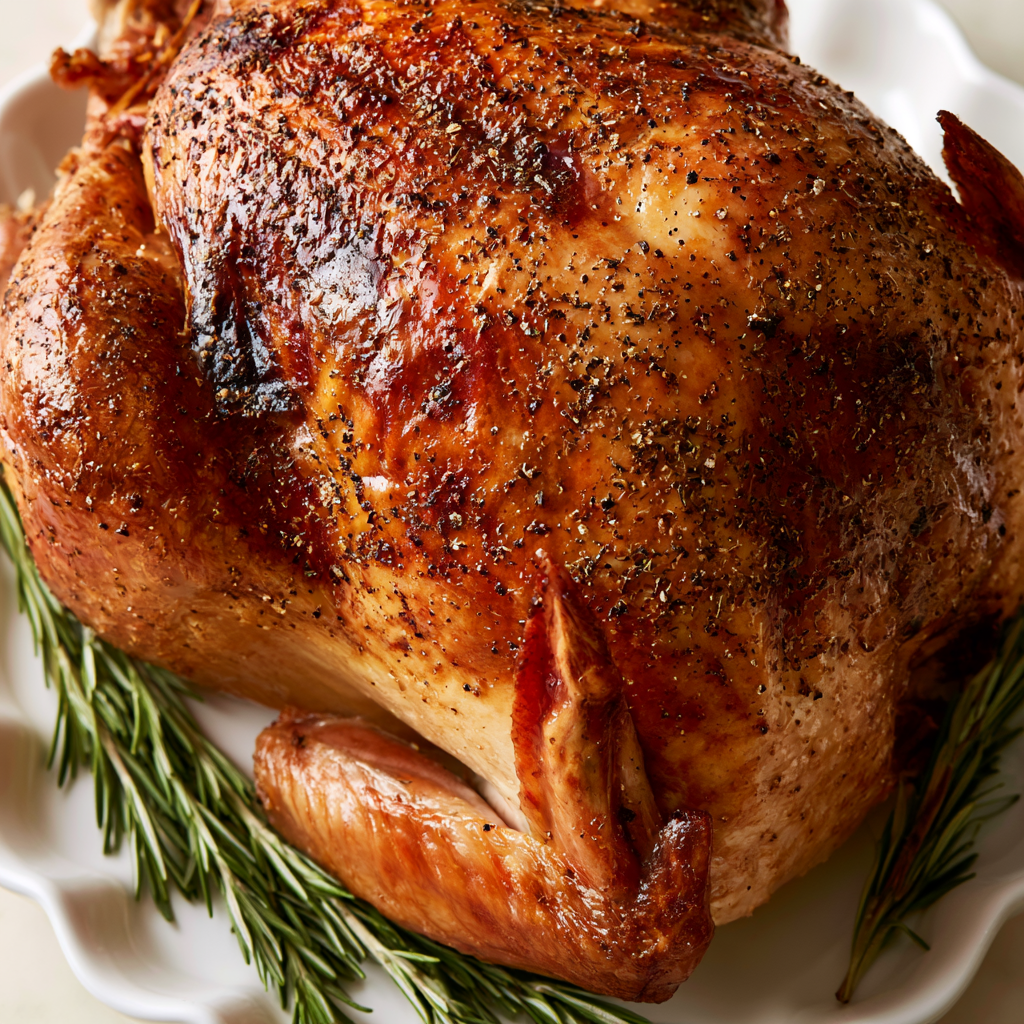
If cooking a whole turkey feels intimidating, the oven-bag method makes the process much more manageable. The enclosed roasting environment helps retain moisture while still allowing the turkey to cook evenly, making it especially useful when you are preparing a large Thanksgiving or holiday meal.
The key to great flavor is spreading the softened garlic and thyme butter beneath the breast skin rather than simply coating the outside. As the turkey roasts, the butter melts directly over the meat, while the vegetables underneath contribute savory aroma and help keep the turkey elevated inside the bag.
Ingredients
You only need a straightforward group of ingredients to prepare this oven-roasted turkey, with most of the flavor coming from the seasoned butter and aromatic vegetables.
- Whole turkey: A fresh or completely thawed 12–24 pound turkey serves as the centerpiece of the dish.
- Unsalted butter: Softened butter creates the base for the seasoning mixture and melts over the breast meat as the turkey cooks.
- Garlic: Freshly minced garlic gives the butter a savory, aromatic flavor.
- Thyme: Dried or fresh thyme adds a classic herb flavor that works naturally with roasted poultry.
- Salt and black pepper: Used both inside and outside the turkey to season the meat throughout.
- Yellow onion: Large chunks provide aroma and savory flavor beneath the turkey.
- Carrots: Cut into substantial pieces so they can withstand the long roasting time.
- Celery: Adds another layer of traditional poultry-roasting flavor to the vegetable bed.
- All-purpose flour: A small amount is shaken inside the oven bag before roasting as part of preparing the bag for oven use.
Cooking Steps
STEP 1: Position an oven rack slightly below the center of the oven and preheat it to 350°F (175°C). In a small bowl, stir the softened butter with the minced garlic, thyme, salt, and black pepper until the herbs and seasonings are evenly distributed.
STEP 2: Remove the turkey neck and giblets from the cavities and check the bird carefully for any remaining pin feathers. Tuck the wing tips underneath the turkey to help protect them from excessive browning. Season the cavity with salt and black pepper.
STEP 3: Carefully loosen the skin covering the breast. The rounded handle of a wooden spoon can help separate the skin from the meat without tearing it. Work the garlic-thyme butter underneath the skin and gently spread it across as much of the breast meat as possible. Season the exterior of the turkey with additional salt and pepper.
STEP 4: Add the all-purpose flour to a turkey-size oven roasting bag and shake the bag so the flour coats the interior. Place the bag inside a sturdy roasting pan before adding any of the remaining ingredients.
STEP 5: Scatter the carrot pieces, celery, and onion chunks across the bottom of the bag. These vegetables form an aromatic bed for the turkey and help keep it slightly elevated as the juices collect during roasting. Carefully place the seasoned turkey breast-side up over the vegetables.
STEP 6: Close the bag using the oven-safe tie supplied with it. Make six small openings across the top so excess steam can escape. Keep every portion of the bag contained inside the roasting pan and away from the heating elements and oven walls.
STEP 7: Roast according to the size of your turkey. A 12–16 pound bird generally needs about 2 to 2 1/4 hours, while a 16–20 pound turkey usually takes approximately 2 1/4 to 2 1/2 hours. For a 20–24 pound turkey, allow roughly 2 1/2 to 3 hours. Begin checking toward the early end of the suggested range rather than relying on time alone.
STEP 8: Check the temperature in several places before taking the turkey from the oven. The thickest area of the breast should reach 165°F, and the thigh should reach approximately 175°F. Let the turkey rest for at least 20 minutes before carefully opening the bag, transferring the bird to a carving board, and slicing it for serving.

How do I know when an oven-bag turkey is done?
Cooking time is helpful for planning, but internal temperature is the most reliable guide. Insert a meat thermometer into the thickest section of the breast without touching bone and check the thigh as well. The breast should register 165°F, while the thigh should be around 175°F.
Helpful Tips
- Soften the butter first. Room-temperature butter blends much more evenly with the garlic and thyme and is easier to spread underneath the delicate turkey skin.
- Check temperature before the estimated finish time. Turkey size, shape, starting temperature, and individual ovens can affect cooking time, so begin checking toward the lower end of the suggested range.
- Open the bag cautiously. A large amount of very hot steam builds up during roasting. Cut or open the bag away from your face and hands after the turkey has rested.
Why do you put flour in a turkey oven bag?
The flour is added when preparing the oven roasting bag before the turkey goes inside. Shake it throughout the bag so it is distributed over the interior rather than leaving it in one pile. Follow any additional preparation directions printed on the particular oven-bag package you are using.
Perfect Pairings
A whole roasted turkey naturally works well with traditional holiday side dishes. Mashed potatoes are ideal for serving alongside the flavorful turkey juices or gravy and make the meal especially comforting.
Roasted or steamed green vegetables such as green beans or Brussels sprouts add freshness and balance alongside the rich turkey.
For a classic holiday plate, serve the turkey with stuffing or dressing. The savory herbs in the stuffing pair particularly well with the garlic and thyme used to season the bird.
Can I prepare the turkey before roasting?
You can do much of the preparation ahead of time. The turkey can be cleaned, seasoned, and rubbed beneath the skin with the garlic-thyme butter in advance, then kept properly refrigerated. Assemble it in the roasting bag closer to the time you plan to place it in the oven.

How to Store & Reheat
Remove leftover turkey meat from the carcass and transfer it to shallow airtight containers once the meal is finished. Refrigerate leftovers promptly and use them within about 3–4 days.
For longer storage, freeze carved turkey in freezer-safe containers or tightly sealed bags. Adding a spoonful of the cooking juices before freezing can help the meat stay moist. For the best eating quality, use frozen turkey within approximately 2–3 months.
To reheat turkey without drying it out, place sliced meat in a covered baking dish with a small amount of turkey juices, broth, or water. Warm it gently in the oven until thoroughly heated. Smaller portions can also be reheated in the microwave, preferably covered so moisture remains trapped around the meat.
Avoid repeatedly reheating the entire batch of leftovers. Instead, warm only the amount you intend to serve so the remaining turkey maintains a better texture.
Does cooking turkey in a bag keep it moist?
The enclosed environment reduces moisture loss during the long roasting period, which can help the turkey remain tender. In this method, the butter underneath the breast skin provides additional richness while the vegetables and natural turkey juices create plenty of flavorful moisture inside the bag.
Because the bag traps much of the steam produced during cooking, it is especially important to create the recommended vent openings before roasting.
Should turkey rest before carving?
Yes. Give the roasted turkey at least 20 minutes to rest after it comes out of the oven. During this time, the juices redistribute through the meat rather than immediately running onto the carving board.
A slightly longer rest is also fine for a large bird. Resting gives you time to finish side dishes and prepare the serving area while making the turkey easier to carve into cleaner, juicier slices.
Roasted Turkey in Oven Bag
Ingredients
Seasoned Butter
- 3 garlic cloves finely minced
- 1/4 cup unsalted butter softened to room temperature
- Salt and freshly ground black pepper as needed
- 1 teaspoon dried thyme or 1 tablespoon fresh thyme
Turkey
- Salt and ground black pepper for seasoning the cavity and exterior
- 1 whole turkey 12–24 pounds, fresh or fully thawed
Vegetable Base and Roasting Bag
- 2 carrots peeled and sliced into 2-inch sections
- 1 tablespoon all-purpose flour
- 1 large yellow onion peeled and cut into chunks
- 4 celery stalks chopped into 2-inch lengths
Instructions
- Position an oven rack one level below the center of the oven, then preheat the oven to 350°F (175°C).
- Combine the room-temperature butter, minced garlic, thyme, a small amount of salt, and ground black pepper in a small bowl. Stir until the seasonings are evenly incorporated into the softened butter.
- Remove the neck and giblets from the turkey cavities. Inspect the skin and remove any remaining pin feathers.
- Fold the wing tips beneath the turkey so they are less likely to become overly browned during roasting.
- Season the interior cavity with salt and ground black pepper.
- Using the handle end of a wooden spoon, carefully loosen the skin covering the breast without tearing it. Spread the garlic-thyme butter beneath the loosened skin, distributing it evenly over the breast meat.
- Season the outside of the turkey generously with additional salt and ground black pepper.
- Place 1 tablespoon of all-purpose flour inside a turkey-size oven roasting bag. Shake the bag thoroughly so the flour is dispersed over its interior.
- Set the prepared oven bag inside a roasting pan.
- Arrange the celery pieces, onion chunks, and carrot sections along the bottom of the bag, forming a vegetable bed.
- Position the seasoned turkey directly on top of the vegetables inside the oven bag.
- Secure the oven bag using the supplied oven-safe tie. Make six small openings across the upper surface of the bag to allow steam to vent during roasting.
- Keep the loose ends of the bag tucked securely within the roasting pan.
- Roast a 12–16 pound turkey for approximately 2–2 1/4 hours. For a 16–20 pound turkey, roast for about 2 1/4–2 1/2 hours. A 20–24 pound turkey will generally require 2 1/2–3 hours.
- Check the internal temperature in several areas before removing the turkey from the oven. The thickest portion of the breast should register 165°F, while the thigh should reach 175°F.
- After roasting, allow the turkey to rest for 20 minutes. This resting period permits the juices to redistribute through the meat before carving.
- Carefully open the top of the roasting bag, taking care around the hot steam. Lift the turkey from the bag and transfer it to a carving board.
- Carve the rested turkey into portions and serve.
Notes
- Softening the butter to room temperature makes it easier to blend thoroughly with the garlic, thyme, salt, and pepper.
- Applying the seasoned butter underneath the breast skin distributes the flavor directly over the meat while helping maintain moisture during roasting.
- If additional time is available, the turkey may rest slightly longer than 20 minutes before carving, which can make slicing easier while allowing the juices to settle further.