
This Roasted Butternut Squash Breakfast combines tender squash, sweet red pepper, runny eggs, rosemary, and a thick balsamic drizzle for a savory, satisfying brunch that comes together in about 45 minutes.
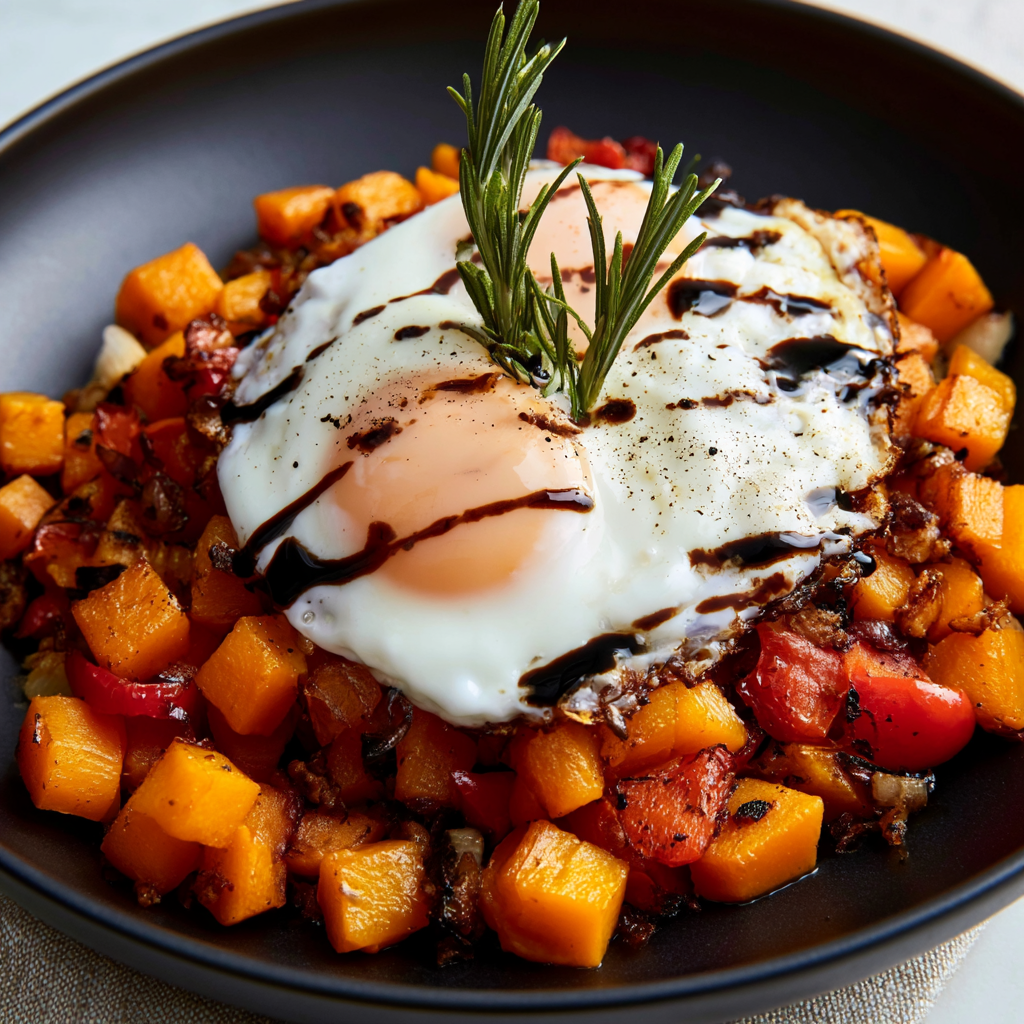
This colorful breakfast is a great choice when you want something warm and substantial without relying on bread, potatoes, or a complicated casserole. Most of the cooking happens on one sheet pan, leaving you free to prepare the eggs and balsamic reduction while the vegetables roast.
The combination works especially well because each component brings something different to the plate. Butternut squash becomes tender and lightly caramelized, red bell pepper adds sweetness, and the eggs create a rich sauce when the yolks break over the vegetables.
A finishing drizzle of reduced balsamic vinegar keeps the dish from feeling heavy. Its concentrated tang balances the naturally sweet vegetables and makes this simple roasted squash breakfast feel special enough for a weekend brunch while remaining practical for an everyday meal.
Ingredients
- Butternut squash: Use about 3 cups of peeled squash cut into small, even cubes. Half-inch pieces roast quickly and are easier to eat with the eggs.
- Red bell pepper: One large pepper adds color, moisture, and a mild sweetness that complements the squash.
- Large eggs: Two eggs per serving make the breakfast filling. Frying, poaching, or soft-boiling all work, depending on your preferred texture.
- Balsamic vinegar: Half a cup cooks down into a glossy, concentrated drizzle with a pleasantly sweet-tart flavor.
- Rosemary: Freshly chopped rosemary gives the roasted vegetables a fragrant, woodsy flavor. Dried rosemary can also be used, but add it sparingly because it tastes more concentrated.
- Garlic powder: A light dusting after roasting adds savory flavor without the risk of fresh garlic burning in the hot oven.
- Olive oil cooking spray: This coats the vegetables lightly and helps the seasonings adhere while encouraging browning.
- Salt and black pepper: These simple seasonings sharpen the flavor of the squash, pepper, eggs, and balsamic reduction.

Cooking Steps
STEP 1: Heat your oven to 425°F and line a rimmed baking sheet with parchment paper or aluminum foil. A rimmed pan keeps the vegetables contained when you toss them and prevents any cooking juices from dripping into the oven.
STEP 2: Spread the diced butternut squash and red bell pepper across the prepared pan. Keep them in a single layer with a little room between the pieces. Crowding traps steam, which can make the squash soft without developing the lightly browned edges that give it more flavor.
STEP 3: Mist the vegetables evenly with olive oil spray. Sprinkle them with salt, freshly ground black pepper, and chopped rosemary, then toss until every piece is lightly coated. Rearrange the vegetables into an even layer before placing the pan in the oven.
STEP 4: Roast the squash and pepper for 25 to 30 minutes. Stir or turn the pieces once during cooking if the edges closest to the pan are browning quickly. The squash is ready when a fork slides easily into the center and the outside has started to caramelize.
STEP 5: While the vegetables roast, pour the balsamic vinegar into a small saucepan. Bring it to a gentle simmer over medium heat, then lower the heat as needed to prevent scorching. Continue simmering until it has reduced to roughly 2 to 3 tablespoons and lightly coats the back of a spoon.
STEP 6: Remove the reduction from the heat and let it stand for a few minutes. It may look slightly thin while hot, but it will become thicker and glossier as it cools. Avoid reducing it until it resembles syrup in the pan, or it may become too sticky once cooled.
STEP 7: Take the roasted vegetables out of the oven and immediately season them with a light dusting of garlic powder. Toss carefully so the seasoning is distributed while the vegetables are still hot.
STEP 8: Cook the eggs using your preferred method. For a sauce-like yolk, fry them over medium-low heat just until the whites are set, poach them gently, or prepare soft-boiled eggs. Divide the vegetables among four plates, top each portion with two eggs, and finish with 1 to 2 teaspoons of balsamic reduction.
How to Store and Reheat
For the most convenient meal preparation, store the roasted vegetables, eggs, and balsamic reduction separately. The cooked squash and bell pepper can be refrigerated in an airtight container for up to four days. The balsamic reduction can be kept in a covered jar or small container in the refrigerator for up to two weeks.
Cooked eggs are best prepared immediately before serving, particularly when you want soft or runny yolks. Fully cooked fried or hard-boiled eggs can be refrigerated for up to two days, but their texture may become firmer after reheating.
Reheat the vegetables in a 400°F oven for 8 to 10 minutes, or warm them in a skillet over medium heat until heated through. The microwave also works, although the squash will be softer and less caramelized.
The roasted vegetables can be frozen for up to two months, but freezing may soften their texture. Do not freeze the cooked eggs or balsamic drizzle. Thaw frozen vegetables overnight in the refrigerator before reheating them in the oven.
Can I prepare the vegetables ahead of time?
Yes. Peel and cube the squash, chop the bell pepper, and refrigerate them in separate airtight containers for up to two days. You can also roast the vegetables in advance and reheat them just before cooking the eggs and assembling the plates.
How do I know when the balsamic reduction is ready?
The reduction should coat the back of a spoon and measure approximately 2 to 3 tablespoons. It should still pour easily while warm. Remember that it continues to thicken as it cools, so remove it from the heat before it becomes very syrupy.
Can I use prepared balsamic glaze?
A prepared balsamic glaze is a convenient substitute for the homemade reduction. Check the ingredient list if you prefer one without added sweeteners, and use a small amount at first because bottled glazes can be thicker and sweeter than a homemade reduction.

What is the best way to cook the eggs?
Fried eggs are especially convenient because they can be prepared while the roasted vegetables finish cooking. Keep the skillet over medium-low heat and cook until the whites are set but the yolks remain soft. Poached or soft-boiled eggs work equally well.
Perfect Pairings
- Sautéed leafy greens: Garlicky spinach, kale, or Swiss chard adds a fresh, savory contrast to the sweet roasted vegetables.
- Toasted sourdough: A crisp slice of toast is useful for scooping up the soft egg yolks and balsamic-coated squash.
- Simple fruit salad: Fresh berries, citrus, or sliced melon provide a cool and refreshing side for a warm brunch plate.
Pro Tips for Butternut Squash Breakfast
- Cut the squash into evenly sized half-inch cubes. Oversized pieces may remain firm after the bell pepper has already softened and browned.
- Add the garlic powder after roasting. This gives the vegetables a noticeable garlic flavor without allowing the seasoning to become bitter in the high oven heat.
- Assemble the plates immediately before serving. Warm vegetables and freshly cooked eggs produce the best contrast, while a slightly cooled balsamic reduction stays on the food instead of running across the plate.
Roasted Butternut Squash Breakfast
Ingredients
For the Roasted Vegetables
- 1 large red bell pepper cut into 1-inch pieces
- 3 cups peeled butternut squash diced into ½-inch cubes, approximately 1 pound
- Fresh rosemary finely chopped, or dried rosemary, to taste
- Freshly ground black pepper as needed
- Garlic powder for finishing
- Olive oil cooking spray as needed
- Salt to taste
For the Eggs
- 8 large eggs
For the Balsamic Reduction
- ½ cup balsamic vinegar
Instructions
- Preheat the oven to 425°F. Cover a rimmed baking sheet with parchment paper or aluminum foil.
- Arrange the cubed butternut squash and chopped red bell pepper on the prepared baking sheet. Spread the vegetables into a single, even layer to encourage uniform roasting.
- Lightly coat the vegetables with olive oil spray. Season with salt, freshly ground black pepper, and rosemary, then toss thoroughly until the seasonings are evenly distributed.
- Roast for 25 to 30 minutes, or until the squash is tender when pierced with a fork. Larger cubes may require additional cooking time.
- While the vegetables roast, pour the balsamic vinegar into a small saucepan. Bring it to a gentle simmer over medium to medium-high heat, then cook until the liquid has reduced by slightly more than half.
- Remove the balsamic reduction from the heat once it coats the back of a spoon and measures approximately 2 to 3 tablespoons. Allow it to cool briefly; it will continue to thicken as its temperature decreases.
- When the vegetables have finished roasting, remove the baking sheet from the oven. Immediately dust the hot squash and pepper lightly with garlic powder, then stir to distribute the seasoning.
- Prepare the eggs by frying, poaching, or soft-boiling them. For runny yolks, cook only until the whites are set; eggs fried over medium-low heat work especially well.
- Divide the roasted vegetables evenly among four plates, using approximately one-quarter of the mixture for each serving. Place two cooked eggs over each portion.
- Finish each plate with 1 to 2 teaspoons of the balsamic reduction and serve promptly.