
This pumpkin cheesecake combines a creamy pumpkin filling, warm cinnamon and cloves, and a crisp gingersnap crust. A gentle water bath and slow cooling help it set smoothly, making it ideal for make-ahead holiday desserts.
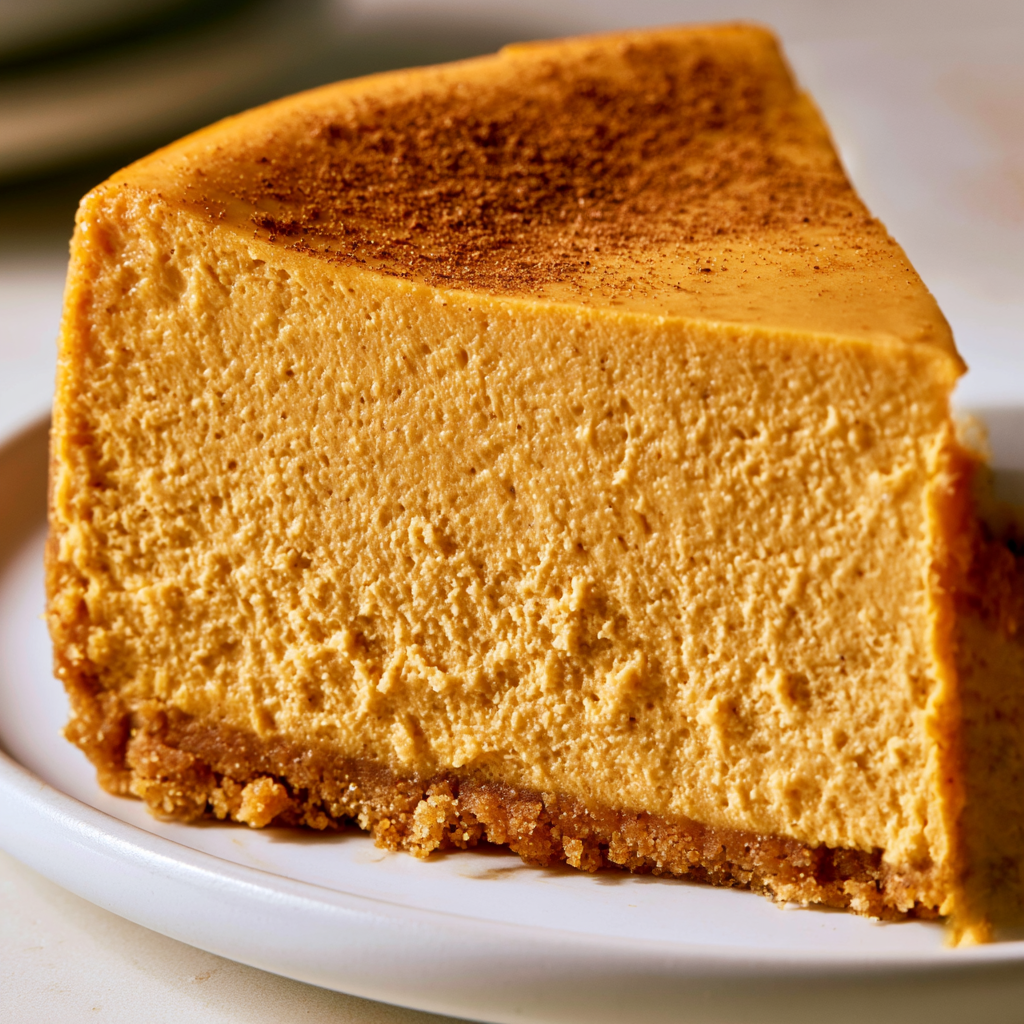
When you want a dessert that feels special but can be prepared well before serving, this cheesecake is a dependable choice. Most of the work happens during mixing and assembly, while the long cooling and chilling periods do the rest.
Pumpkin purée gives the filling its seasonal flavor and color, while cream cheese and sour cream create the rich, smooth base. Cinnamon, nutmeg, and cloves add warmth without overwhelming the pumpkin, and the crisp cookie crust provides a welcome contrast to the creamy center.
The key to a beautifully set cheesecake is patience. Room-temperature ingredients blend more evenly, gentle mixing limits excess air, and the water bath helps the filling bake gradually. After baking, the cheesecake rests in the turned-off oven before chilling overnight, giving you clean slices and an evenly set center.
Pumpkin Cheesecake Ingredients
Gingersnap cookies: Finely crushed cookies form the warmly spiced base and give the cheesecake a crisp contrast to the creamy filling.
Salted butter: Moistens and binds the cookie crumbs so the crust holds together when sliced.
Granulated sugar: Sweetens both the crust and filling while helping balance the tanginess of the cream cheese and sour cream.
Cream cheese: The main component of the filling, providing the characteristic rich, dense, and creamy cheesecake texture.
Pumpkin purée: Adds pumpkin flavor, moisture, and the filling’s warm orange color. Use plain pumpkin purée rather than a prepared pie filling.
Light brown sugar: Adds sweetness along with a subtle caramel-like depth that works especially well with pumpkin and warm spices.
Sour cream: Softens the richness of the cream cheese and contributes to a smoother, creamier consistency.
Eggs: Provide structure so the cheesecake becomes sliceable while remaining tender after chilling.
Vanilla extract: Rounds out the pumpkin and cream cheese flavors without competing with the spices.
Cinnamon, nutmeg, and cloves: Create the classic warm spice profile that complements both the pumpkin filling and gingersnap crust.
Steaming-hot water: Used for the water bath, creating a gentler and more humid baking environment around the springform pan.

Step-by-Step Pumpkin Cheesecake
STEP 1: Heat the oven to 325°F and lightly grease a 9-inch springform pan. Combine the finely crushed gingersnaps with melted butter and a small amount of sugar until the crumbs resemble damp sand. Press them firmly and evenly over the bottom of the pan. Bake for about 6 minutes, then set the crust aside to cool.
STEP 2: Place the softened cream cheese in a large mixing bowl and beat it on medium speed until completely smooth. Scrape both the sides and bottom of the bowl so no firm pieces remain. Blend in the granulated and light brown sugars until evenly incorporated.
STEP 3: Reduce the mixer to low speed. Add the vanilla and pumpkin purée, mixing only until the filling is uniform. Sprinkle in the cinnamon, nutmeg, and cloves. Add the room-temperature sour cream and gently blend just until incorporated. From this point onward, avoid vigorous mixing because extra air can encourage the cheesecake to puff and crack.
STEP 4: Whisk the room-temperature eggs separately until the whites and yolks are completely combined. Add them to the pumpkin mixture and fold gently with a rubber spatula until no visible streaks remain. Pour the filling onto the cooled crust and tap the pan lightly against the counter to release larger trapped air bubbles.
STEP 5: Wrap the outside of the springform pan securely with aluminum foil, paying special attention to the bottom and seams. Place it inside a larger roasting pan. Pour steaming-hot water into the roasting pan until it comes approximately halfway up the side of the springform pan.
STEP 6: Carefully place the water bath in the oven and bake for about 65 minutes. The cheesecake should appear set near the edges while retaining a slight movement in the center. Turn off the oven but keep the door closed, leaving the cheesecake inside for about 5 hours so its temperature decreases very gradually.
STEP 7: Remove the cheesecake from the oven and water bath and allow it to finish cooling. Discard the foil and refrigerate the cheesecake for at least 8 hours, although around 12 hours or overnight gives the filling more time to become fully set. Before releasing the springform sides, run a thin knife carefully around the edge.
How to Store & Reheat
Because cheesecake contains cream cheese, sour cream, and eggs, keep it refrigerated whenever it is not being served. Once completely chilled, cover the springform pan well or transfer individual slices to an airtight container. The cheesecake is at its best within about 4 to 5 days.
For longer storage, you can freeze individual slices after the cheesecake has chilled completely. Place the slices on a tray until firm, then wrap them securely and transfer them to a freezer-safe container. For the best texture, use frozen cheesecake within about 1 month.
Thaw frozen slices overnight in the refrigerator rather than leaving them on the counter. This dessert should be served chilled, so reheating is unnecessary and would soften the carefully set filling.
Why does cheesecake need a water bath?
The hot water surrounding the springform pan helps moderate the temperature around the cheesecake as it bakes. This gentler environment encourages the edges and center to cook at a more similar rate and can reduce excessive browning, rapid rising, and cracking.
Can I make this cheesecake ahead of time?
Yes. In fact, this is an excellent make-ahead dessert because it needs an extended chilling period before serving. Preparing it the day before gives the cheesecake enough time to cool slowly and refrigerate overnight, so there is very little last-minute work.
How do I know when the cheesecake is finished baking?
Look at the movement of the filling rather than waiting for the entire cheesecake to become firm. The outer portion should look set, while the center should still have a small, controlled jiggle when the pan is gently moved. It will continue setting as it rests and chills.

Can I use pumpkin pie filling instead of pumpkin purée?
Plain pumpkin purée is the better choice for this recipe. Pumpkin pie filling already contains sweeteners and seasonings, which would change the intended balance of sugar and spices in the cheesecake. Check the label and choose a product containing plain pumpkin.
Helpful Tips
- Start with room-temperature ingredients. Softened cream cheese and room-temperature sour cream and eggs combine more smoothly, reducing the need for prolonged mixing.
- Mix gently once the filling is smooth. After adding sour cream and especially the eggs, use low speed or a spatula and stop as soon as everything is incorporated.
- Respect the cooling schedule. The long oven rest and overnight refrigeration are part of the method, not optional waiting time. Gradual cooling helps the cheesecake finish setting before slicing.
Serving Ideas for Pumpkin Cheesecake
A spoonful of lightly whipped cream is a simple pairing that adds a soft, airy contrast to the dense, creamy filling without hiding the pumpkin and spice flavors.
A modest caramel drizzle also works particularly well with the brown sugar, gingersnap cookies, and warm spices. Keep the amount restrained so the cheesecake remains the focus of the dessert.
For a fuller holiday dessert plate, serve chilled slices alongside hot coffee or tea. The warmth of the drink pairs naturally with the cinnamon, nutmeg, cloves, and crisp gingersnap crust while balancing the richness of the cheesecake.
Pumpkin Cheesecake
Ingredients
Gingersnap Crust
- 6 tablespoons salted butter melted
- 1 tablespoon granulated sugar
- 1 1/2 cups gingersnap cookies finely crushed into crumbs
Pumpkin Cheesecake Filling
- 15 ounces pumpkin purée
- 1/4 teaspoon ground nutmeg
- 22 ounces cream cheese softened to room temperature, approximately 70°F
- 2/3 cup packed light brown sugar
- 3 large eggs brought to room temperature and whisked
- 1 teaspoon vanilla extract
- 10 ounces sour cream at room temperature
- 1 teaspoon ground cinnamon
- 2/3 cup granulated sugar
- 1/4 teaspoon ground cloves
For the Water Bath
- 4 quarts steaming-hot water
Instructions
- Prepare the crust. Preheat the oven to 325°F. Lightly grease a 9-inch springform pan with butter or cooking spray.
- Combine the finely ground gingersnap crumbs, melted salted butter, and 1 tablespoon granulated sugar. Stir until the mixture has the consistency of damp sand.
- Firmly press the crumb mixture into an even, compact layer across the bottom of the prepared springform pan.
- Bake for 6 minutes, or until the crust is set and lightly golden. Remove it from the oven and allow it to cool while preparing the cheesecake mixture.
- Make the cheesecake base. Place the room-temperature cream cheese in a large mixing bowl. Using an electric mixer on medium speed, beat for 2–3 minutes until completely smooth and creamy, scraping the sides and bottom of the bowl as necessary.
- Add the granulated sugar and packed light brown sugar. Continue mixing for approximately 1 minute, until evenly blended.
- Add the vanilla extract and pumpkin purée. Mix on low speed only until the pumpkin is thoroughly incorporated and the filling has a consistent orange color.
- Incorporate the spices and sour cream. Add the cinnamon, nutmeg, and cloves to the pumpkin mixture. Blend gently on low speed until the spices are evenly dispersed.
- Add the room-temperature sour cream and carefully fold or mix it into the filling just until combined. Avoid excessive mixing, which can introduce unnecessary air into the batter.
- Add the eggs. In a separate bowl, whisk the three room-temperature eggs until uniformly combined and no visible streaks of egg white remain.
- Pour the whisked eggs into the cheesecake filling. Using a rubber spatula, gently fold them into the mixture only until fully incorporated. Stop as soon as no egg streaks are visible to limit the formation of air bubbles.
- Pour the completed filling over the cooled gingersnap crust. Gently tap the springform pan against the countertop several times to help release trapped air.
- Assemble the water bath. Completely wrap the exterior of the springform pan with aluminum foil to protect the cheesecake from water seepage.
- Heat 4 quarts of water until steaming hot. Set the foil-wrapped springform pan inside a larger roasting pan.
- Carefully pour the hot water into the roasting pan until the water reaches approximately halfway up the outside of the springform pan.
- Transfer the entire water-bath arrangement to the preheated 325°F oven.
- Bake and cool gradually. Bake the cheesecake for 65 minutes. It is ready when the outer portion appears set while the center retains a very slight jiggle when the pan is gently moved.
- Turn off the oven without opening the door. Leave the cheesecake undisturbed inside the warm oven for 5 hours.
- After the 5-hour resting period, carefully remove the roasting pan and cheesecake from the oven. Allow the cheesecake to continue cooling until it reaches room temperature.
- Refrigerate and serve. Remove the aluminum foil from the springform pan and place the cheesecake in the refrigerator. Chill overnight for a minimum of 8 hours, with approximately 12 hours preferred for a fully set texture.
- Before releasing the springform pan, carefully run a thin knife around the outer edge of the cheesecake to separate it cleanly from the sides.
- Serve thoroughly chilled. Whipped cream or a drizzle of caramel sauce may be added when serving.
Notes
Freshly ground cinnamon may provide a stronger aroma and more pronounced spice character than pre-ground cinnamon.
Bringing the cream cheese, sour cream, and eggs to room temperature promotes smoother mixing and a more uniform filling.
Avoid overmixing after adding the sour cream and eggs, as excess incorporated air can contribute to cracking.
The water bath and prolonged cooling period provide gentle temperature changes that help the cheesecake bake and set evenly.