
Pumpkin Bread made with freshly grated pumpkin, eggs, and olive oil bakes into a tender, savory loaf with a simple crumb. It is practical for breakfast, lunchboxes, or serving alongside soup, with optional pumpkin seeds for crunch.
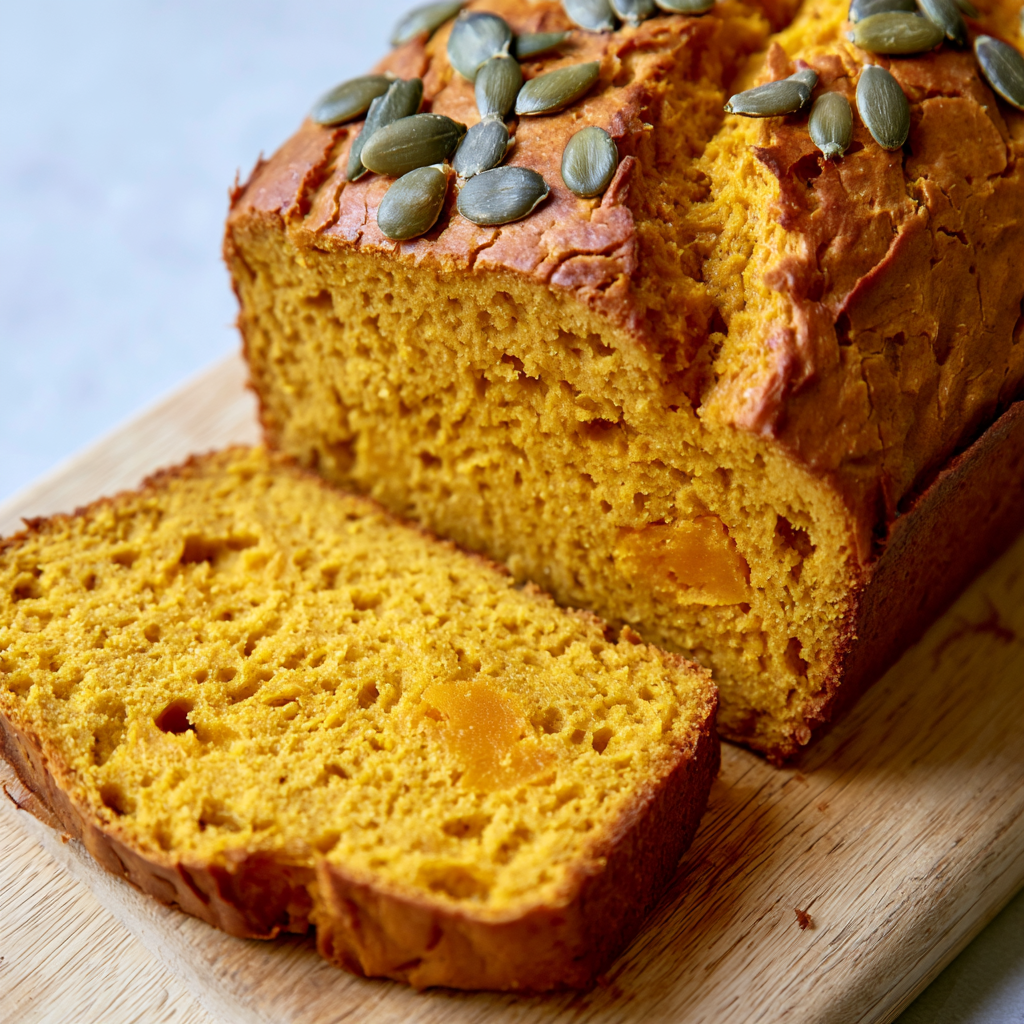
This homemade loaf is a useful choice when you have fresh pumpkin but want something less sweet than a traditional spiced quick bread. The grated pumpkin blends directly into the batter, adding moisture, subtle earthy flavor, and an attractive golden color.
The method is refreshingly straightforward. You do not need yeast, kneading, or a lengthy rising period. Once the pumpkin is grated, the batter comes together in two bowls before being transferred to the loaf tin and baked.
Serve the finished loaf in thick slices while slightly warm or completely cooled. Its mild flavor works well with both simple spreads and savory meals, making it a versatile addition to your kitchen throughout pumpkin season.
Ingredients
Fresh raw pumpkin: Use 16 ounces of peeled and deseeded pumpkin. Grating it finely helps the pumpkin cook evenly and disperse its moisture throughout the loaf.
Large eggs: Four room-temperature eggs provide structure, richness, and enough binding power to hold the grated pumpkin and flour together.
Olive oil: A quarter cup keeps the crumb tender and gives the loaf a mild earthy flavor. An equal amount of melted coconut oil or neutral vegetable oil may also be used.
Plain all-purpose flour: Two and a half cups form the main structure of the bread. Measure the flour carefully so the finished loaf does not become dry or overly dense.
Baking powder: Three teaspoons provide the lift needed for a light quick-bread texture without yeast.
Pumpkin seeds: These are optional but add color and a pleasant crunch to the top. Finely chop them when preparing the loaf for babies younger than 12 months.

Cooking Steps
STEP 1: Heat the oven to 180°C, or 160°C when using a fan-assisted oven. Set a gas oven to gas mark 4. Line a 10 by 20 cm loaf tin with baking paper, leaving enough paper at the sides to help lift out the baked loaf.
STEP 2: Check that all skin, seeds, and fibrous strands have been removed from the pumpkin. Grate the flesh with the coarse or medium side of a box grater. A food processor fitted with a grating disc can make this step faster.
STEP 3: Transfer the grated pumpkin to a large mixing bowl. Add the room-temperature eggs and olive oil, then stir until the pumpkin is evenly coated and the eggs are fully incorporated. Break up any compact clumps of grated pumpkin as you mix.
STEP 4: In a separate bowl, combine the plain flour and baking powder. Stir well so the leavening is distributed throughout the flour, then sift or gradually add the dry ingredients to the pumpkin mixture.
STEP 5: Fold the batter gently with a spatula or large spoon. Scrape around the sides and across the bottom of the bowl until no dry flour remains. Stop mixing as soon as the batter looks evenly combined because excessive stirring can make the loaf heavy.
STEP 6: Spoon the batter into the lined tin and spread it toward the corners. Smooth the surface without pressing down too firmly. Sprinkle pumpkin seeds over the top when using them, pressing them very lightly into the batter so they stay attached during baking.
STEP 7: Bake for 1 to 1½ hours. Begin testing the center after 1 hour by inserting a clean knife or wooden skewer into the thickest part. The loaf is ready when the tester comes out clean or with only a few dry crumbs. Cover the top loosely with foil if it browns too quickly.
STEP 8: Leave the baked loaf in its tin for 1 hour. This resting period gives the soft interior time to firm up. Lift it onto a wire rack using the baking paper, then let it cool completely before slicing.
How do I know when the center is fully baked?
Insert a clean knife or skewer into the center rather than testing close to the edges. It should come out clean, without wet batter attached. A few dry crumbs are acceptable. When the surface is already dark but the middle needs longer, cover the loaf loosely with foil.
Can I replace the fresh pumpkin with canned pumpkin?
Canned pumpkin purée is not an equal replacement in this particular batter. Freshly grated pumpkin has a different texture and releases moisture gradually as it bakes. Purée could make the mixture wetter and denser, so the flour and baking time would need to be adjusted.
Helpful Tips
- Grate the pumpkin into relatively even pieces so it cooks at the same rate throughout the loaf. Very large shreds can leave wetter pockets in the crumb.
- Measure the flour by lightly spooning it into the measuring cup and leveling the top. Scooping directly from the container can compact the flour and add more than the batter needs.
- Allow enough cooling time before cutting. Slicing too early can compress the warm interior and make a fully baked loaf appear underdone.
Perfect Pairings
Serve a slice with a thin layer of butter, soft cheese, or a mild savory spread for a simple breakfast or afternoon snack. Because the bread itself is not heavily seasoned, you can choose a topping that is creamy, salty, or slightly sweet.
For lunch, pair it with a bowl of tomato soup, roasted vegetable soup, or a creamy pumpkin soup. The sturdy slices are useful for dipping and offer a satisfying alternative to standard sandwich bread or dinner rolls.
The loaf can also accompany scrambled eggs, baked eggs, or a vegetable omelet. Add fresh tomatoes or lightly dressed greens to turn a couple of slices into a complete brunch plate.
Can I use whole-wheat flour?
Whole-wheat flour may be used, although it generally produces a firmer, more rustic crumb. For a softer result, replace only half of the plain flour at first. Whole-wheat flour also absorbs moisture differently, so avoid adding extra flour unless the batter appears unusually loose.
Why does the loaf need such a long cooling time?
The center remains soft immediately after baking because of the moisture released by the fresh pumpkin. Resting the bread in the tin allows its structure to settle, while cooling on a rack lets excess steam escape. This makes the loaf easier to slice without becoming gummy or compressed.

Can I make this with gluten-free flour?
A dependable gluten-free all-purpose flour blend may replace the plain flour, preferably one designed for direct cup-for-cup substitution. Results will vary between blends because they absorb liquid differently. Check the batter before baking and allow the finished bread to cool completely before evaluating its texture.
Keeping Leftovers Fresh
Once the loaf has cooled completely, place it in an airtight container or wrap it securely. Keep it at room temperature for up to one day in a cool kitchen. For longer storage, refrigerate it for up to four days.
Place a sheet of baking paper between individual slices if you plan to remove them one at a time. Chilled slices can be served cold, brought to room temperature, or warmed briefly before serving.
For freezing, cut the loaf into slices and wrap each one separately. Place the wrapped portions in a freezer-safe container or bag and freeze them for up to two months. Thaw slices overnight in the refrigerator or leave them at room temperature until softened.
To reheat, place a slice in a low oven for several minutes or warm it briefly in a toaster oven. Avoid overheating it because the eggs and grated pumpkin already create a delicate, tender crumb. A light warming is enough to restore its fresh-baked texture.
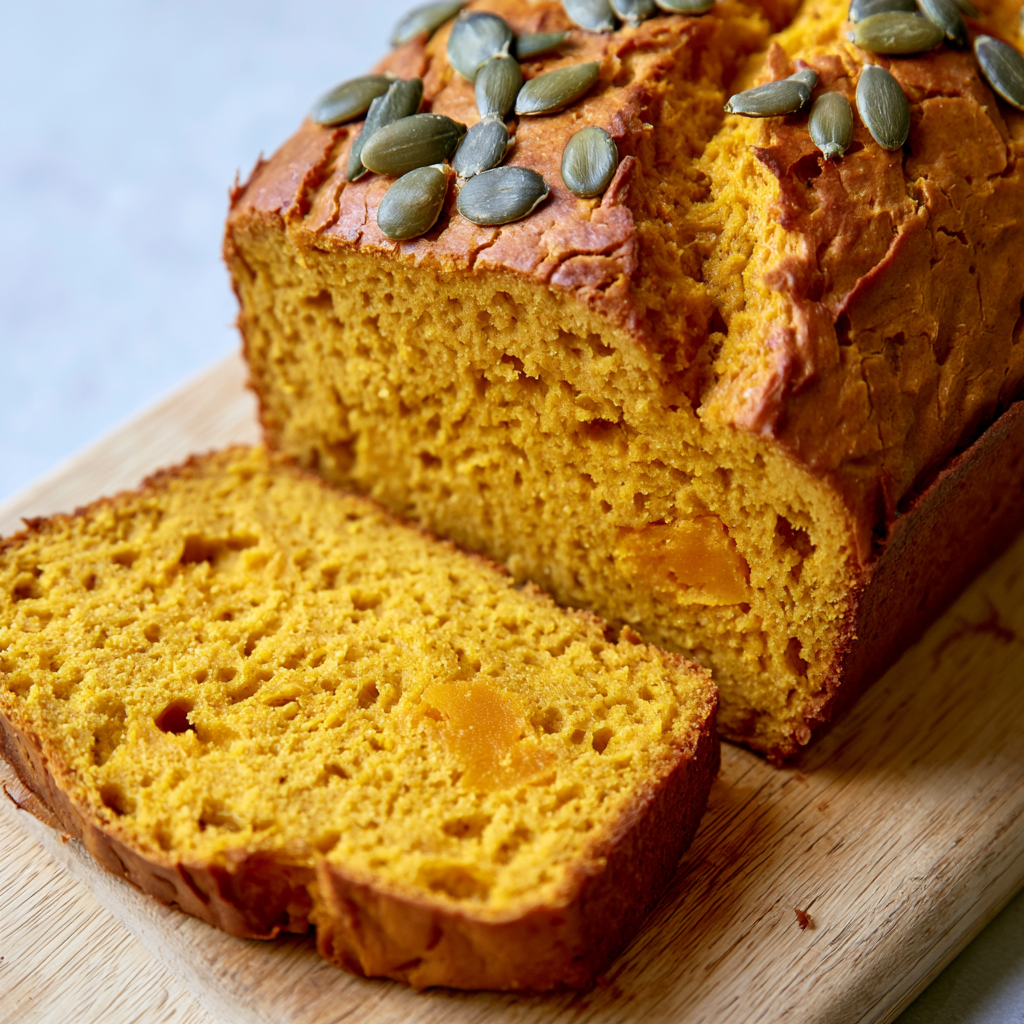
Pumpkin Bread
Ingredients
For the Pumpkin Loaf
- 16 oz fresh raw pumpkin peeled, deseeded, and cut into approximately 1-inch pieces
- ¼ cup olive oil or an equal quantity of coconut or vegetable oil
- 2½ cups plain all-purpose flour
- 4 large eggs brought to room temperature
- 3 teaspoons baking powder
Optional Topping
- Pumpkin seeds as needed for sprinkling; recommended for children aged 12 months and older
Instructions
- Preheat the oven to 180°C, or 160°C for a fan-assisted oven. For a gas oven, use gas mark 4. Line a 10 × 20 cm loaf tin with baking paper to prevent the bread from sticking and to make removal easier.
- Remove any remaining skin and seeds from the pumpkin. Grate the prepared flesh with a box grater or process it with the grating attachment of a food processor. Place the grated pumpkin in a large mixing bowl.
- Crack the room-temperature eggs into the bowl containing the grated pumpkin, then pour in the olive oil. Coconut oil or vegetable oil may be used in the same quantity. Stir thoroughly until the pumpkin is evenly coated and the wet ingredients are well distributed.
- In a separate bowl, stir the baking powder into the plain flour. Sift this dry mixture over the combined pumpkin, egg, and oil mixture. Fold gently until no visible pockets of dry flour remain. Stop mixing as soon as the batter is combined to avoid developing an overly dense texture.
- Transfer the batter to the lined loaf tin and spread it evenly, smoothing the surface with a spoon or spatula. Scatter pumpkin seeds across the top when using the optional garnish.
- Place the tin in the preheated oven and bake for approximately 1 to 1½ hours. Begin checking after 1 hour by inserting a clean knife into the center of the loaf. The bread is ready when the knife comes out clean.
- Remove the baked loaf from the oven and leave it undisturbed in the tin for 1 hour. Carefully lift it from the tin, place it on a wire cooling rack, and allow it to cool completely before cutting into slices.