
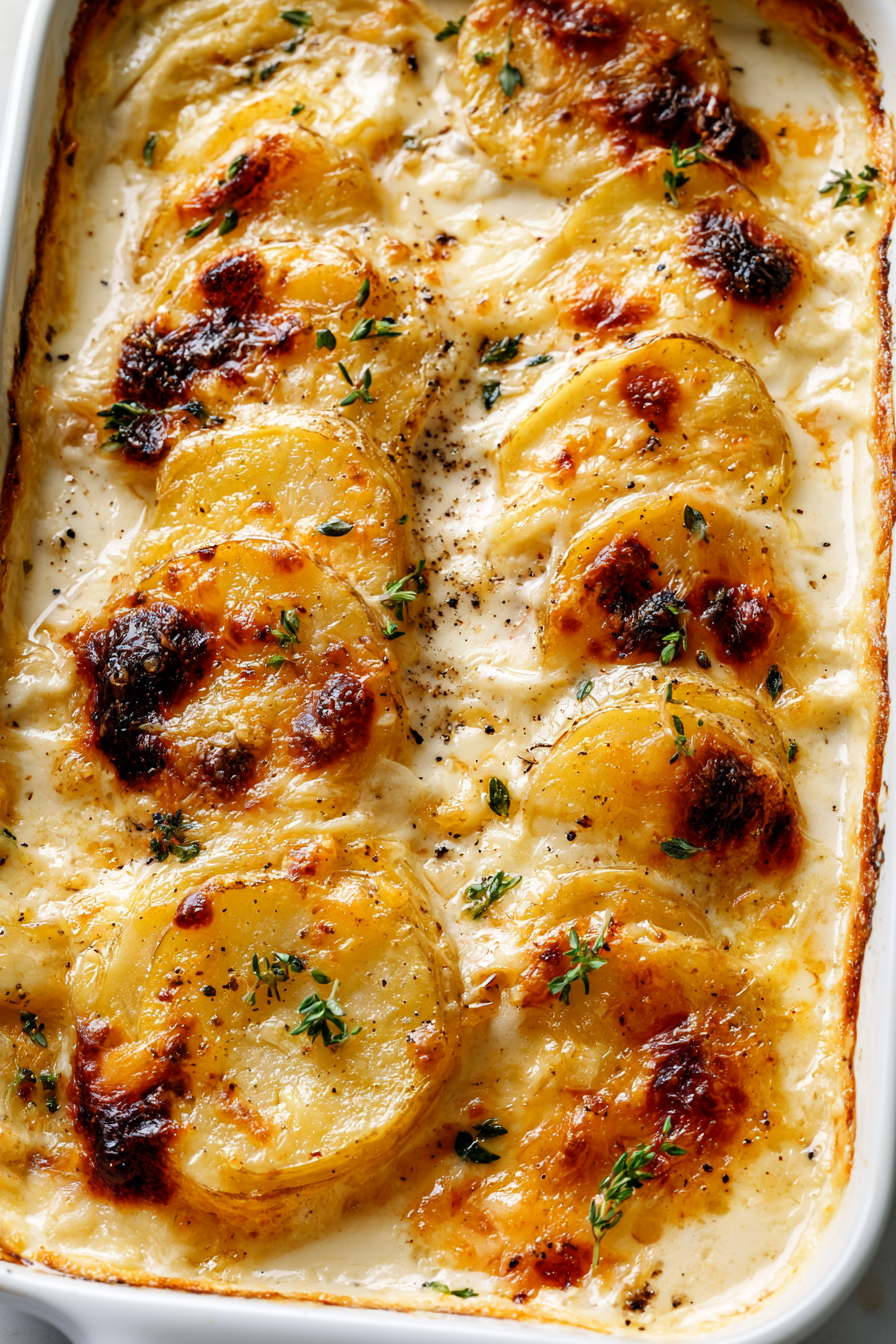
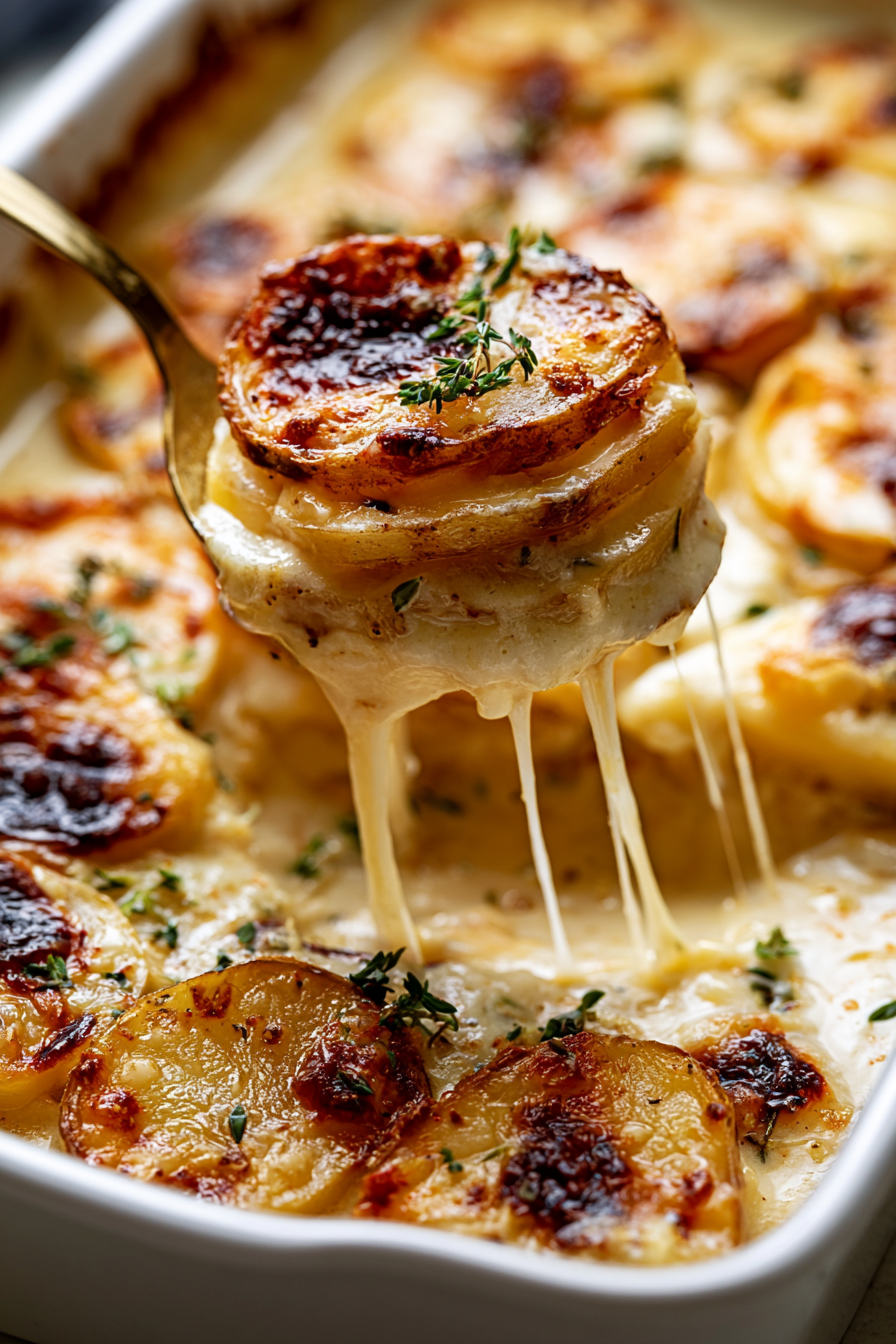
Potato gratin is a creamy, comforting side dish with thin, tender potatoes, a smooth Gruyère cheese sauce, and a lightly golden top. It’s dependable for holidays, family dinners, and make-ahead entertaining.

This is the kind of side dish I recommend when you want something a little more special than everyday roasted or mashed potatoes without making the cooking process complicated. Most of the work is simple slicing, stirring, and layering before the oven takes over.
The combination of Gruyère, onion, garlic, and thyme gives the sauce plenty of savory flavor without overwhelming the potatoes. A small pinch of nutmeg is optional, but it works especially well with the creamy béchamel-style base and gives the finished dish subtle warmth.
The biggest key to getting this gratin right is slicing the potatoes evenly. Thin, consistent rounds cook at the same rate, soak up the cheese sauce, and become tender enough to cut cleanly after the gratin has rested.
Ingredients
You only need a handful of familiar ingredients to create the creamy layers and golden cheese topping.
- Potatoes: The foundation of the gratin. Slice them about 1/8 inch thick so they soften evenly during baking.
- Gruyère cheese: Adds a nutty, savory flavor to both the sauce and the melted topping. Freshly grated cheese gives you the smoothest melt.
- Unsalted butter: Used to soften the aromatics and form the base of the roux.
- All-purpose flour: Thickens the milk into a creamy sauce that clings to the potato slices. Gluten-free flour can also be used when appropriate.
- Milk: Creates a creamy but balanced béchamel. Heavy cream can replace it when you want a richer finished dish.
- Onion: Finely minced onion adds gentle sweetness and savory depth throughout the sauce.
- Garlic: One fresh clove is enough to bring aromatic flavor without dominating the cheese.
- Thyme: Adds an earthy herbal note that complements both Gruyère and potatoes.
- Nutmeg: Optional, but a small pinch gives the creamy sauce traditional béchamel-style depth.
- Salt and black pepper: Essential for seasoning the mild potatoes and balancing the richness of the cheese.
Cooking Steps
STEP 1: Heat your oven to 350°F and lightly butter the baking dish. Slice the potatoes into rounds about 1/8 inch thick. Keeping them as uniform as possible is more important than making every slice perfectly shaped.
STEP 2: Melt the butter in a saucepan over medium heat. Add the finely minced onion along with the garlic and thyme. Cook gently for about 3–5 minutes, stirring occasionally, until the onion is translucent and tender. Avoid aggressively browning the aromatics because you want their flavor to remain delicate.
STEP 3: Sprinkle the flour over the softened onion mixture. Stir continuously for about 1 minute. This brief cooking period combines the butter and flour into a roux while removing the raw flour taste.
STEP 4: Slowly add the milk while whisking. Adding it gradually helps prevent lumps from forming. Continue cooking and whisking for another minute or two, until the sauce becomes smooth and thick enough to lightly coat the back of a spoon.
STEP 5: Take the saucepan off the heat and stir in the smaller portion of Gruyère. Add the optional pinch of nutmeg and season with salt and freshly ground black pepper. Stir until the cheese has melted completely and the sauce looks silky and uniform.
STEP 6: Spread a thin layer of cheese sauce over the bottom of the prepared baking dish. Arrange about half of the potato slices in overlapping rows, then spoon roughly half of the remaining sauce over them. Add the rest of the potatoes and finish with the remaining sauce, making sure some works its way between the slices.
STEP 7: Scatter the remaining Gruyère across the top. Bake for 45–60 minutes, or until the potatoes are completely tender when pierced with a thin knife and the cheese is bubbling and lightly browned. If you want additional color, broil for 2–3 minutes while watching the dish closely.
STEP 8: Remove the gratin from the oven and let it rest for about 10 minutes before cutting into portions. This resting time allows the hot sauce to settle around the potatoes, so the servings hold together more neatly instead of immediately spreading across the plate.
Perfect Pairings
This creamy side works especially well with simple main courses because the potatoes already bring plenty of richness to the meal.
- Roasted chicken: A simply seasoned roast chicken balances the cheesy potatoes without competing with their flavor.
- Roast beef or pot roast: The creamy Gruyère layers are an excellent contrast to deeply savory, slow-cooked beef.
- Roasted vegetables: Green beans, asparagus, Brussels sprouts, or other simply roasted vegetables can add freshness and color alongside the gratin.
Can I prepare the gratin ahead of time?
Yes. You can assemble the dish in advance, cover it well, and refrigerate it until you are ready to bake. Because a chilled gratin starts at a lower temperature, expect it to need some additional oven time. Check doneness by inserting a knife into the center rather than relying only on the clock.
What potatoes are good for gratin?
Potatoes that hold their shape while becoming tender are particularly useful for a layered gratin. Whatever type you choose, consistent slicing matters most. Aim for slices around 1/8 inch thick so the potatoes cook through before the cheese topping becomes overly browned.
Why are my potatoes still firm after baking?
The slices may have been too thick, the layers may have been packed too tightly, or the gratin simply needs longer in the oven. Covering the dish loosely can prevent excessive browning while you continue cooking it until a knife slides easily through the center.
Can I use heavy cream instead of milk?
Yes. Heavy cream creates a noticeably richer sauce and can be substituted when you prefer a more luxurious gratin. Milk keeps the dish somewhat lighter while still producing a creamy result because the flour, butter, and Gruyère provide additional body.
Do I need to peel the potatoes?
Not necessarily. Whether you peel them depends on the type of potato you are using and the texture you prefer. Thin, tender skins can often be left in place, while thicker or rougher skins are generally better removed before slicing.
Helpful Tips
- Slice evenly: A mandoline is especially useful for producing consistent 1/8-inch slices, which helps prevent some potatoes from remaining firm while others become overly soft.
- Grate the cheese yourself: Freshly grated Gruyère melts more smoothly into the béchamel and across the top than many packaged pre-shredded cheeses.
- Test the center: The surface can look finished before the potatoes underneath are tender, so always insert a knife into one of the thickest sections before removing the dish from the oven.
How to Store & Reheat
Allow leftovers to cool before transferring them to an airtight container or covering the baking dish tightly. Keep the gratin refrigerated for about 3–4 days. The sauce will firm considerably when chilled, which is normal, and it will soften again as the potatoes reheat.
For the most consistent texture, reheat larger portions in a covered baking dish in a moderate oven until hot throughout. You can uncover the dish near the end if you want to refresh the browned cheese topping. Individual portions can also be reheated more quickly, although gentle heating helps prevent the creamy sauce from becoming overly oily.
Freezing is possible, but it is not the preferred storage method when texture is important. Dairy-based sauces can separate slightly after freezing and thawing, and the potatoes may become softer. If you do freeze leftovers, wrap them securely and use them within about 1–2 months. Thaw overnight in the refrigerator before reheating.
Once warm, give the gratin a few minutes to settle before serving again. The combination of tender potato layers, creamy Gruyère sauce, aromatic thyme, and a browned cheese top makes it particularly well suited to holiday meals, Sunday dinners, or any occasion when you want a comforting baked side that can be prepared with straightforward ingredients.
Potato Gratin
Ingredients
For the Gruyère Cheese Sauce
- 1 small onion finely minced into approximately 1/4-inch pieces
- 3 tablespoons unsalted butter
- 1 teaspoon finely chopped fresh thyme or 1/2 teaspoon dried thyme
- 1 1/2 cups milk with heavy cream as an option for a richer sauce
- 1 garlic clove finely grated or freshly minced
- 1/2 cup freshly shredded Gruyère cheese
- 3 tablespoons all-purpose flour or gluten-free flour
- A small pinch of ground nutmeg optional
- Fine salt and freshly ground black pepper according to taste
For the Potato Layers
- 4 pounds potatoes cut into approximately 1/8-inch-thick slices
- 1 cup freshly grated Gruyère cheese
Instructions
- Prepare the ingredients and heat the oven. Preheat the oven to 350°F. Cut the potatoes into uniform rounds approximately 1/8 inch thick. A mandoline or slicing blade may be used to maintain an even thickness. Finely mince the onion, grate or mince the garlic, chop the fresh thyme, and grate the Gruyère, keeping the 1/2-cup and 1-cup portions separate.
- Cook the aromatics. Melt the butter in a saucepan over medium heat. Add the minced onion, garlic, and thyme. Gently sauté for 3–5 minutes, until the onion has softened and turned translucent without developing significant color.
- Form the roux. Sprinkle the flour evenly over the softened aromatic mixture. Stir continuously and cook for 1 minute to remove the uncooked flour flavor.
- Prepare the cream sauce. Gradually pour the milk into the saucepan while whisking continuously to keep the mixture smooth. Continue whisking for another 1–2 minutes, or until the sauce thickens sufficiently to coat the back of a spoon.
- Add the cheese and seasonings. Remove the saucepan from the heat. Stir in 1/2 cup of shredded Gruyère along with the nutmeg, salt, and black pepper. Continue stirring until the cheese has completely melted and the sauce has a smooth, creamy consistency.
- Begin assembling the gratin. Lightly butter a baking dish, then spread a thin coating of the prepared cheese sauce across the bottom. Arrange half of the sliced potatoes over the sauce in overlapping rows.
- Complete the layers. Pour approximately half of the remaining sauce over the first potato layer. Arrange the rest of the potato slices on top in the same overlapping fashion, then distribute the remaining sauce evenly over the surface, allowing it to settle into the spaces between the potatoes.
- Add the Gruyère topping. Scatter the remaining 1 cup of freshly grated Gruyère evenly over the assembled potato layers.
- Bake the gratin. Transfer the dish to the preheated oven and bake at 350°F for 45–60 minutes. The gratin is ready when a knife passes easily through the potatoes and the cheese topping has developed a light golden-brown color.
- Brown further if desired. For a more deeply caramelized surface, switch the oven to broil during the final 2–3 minutes. Monitor the gratin closely to prevent the cheese from burning.
- Rest before serving. Remove the gratin from the oven and allow it to stand for 10 minutes. This brief resting period helps the layers settle and makes the gratin easier to portion while retaining its creamy texture.
Notes
Freshly grated Gruyère generally melts more smoothly than pre-shredded cheese.
Ground nutmeg is optional but adds subtle depth to the béchamel.
If fresh thyme is unavailable, substitute 1/2 teaspoon dried thyme for the 1 teaspoon of fresh thyme.
Keeping the potato slices close to 1/8 inch thick promotes consistent cooking throughout the gratin.