
Paula Deen’s Baked Mac and Cheese is a creamy, comforting casserole made with sharp cheddar, sour cream, evaporated milk, eggs, and tender elbow macaroni. It bakes up rich and cheesy with a soft, satisfying texture that makes it especially good for family dinners, holidays, and potlucks.
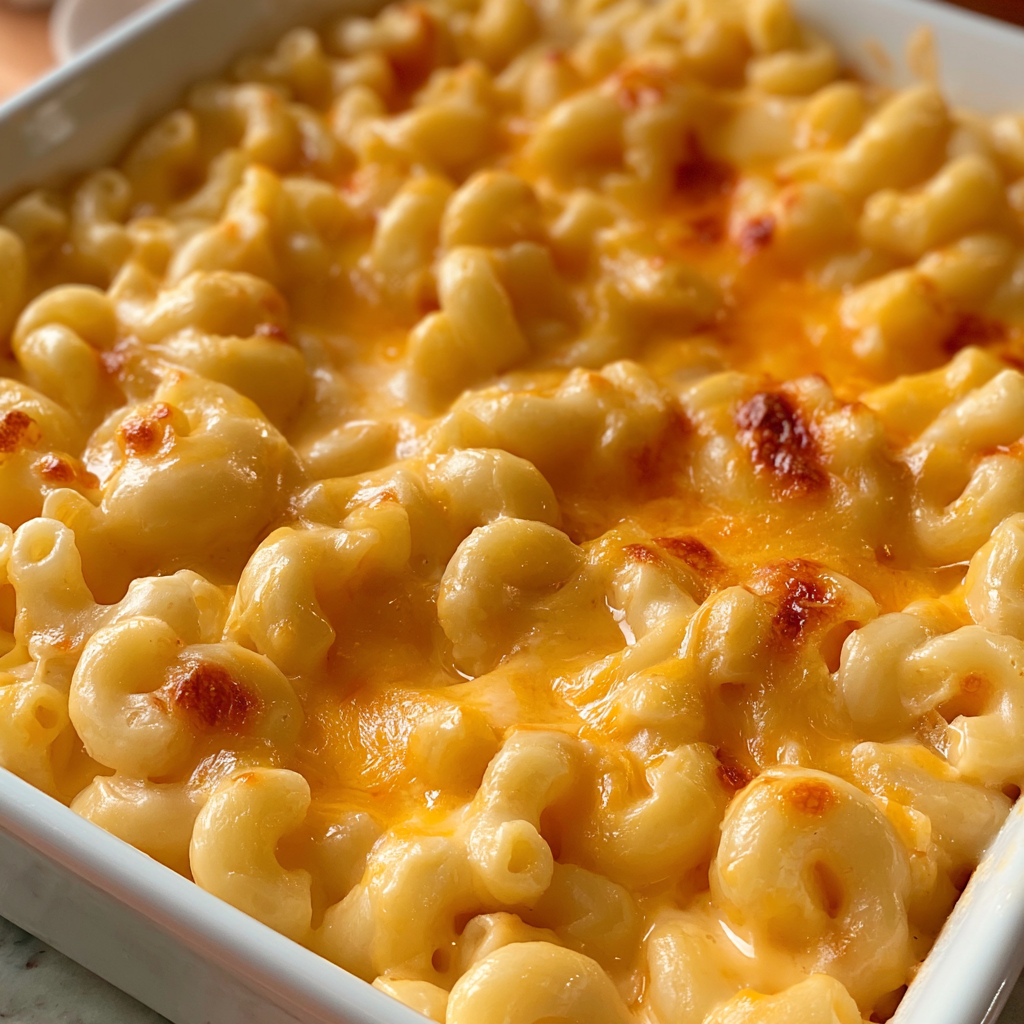
When you want classic Southern-style comfort food without a complicated cheese sauce, this baked macaroni and cheese is a dependable choice. Everything comes together with simple ingredients, and the hot pasta helps melt the butter and cheddar before the casserole even goes into the oven.
The combination of evaporated milk and sour cream keeps the macaroni rich while the eggs help the casserole set as it bakes. Unlike an ultra-saucy stovetop mac and cheese, this version is meant to be creamy yet structured enough to scoop neatly onto a plate.
It is also a practical side dish when your oven is already working overtime for a holiday meal. Once assembled, the macaroni needs only about 30 to 35 minutes of baking, with an optional final sprinkle of cheddar if you want an extra cheesy finish.
Paula Deen’s Baked Mac and Cheese Ingredients
Elbow macaroni: The classic pasta shape for baked mac and cheese. Cooking it a little softer than usual gives this casserole its characteristic tender texture.
Sharp cheddar cheese: Provides the main cheesy flavor. Grating it fresh from a block helps it melt more smoothly into the warm macaroni.
Butter: Adds richness and coats the freshly drained pasta while it is still hot.
Evaporated milk: Creates a creamy base without making the casserole excessively loose or watery.
Sour cream: Gives the cheese mixture extra richness and a smooth, creamy consistency.
Eggs: Help bind the macaroni and dairy mixture so the finished casserole holds together after baking.
Salt: Seasons the pasta and creamy filling, bringing out the flavor of the cheddar.
Additional cheddar: Optional, but useful if you prefer a melted cheese layer over the top before serving.

Cooking Steps
STEP 1: Preheat your oven to 350°F (175°C). Have a casserole dish ready so you can transfer the macaroni directly into it once the cheese and custard mixture has been combined.
STEP 2: Cook the elbow macaroni until very tender. For the softer texture intended in this dish, let it cook roughly 2 to 3 minutes beyond the package’s usual recommended cooking time. Drain thoroughly so excess pasta water does not thin the casserole.
STEP 3: Transfer the hot macaroni to a large bowl immediately after draining. Add the butter and freshly grated sharp cheddar while the pasta is still steaming. Stir until the butter has melted and the cheese begins softening and clinging to the noodles.
STEP 4: In a separate mixing bowl, whisk together the eggs, evaporated milk, sour cream, and salt. Mix until the eggs are completely incorporated and no large streaks of sour cream remain.
STEP 5: Pour the creamy egg mixture over the warm macaroni and cheese. Fold everything together until the pasta is evenly coated, then spoon the mixture into the casserole dish and spread it into an even layer.
STEP 6: Bake uncovered for 20 minutes. Remove the casserole carefully and give the macaroni a gentle stir. This redistributes the creamy mixture and helps the dish bake more evenly from the center to the edges.
STEP 7: Return the casserole to the oven for another 10 to 15 minutes, or until the mixture looks creamy but set. If you want additional cheddar on top, scatter it over the casserole during the final few minutes and bake just until melted. Let the mac and cheese rest briefly before serving.
Perfect Pairings
This rich baked macaroni works especially well with simple savory mains and vegetable sides that balance its creamy texture.
Roasted or baked chicken: A simply seasoned chicken keeps the meal comforting without competing with the cheddar flavor.
Green beans: Steamed, sautéed, or oven-roasted green beans bring freshness and a lighter texture to a plate of rich mac and cheese.
Roasted vegetables: Broccoli, Brussels sprouts, or carrots are all practical choices, particularly when serving the casserole as part of a larger dinner.
For holiday meals, you can also place it alongside turkey, ham, or other traditional side dishes. Because the macaroni is filling, smaller portions usually work well when several sides are being served.
Why are eggs added to baked mac and cheese?
Eggs help give this style of baked macaroni and cheese its set, casserole-like consistency. They combine with the evaporated milk and sour cream to form a creamy custard around the pasta. The result is firmer than stovetop mac and cheese but should still remain moist when properly baked.
Can I use pre-shredded cheddar cheese?
You can, but freshly grated cheddar generally melts more smoothly. Packaged shredded cheese often contains ingredients that help prevent the strands from clumping, and those can affect how seamlessly it melts. Since cheddar is one of the main flavors here, grating a block is worth the small amount of extra preparation.
How do I know when baked mac and cheese is done?
Look for a casserole that appears set around the edges while remaining creamy through the center. The cheese should be melted and the liquid mixture should no longer look loose. Avoid baking much longer than necessary, because extended oven time can make the macaroni noticeably drier.
Can I assemble it ahead of time?
For the freshest texture, it is preferable to combine the ingredients fairly close to baking time. If advance preparation is necessary, assemble the casserole, cover it, and refrigerate it for a short period. Allow for some additional baking time if it goes into the oven cold, and make sure the center is thoroughly heated.

Why is the macaroni cooked longer than usual?
This particular preparation is designed around very tender pasta rather than firm al dente noodles. Cooking the elbows a couple of minutes longer gives them the softer consistency expected in the finished casserole. Drain them well, however, because retained cooking water can dilute the creamy cheese mixture.
Helpful Tips
- Mix the cheese with the pasta while it is hot. The residual heat starts melting the cheddar and butter immediately, giving you better distribution throughout the casserole.
- Avoid overbaking. Once the custard has set and the casserole is hot throughout, take it out. Too much oven time can turn creamy macaroni into a dry casserole.
- Give it a brief rest before scooping. A few minutes outside the oven allows the mixture to settle, making portions easier to serve without sacrificing the creamy center.
How to Store & Reheat
Allow leftover baked mac and cheese to cool before transferring it to a covered container. Refrigerate it promptly and use it within about 3 to 4 days. Keeping it tightly covered helps prevent the pasta from drying out or absorbing other refrigerator odors.
For individual portions, reheating in the microwave is convenient. Add a small splash of milk before warming if the macaroni seems dry, then heat it in short intervals until thoroughly hot. Stirring partway through helps the center warm more evenly.
For larger portions, place the macaroni in an oven-safe dish, cover it to retain moisture, and warm it at about 325°F to 350°F until heated through. A little milk stirred into the casserole before reheating can help loosen the sauce.
Baked macaroni and cheese can also be frozen, although the dairy and egg mixture may have a slightly different texture after thawing. Store cooled portions in airtight freezer-safe containers for about 2 months. Thaw overnight in the refrigerator before reheating for the most even results.
The combination of tender noodles, sharp cheddar, sour cream, and evaporated milk makes this a particularly satisfying version of classic baked mac and cheese. Keep the baking time under control, use freshly grated cheddar when possible, and serve it after a short rest for a creamy casserole that fits just as comfortably beside a weeknight dinner as it does on a holiday table.
Paula Deen’s Baked Mac and Cheese
Ingredients
- 1 cup evaporated milk
- ¼ cup butter melted or cut into small pieces
- 4 cups cooked elbow macaroni
- ½ teaspoon salt
- 2 cups sharp cheddar cheese freshly grated from a block
- 3 large eggs lightly beaten
- ½ cup full-fat sour cream
- Additional grated sharp cheddar cheese optional, for finishing
Instructions
- Preheat the oven. Set the oven temperature to 350°F (175°C) so it is fully heated before the assembled macaroni and cheese is ready to bake.
- Prepare the macaroni. Cook the elbow macaroni approximately 2–3 minutes longer than the package instructions recommend to achieve a softer consistency. Drain the pasta thoroughly, then place it in a large mixing bowl while still hot.
- Incorporate the butter and cheddar. Immediately add the butter and 2 cups of shredded sharp cheddar to the hot macaroni. Stir well, allowing the residual heat from the pasta to melt the butter and partially soften the cheese.
- Make the creamy mixture. In a separate bowl, whisk the lightly beaten eggs with the sour cream, evaporated milk, and salt until evenly combined.
- Combine the mixtures. Pour the egg and milk mixture over the warm, cheese-coated macaroni. Stir thoroughly until the pasta is evenly covered with the creamy mixture.
- Begin baking. Transfer the prepared macaroni mixture to a casserole dish and distribute it evenly. Bake uncovered at 350°F for 20 minutes.
- Stir and finish baking. After the first 20 minutes, gently stir the macaroni to encourage even cooking. Return the casserole to the oven and continue baking for another 10–15 minutes.
- Add the optional topping. If desired, scatter a small amount of additional shredded sharp cheddar over the surface shortly before serving. Place the casserole back in the oven for a couple of minutes, just until the cheese has melted.
- Rest before serving. Allow the baked macaroni and cheese to stand for several minutes before portioning so the casserole can settle slightly and hold together more easily.