
Pastitsio Greek Lasagna is a hearty, make-ahead baked pasta with cinnamon-scented beef, tender egg-bound noodles, plenty of cheese, and a thick, creamy béchamel topping. It bakes into defined layers with a deeply golden surface, making it ideal for family dinners, holidays, and meals you want to prepare in stages.
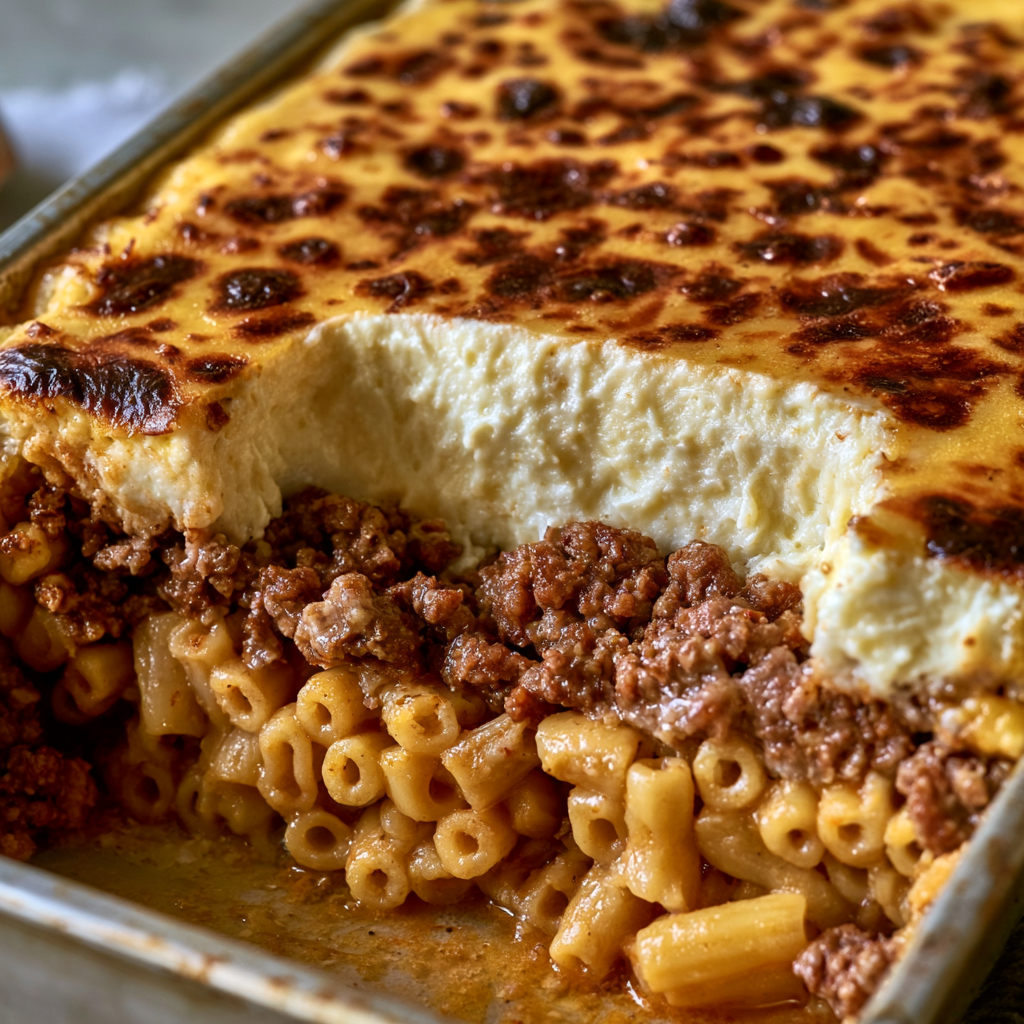
When you want something cozy enough for a weekend dinner but impressive enough to bring to the table for guests, pastitsio is a wonderful choice. It has the comforting structure of a baked pasta casserole, but the warm cinnamon in the beef sauce and substantial béchamel give it its distinctly Greek character.
This version is especially practical because the meat sauce can be cooked the day before. An overnight rest gives the beef and tomato mixture time to develop a fuller flavor while also breaking the workload into manageable pieces.
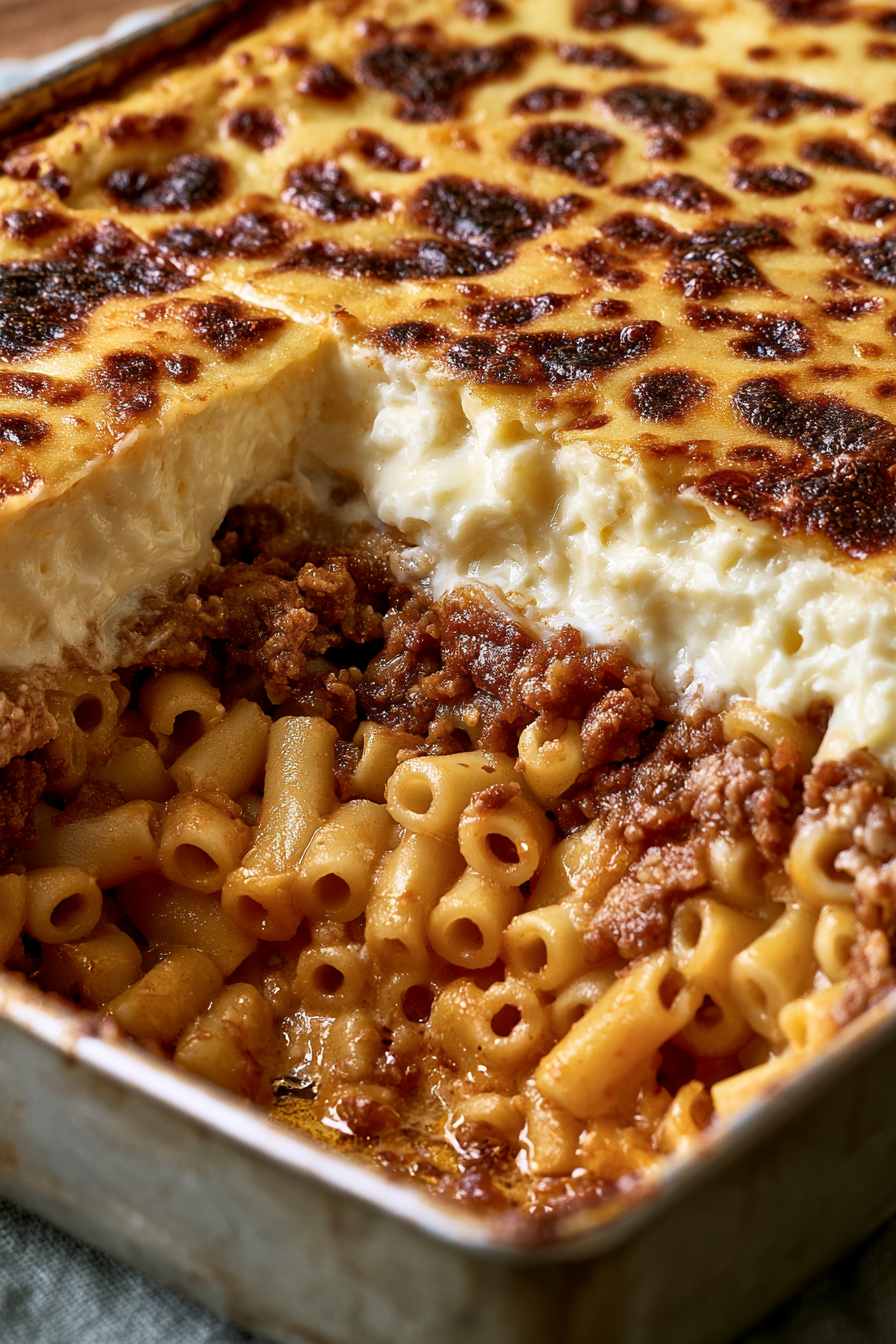
The final casserole combines firm pasta, savory beef, melted cheese, and a silky sauce that becomes beautifully browned in the oven. Give it the full resting time after baking, and those generous layers will be much easier to cut into neat portions.
Pastitsio Ingredients
Ground beef: Forms the rich, substantial center of the casserole and holds up well beneath the thick béchamel layer.
Yellow onion: Softens into the beef and provides a savory aromatic base for the tomato sauce.
Tomato sauce: Creates the moisture and tomato flavor needed to slowly simmer the beef mixture.
Ground cinnamon: The signature seasoning here, adding gentle warmth and distinguishing the meat sauce from a standard Italian-style pasta sauce.
Coarse kosher salt: Seasons both the beef mixture and pasta water so the finished casserole tastes balanced from layer to layer.
Pastitsio pasta or mostaccioli: Provides the sturdy pasta foundation. Traditional pastitsio noodles are ideal, but mostaccioli is a practical substitute.
Egg: Tossed with the drained pasta to help the noodles bind together as the casserole bakes.
Kasseri, Asiago, or Italian cheese blend: Adds savory flavor between the layers and forms a golden cheesy finish over the béchamel.
Unsalted butter: Used to start the béchamel and again for the buttery topping.
All-purpose flour: Combines with butter to thicken the béchamel so it sits in a substantial layer rather than soaking into the pasta.
Whole milk: Gives the sauce its creamy body and helps produce a smooth, rich topping.
Eggs for the béchamel: Enrich and help set the sauce so it becomes firm enough to slice after baking.
Step-by-Step Greek Pastitsio
STEP 1: Begin with the beef sauce, preferably one day before you plan to bake the casserole. Soften the diced onion in a lightly oiled pot with a good pinch of salt, then add the ground beef. Break it into small pieces as it cooks and continue until there is no visible pink.
STEP 2: Stir the tomato sauce and cinnamon into the cooked beef. Adjust the salt, bring everything to a gentle simmer, and cover the pot with the lid slightly open. Let the sauce cook slowly for about 3 hours, stirring occasionally. Cool it completely, then refrigerate overnight. Before assembling the pastitsio, allow the sauce to lose its refrigerator chill or warm it gently.
STEP 3: Cook the pasta in generously salted boiling water until just al dente. Taking it out about 1 to 2 minutes before the package time helps prevent overly soft noodles after the casserole spends an hour in the oven. Drain thoroughly, let it cool slightly, then coat the noodles evenly with one beaten egg.
STEP 4: Heat the oven to 350°F and lightly grease a large lasagna-style baking dish. Spread the egg-coated pasta into an even bottom layer. Add about one-third of the shredded cheese, followed by the meat mixture. A slotted spoon is useful if the sauce contains more liquid than you need. Finish the meat layer with another portion of cheese.
STEP 5: Prepare the béchamel by melting 8 tablespoons of butter in a heavy pot. Whisk in the flour and cook briefly until the mixture is smooth. Gradually add the 5 cups of whole milk, whisking steadily as you pour. Continue heating until the sauce reaches the first signs of bubbling and begins to thicken, then temporarily remove it from the heat.
STEP 6: Beat the three eggs with the additional 1/2 cup milk in a separate bowl. Slowly whisk this mixture into the hot béchamel rather than adding it all at once. Return the saucepan to the heat and continue whisking until the sauce is thick and bubbling. Take it off the heat and let it stand for several minutes before spreading it over the casserole.
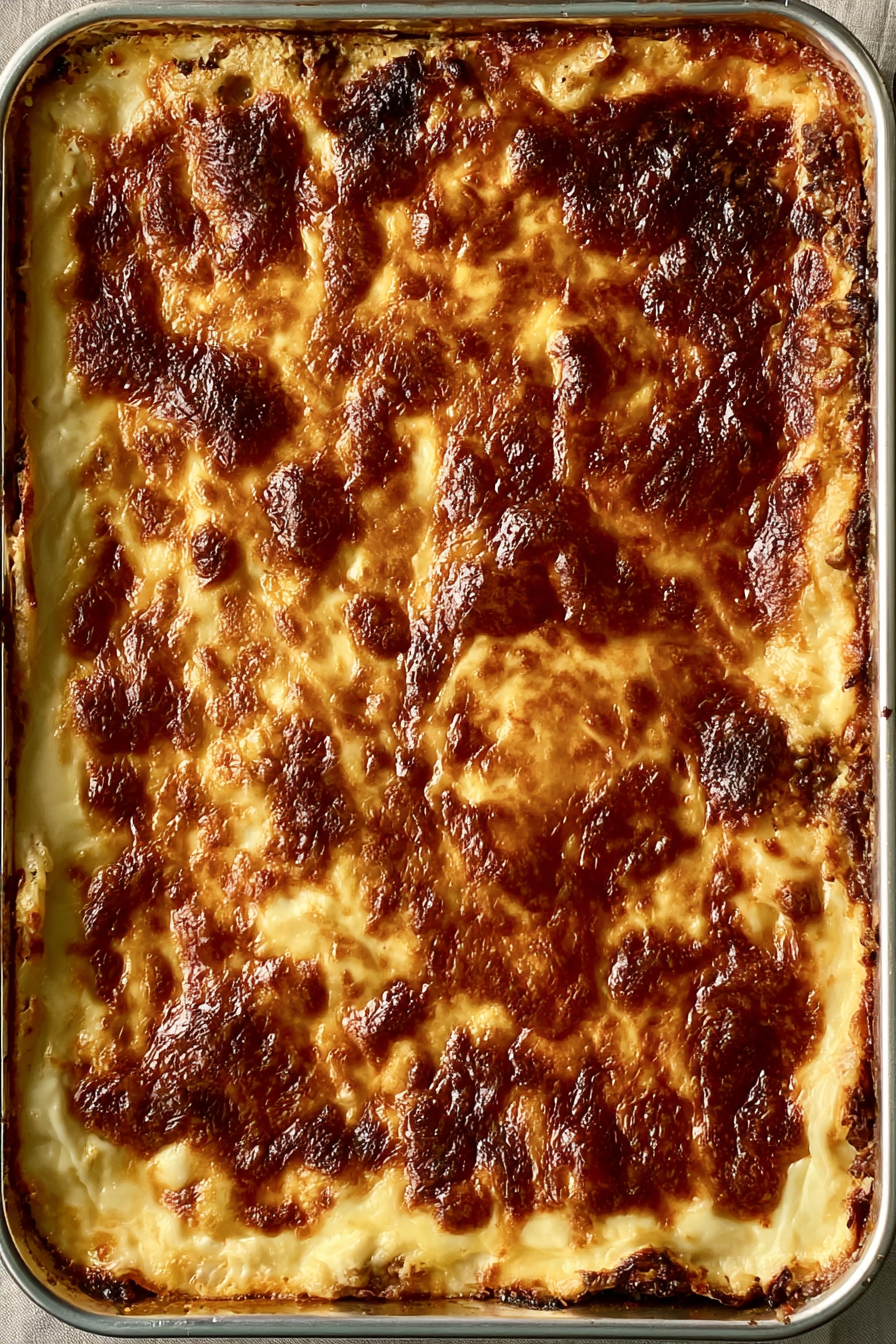
STEP 7: Pour the béchamel over the meat layer and carefully spread it from edge to edge. Add the remaining shredded cheese, then spoon or drizzle some or all of the final 4 tablespoons of melted butter across the surface. Bake the dish on a baking sheet for about 1 hour, until the filling is bubbling and the top is well browned. Broil for 3 to 5 minutes only if additional color is needed, watching continuously.
STEP 8: Remove the finished casserole from the oven and leave it undisturbed for at least 10 minutes. This short rest gives the béchamel, pasta, and meat layers time to settle so you can cut substantial slices without the casserole immediately falling apart.
Helpful Tips
- Make the beef sauce ahead. The overnight chilling step is useful for both flavor and scheduling. Just bring the sauce closer to room temperature before layering so the casserole heats more evenly.
- Keep whisking the béchamel. Consistent whisking while adding the milk and egg mixture is the simplest way to prevent floury lumps and produce a smooth topping.
- Watch carefully when broiling. The cheese and butter can brown quickly. Use the broiler only when the baked top needs extra color.
What to Serve with Greek Pastitsio
A crisp Greek-style salad is an excellent partner because fresh vegetables and a bright, tangy dressing contrast nicely with the rich beef, cheese, and béchamel.
Roasted or simply sautéed vegetables also work well. Green beans, zucchini, broccoli, or roasted peppers can add color and keep the meal from feeling too heavy.
For something very simple, serve the casserole with a leafy salad and a sharp vinaigrette. Pastitsio is already substantial, so your side dishes do not need to be complicated.
Can I prepare pastitsio in advance?
Yes. The meat sauce is actually designed to be prepared ahead and chilled overnight. You can also organize the other ingredients in advance so final assembly is faster. If you assemble the entire casserole while the components are very cold, allow for some additional baking time as needed.
Why is cinnamon used in the meat sauce?
Cinnamon provides the warm background flavor traditionally associated with many versions of Greek pastitsio. The amount here is noticeable without turning the dish sweet. It works especially well with the slow-cooked combination of ground beef, onion, and tomato.
What pasta can I use if I cannot find pastitsio noodles?
Mostaccioli is a good substitute because its sturdy shape handles the long baking time and heavy layers well. Other firm tubular pasta can work when necessary, but avoid very delicate shapes that may become soft or lose their structure during baking.
How do I know when the béchamel is thick enough?
The sauce should become noticeably thick and creamy after the egg mixture has been incorporated and the pot is returned to the heat. It should bubble and have enough body to remain in a generous layer over the meat rather than immediately running into the casserole.
How long should pastitsio rest before slicing?
Give it at least 10 minutes after it comes out of the oven. The casserole will still be hot, but the béchamel and pasta layers will have more time to firm. For especially clean, defined portions, you can let it stand a little longer before cutting.
Keeping Leftovers Fresh
Allow leftover pastitsio to cool before transferring it to a covered container or tightly covering the baking dish. Refrigerate it promptly and use it within about 3 to 4 days. Because this casserole is dense, storing individual portions can make reheating much more convenient.
For longer storage, freeze cooled slices in airtight freezer-safe containers. They can generally be kept frozen for up to 2 to 3 months. Individual portions are particularly useful because you can thaw only what you need instead of reheating the entire casserole.
For the best texture, thaw frozen portions overnight in the refrigerator. Reheat pastitsio in a covered baking dish at about 350°F until the center is thoroughly hot. Covering the dish during most of the reheating time helps protect the béchamel from drying out.
Smaller portions can also be reheated in the microwave. Use moderate intervals rather than one long heating cycle so the center heats evenly without making the outer edges tough. A brief rest after reheating helps distribute the heat throughout all those thick pasta, beef, cheese, and béchamel layers.
Pastitsio Greek Lasagna
Ingredients
For the Meat Sauce
- 2 cans tomato sauce 15 ounces each
- 1 tablespoon finely ground cinnamon
- 1 large yellow onion cut into small dice
- 3 pounds ground beef
- Coarse kosher salt as needed to taste
For the Pasta Layer
- 1 large egg
- 4 cups shredded kasseri Asiago, or Italian cheese blend, using at least 1/2 pound and up to 1 pound
- 1 package pastitsio pasta or mostaccioli
For the Béchamel
- 3 large eggs
- 5 cups whole milk
- 1 cup all-purpose flour
- 4 tablespoons unsalted butter melted
- 1/2 cup additional whole milk for combining with the eggs
- 8 tablespoons unsalted butter
Instructions
- Place a large pot over medium heat and add a small amount of olive oil.
- Add the diced yellow onion along with a generous pinch of coarse kosher salt. Cook until the onion has softened and just turned translucent.
- Add the ground beef. Cook while stirring and breaking the meat apart with a wooden spoon until no pink remains.
- Mix in the tomato sauce and ground cinnamon. Season with additional salt according to taste, then bring the mixture to a simmer.
- Cover the pot with the lid positioned slightly ajar. Allow the sauce to stew for 3 hours, stirring it from time to time.
- When cooking is complete, allow the meat sauce to cool before transferring it to the refrigerator overnight.
- Before beginning the final assembly, allow the chilled meat sauce to come to room temperature or warm it gently.
- Shred enough kasseri, Asiago, or Italian cheese blend to provide at least 4 cups. Set the cheese aside for layering.
- Bring a large pot of generously salted water to a full boil.
- Add the pastitsio noodles or mostaccioli and cook until al dente. For the proper texture, remove the pasta approximately 1–2 minutes before the cooking time specified on the package.
- Drain thoroughly. Once the pasta has cooled sufficiently to handle, transfer it to a large bowl.
- Beat 1 egg, pour it over the noodles, and use your hands to distribute the egg thoroughly throughout the pasta.
- Preheat the oven to 350°F.
- Lightly grease a lasagna pan or other large baking dish with a drizzle of olive oil or a coating of nonstick cooking spray.
- Arrange all of the egg-coated pasta evenly across the bottom of the prepared baking dish.
- Scatter approximately one-third of the shredded cheese evenly over the pasta.
- Using a slotted spoon, distribute all or most of the prepared meat sauce over the cheese. Leave sufficient room at the top of the dish for the béchamel.
- Cover the meat layer with another one-third of the shredded cheese. At this stage, the casserole should consist of pasta, cheese, meat sauce, and a second cheese layer.
- Melt 8 tablespoons of unsalted butter in a large, heavy-bottomed pot over medium heat.
- Add the all-purpose flour and whisk continuously for approximately 1–2 minutes, until the butter and flour are completely incorporated.
- Gradually pour in 5 cups of whole milk while whisking constantly to maintain a smooth, lump-free consistency.
- Continue cooking and whisking until the mixture just begins to boil and bubble. Remove the pot from the heat.
- In a separate bowl, use a hand mixer to beat 3 eggs together with the additional 1/2 cup of whole milk.
- Slowly add the egg-and-milk mixture to the hot sauce while whisking continuously.
- Return the pot to medium-high heat. Continue whisking until the béchamel becomes thick and bubbly.
- Remove it from the heat once the proper consistency has developed, then allow it to stand for several minutes.
- In a small saucepan, melt the remaining 4 tablespoons of unsalted butter.
- After the béchamel has rested briefly, pour it evenly over the assembled meat and cheese layers. Spread it across the entire surface.
- Sprinkle the remaining one-third of the shredded cheese over the béchamel.
- Drizzle or spoon the melted butter over the cheese. Less than the full amount may be used if a lighter topping is preferred.
- Set the baking dish on a baking sheet and transfer it to the preheated 350°F oven.
- Bake for 1 hour, or until the center is bubbling and the surface is attractively browned.
- For deeper browning, switch the oven to broil and continue cooking for another 3–5 minutes, monitoring the pastitsio closely to prevent burning.
- Remove the finished pastitsio from the oven and allow it to stand for 10 minutes before cutting.
- This brief resting period helps the layered casserole firm sufficiently for cleaner slices while preserving its moist interior.