
This orange chicken recipe delivers fast, takeout-style comfort in one pan. Crisp, golden bites of chicken get tossed in a glossy orange-soy glaze with a lively zing.
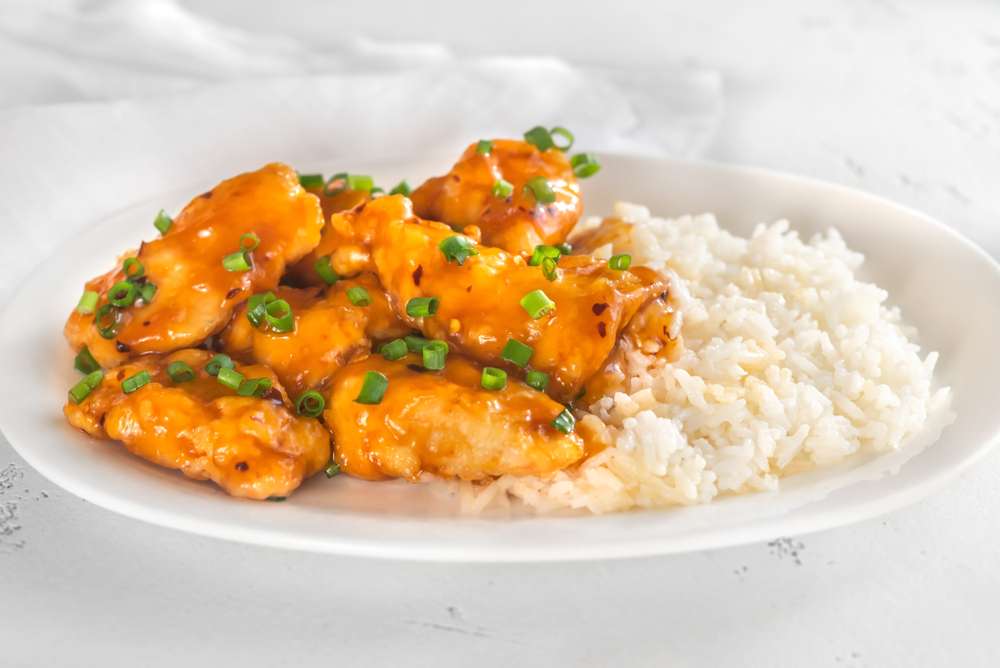
It’s weeknight-friendly in about 30 minutes with straightforward steps. Expect restaurant sheen and big flavor without deep frying or mystery ingredients.
Inspired by Natasha Bull’s streamlined approach, this version leans on pantry staples plus two citrusy upgrades. The sauce lands right between sweet and savory.
Sear hot and fast so the coating stays light. Then give the chicken a short tumble in the skillet to lacquer it without softening the edges.
Rice on the side is optional, but highly recommended.
The Building Blocks of This Orange Chicken Recipe
- Boneless, skinless chicken breasts – tender, quick-cooking protein that stays juicy in a hot skillet.
- Cornstarch – featherlight coating for crisp edges and a sauce that clings.
- Olive oil – steady, high-heat sear without deep frying.
- Orange juice – sweet citrus backbone for the glaze.
- Soy sauce – savory depth and salt to balance the sweetness.
- Brown sugar – molasses-warm sweetness that caramelizes beautifully.
- Fresh garlic & ginger – aromatic lift that makes the orange pop.
- Orange zest – concentrated citrus oils for an “orangier” finish.
- Lemon juice – a clean, bright note that sharpens the sauce.
- Red pepper flakes – optional gentle heat to wake up the palate.
Bright, Balanced Orange Sauce
Great orange chicken lives and dies by balance. Think of the sauce as four voices: sweetness, acidity, saltiness, and heat.
Use brown sugar for sweetness, orange and a squeeze of lemon for acidity, soy for salt, and red pepper for heat. Whisk the sauce first so cornstarch hydrates evenly.
That step is your insurance against lumps. When the mixture hits a sizzling pan, bubbles activate the starch quickly.
Thin juice turns into a glossy glaze in under a minute. If it tightens too much, whisk in a splash of water or orange juice off heat.
Taste and adjust. Add a pinch of salt, a drop of lemon, or a dusting of zest to nudge it perfect.
Skillet Steps, Simplified for Orange Chicken Recipe
Prep first, then cook fast. Toss bite-size chicken with cornstarch and seasoning.
Sear in two hot, uncrowded batches until browned and cooked through. Turn pieces only once for even color.
Kill the heat and pour in the pre-whisked sauce. Let residual heat thicken it while you scrape up the browned bits.
Return the chicken, toss to coat, and serve immediately.
Crispy Bites Without Deep Frying
Crispness starts before the pan. Pat the chicken dry, then dust—not drench—with cornstarch so the coating stays light.
Use a large skillet and preheat until shimmering. Cook in batches to avoid steaming.
Don’t fuss with the pieces. Four minutes undisturbed builds a golden crust, then flip to finish.
Once the sauce hits the hot pan, it thickens fast. Toss the chicken only long enough to glaze.
For extra texture, reserve a small handful of chicken. Spoon sauce over it on the plate instead of in the pan to preserve more crunch.
Recipe Tips & Easy Variations
- Rice or noodles both love this sauce, so start them first so everything finishes together.
- Swap in chicken thighs for extra succulence if you prefer.
- Add quick-cooking veg—blanched broccoli, snap peas, or thin carrot coins—just before glazing.
- Keep the zest modest because a little goes far.
- For less sweetness, reduce the brown sugar slightly and add a few extra drops of lemon instead of more soy.

Make-Ahead Strategy That Stays Crisp
For a head start, cut and cornstarch-coat the chicken up to 6 hours ahead. Chill it uncovered on a sheet pan so the surface dries slightly and browns better.
Whisk the sauce and refrigerate it separately. Re-whisk before cooking because cornstarch settles.
Sear the chicken just before serving. Then glaze at the end.
If you must cook earlier, under-glaze the chicken. Sear it, cool on a rack, and refrigerate.
Re-crisp in a hot, lightly oiled skillet, then finish with freshly thickened sauce right before serving.
How to Store Leftovers
Cool leftovers quickly in a shallow container to protect texture. Refrigerate for up to 3 days; the sauce will thicken as it chills.
Freeze for up to 2 months if needed. Store the chicken flat in a freezer bag or tight container to prevent clumping.
For best results, reheat gently. Adjust with a splash of water or orange juice to restore a silky, spoon-coating consistency.
Leftover Revival Without Sogginess
Skillet reheating gives the best texture. Add a tablespoon of water or orange juice to a nonstick pan over medium heat.
Stir in the cold chicken so the sauce loosens before it gets hot. As it steams, the glaze returns to glossy.
Boil briefly to re-thicken if needed. Microwave works in short bursts at 50–60% power with a splash of liquid.
Stir between bursts to avoid gluey hot spots. If you crave a little crunch, warm the chicken uncovered on a parchment-lined sheet at 400°F for a few minutes.
Then toss with reheated sauce right before serving.

Frequently Asked Questions (FAQ)
Can I use chicken thighs instead of breasts?
Yes—boneless, skinless thighs stay especially juicy. Trim excess fat, cut into bite-size pieces, and cook a touch longer until tender and browned before glazing.
Can I add vegetables without watering down the sauce?
Absolutely. Quickly blanch firm veg (like broccoli) or sauté tender veg (like snap peas) separately. Then fold them into the glazed chicken off heat so they don’t release excess moisture in the pan.
Can I bake the chicken instead of pan-frying?
Yes. Toss cornstarch-coated pieces with a little oil, spread on a rack over a sheet pan, and bake at 425°F until crisp and cooked through (about 12–15 minutes). Warm the sauce on the stove and toss to coat.
How do I scale the recipe for a crowd?
Double all ingredients but sear in multiple batches so the pan stays hot and the chicken browns, not steams. Thicken the doubled sauce in a larger skillet or saucepan for even heating, then combine everything just before serving.
Orange Chicken
Ingredients
- 2 boneless skinless chicken breasts, cut into bite-sized cubes
- 3 tablespoons cornstarch for coating
- Sea salt and ground black pepper as needed
- 3 tablespoons olive oil split for cooking
- Finely sliced green onions optional for garnish
For the Sauce
- ¾ cup of pulp-free orange juice freshly squeezed or store-bought
- ¼ cup tightly packed brown sugar
- 2 tablespoons soy sauce
- 1 tablespoon fresh lemon juice
- Zest from one medium orange about ½ to ¾ tablespoon
- 1 tablespoon cornstarch for thickening
- ½ teaspoon freshly grated ginger
- 2 garlic cloves finely minced
- ¼ teaspoon crushed red chili flakes optional for heat
Instructions
- Begin by preparing all components before cooking, as the process is fast-paced. Dice the chicken into small, uniform chunks and place them in a medium bowl. Season lightly with salt and pepper, then dust with cornstarch. Mix to ensure even coating on all sides.
- In a separate bowl, combine the orange juice, brown sugar, soy sauce, lemon juice, orange zest, cornstarch, grated ginger, minced garlic, and red pepper flakes (if using). Whisk until smooth and set aside.
- Warm 2 tablespoons of olive oil in a large skillet over medium-high heat. Once the oil is hot and shimmering, add half of the chicken, spacing the pieces apart for proper browning. Cook undisturbed for 4 minutes, flip, and continue cooking for another 3 to 4 minutes, until golden and the internal temperature reaches 165°F. Remove the chicken and repeat the process with the remaining oil and chicken, transferring all cooked chicken to a plate when finished.
- Switch off the heat and carefully pour the prepared sauce mixture into the hot skillet. The residual heat will cause the sauce to bubble and thicken in about a minute. Stir constantly, loosening any caramelized bits from the pan base.
- Return the chicken to the skillet and toss thoroughly to coat each piece in the glossy sauce. Serve immediately while hot, optionally topped with sliced scallions.