
Maple Glazed Salmon is a quick oven-baked dinner with tender fish and a glossy savory-sweet coating of pure maple syrup, Dijon mustard, soy sauce, and fresh garlic. Layered glazing keeps the flavor rich without scorching.
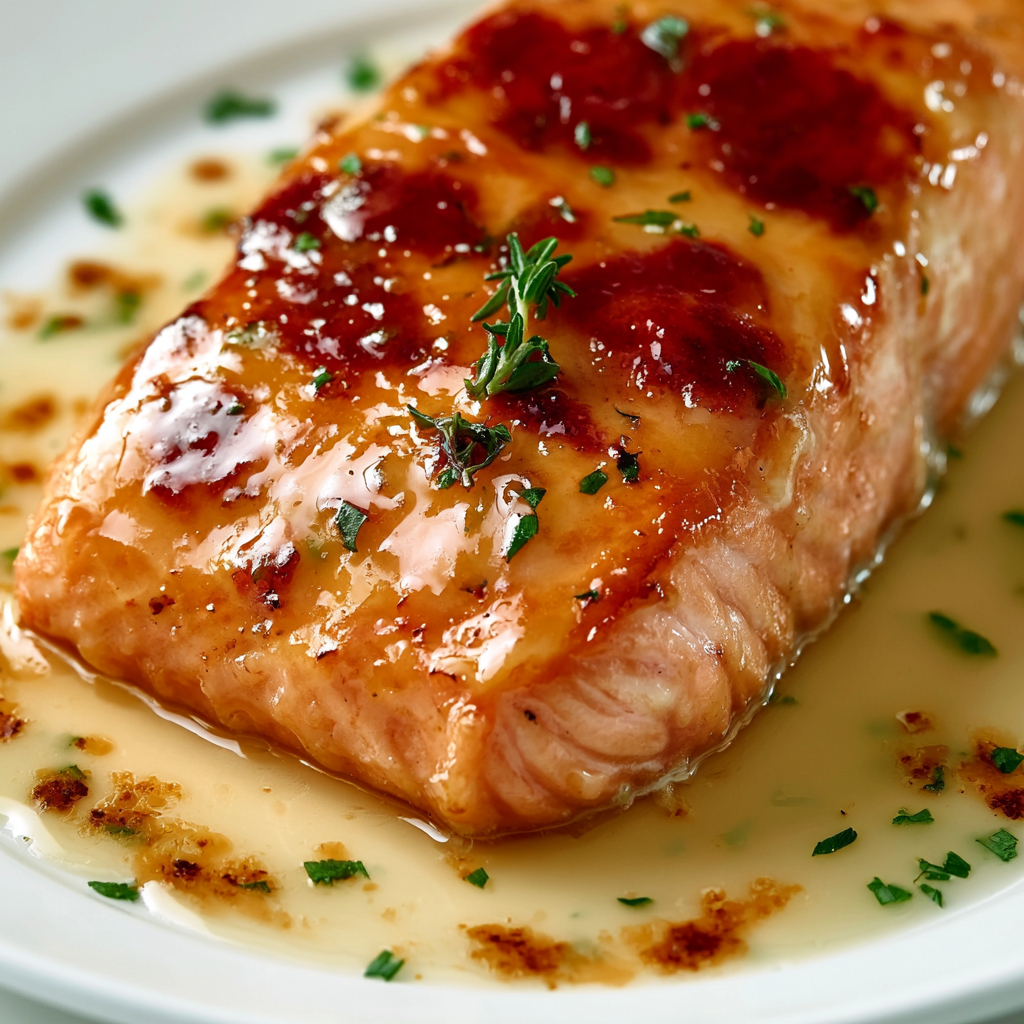
This is the kind of salmon dinner that works especially well when you want something flavorful without a long ingredient list or complicated prep. Most of the work is simply whisking the glaze together and brushing it onto the fillets as they bake.
The combination is nicely balanced rather than overly sweet. Maple syrup brings caramel-like sweetness, soy sauce adds savory depth, Dijon provides a little tang, and fresh garlic rounds everything out. Brushing the glaze on gradually also gives it time to cling to the salmon instead of running straight onto the baking sheet.
It is especially useful for weeknight dinners because the salmon needs only about 15 to 20 minutes in the oven. Add rice, vegetables, or another simple side and you have a complete meal without spending much time at the stove.
Maple Glazed Salmon Ingredients
You only need a few ingredients for this dish, so each one has an important role in creating the finished flavor and texture.
- Salmon fillets: Four fillets form the base of the dish. Arrange them skin-side down so the flesh stays exposed for glazing.
- Pure maple syrup: Provides the glaze with sweetness, body, and its glossy finish. Dark amber maple syrup gives the sauce a deeper maple character.
- Soy sauce: Balances the sweetness with saltiness and savory flavor.
- Dijon mustard: Adds gentle tang and helps give the glaze a smooth, cohesive consistency.
- Fresh garlic: Finely minced garlic adds aromatic depth without overpowering the maple flavor.
Because the glaze contains only four ingredients, there is no need for a long simmer or separate saucepan. Whisking everything thoroughly before baking is enough to create a smooth coating that develops as the salmon cooks.
Cooking Steps
STEP 1: Heat your oven to 375°F. While it preheats, finely mince the garlic so it can distribute evenly through the glaze rather than leaving large pieces on the salmon.
STEP 2: Combine the maple syrup, soy sauce, Dijon mustard, and minced garlic in a small bowl. Whisk until the mustard has blended completely into the liquids and the glaze looks smooth and uniform.
STEP 3: Pat the salmon fillets dry with paper towels. Arrange them skin-side down on a baking sheet with a little space between each piece. Removing excess surface moisture helps the maple mixture stay on the salmon more effectively.
STEP 4: Divide the glaze mentally into roughly three portions. Brush the first third generously over the tops of the salmon fillets, making sure the exposed flesh is evenly coated.
STEP 5: Place the salmon in the oven and bake for 10 minutes. Remove the pan briefly, then brush another third of the maple mixture over each fillet. The first coating should already be beginning to set, so this second layer builds additional flavor rather than simply sliding away.
STEP 6: Return the pan to the oven for another 5 to 10 minutes. The exact cooking time will depend on the thickness of your fillets. The salmon should become opaque and separate easily when gently tested with a fork.
STEP 7: As soon as the salmon comes out of the oven, brush the final portion of glaze over the hot fillets. Allow them to rest for about 2 minutes before serving. The residual heat helps this last coating settle into a smooth, glossy finish without additional baking.

What to Serve with Maple Glazed Salmon
The maple and soy flavors pair especially well with simple sides that can soak up a little of the extra glaze.
- Steamed or roasted rice: Plain white, brown, or jasmine rice makes a simple base and balances the concentrated glaze.
- Roasted vegetables: Broccoli, green beans, asparagus, or Brussels sprouts provide a savory contrast to the maple sweetness.
- Simple potatoes: Roasted baby potatoes or creamy mashed potatoes make the meal heartier without competing with the salmon.
For a lighter dinner, you can also serve the salmon alongside vegetables and skip the starch. Since the glaze already has plenty of flavor, the side dishes do not need complicated seasoning.
Helpful Tips
- Dry the salmon well. Excess moisture can make the first glaze layer slip from the fish instead of forming an even coating.
- Keep the glaze in stages. Adding all of it before baking can expose the maple syrup to heat for too long. Three applications create better coverage while reducing the chance of scorching.
- Watch the final few minutes carefully. Salmon fillets vary considerably in thickness, so use the texture of the fish rather than relying only on the clock.
Why should I glaze the salmon more than once?
Applying the glaze gradually gives each layer a chance to set before more is added. This creates a more concentrated coating and keeps a large amount of maple syrup from sitting in the oven for the entire cooking time, where its sugars could darken too quickly.
The final brushing is especially useful because it adds fresh maple flavor and gives the cooked salmon its shiny finish without requiring another trip into the oven.
Can I use lighter maple syrup?
Yes. Pure maple syrup with a lighter flavor will still work with the soy sauce, Dijon, and garlic. Dark amber syrup is particularly good here because its stronger maple character remains noticeable after baking, but you do not need it for the method to work.
Whichever type you choose, use pure maple syrup rather than changing the glaze to a different sweetener, since the recipe’s proportions and flavor were developed around maple syrup.
How do I know when the salmon is finished?
After the initial 10 minutes and another 5 to 10 minutes of baking, check the thickest part of a fillet. The flesh should appear opaque and should separate easily into moist flakes when gently pressed or tested with a fork.
Thinner fillets may be ready closer to 15 minutes total, while thicker pieces can need several additional minutes. Checking early is useful because salmon can become dry when left in the oven longer than necessary.
Can I prepare the maple glaze ahead?
Yes. You can whisk the maple syrup, soy sauce, Dijon mustard, and finely minced garlic together ahead of cooking and keep the mixture covered in the refrigerator.
Give it another good stir or whisk before using because the ingredients may settle slightly as they stand. Preparing the glaze in advance can make the actual dinner preparation especially fast.

How to Store & Reheat
Allow leftover salmon to cool before transferring it to a covered airtight container. Refrigerate it promptly and plan to use it within about 3 to 4 days. Keeping the fillets whole rather than breaking them into pieces can help them retain moisture during reheating.
For longer storage, cooked salmon can be frozen in a tightly sealed freezer-safe container for about 2 to 3 months. Let frozen portions thaw overnight in the refrigerator before reheating for the most even results.
To warm the salmon without drying it out, place it in a small baking dish, cover loosely, and reheat in a low oven until warmed through. Gentle reheating works better than using high heat because the fish is already fully cooked and only needs to become hot again.
If you have a little glaze remaining with the stored salmon, spooning it over the fish before reheating can help maintain the savory-sweet flavor. Avoid prolonged heating, since the maple coating can become very dark and the salmon can lose its tender texture.
This maple-glazed salmon works because the method is just as important as the short ingredient list. Instead of relying on one heavy coating, the glaze is built in layers: one to begin flavoring the fish, another to deepen the coating during baking, and a final application for a polished finish. The result is tender oven-baked salmon with a balanced combination of maple sweetness, savory soy sauce, tangy Dijon, and fresh garlic that fits comfortably into a quick weeknight dinner.
Maple Glazed Salmon
Ingredients
For the Salmon
- 4 salmon fillets 1 lb total, approximately 6 oz each
For the Maple Glaze
- 3 tablespoons soy sauce
- 2 garlic cloves finely minced (approximately 1 teaspoon)
- 1/4 cup pure maple syrup Grade A dark amber preferred
- 1 tablespoon Dijon mustard
Instructions
- Preheat the oven to 375°F. Place the minced garlic, pure maple syrup, soy sauce, and Dijon mustard in a small bowl. Whisk thoroughly until the ingredients form a smooth, uniform glaze. Allow the mixture to stand while preparing the salmon.
- Pat the salmon fillets thoroughly dry with paper towels, then arrange them skin-side down on a baking sheet. Brush approximately one-third of the maple glaze evenly across the tops of the fillets, allowing a small amount to collect on the surface. Drying the salmon first helps the glaze cling to the fish and develop a glossy finish during baking.
- Transfer the salmon to the preheated oven and bake for 10 minutes. Remove the baking sheet from the oven and coat each fillet with another one-third of the glaze. Return the salmon to the oven and bake for an additional 5–10 minutes, or until the flesh is opaque throughout and separates easily when tested with a fork. Layering the glaze during baking allows the coating to set gradually and intensifies its flavor without allowing the sugars to burn.
- Remove the cooked salmon from the oven and immediately brush the remaining one-third of the maple glaze over the hot fillets. Leave the salmon to rest for 2 minutes before serving. The residual heat helps the final glaze settle into a smooth, lustrous coating without exposing the maple syrup to additional direct heat.