
This Lemon Curd Cake is soft, buttery, and packed with fresh citrus flavor, with homemade lemon curd tucked into the cake and swirled over a fluffy lemon cream cheese frosting. It’s a bright, reliable dessert for spring gatherings, birthdays, holidays, or any occasion that calls for something fresh and impressive.
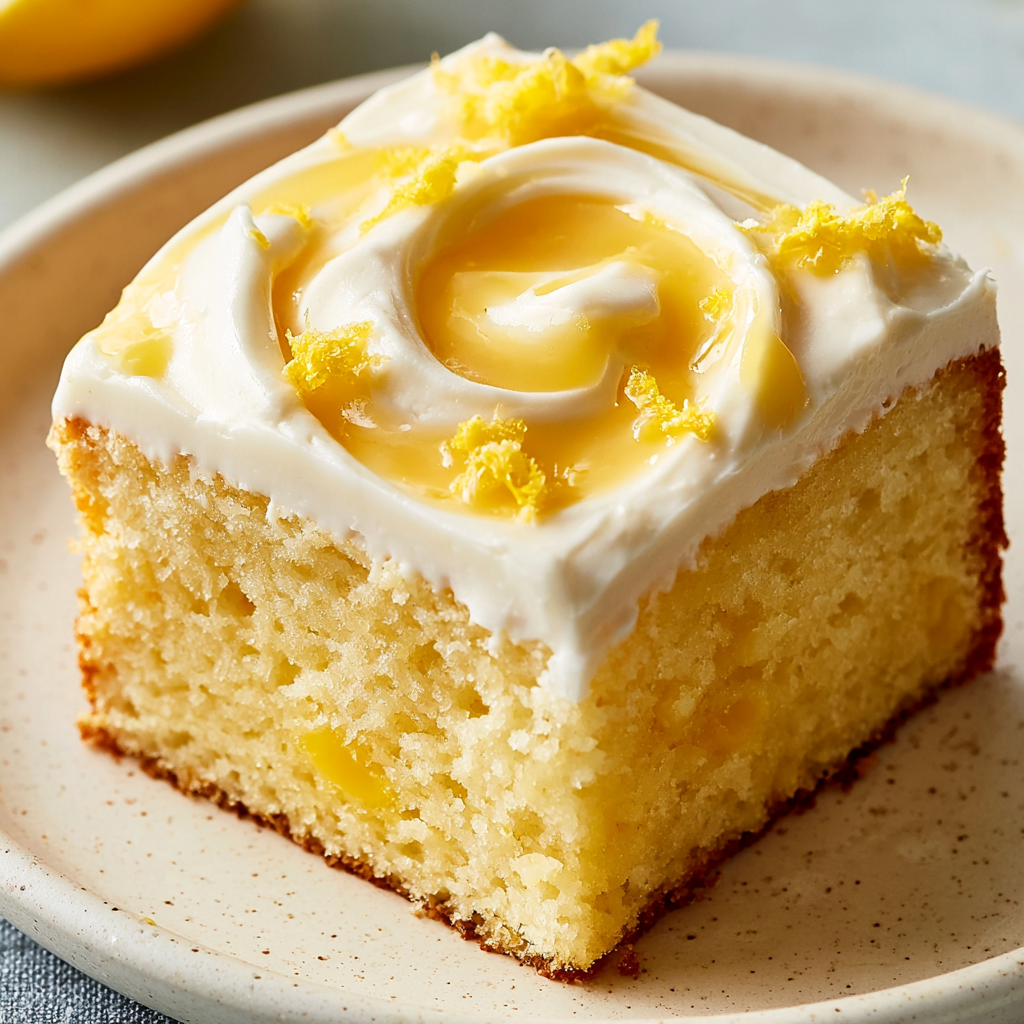
If you love desserts that balance sweetness with a noticeable lemon tang, this cake is worth adding to your baking list. The buttermilk cake has a tender crumb and plenty of lemon zest, while the homemade curd gives every slice an extra burst of citrus.
What makes the cake especially satisfying is the way the components work together. The rich cake keeps the lemon from becoming overly sharp, the curd adds concentrated flavor, and the cream cheese frosting brings a creamy finish without hiding the citrus.
Although there are a few separate components to prepare, none of them requires complicated decorating skills. Once the cake has cooled, you simply fill it with chilled curd, spread over the frosting, and swirl a little more curd across the top.
Lemon Curd Cake Ingredients
Fresh lemons: Both the juice and finely grated zest provide the bright citrus flavor that runs through the curd, cake, and frosting.
Granulated sugar: Sweetens both the homemade lemon curd and the cake while helping create a tender crumb.
Egg yolks: Give the lemon curd its rich consistency and help it thicken as it cooks.
Unsalted butter: Used generously throughout the dessert to make the curd silky, the cake tender, and the frosting light and creamy.
All-purpose flour: Provides enough structure for the cake while still allowing the buttermilk and butter to create a soft texture.
Buttermilk: Adds moisture and a subtle tang that complements the lemon while helping keep the cake tender.
Whole eggs: Give the cake structure and richness. Bringing them to room temperature helps them blend more smoothly with the creamed butter.
Baking powder and baking soda: Work together to give the cake its lift and light texture.
Vanilla extract: Rounds out the sharp citrus notes and adds warmth to the cake batter.
Cream cheese: Creates a smooth, slightly tangy frosting that pairs naturally with the lemon curd.
Confectioners’ sugar: Sweetens and thickens the frosting while helping create a smooth, spreadable finish.

Cooking Steps
STEP 1: Start with the lemon curd so it has enough time to chill. Whisk the lemon juice, egg yolks, sugar, salt, and lemon zest together in a medium saucepan until smooth. Cook over medium-low heat, stirring frequently, until the mixture noticeably thickens and coats the back of a spoon.
STEP 2: Remove the thickened curd from the heat and whisk in the cold butter a few cubes at a time. Let each addition melt into the mixture before adding more. Transfer the curd to a heatproof bowl, press plastic wrap directly against its surface, and refrigerate until completely cold.
STEP 3: Heat your oven to 350°F (175°C). Lightly grease a 9 × 9-inch baking pan and line it with parchment paper. In a separate bowl, whisk together the flour, baking powder, baking soda, and salt so the leavening is evenly distributed.
STEP 4: Beat the softened butter and granulated sugar for about 2 minutes until creamy. Add the room-temperature eggs and vanilla, then continue mixing until the mixture looks smooth and slightly lighter. Keeping the mixer on low, alternate additions of the dry ingredients and room-temperature buttermilk.
STEP 5: Stop mixing as soon as the batter comes together, scraping the bowl as necessary. Gently fold in the fresh lemon zest. Spread the batter evenly in the prepared pan and bake for about 35–40 minutes, beginning to test it at the earlier end of the baking time. A toothpick inserted near the center should come out clean.
STEP 6: Leave the cake to cool completely on a wire rack. Meanwhile, make the frosting by beating the softened butter until pale and fluffy. Add the cold cream cheese and beat briefly until smooth. Gradually incorporate the sifted confectioners’ sugar, then whip in the lemon zest until the frosting is light and spreadable.
STEP 7: Remove the cooled cake from the pan. Use the handle of a wooden spoon or a thick skewer to create evenly spaced holes across the surface. Transfer some of the chilled curd to a piping bag and fill the holes so the citrus flavor reaches into the cake rather than sitting only on top.
STEP 8: Spread a generous layer of lemon cream cheese frosting over the cake. Spoon small amounts of the remaining curd over the frosting and gently swirl them together without completely mixing the two. Slice once assembled and serve chilled or slightly cool.
Can I prepare the lemon curd ahead?
Yes. Making the curd in advance can actually make assembling the cake more convenient because it needs to be thoroughly chilled before you pipe it into the cake. Prepare it ahead, cover the surface closely, and keep it refrigerated until you are ready to assemble the dessert.
Perfect Pairings
This cake already has plenty of flavor, so simple accompaniments work particularly well.
- Fresh berries: Strawberries, raspberries, or blueberries complement the tart lemon without overwhelming the cake.
- Freshly brewed coffee: A simple cup of coffee balances the sweetness of the frosting and curd.
- Unsweetened tea: Black tea or a mild herbal tea makes a light pairing for an afternoon dessert.
Should the cake be cold before frosting?
Yes. The cake should be completely cooled before you add either the curd or cream cheese frosting. A warm cake can soften the frosting and prevent it from holding its fluffy texture. Cooling also helps the cake stay intact when you create the holes for the filling.
Helpful Tips
- Bring the eggs and buttermilk to room temperature before mixing the cake batter. They combine more evenly with the butter and help create a smoother batter.
- Avoid overmixing once the flour has been added. Mix only until no obvious dry streaks remain, then gently fold in the lemon zest.
- Start checking the cake around 35 minutes. Removing it as soon as it is baked through helps protect the soft, tender texture.
How do I know when lemon curd is thick enough?
The curd should become noticeably thicker as it cooks and should coat the back of a spoon rather than immediately running off. It will continue to firm up as it cools in the refrigerator, so it does not need to reach a stiff consistency while it is still warm.

How to Store & Reheat
Because this cake contains both homemade lemon curd and cream cheese frosting, it should be kept refrigerated. Place leftover slices in an airtight container or cover the cake well and store it in the refrigerator for about 3–4 days.
For the nicest texture, you can take an individual slice out of the refrigerator shortly before serving and allow it to lose some of its chill. There is no need to reheat the cake, and heating is not recommended because it can melt the frosting and loosen the lemon curd.
For longer storage, unfrosted cake can be wrapped securely and frozen. You can also freeze assembled slices if necessary, although the texture of cream cheese frosting can change slightly after thawing. Wrap slices carefully, place them in a freezer-safe container, and freeze for up to about 2 months. Thaw them overnight in the refrigerator before serving.
Can I make the whole cake ahead of time?
Yes. This is a useful dessert to prepare in stages. The curd can be made first, and the cake itself can be baked and cooled before final assembly. Once filled and frosted, keep the finished cake refrigerated until serving.
Making it ahead also gives the curd time to settle into the holes in the cake, creating little pockets of bright lemon flavor throughout each slice.
Why use buttermilk in lemon cake?
Buttermilk contributes moisture and a mild tang that works especially well with fresh lemon. Its acidity also interacts with the baking soda in the batter. Combined with properly softened butter and room-temperature eggs, it helps create the soft, tender texture that makes this cake especially good with the creamy frosting and rich lemon filling.
The finished dessert has several layers of lemon flavor without relying on complicated decoration. Fresh zest perfumes the cake itself, homemade curd adds an intense citrus center, and the cream cheese topping brings everything together with a smooth finish. That combination makes this 9 × 9-inch cake equally practical for a family dessert and polished enough for a special gathering.
Lemon Curd Cake
Ingredients
For the Lemon Curd
- ¾ cup white granulated sugar
- 1 tablespoon finely grated lemon zest from approximately 1 large lemon
- ½ cup freshly squeezed lemon juice obtained from roughly 2–3 lemons
- ⅛ teaspoon fine salt
- ½ cup unsalted butter cold and cut into cubes
- 4 large egg yolks brought to room temperature
For the Cake
- 1 cup buttermilk at room temperature
- 10 tablespoons unsalted butter softened to approximately 70°F
- ¼ teaspoon baking soda
- 3 large eggs at room temperature
- 3 tablespoons finely grated lemon zest from approximately 3 large lemons
- 2¼ cups all-purpose flour
- 1 tablespoon vanilla extract
- 1½ cups granulated sugar
- ½ teaspoon salt
- 1½ teaspoons baking powder
For the Lemon Cream Cheese Frosting
- 6 ounces cream cheese kept cold
- ½ tablespoon finely grated lemon zest
- 2¼ cups confectioners’ sugar
- ¾ cup unsalted butter softened to approximately 70°F
Instructions
- Place the lemon juice, room-temperature egg yolks, granulated sugar, salt, and finely grated lemon zest in a medium saucepan.
- Whisk the ingredients thoroughly until they form a uniform mixture.
- Set the saucepan over medium-low heat and cook for 20–25 minutes, stirring frequently. Continue until the curd has thickened enough to coat the back of a spoon.
- Take the pan off the heat. Gradually whisk in the cubes of cold unsalted butter, allowing each addition to melt completely into the curd.
- Transfer the finished lemon curd to a heatproof bowl. Press plastic wrap directly against the surface to prevent a skin from forming, then refrigerate until thoroughly chilled.
- Preheat the oven to 350°F (175°C).
- Coat a 9 × 9-inch baking pan with non-stick cooking spray, then line it with parchment paper.
- In a medium mixing bowl, whisk the all-purpose flour with the baking powder, baking soda, and salt until evenly distributed.
- In a separate large bowl, use an electric mixer to beat the softened butter and granulated sugar together for approximately 2 minutes, until well creamed.
- Add the room-temperature eggs and vanilla extract. Beat at medium speed for about 1 minute, or until the mixture becomes smooth and pale.
- With the mixer operating on low speed, gradually alternate additions of the dry flour mixture and room-temperature buttermilk into the butter mixture. Mix only until the cake batter is combined.
- Scrape down the sides and bottom of the bowl with a rubber spatula whenever necessary to ensure the batter is evenly mixed.
- Carefully fold the 3 tablespoons of lemon zest into the completed batter.
- Transfer the batter to the prepared 9 × 9-inch pan and spread it evenly.
- Bake for 35–40 minutes. The cake is ready when a toothpick inserted into the center comes out clean.
- Place the pan on a wire cooling rack and allow the cake to cool completely before filling and frosting.
- While the cake is cooling, place the softened butter in a large mixing bowl. Beat it with an electric mixer on high speed for approximately 5 minutes, until noticeably pale and fluffy.
- Add the cold cream cheese and continue beating on high speed for about 1 minute, until the mixture is light and evenly blended.
- Sift the powdered sugar into the bowl. Begin mixing at low speed to incorporate it, then increase to high speed and continue beating until the frosting becomes fully combined and fluffy.
- Add the ½ tablespoon of lemon zest and whip once more until evenly incorporated and airy.
- Once completely cool, carefully remove the cake from its pan and place it on a serving platter.
- Using the handle of a wooden spoon or a thick skewer, make holes evenly across the entire surface of the cake.
- Spoon the chilled lemon curd into a piping bag and pipe the curd directly into the prepared holes.
- Using an offset spatula, spread a thick, even covering of lemon cream cheese frosting across the top of the cake.
- Finish by swirling additional lemon curd through the frosting to create a tangy lemon topping.
- Slice and serve.