
Jamaican Jerk Cornish Hens make a bold, impressive main course with very little complicated prep. Fiery jerk seasoning, aromatic herbs, garlic, and lemon flavor the tender roasted hens, while a buttery citrus baste adds richness, moisture, and a bright finish.
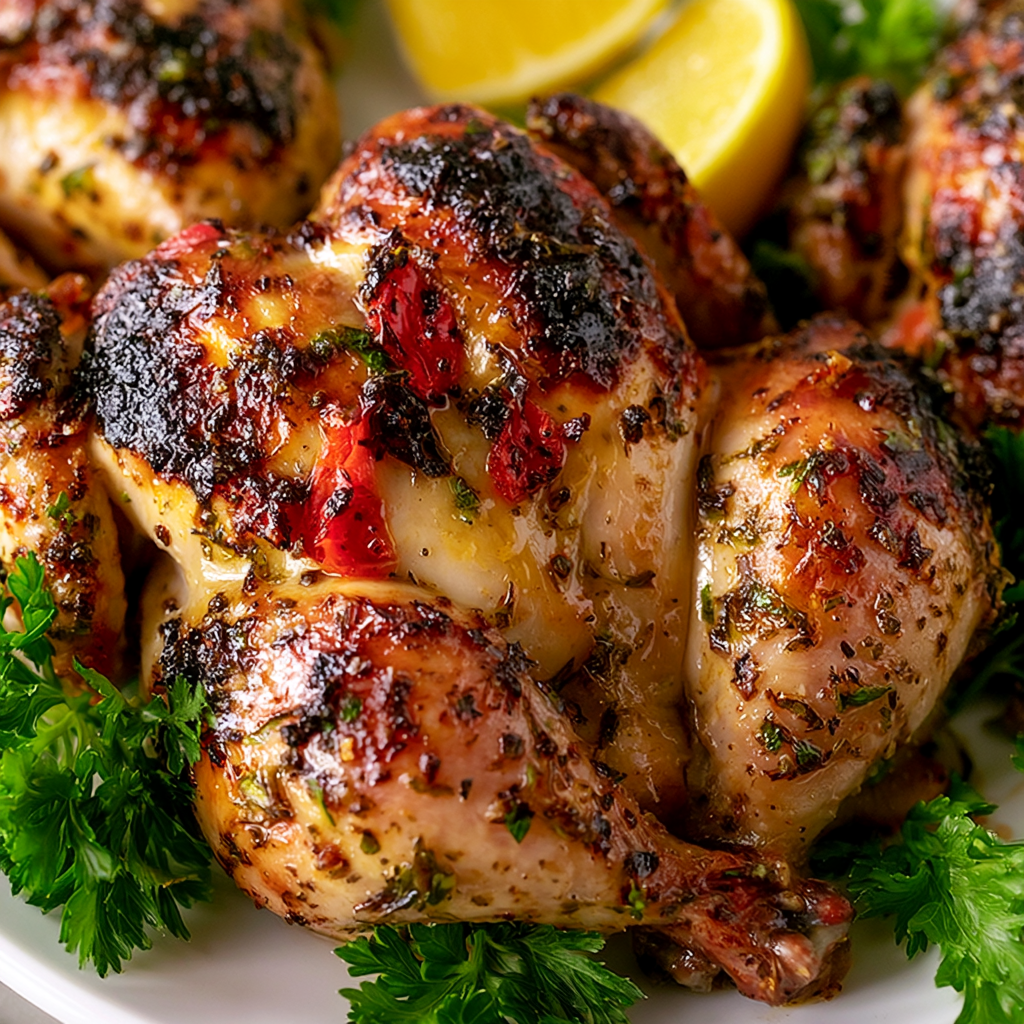
Cornish hens are especially useful when you want something that feels a little more special than everyday roasted chicken without committing to a large bird. Each hen roasts whole, develops a deeply seasoned exterior, and can be split neatly in half for serving.
The combination here works because the strong, savory heat of Jamaican-inspired jerk seasoning is balanced by fresh lemon and a warm herb butter. Thyme, sage, and garlic tucked inside the cavities perfume the meat as it cooks, while the final basting step gives the outside extra flavor just before serving.
You can bring these hens to the table for a weekend dinner, holiday meal, or small gathering. Add rice and peas, plantains, or another simple side and you have a satisfying dinner that looks impressive without requiring difficult techniques.
Jamaican Jerk Cornish Hens Ingredients
Cornish hens: Two whole hens around 2 to 2 1/2 pounds each provide the foundation of the dish. Drying them thoroughly before seasoning helps the exterior roast more effectively.
Jamaican jerk seasoning: A prepared medium or hot jerk seasoning creates the primary spicy, aromatic flavor. Use enough to coat the hens well, adjusting slightly according to your preferred heat level.
Fresh thyme and sage: These herbs are placed inside the birds so their fragrance infuses the meat during roasting.
Fresh lemon: Thin slices go into the cavities, while the zest and juice are used later in the butter baste for fresh citrus flavor.
Garlic: Smashed cloves season the hens from the inside, and finely minced garlic adds another savory layer to the finishing butter.
Herbes de Provence: This dried herb blend complements the fresh herbs and adds seasoning across the exterior of the hens.
Olive oil: A light coating helps the seasonings cling to the skin and promotes attractive browning in the oven.
Unsalted butter: Melted butter forms the rich base of the lemon-herb basting sauce.
Shallot: Finely chopped shallot softens briefly in the butter and gives the baste a mild onion flavor without overpowering the jerk seasoning.
Dried parsley: Parsley adds another gentle herbal note to the warm finishing sauce.
Salt and black pepper: Use these to season the hens and butter sauce as needed, keeping in mind that prepared jerk seasoning may already contain salt.

Cooking Steps
STEP 1: Heat your oven to 400°F and position the rack around the center. Set a wire rack over a roasting pan or quarter-sheet pan and lightly grease it. Elevating the hens allows hot air to move around them more efficiently while excess juices drip beneath.
STEP 2: Pat the cleaned Cornish hens very dry with paper towels. Mix the herbes de Provence with a modest amount of kosher salt and black pepper. Sprinkle some of this seasoning inside each cavity, then divide the thyme, sage, smashed garlic, and thin lemon slices between the two birds.
STEP 3: Drizzle the outside of the hens with olive oil and rub it over the surface. Season with the remaining herb mixture, then spread the jerk seasoning generously over the birds, reaching around the legs, wings, breast, and other creases. Tie the legs together with kitchen twine and tuck the wing tips close to the body before transferring the hens to the rack.
STEP 4: Roast the prepared hens uncovered for about 1 hour. Because Cornish hens can vary slightly in size, use the roasting time as a guide rather than relying on time alone. Begin preparing the basting butter during the final 10 minutes of this initial roasting period.
STEP 5: Melt the butter in a small saucepan over medium heat. Stir in the minced garlic, finely chopped shallot, lemon zest, fresh lemon juice, dried parsley, and a little salt and pepper. Let the mixture simmer gently for 2 to 3 minutes, just long enough for the shallot and garlic to soften slightly and the flavors to blend.
STEP 6: Carefully remove the roasting pan after the hens have cooked for approximately 1 hour. Brush roughly half of the warm lemon-herb butter over their surfaces, then return them to the oven for another 20 minutes. Check the thickest part of the thigh with an instant-read thermometer. The hens should reach at least 165°F before serving.
STEP 7: Remove the fully roasted hens from the oven and immediately brush them with the remaining butter mixture. Rest them for at least 10 minutes so the juices have time to redistribute. Once rested, use a sharp chef’s knife or sturdy kitchen shears to split each hen in half and serve warm.
What to Serve with Jamaican Jerk Cornish Hens
Rice and peas: This is an excellent choice for soaking up any seasoned juices or extra lemon-herb butter from the hens. Its mild, hearty flavor also balances the stronger jerk spices.
Roasted plantains: Their natural sweetness works particularly well with the heat and savory depth of the jerk coating. Keep the seasoning on the plantains fairly simple so the main dish remains the focus.
Roasted vegetables: Broccoli, carrots, peppers, sweet potatoes, or a mixed vegetable tray can round out the meal without competing with the herbs and citrus already used on the poultry.
Can I prepare the Cornish hens ahead of time?
Yes. You can dry, fill, and season the hens several hours before roasting, then keep them covered in the refrigerator. Bring them out while the oven heats so they lose some of their refrigerator chill, and prepare the butter baste closer to roasting time.
How do I know when Cornish hens are fully cooked?
The most reliable method is an instant-read meat thermometer. Insert it into the thickest portion of the thigh without touching bone. The temperature should reach at least 165°F. Temperature is more dependable than judging doneness only by color or cooking time.
Are Jamaican jerk Cornish hens very spicy?
That depends primarily on the jerk seasoning you choose and how heavily you apply it. A medium seasoning provides noticeable warmth, while a hot version delivers much more heat. The lemon, butter, and mild meat help balance the seasoning without eliminating its spicy character.
Can I use less jerk seasoning?
Absolutely. You do not have to use the full amount available in the recipe card. Apply enough to create an even coating, then stop when the seasoning level suits your preference. Remember that concentrated jerk seasoning can be powerful, particularly if you choose a hot variety.
Why should the hens rest before carving?
Resting allows the hot juices inside the meat to settle instead of immediately running onto your cutting board. Ten minutes is usually enough for these smaller birds. Keep them in a warm area while resting, then split them in half just before serving.

Pro Tips for Jamaican Jerk Cornish Hens
- Dry the hens thoroughly. Removing excess surface moisture before adding oil and seasoning helps the outside roast rather than steam.
- Check temperature before extending the cooking time. Cornish hens vary in weight, so begin checking near the end of the suggested roasting period and avoid unnecessarily overcooking the breast meat.
- Save the final butter for after roasting. Using part of the lemon-herb sauce at the end gives the finished hens a fresher garlic, herb, and citrus character.
How to Store & Reheat
Allow leftover Cornish hen to cool before transferring it to a tightly covered container. Refrigerate the cooked meat within two hours of serving and use it within about 3 to 4 days. You can store whole portions, halved hens, or remove the meat from the bones first if you want leftovers that are easier to reheat.
For longer storage, remove the meat from the bones and place it in a freezer-safe container or freezer bag with as little excess air as possible. Freeze for approximately 2 to 3 months for the best quality. Thaw frozen leftovers overnight in the refrigerator before reheating.
For the oven, place the leftover hen in a covered baking dish with a small spoonful of water or any reserved cooking juices and warm at about 325°F until heated through. Covering the dish helps prevent the meat from becoming dry.
Smaller portions can also be reheated gently in the microwave. Heat in short intervals rather than using one long cooking cycle, and turn or rearrange the meat between intervals for more even heating. Reheated poultry should reach 165°F in the center.
If you have a little lemon-herb butter left, brushing a small amount over the meat before reheating is an excellent way to restore some of the richness and brightness of the freshly roasted hens.
Jamaican Jerk Cornish Hens
Ingredients
For the Cornish Hens and Seasoning
- 6 fresh thyme sprigs
- 2 whole Cornish hens approximately 2 to 2 1/2 pounds each, cavities cleaned
- 4 garlic cloves gently smashed
- Olive oil as needed for drizzling
- 1 tablespoon herbes de Provence
- 4 slender slices of fresh lemon
- Kosher salt and freshly ground black pepper according to taste
- 10 ounces Walkerswood Jamaican jerk seasoning medium or hot according to preference
- 6 fresh sage leaves
For the Lemon-Herb Basting Sauce
- 2 garlic cloves finely minced
- 6 tablespoons unsalted butter
- 1 tablespoon dried parsley
- 1 small shallot finely chopped
- Kosher salt and freshly ground black pepper to taste
- 1 small lemon both zest and juice
Instructions
- Position an oven rack in the center and preheat the oven to 400°F (200°C).
- Place a wire rack inside a quarter-sheet pan or another suitable roasting pan. Lightly coat the rack with cooking spray to reduce sticking and allow heat to circulate beneath the hens during roasting.
- Blot the Cornish hens thoroughly with paper towels until the exterior surfaces are dry.
- Combine the herbes de Provence with kosher salt and freshly ground black pepper in a small bowl. Stir until the seasonings are evenly blended.
- Sprinkle a portion of the herb mixture inside the cavity of each hen.
- Fill each hen with 3 thyme sprigs, 3 sage leaves, 2 smashed garlic cloves, and 2 thin lemon slices.
- Drizzle olive oil generously over the exterior of both hens.
- Distribute the remaining herbes de Provence mixture over the outside, seasoning the birds evenly.
- Rub approximately 1/2 cup of the Walkerswood Jamaican jerk seasoning thoroughly over both hens, working it across the entire surface and into the creases. Additional jerk seasoning may be used for a stronger coating.
- Tie the legs together with kitchen twine and tuck the wing tips into the area beside the legs.
- Transfer the seasoned hens to the prepared wire rack.
- Place the hens in the preheated oven and roast them uncovered for 1 hour.
- Approximately 10 minutes before the first hour of roasting is complete, begin preparing the lemon-herb basting sauce.
- Melt the unsalted butter in a small saucepan over medium heat.
- Add the lemon zest, lemon juice, finely chopped shallot, dried parsley, minced garlic, kosher salt, and freshly ground black pepper.
- Allow the mixture to simmer gently for 2 to 3 minutes, giving the ingredients time to combine and release their flavors.
- Remove the saucepan from the heat and keep the sauce nearby for basting.
- After the hens have roasted for 1 hour, remove the pan from the oven while leaving the oven switched on.
- Brush approximately half of the warm lemon-herb butter sauce generously over the hens.
- Return them to the oven and continue roasting for another 20 minutes, or until an instant-read thermometer inserted into the thickest portion of a thigh registers at least 165°F (74°C).
- Remove the fully cooked hens from the oven and brush them thoroughly with the remaining lemon-herb sauce.
- Allow the hens to rest for a minimum of 10 minutes before carving.
- Using a sharp knife or sturdy kitchen shears, cut each rested Cornish hen in half.
- Serve the hens while warm.