
Jamaican Fried Chicken is a deeply seasoned, crunchy main dish with garlic, ginger, fresh thyme, curry, paprika, hot sauce, and pepper tucked beneath a crisp flour-and-cornstarch coating. It is flavorful, reliable for batch frying, and ideal when you want fried chicken with extra aromatic character.
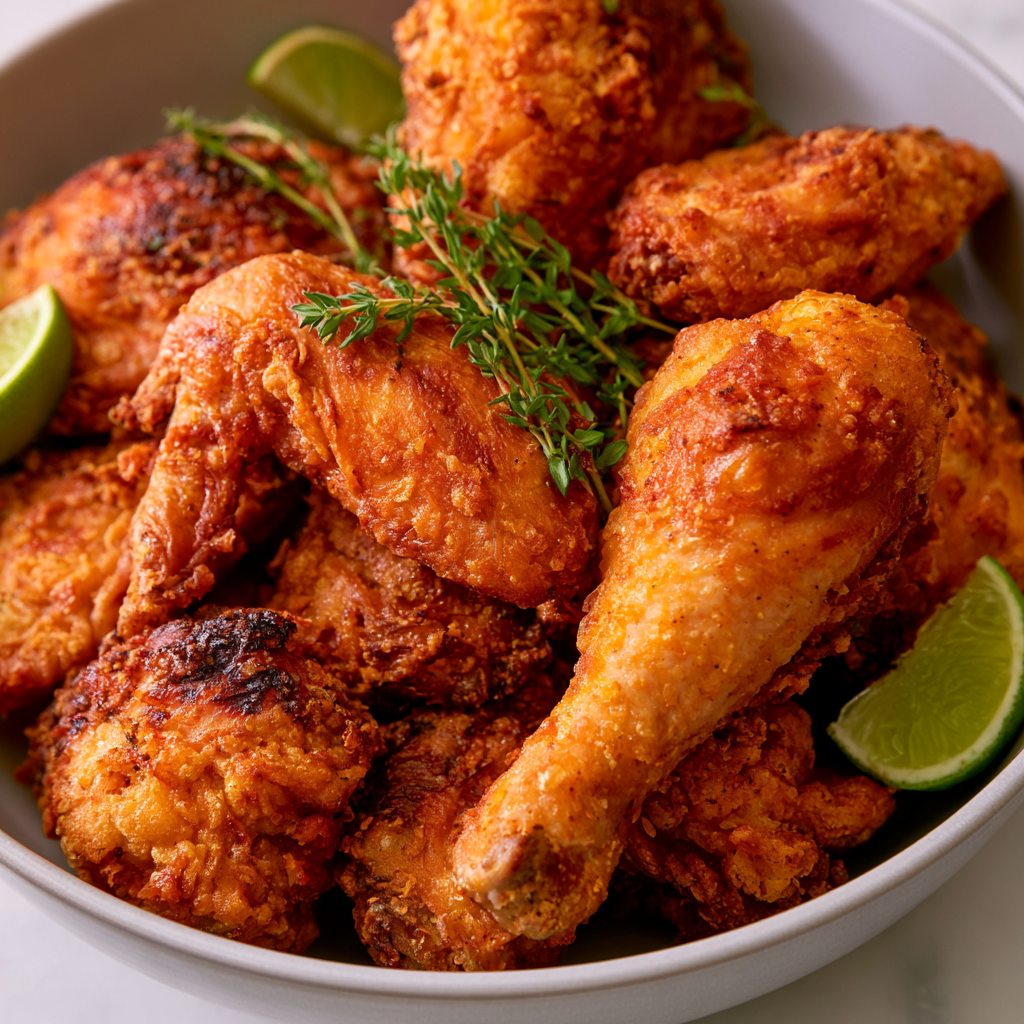
This is the kind of chicken to make when plain fried chicken simply will not do. The marinade gives the meat plenty of savory, peppery flavor before it ever reaches the coating, so every bite tastes seasoned rather than relying only on the crust.
The combination of flour and cornstarch creates an especially crisp shell, while a small amount of milk worked into the coating forms those irregular little flour clumps that turn crunchy in the hot oil. Resting the breaded pieces before frying also helps the coating stay where it belongs.
Give the chicken at least an hour to marinate if you are short on time, but an overnight rest is even better. Once the marinating is done, the remaining work is straightforward and can easily be handled in batches.
Jamaican Fried Chicken Ingredients
Whole chicken: A roughly 3 1/2 to 4-pound chicken cut into about 10 portions gives you a useful mix of breasts, thighs, drumsticks, and wings.
Fresh thyme: One of the key aromatic flavors in the marinade, giving the chicken its distinctive herbal character.
Garlic and ginger: These fresh aromatics season the meat itself and add plenty of savory depth beneath the crispy coating.
Paprika: Used in both the marinade and breading for warmth, seasoning, and a richer golden appearance.
Curry powder: A small amount adds another layer of spice without turning the chicken into a strongly curry-flavored dish.
Hot sauce and cayenne: These provide adjustable heat. You can keep the chicken moderately spiced or increase the amount if you prefer a stronger kick.
White pepper: Adds a sharp, earthy pepperiness to both the chicken and its outer crust.
Chicken bouillon powder: Boosts the savory seasoning in the marinade. Additional salt can be used in its place.
All-purpose flour: Gives the coating its main structure and helps create those familiar craggy fried edges.
Cornstarch: Mixed equally with the flour to produce a lighter, crispier crust.
Baking powder: Helps give the coating a slightly rougher, airy crunch as it fries.
Garlic powder, onion powder, and dried herbs: Season the breading so the crust is just as flavorful as the chicken underneath.
Milk: Moistens the marinated chicken before dredging and also helps create crunchy little clusters in the dry coating.
Frying oil: Use enough neutral cooking oil to safely deep-fry the chicken pieces without crowding the pan.

Step-by-Step Jamaican Fried Chicken
STEP 1: Place the cut chicken into a large bowl and season it generously with salt, bouillon powder, hot sauce, minced garlic, grated ginger, white pepper, paprika, curry powder, and finely chopped fresh thyme. Massage everything over the chicken so the seasoning reaches every surface. Cover and refrigerate for at least 1 hour, or preferably overnight.
STEP 2: When you are ready to cook, pour the milk over the marinated chicken and turn the pieces several times until they are evenly moistened. Set aside a couple of tablespoons of the seasoned milk before you begin dredging.
STEP 3: In a separate wide bowl, combine equal amounts of flour and cornstarch with baking powder, paprika, garlic powder, onion powder, cayenne, dried herbs, white pepper, and salt. Mix thoroughly so the seasonings are distributed evenly throughout the coating.
STEP 4: Drizzle the reserved milk into the flour mixture and rub it lightly through the dry ingredients with your fingertips. You are not trying to make a dough. Instead, create small uneven flour clusters. Those rough bits attach to the chicken and become wonderfully crisp once fried.
STEP 5: Lift one piece of chicken from the milk and press it firmly into the seasoned coating. Turn it several times, packing the flour mixture against the meat rather than simply dusting it lightly. Shake off loose flour and transfer the coated piece to a rack or tray. Repeat with the remaining chicken, then leave everything undisturbed for about 15 minutes.
STEP 6: Heat your frying oil to approximately 375°F. Lower the chicken into the oil carefully, working in batches so the temperature does not drop dramatically. Avoid squeezing too many pieces into the pan because overcrowding can lead to greasy, softer breading.
STEP 7: Fry the pieces until deeply golden, crisp, and completely cooked through, turning once as needed. Smaller pieces may finish close to the 10-minute mark, while larger breast and thigh portions can require closer to 20 minutes. The thickest part of the chicken should reach 165°F.
STEP 8: Transfer each finished batch to a wire rack lined underneath with paper towels to catch excess oil. Let the chicken rest for about 10 minutes before serving. This gives the crust time to settle while the juices redistribute inside the meat.
Why does my fried chicken coating fall off?
Coating usually separates when the chicken is too wet, the breading has not been pressed on firmly enough, or the coated pieces go straight into the fryer. Letting the breaded chicken rest for about 15 minutes helps the moist layer and flour mixture bond more securely.
Helpful Tips
- Keep the oil temperature steady. Allow the oil to recover between batches. Oil that is too cool can make the crust greasy, while excessively hot oil may brown the outside before larger pieces cook completely.
- Fry similar-sized pieces together. Wings and smaller drumsticks generally finish sooner than large breasts or thighs, so grouping comparable pieces makes timing much easier.
- Use a rack after frying. A wire rack lets steam escape from underneath the chicken. Leaving hot fried chicken sitting directly on paper towels for too long can soften the bottom crust.
How do you make fried chicken extra crispy?
The flour-and-cornstarch combination does much of the work here. Cornstarch reduces the heaviness of an all-flour breading and creates a more brittle crunch. Adding a little milk to the dry coating also produces irregular clusters that fry into crisp, rugged edges.
Maintaining the oil temperature is equally important. If it falls too far during cooking, the breading can absorb more oil instead of becoming quickly crisp.
What to Serve with Jamaican Fried Chicken
A crunchy chicken dinner works particularly well with sides that offer either freshness or something soft and comforting alongside the crisp crust.
Rice and peas are a natural pairing, especially when you want to turn the chicken into a filling Jamaican-inspired dinner.
Cabbage slaw brings freshness and crunch while helping balance the richness of deep-fried chicken. A lightly dressed version works especially well.
Fried plantains add a sweet contrast to the thyme, curry, pepper, and hot sauce in the chicken seasoning.
Can I marinate the chicken overnight?
Yes. Overnight marinating is actually a great option because it gives the garlic, ginger, thyme, paprika, curry, and pepper more time to season the meat. Keep the chicken covered in the refrigerator, then continue with the milk and breading when you are ready to fry.
If you need the chicken sooner, a one-hour marinade will still give you good results.

How do I know when the chicken is cooked?
Color alone is not always reliable because the breading can become beautifully brown before a large piece is completely cooked. Check the thickest area of the chicken with an instant-read thermometer, avoiding direct contact with the bone. The chicken should reach at least 165°F.
Remember that different pieces can finish at different times, so remove smaller portions when they are ready instead of waiting for the entire batch to cook equally.
Keeping Leftovers Fresh
Let leftover chicken cool before transferring it to a covered container. Refrigerate it within a reasonable amount of time after serving and keep it chilled for up to 3 to 4 days.
For longer storage, freeze completely cooled pieces in a freezer-safe container or bag. Separating layers with parchment can make individual portions easier to remove. For the best texture and flavor, use frozen fried chicken within about 2 to 3 months.
The oven or air fryer is the better choice for reheating because dry heat helps bring back the crunchy coating. Warm refrigerated pieces until heated through and crisp again, turning them if needed so both sides reheat evenly. Frozen chicken can be thawed overnight in the refrigerator before reheating for more even results.
Microwaving works when convenience matters most, but the trapped steam will soften the breading. If keeping that craggy crust is important, give the chicken a few extra minutes in the oven or air fryer instead.
Can I make the coating ahead of time?
You can combine the dry flour, cornstarch, baking powder, and seasonings several hours ahead and keep the mixture covered until needed. Wait to add the reserved milk until just before dredging the chicken.
Creating the little flour clumps at the last minute keeps the coating loose enough to press evenly onto each piece. Once breaded, give the chicken its 15-minute rest and then fry it rather than storing the coated pieces for an extended period.
Jamaican Fried Chicken
Ingredients
Chicken and Marinade
- 1 whole chicken approximately 3 1/2–4 lb, divided into 10 pieces
- 1 tablespoon ground paprika
- 2 –3 teaspoons finely minced fresh thyme
- 1 teaspoon freshly grated ginger
- 2 teaspoons finely minced garlic
- 1 teaspoon curry powder
- 2 –3 teaspoons hot sauce adjusted to taste
- 1 teaspoon ground white pepper
- 3/4 teaspoon chicken bouillon powder or additional salt as a substitute
- 1 teaspoon salt
Crispy Seasoned Coating
- 1 1/2 cups cornstarch
- 1 tablespoon onion powder
- 1 teaspoon cayenne pepper
- 1 1/2 tablespoons dried mixed herbs such as thyme, oregano, and parsley
- 1 1/2 cups all-purpose flour
- 1 tablespoon garlic powder
- 1 tablespoon paprika
- 1 teaspoon baking powder
- 1 teaspoon ground white pepper
- 3/4 teaspoon salt or to taste
- 2 tablespoons milk reserved from the milk used to soak the chicken
For Assembly
- 1 cup milk
Instructions
- Place the portioned chicken in a large mixing bowl. Add the salt, chicken bouillon powder, hot sauce, minced garlic, grated ginger, white pepper, paprika, curry powder, and fresh thyme.
- Thoroughly toss and massage the seasonings over the chicken until every piece is evenly coated. Cover the bowl securely and refrigerate for a minimum of 1 hour. For more developed flavor, leave the chicken to marinate overnight.
- Remove the seasoned chicken from the refrigerator and pour 1 cup of milk over the pieces.
- Gently turn the chicken until all surfaces are moistened with the milk. Reserve approximately 2 tablespoons of this milk for preparing the coating mixture.
- In a large bowl, thoroughly combine the all-purpose flour, cornstarch, baking powder, paprika, salt, garlic powder, onion powder, cayenne pepper, dried mixed herbs, and additional white pepper.
- Immediately before coating the chicken, work approximately 2 tablespoons of the reserved milk into the dry mixture with your fingertips. Continue until small, irregular clumps form throughout the flour mixture. These pieces will produce a rougher, extra-crisp crust during frying.
- Remove each milk-coated piece of chicken and thoroughly cover it with the seasoned flour mixture, gently pressing the coating against the surface to encourage a craggy texture. Shake away any loose excess flour.
- A zip-top bag may also be used for coating if preferred.
- Transfer the coated chicken to a tray or wire rack and allow it to stand for approximately 15 minutes before frying. This resting period helps the coating adhere more securely to the chicken.
- Heat frying oil in a deep fryer or a large cast-iron skillet to 375°F (190°C).
- Carefully lower the coated chicken into the hot oil in batches, leaving sufficient room between the pieces to prevent overcrowding.
- Fry until the exterior is deeply golden and crisp, turning each piece once during cooking. Depending on the size of the chicken pieces, frying will take approximately 10–20 minutes.
- Continue cooking until the chicken is no longer pink inside and the juices run clear. Check the thickest pieces carefully to confirm they are fully cooked.
- Transfer the finished chicken from the oil to paper towels arranged over a wire rack to remove excess oil.
- Repeat the frying procedure with the remaining chicken pieces.
- Allow the fried chicken to rest for at least 10 minutes before serving. This short resting period helps preserve the crisp coating while allowing the juices inside the chicken to redistribute.