
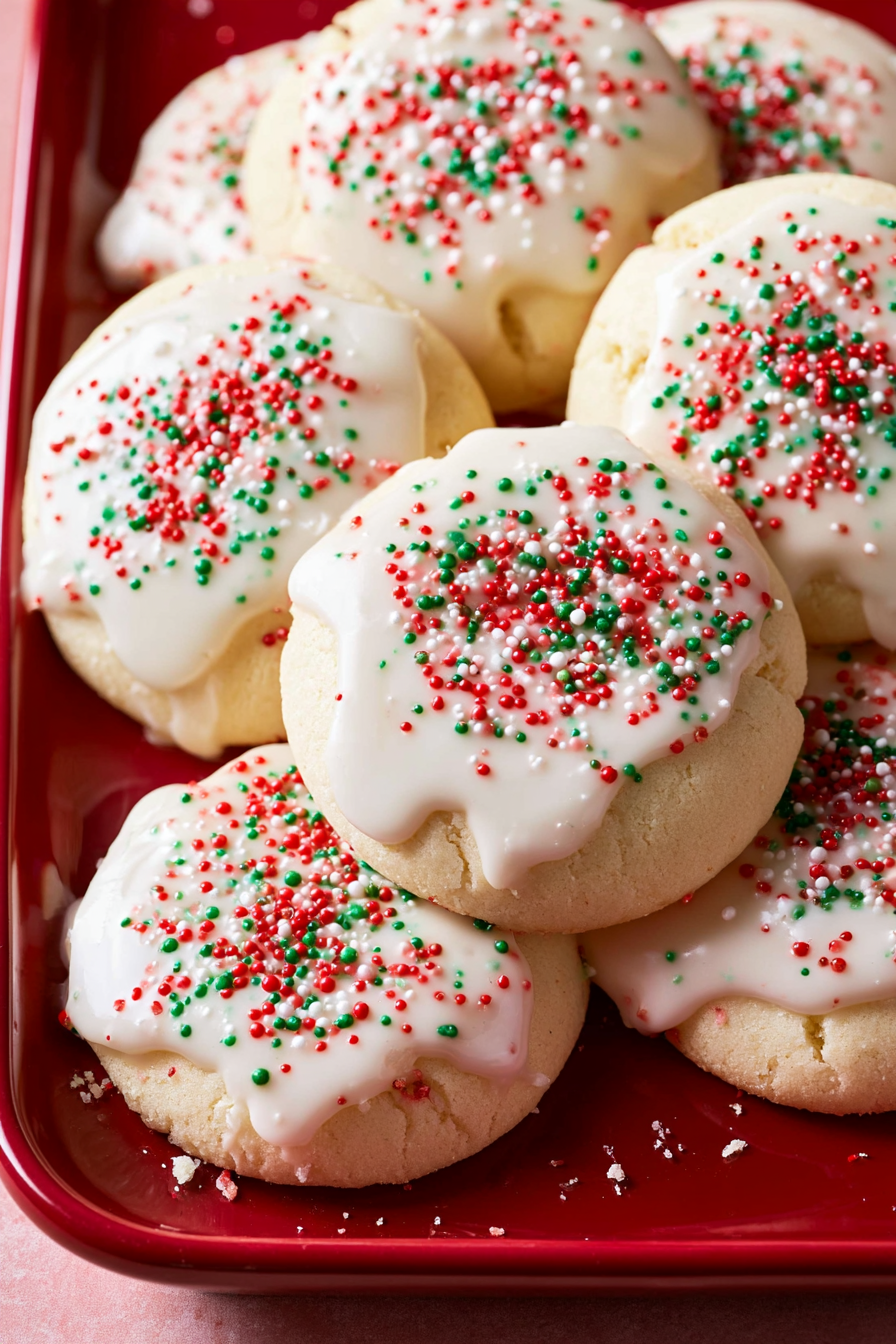
Italian Christmas Cookies are soft, tender, and fragrant with almond, then finished with a thick powdered sugar glaze and colorful nonpareil sprinkles. Chilling the dough makes shaping easier, while a short bake keeps every cookie delicate and perfect for holiday trays.
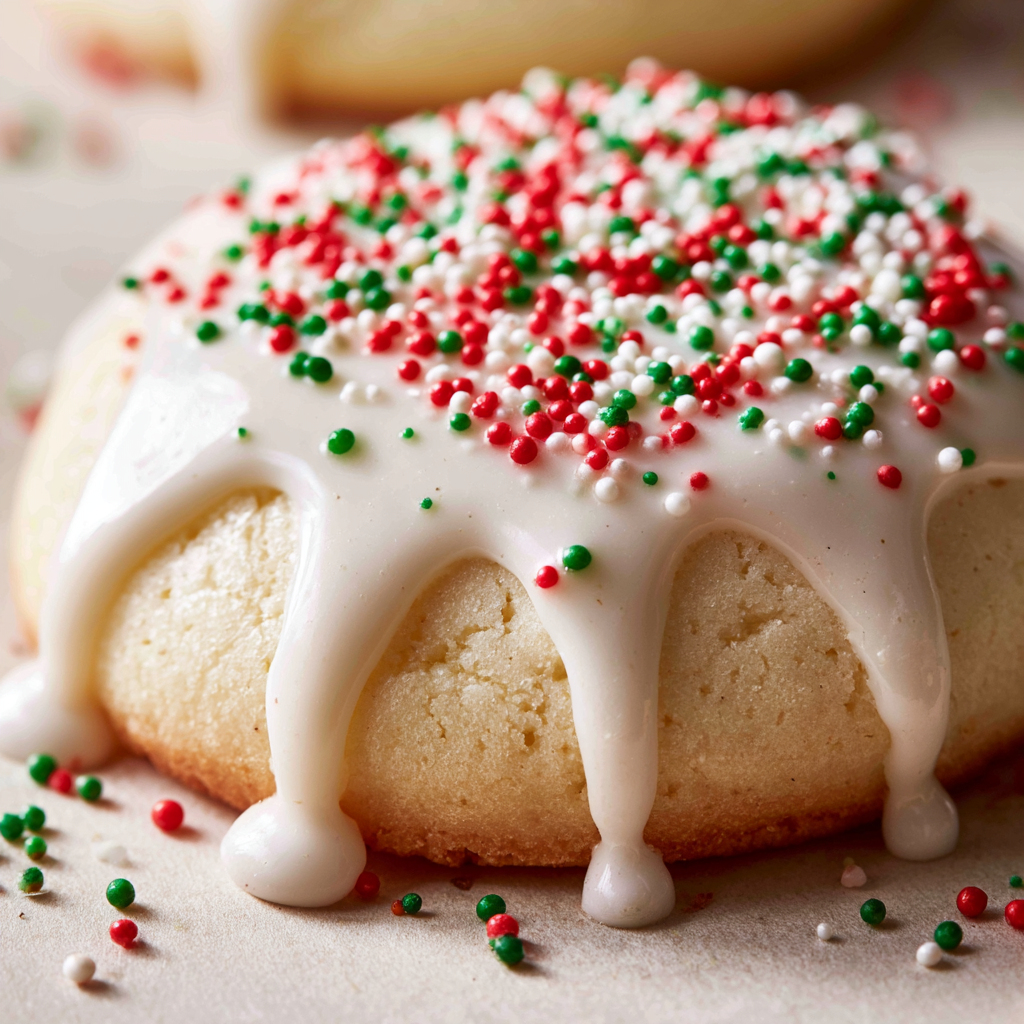
These festive little cookies are a great choice when you want something traditional-looking without complicated decorating. The dough comes together with familiar baking staples, and the simple dip-and-sprinkle finish gives each batch a cheerful Christmas appearance.
Almond extract brings the signature flavor to both the cookie dough and icing, so you get that sweet, fragrant almond note in every bite. The cookies themselves stay pleasantly soft when baked just until set, while the glaze adds a smooth layer of sweetness on top.
They are especially handy for holiday baking because the dough can be chilled ahead of time. Once the cookies are baked and cooled, glazing becomes a quick assembly-line job that works well when you’re preparing several desserts for a cookie platter, party, or Christmas gathering.
Ingredients
You only need a short list of baking staples for these cookies, with almond extract doing most of the flavor work.
- All-purpose flour: Provides the structure needed for cookies that hold their rounded shape while remaining tender.
- Baking powder: Gives the dough a little lift so the cookies don’t become overly dense.
- Salted butter: Adds richness and helps create a soft crumb. Let the melted butter cool before mixing it with the other ingredients.
- Granulated sugar: Sweetens the cookie dough without competing with the almond flavor.
- Eggs: Add moisture, richness, and structure. Room-temperature eggs blend more smoothly into the mixture.
- Almond extract: Gives the cookies their distinctive sweet almond aroma and flavor.
- Powdered sugar: Creates the smooth, opaque base for the icing.
- Milk: Thins the powdered sugar into a glaze suitable for dipping.
- Nonpareil sprinkles: Add the classic colorful holiday finish while the icing is still wet.
Cooking Steps
STEP 1: Whisk the flour and baking powder together in a separate bowl. Mixing these dry ingredients first distributes the leavening evenly throughout the dough and helps prevent pockets of baking powder in the finished cookies.
STEP 2: In a larger mixing bowl, beat the cooled melted butter until it is well mixed, then add the eggs, granulated sugar, and almond extract. Continue mixing until everything is incorporated. Don’t worry if the mixture doesn’t look perfectly smooth at this stage.
STEP 3: Add the flour mixture gradually to the wet ingredients. Mix just until a sticky, cohesive cookie dough forms. Avoid continuing to beat the dough once the flour has disappeared, since excessive mixing can make the baked cookies firmer than intended.
STEP 4: Cover the dough and refrigerate it for at least 1 hour. This chilling period is important because the freshly mixed dough is quite sticky. Once cold, it becomes noticeably easier to portion and roll without adding unnecessary extra flour.
STEP 5: Heat your oven to 350°F (175°C) and line a baking sheet with parchment paper. Scoop small portions of chilled dough with a cookie scoop or tablespoon and gently roll them into balls. Arrange them about an inch apart so they have room to bake evenly.
STEP 6: Bake the cookies for approximately 8–10 minutes. Remove them when they look set but haven’t become deeply browned. A slightly pale appearance is preferable here because overbaking can quickly turn these tender cookies dry. Transfer them to a rack and allow them to cool completely.
STEP 7: Make the icing by stirring sifted powdered sugar with milk, adding the milk gradually until the glaze is thick but still suitable for dipping. Stir in the almond extract. Dip the top of each completely cooled cookie into the glaze, return it upright to the rack, and immediately add nonpareil sprinkles before the icing sets.
Perfect Pairings
Because these cookies are sweet and almond-forward, simple drinks and complementary holiday treats work particularly well alongside them.
- Hot coffee or espresso: The slight bitterness of coffee balances the sweet almond glaze and makes the cookies a lovely after-dinner treat.
- Hot chocolate: Serve the cookies with warm cocoa for an especially festive dessert pairing that works well for family gatherings.
- A mixed Christmas cookie platter: Pair them with chocolate cookies or lightly spiced holiday cookies to create variety in both flavor and appearance.
Pro Tips for Italian Christmas Cookies
- Don’t skip the chilling time. The dough is intentionally sticky, and refrigeration makes it much easier to roll into neat balls without incorporating additional flour that could dry out the cookies.
- Watch the oven closely. Start checking around the 8-minute mark. These cookies should be removed once they are set rather than waiting for strong browning.
- Decorate immediately after dipping. Nonpareils adhere most securely while the almond glaze is still wet, so glaze and sprinkle a few cookies at a time instead of dipping the entire batch first.
Why is my cookie dough so sticky?
A sticky dough is normal for this style of cookie because it contains melted butter and eggs. Refrigerating it for at least an hour firms the butter and hydrates the flour, making the mixture easier to scoop and shape.
If the dough still feels sticky after chilling, work quickly and handle it as little as possible rather than automatically adding more flour. Too much additional flour can change the soft finished texture.
How do I know when the cookies are finished baking?
Look for cookies that are set on the outside but still fairly pale. They generally need only 8–10 minutes in a 350°F oven.
Avoid waiting until the entire surface turns golden brown. The cookies continue to set as they cool, and leaving them in the oven too long can make them dry instead of soft and tender.
Can I prepare the dough ahead of time?
Yes. Making the dough ahead is particularly convenient during busy holiday baking. Prepare it as directed, cover it securely, and keep it refrigerated until you’re ready to shape and bake the cookies.
If the chilled dough becomes very firm, allow it to sit briefly at room temperature until it is soft enough to scoop comfortably.
Should the cookies be completely cool before glazing?
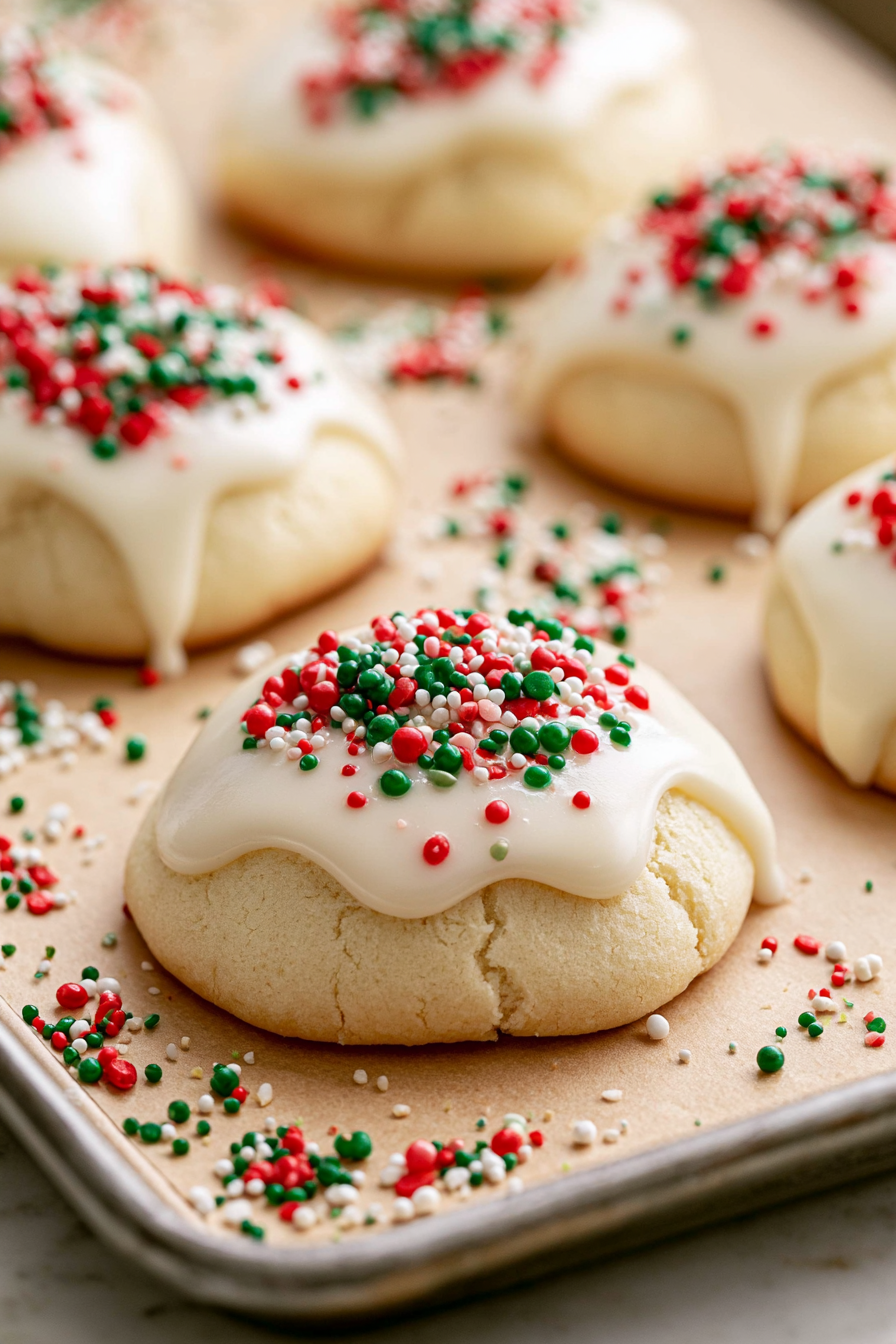
Yes. Let the cookies cool completely before dipping their tops into the almond icing. Warm cookies can cause the glaze to become thin, run down the sides, or absorb into the surface instead of creating the thick white coating you’re looking for.
Once dipped, leave the glazed cookies undisturbed until the icing has set.
Can I freeze these Christmas cookies?
Yes, although freezing the baked cookies before glazing usually gives you more control over their appearance. Place completely cooled, unglazed cookies in an airtight freezer-safe container with parchment between layers and freeze them for up to about 2 months.
Thaw them at room temperature, then prepare the fresh almond glaze and decorate them once they have completely defrosted.
How to Store & Reheat
Once the icing has fully hardened, arrange the cookies in an airtight container. If you need to stack them, place sheets of parchment or wax paper between the layers so the glaze and sprinkles remain neat. They are best enjoyed within several days.
For longer storage, refrigerate the cookies in a tightly sealed container for up to about 5 days. Bring them back to room temperature before serving so the texture isn’t overly firm from the refrigerator.
For freezing, unglazed cookies are the most convenient option. Freeze them for up to 2 months, separating layers with parchment paper. Thaw them completely at room temperature before glazing and decorating.
These cookies don’t need reheating. In fact, warming glazed cookies can soften or melt the icing. Simply remove chilled or thawed cookies from storage and let them sit at room temperature until they return to their soft, tender serving texture.
Italian Christmas Cookies
Ingredients
For the Cookies
- 3 large eggs brought to room temperature for smoother mixing
- 1 1/2 teaspoons almond extract
- 1/2 cup granulated sugar
- 2 teaspoons baking powder
- 2 1/4 cups all-purpose flour preferably King Arthur all-purpose flour
- 1/2 cup salted butter melted and allowed to cool
For the Icing
- Nonpareil sprinkles for decorating
- 2 –3 tablespoons milk
- 1 teaspoon almond extract for pronounced almond flavor and fragrance
- 2 cups powdered sugar sifted for a smooth, lump-free glaze
Instructions
- Prepare the dry mixture. In a small bowl, thoroughly combine the all-purpose flour with the baking powder. Set the mixture aside while preparing the remaining ingredients.
- Mix the butter and wet ingredients. Using an electric mixer, beat the cooled melted butter until light and fluffy. Add the eggs, granulated sugar, and almond extract, then continue mixing until thoroughly incorporated. The mixture may have a somewhat chunky appearance at this point.
- Form and chill the dough. Gradually incorporate the flour and baking powder mixture into the butter mixture. Mix only until everything is combined, taking care not to overwork the dough. Refrigerate the finished dough for at least 1 hour so that it becomes easier to handle.
- Shape and bake the cookies. Preheat the oven to 350°F (175°C) and line a baking sheet with parchment paper. Using a small cookie scoop or tablespoon, portion the chilled dough and roll it into balls. The dough will remain fairly sticky. Arrange the dough balls approximately 1 inch apart on the prepared baking sheet.
- Bake for 8–10 minutes, or just until the cookies are set. Avoid baking them for too long, as this can cause them to become dry. Transfer the cookies to cool completely before applying the icing.
- Make the almond icing. Place the sifted powdered sugar in a bowl. Add the milk 1 tablespoon at a time, stirring after each addition until a thick glaze develops. Mix in the almond extract until evenly distributed.
- Glaze and decorate. Position a cooling rack inside a baking sheet so the pan can collect any dripping icing. Once the cookies are completely cool, hold each cookie upside down and dip the top into the prepared glaze.
- Turn each glazed cookie upright and place it on the cooling rack, allowing the excess icing to drip onto the baking sheet below. Immediately scatter nonpareil sprinkles over the wet glaze before the icing begins to set.