
Soft, lightly sweet Amish Sweet Bread with a golden crust—simple pantry ingredients, bakery results, perfect for sandwiches, toast, or warm with butter.
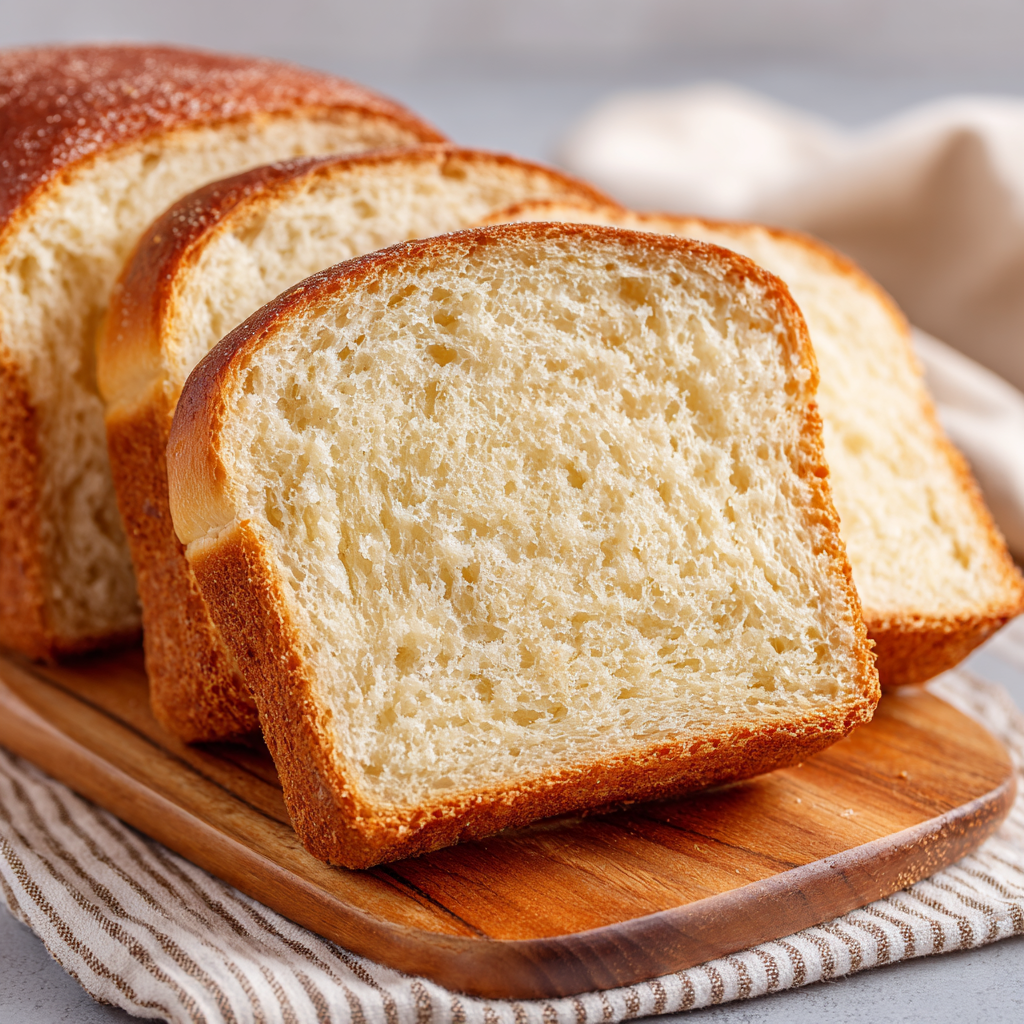
This loaf is the definition of comfort baking: humble ingredients, straightforward technique, and a payoff that perfumes your kitchen like a small-town bakery. The crumb bakes up fluffy and tender, the crust bronzes beautifully, and that gentle touch of sweetness makes every slice as good with butter and jam as it is with a savory sandwich.
You’ll build the dough the classic way—bloom the yeast, add flour gradually, knead until supple, then let time do the lifting. The recipe makes two generous loaves, ideal for eating one now and freezing the other. If bread feels intimidating, think of this as your friendly starter project: the cues are obvious, the dough is forgiving, and your senses (look, touch, aroma) guide each step.
What You Need to Make This Amish Sweet Bread
- Water — Warm (about 110°F/43°C) to dissolve sugar and wake the yeast without shocking it.
- Granulated sugar — Feeds the yeast and lends a subtle sweetness and soft crumb.
- Active dry yeast — The engine of the rise; blooming proves it’s lively before you add flour.
- Salt — Balances sweetness and strengthens gluten for better structure.
- Vegetable oil — Keeps the crumb moist and tender with a delicate sheen.
- All-purpose flour — The backbone of the dough; add gradually until soft, slightly tacky, and cohesive.
Step-by-Step Amish Sweet Bread
- Warm the water to roughly 110°F/43°C—hotter than lukewarm, cooler than a hot bath. Stir in the sugar until dissolved, then remove from heat and sprinkle the yeast over the surface. Let it stand 10 minutes until creamy and foamy.
- Whisk in the salt and oil. Start adding flour one cup at a time, beating well after each addition. Stop when the dough gathers itself, pulls away from the bowl, and feels sticky but manageable; you may not need every last bit.
- Turn the dough onto a lightly floured counter. Knead for about 5 minutes, dusting with tiny sprinkles of flour as needed. Aim for smooth, elastic, and slightly tacky. When pressed, it should spring back; if you stretch a small piece, it should resist tearing.
- Place the dough in a lightly oiled bowl, turning once to coat so it won’t dry out. Cover with a damp cloth and set in a warm, draft-free spot until doubled, about 1 hour. A cozy oven with the light on works nicely.
- Gently punch down to release excess gas. Divide into two equal portions, shape each into a snug loaf by patting into a rectangle, rolling up tightly, and pinching the seam. Nestle the loaves into well-greased 9×5-inch pans, seam-side down.
- Cover and let rise again until the dough crowns about an inch above the rim, 30–40 minutes, depending on room temperature. Meanwhile, preheat the oven to 350°F (175°C) so it’s truly hot when you bake.
- Bake the loaves for about 30 minutes, until deeply golden and the bottoms sound hollow when tapped. A thermometer inserted in the center should read 190–200°F (88–93°C). Cool in pans 5 minutes, then turn out to a rack to finish cooling before slicing.
What to Serve with Amish Sweet Bread
Fresh out of the oven, a pat of salted butter and a drizzle of honey is bliss. For breakfast, toast thick slices and top with peanut butter and sliced bananas. At lunch, press ham and Swiss with mustard for a classic grilled sandwich that crisps beautifully while the interior stays soft.

Can I use instant yeast instead of active dry?
Yes. Skip the bloom and whisk instant yeast into the first 2 cups of flour, then proceed. Watch the rises—they may move faster—so start checking a bit early to avoid overproofing.
Why is my dough too sticky to handle?
Slight tackiness is perfect; it becomes manageable as gluten develops. Dust in 1 tablespoon flour at a time during kneading, but stop once it’s smooth and elastic. Too much flour yields a dense, dry loaf.
How do I get a softer crust?
Brush hot loaves with melted butter as soon as they leave the pans. For an extra-soft finish, tent cooling loaves loosely with a clean towel to trap a touch of steam.
Helpful Tips
- Temperature is everything. Water hotter than 115°F can weaken yeast; cooler than 100°F slows the bloom. Use your thermometer early, then rely on visual cues for proofing.
- Proof by volume, not the clock. Rooms differ. When dough doubles and springs back slowly when poked, it’s ready—even if the timer disagrees.
- Slice after cooling. Letting loaves cool at least 45–60 minutes sets the crumb so slices are neat instead of gummy.
Storage & Reheating
Keep loaves at room temperature in a bread box or wrapped in a clean towel inside a plastic bag for 2–3 days. For longer storage, slice and freeze in a zip bag up to 3 months; you can pull single slices straight to the toaster. To refresh day-old bread, warm slices in a 300°F (150°C) oven for 6–8 minutes or toast lightly to reawaken that just-baked aroma.
A little patience and a few pantry staples are all it takes to put Amish Sweet Bread on your table. The method is forgiving, the signs are clear, and the result—two golden loaves with a soft, fine crumb—tastes like home. Bake it once and you’ll know the rhythm: bloom, knead, rise, bake, breathe in. Tomorrow’s toast and today’s sandwich just got an upgrade.
Homemade Amish Sweet Bread
Ingredients
- Approximately 5½ to 6 cups plain flour spooned and leveled
- 1½ tablespoons active dry yeast
- ¼ cup neutral oil such as vegetable oil
- 2 cups warm water about 110°F
- ⅔ cup fine white sugar
- 1½ teaspoons table salt
- Nonstick spray or oil for greasing pans and bowls
Instructions
- Warm the water in a saucepan set over medium heat until it reaches a gentle boil and the temperature climbs to around 110°F.
- Remove the saucepan from heat and stir in the granulated sugar until it dissolves fully.
- Sprinkle the active dry yeast over the warm sweetened water. Set aside for 10 minutes to allow the yeast to activate and form a frothy surface.
- Incorporate the salt and pour in the vegetable oil, mixing gently to combine.
- Gradually add the flour, about one cup at a time, stirring thoroughly after each addition. Continue incorporating flour until the dough begins to pull away from the sides of the bowl and gathers into a soft, sticky mass.
- Transfer the dough to a floured countertop. Knead for 5 minutes, dusting lightly with additional flour as needed to prevent excessive stickiness.
- Coat a large mixing bowl with cooking spray and place the kneaded dough inside. Cover with a damp cloth and let it rise in a warm, draft-free area for 1 hour, or until doubled in size.
- Gently deflate the dough by pressing it down. Divide it into two equal portions and place each half into a greased loaf pan. Cover again and allow to rise for another 30 minutes until puffed.
- While the dough completes its second rise, preheat the oven to 350°F.
- Place the risen loaves into the oven and bake for about 30 minutes, or until the tops are golden and the bread sounds hollow when tapped. Remove from the pans, let cool slightly, and serve.