
Quick, creamy, and satisfyingly savory, halloumi carbonara combines golden-seared halloumi, Parmesan, egg, garlic-infused olive oil, and black pepper with spaghetti for a meat-free pasta dinner that comes together with minimal skillet time.
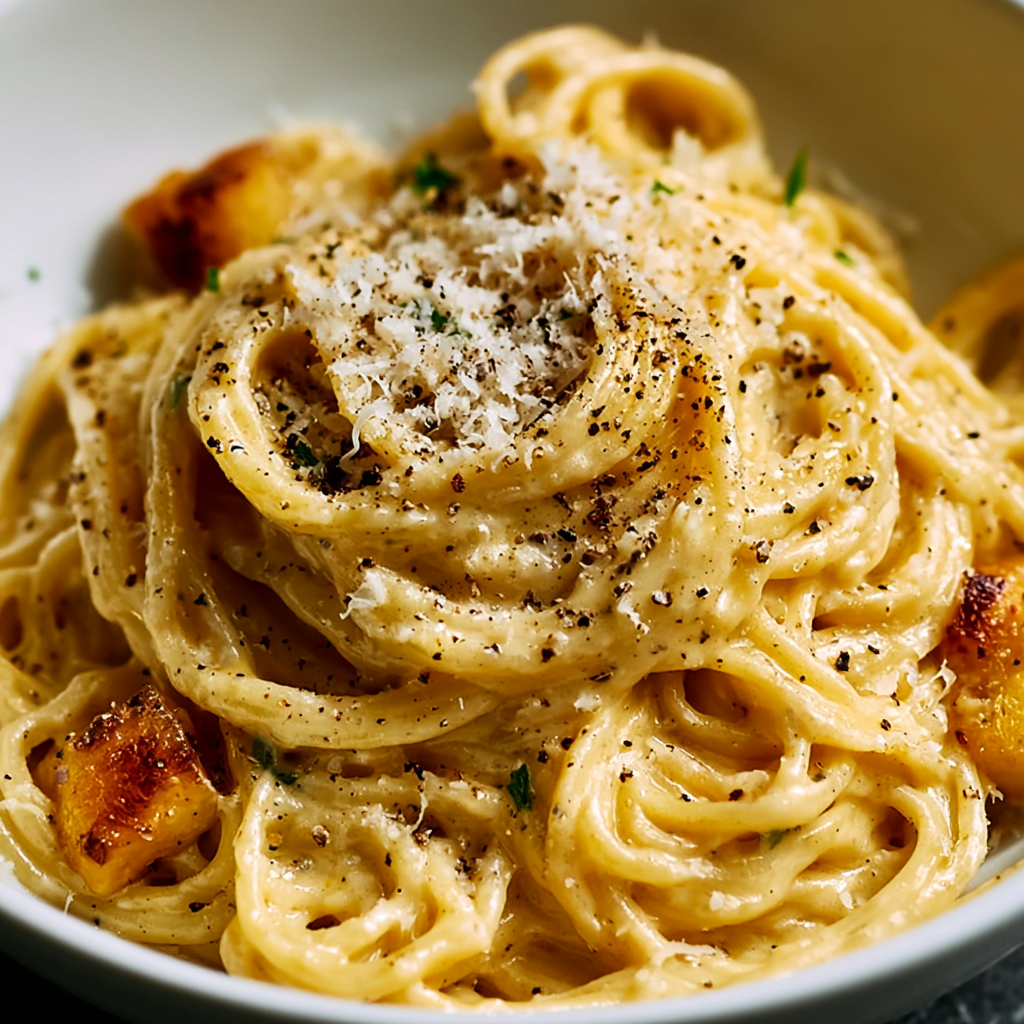
This is a great pasta to make when you want something comforting without building a complicated sauce. Halloumi brings a salty, firm bite that works especially well against the silky egg and Parmesan coating, while plenty of freshly ground pepper keeps the finished dish firmly in carbonara territory.
The technique is simple, but temperature matters. You cook the spaghetti until al dente, brown the halloumi separately, then bring everything together with starchy pasta water before adding the egg mixture away from direct heat. That small detail gives you a smooth sauce instead of scrambled egg.
Because the ingredient list is short, having everything measured and ready before the pasta finishes makes the whole process much easier. Once you start combining the hot spaghetti with the egg and cheese, the dish moves quickly and is best served immediately.
Halloumi Carbonara Ingredients
Spaghetti: The base of the dish. Dried spaghetti holds the creamy egg and Parmesan sauce nicely and gives you plenty of starchy cooking water for emulsifying.
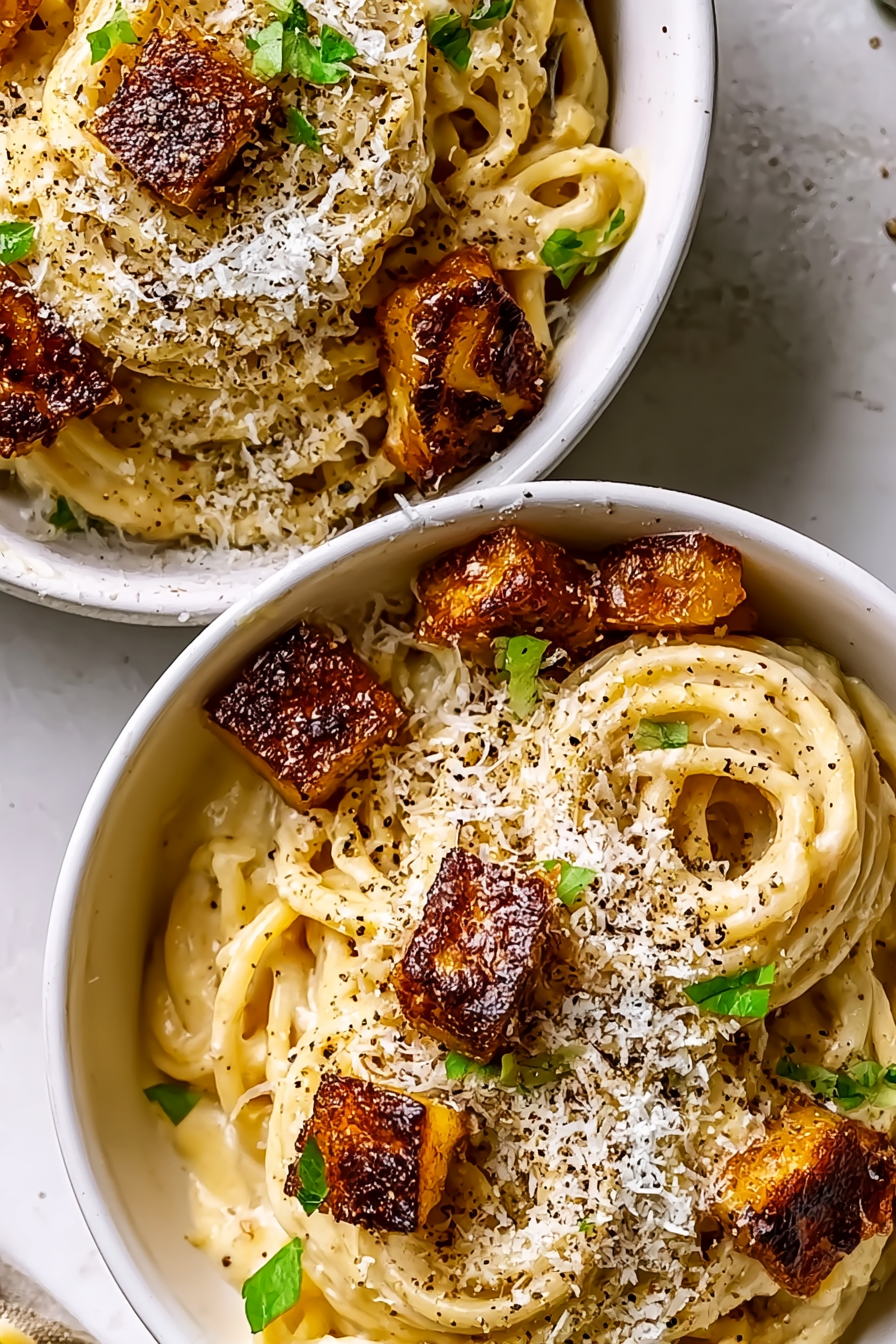
Halloumi cheese: Sliced and pan-seared until golden, halloumi takes the place of the traditional cured meat while adding a pleasantly firm texture and salty flavor.
Parmesan cheese: Freshly grated Parmesan melts smoothly into the egg and helps create the rich, savory sauce.
Large egg: The egg thickens through the residual heat from the freshly cooked pasta, producing the signature carbonara-style coating.
Extra-virgin olive oil: Used to sear the halloumi and carry the flavor of the garlic through the pasta.
Garlic: Briefly cooked in the olive oil to add aroma without becoming a prominent piece in the finished sauce.
Freshly ground black pepper: An essential part of the flavor rather than simply a garnish. Use it generously according to your preference.
Kosher salt: Needed for the pasta water and for making any final seasoning adjustments. Taste before adding much to the finished dish because both halloumi and Parmesan are naturally salty.
Cooking Steps
STEP 1: Bring a large pot of well-salted water to a boil. While it heats, mince the garlic, slice the halloumi to roughly 1/4-inch thickness, grate the Parmesan, and allow the egg to come to room temperature. Whisk the egg and Parmesan together in a bowl until evenly combined.
STEP 2: Add the spaghetti to the boiling water and cook until al dente according to the package directions. Just before draining, reserve about 1/2 cup of the cloudy pasta cooking water. This water is important because its starch helps turn the egg and Parmesan into a cohesive sauce.
STEP 3: While the pasta cooks, heat the olive oil in a large skillet over medium-high heat. Arrange the halloumi in one layer and let it cook for about 2 minutes without moving it too much. Flip the pieces once the bottoms are golden, then cook the opposite sides for another couple of minutes.
STEP 4: Add the chopped garlic to the skillet and let it cook for approximately 30 seconds, just until fragrant. Remove the garlic pieces afterward so you are left with gently garlic-infused olive oil rather than bits that might burn during the final toss.
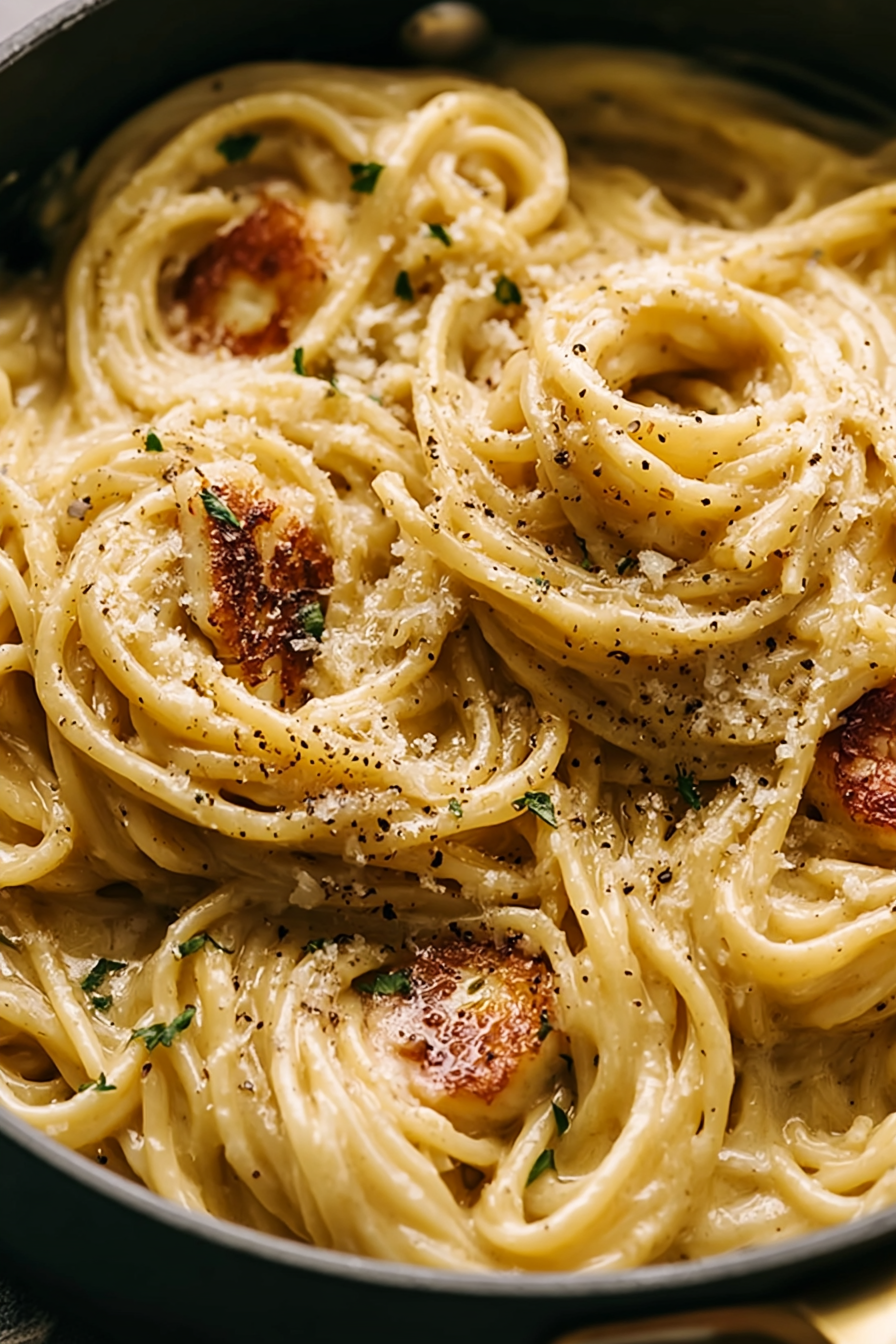
STEP 5: Add the drained spaghetti directly to the skillet with the golden halloumi. Pour in roughly 1/3 cup of reserved pasta water and toss over medium heat for about a minute. Grind plenty of black pepper over the pasta and toss again.
STEP 6: Remove the skillet completely from the heat. Pour the Parmesan and egg mixture over the hot spaghetti and begin stirring immediately. Toss vigorously for around 30 seconds so the heat from the pasta gently thickens the egg without scrambling it.
STEP 7: Check the consistency before serving. If the sauce seems too thick, stir in another small splash of pasta water until it looks smooth and lightly coats every strand. Taste before adding salt, finish with additional black pepper if desired, and serve straight away.
Helpful Tips
- Take the skillet off the heat before adding the egg. Direct burner heat is the easiest way to accidentally scramble the sauce. Let the hot pasta and skillet provide the gentler residual heat instead.
- Keep some pasta water in reserve. Add it gradually rather than all at once. You can always loosen a thick sauce, but too much water can make the pasta unnecessarily soupy.
- Brown the halloumi properly. Give the slices enough time to form a light golden surface before turning them. That seared exterior provides welcome texture against the smooth spaghetti.
Can I Make Carbonara with Halloumi Instead of Meat?
Yes. Halloumi works particularly well in a carbonara-style pasta because it is salty, savory, and stays firm when heated. It does not reproduce the exact flavor of traditional cured pork, but its golden surface and substantial texture make the pasta satisfying without meat.
The halloumi should be browned before the spaghetti is added so it develops flavor rather than simply warming through in the sauce.
How Do I Keep the Egg from Scrambling?
Remove the skillet completely from direct heat before pouring in the egg and Parmesan mixture. Then stir or toss the spaghetti continuously.
The freshly cooked pasta should still be hot enough to thicken the egg gently. A splash of warm starchy pasta water also helps distribute the heat and encourages the cheese and egg to emulsify into a creamy coating.
Why Is My Carbonara Sauce Too Thick?
Carbonara-style sauces thicken quickly as they cool, especially when Parmesan is involved. Stir in reserved pasta cooking water a tablespoon or two at a time until the sauce loosens enough to coat the spaghetti smoothly.
Adding the water gradually is important because you want a glossy coating around the pasta rather than a pool of liquid in the skillet.
Does Halloumi Carbonara Need Extra Salt?
Possibly, but taste it first. Halloumi and Parmesan both contribute considerable saltiness, and the spaghetti is already cooked in salted water.
You may find that no additional salt is necessary once everything is combined. Freshly ground black pepper, however, can be added quite generously because it is a defining flavor in this type of pasta.
Perfect Pairings
Simple green salad: Crisp greens with a light, acidic dressing provide freshness alongside the rich egg, Parmesan, and halloumi sauce.
Roasted vegetables: Roasted zucchini, asparagus, or broccoli can turn this pasta into a more substantial dinner without competing with its savory flavors.
Garlic bread: If you want a heartier meal, serve warm garlic bread on the side for soaking up any creamy sauce left in the bowl.
How to Store & Reheat
This pasta is at its smoothest immediately after cooking, but leftovers can be stored in an airtight container in the refrigerator for about 2 to 3 days.
For reheating, use gentle heat. Place the pasta in a skillet over low heat with a small splash of water and stir frequently until just warmed through. Avoid high heat, which can tighten the egg sauce and make the spaghetti dry.
A microwave can also work for individual portions. Heat in short intervals, stirring between each one and adding a teaspoon or two of water if needed.
Freezing is not recommended. Egg-and-cheese pasta sauces can lose their smooth consistency after thawing, and cooked halloumi can become noticeably firmer. For the creamiest texture and the nicest contrast between silky spaghetti and golden cheese, this is a dish worth enjoying freshly made.
Halloumi Carbonara
Ingredients
- 5 oz halloumi cheese cut into slices approximately 1/4 inch thick
- 1/4 cup Parmesan cheese finely and freshly grated when possible
- 7 oz dried spaghetti
- 1 tbsp high-quality extra-virgin olive oil
- 1 garlic clove finely chopped
- 1 large egg brought to room temperature
- Kosher salt as required
- Freshly ground black pepper to taste
Instructions
- Bring a large pot of generously salted water to a rolling boil.
- While the water heats, finely mince the garlic, cut the halloumi into 1/4-inch-thick slices, and grate the Parmesan if it has not already been prepared.
- Crack the room-temperature egg into a bowl. Add the grated Parmesan and whisk thoroughly until the two ingredients are evenly combined. Keep the mixture at room temperature until needed.
- Add the spaghetti to the boiling water and cook according to the package instructions until al dente.
- Before draining the pasta, scoop out and reserve 1/2 cup of the starchy cooking water. Drain the spaghetti.
- Heat the extra-virgin olive oil in a large skillet over medium-high heat until shimmering.
- Arrange the halloumi slices in a single layer. Sear for approximately 2 minutes, or until the underside develops a golden crust. Turn each piece and cook the second side for another 2 minutes, until lightly browned.
- Add the finely minced garlic and cook for about 30 seconds, just until aromatic.
- Remove and discard the garlic, allowing its flavor to remain infused in the olive oil.
- Transfer the cooked spaghetti to the skillet containing the seared halloumi.
- Pour in between 1/3 and 1/2 cup of the reserved pasta water. Toss the mixture over medium heat for about 1 minute so the spaghetti becomes evenly coated.
- Season generously with freshly ground black pepper.
- Take the skillet completely off the heat before adding the egg mixture. This step is essential for preventing the egg from scrambling.
- Immediately pour the egg-and-Parmesan mixture over the hot spaghetti. Stir quickly and continuously so the residual heat gently thickens the egg and produces a creamy, cohesive sauce.
- Continue stirring vigorously for approximately 30 seconds, ensuring the sauce is evenly distributed and remains smooth rather than forming cooked pieces of egg.
- Taste the finished pasta and add kosher salt and additional freshly ground black pepper as necessary.
- If the carbonara sauce has become thicker than desired, incorporate a small splash of the remaining reserved pasta water and stir until the preferred consistency is reached.
- Divide the halloumi carbonara between serving bowls or plates and serve immediately while hot. Finish with another grinding of black pepper, if desired.