
This garlic herb roasted turkey breast gives you juicy, tender meat with deeply savory butter, fresh herbs, and beautifully browned skin. It is a practical alternative to roasting a whole turkey and works especially well for smaller holiday dinners.
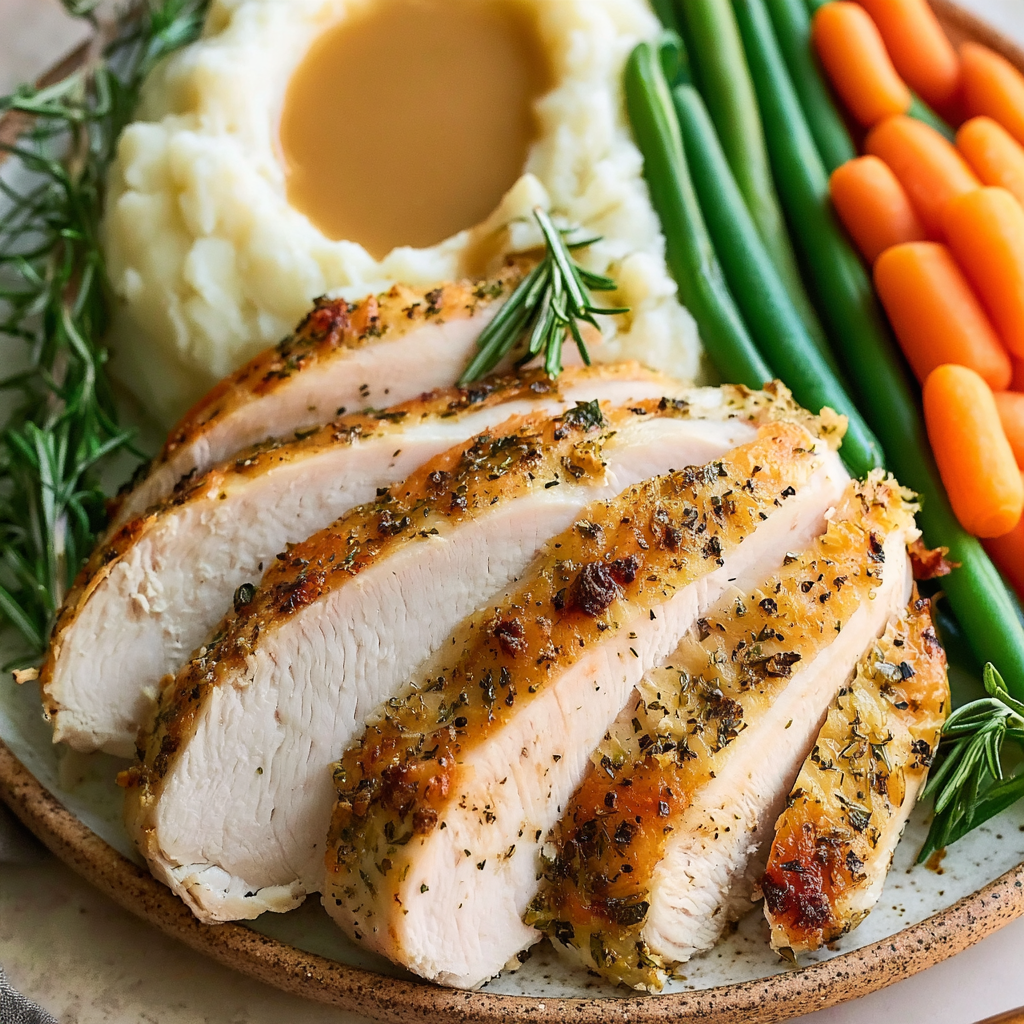
A bone-in turkey breast is one of those main dishes that feels special enough for Thanksgiving or Christmas without requiring an oversized roasting pan or an entire day in the kitchen. You still get slices of moist turkey and plenty of golden skin, but the preparation is much more manageable.
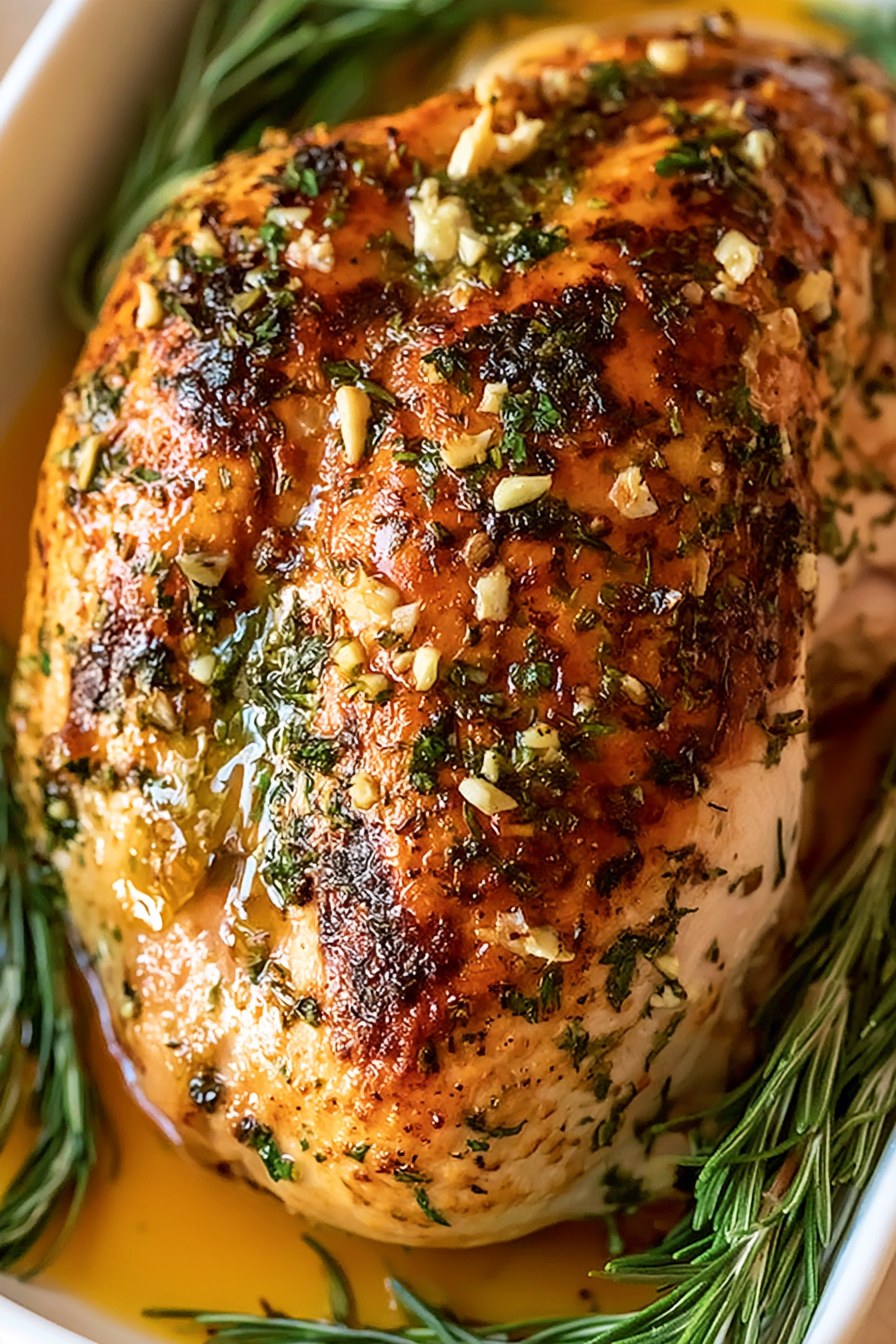
The real flavor comes from spreading garlic-herb butter both underneath and over the skin. Putting some butter directly against the meat helps season the breast throughout, while the butter on the outside encourages rich browning as the turkey roasts.
Starting the turkey in a very hot oven gives the skin an early boost of color. The temperature is then lowered so the thick breast can cook more gently through the center without the exterior becoming overly dark.
Ingredients
Bone-in turkey breast: A 6-pound breast provides plenty of meat for a family meal while remaining much easier to handle than a whole bird. A half breast is particularly convenient for roasting.
Softened butter: Five tablespoons create the rich base for the herb mixture and help both the turkey meat and skin stay flavorful as they roast.
Fresh garlic: A small amount of finely chopped garlic gives the butter a savory aroma without overpowering the fresh herbs.
Fresh parsley: Adds a mild, fresh herbal note and helps distribute flavor throughout the butter mixture.
Fresh thyme: Its earthy flavor works especially well with roasted poultry.
Fresh sage: Brings the familiar savory character often associated with traditional holiday turkey.
Fresh rosemary: Adds a fragrant, woodsy flavor to the butter. Extra sprigs can also be used to dress the finished platter.
Salt and black pepper: Season the herb butter and enhance the natural flavor of the turkey.
Nonstick cooking spray: Helps keep the turkey and flavorful pan drippings from sticking excessively to the baking dish.
Cooking Steps
STEP 1: Preheat your oven to 450°F. Lightly but thoroughly coat a baking dish with nonstick cooking spray so the turkey can roast without sticking to the bottom.
STEP 2: Make the herb butter by combining the softened butter with the chopped garlic, parsley, thyme, sage, rosemary, salt, and freshly ground black pepper. Stir until the herbs are evenly distributed and the butter is smooth enough to spread easily.
STEP 3: Gently work your fingers between the turkey skin and breast meat, loosening the skin without completely detaching it. Spread about half of the seasoned butter underneath the skin, covering as much of the meat as you reasonably can. Rub the remaining butter over the exterior of the skin.
STEP 4: Place the prepared turkey breast in the baking dish and transfer it to the hot oven. Roast at 450°F for about 15 to 20 minutes. This initial blast of heat helps the surface begin developing its appetizing golden color.
STEP 5: Reduce the oven temperature to 350°F and continue roasting for about 1 hour and 15 minutes. Every 25 to 30 minutes, you can spoon some of the juices from the bottom of the dish over the turkey to keep the surface flavorful.
STEP 6: Begin checking the internal temperature toward the end of the cooking time. Insert an instant-read thermometer into the thickest area of the breast, making sure the probe does not touch the bone. The card calls for removing the turkey around 160°F and allowing carryover heat to finish the cooking during the rest. Confirm that the turkey reaches at least 165°F before carving and serving.
STEP 7: Loosely tent the roasted breast with foil and rest it for about 5 to 10 minutes. Once it has reached the proper final temperature, transfer it to a platter, garnish with fresh rosemary if desired, and carve the meat into slices.
Serving Ideas for Garlic Herb Roasted Turkey Breast
The savory garlic, rosemary, thyme, and sage flavors make this turkey especially well suited to classic comfort-food sides.
Serve it with creamy mashed potatoes and turkey gravy for a traditional combination that makes good use of any flavorful juices collected in the roasting dish.
Roasted vegetables are another natural pairing. Carrots, Brussels sprouts, green beans, or roasted potatoes balance the richness of the herb butter without competing with the turkey.
For a holiday meal, add stuffing or dressing alongside a slightly tart cranberry sauce. The sweetness and acidity of the cranberry sauce provide a pleasant contrast to the buttery, herb-seasoned meat.
How do I keep roasted turkey breast juicy?
Avoid relying on roasting time alone. Bone-in turkey breasts vary in thickness, so an instant-read thermometer is the most reliable way to judge doneness. Spreading butter underneath the skin also puts seasoning and fat directly against the meat, while resting before carving allows juices to redistribute.
Can I use dried herbs instead of fresh herbs?
Yes. Fresh herbs provide the brightest flavor, but dried herbs work when necessary. Use roughly one-third as much dried herb as the quantity of fresh herb called for because dried herbs have a more concentrated flavor.
For the smoothest herb butter, crush dried rosemary or other larger dried leaves between your fingers before mixing them into the softened butter.
Why roast the turkey at two temperatures?
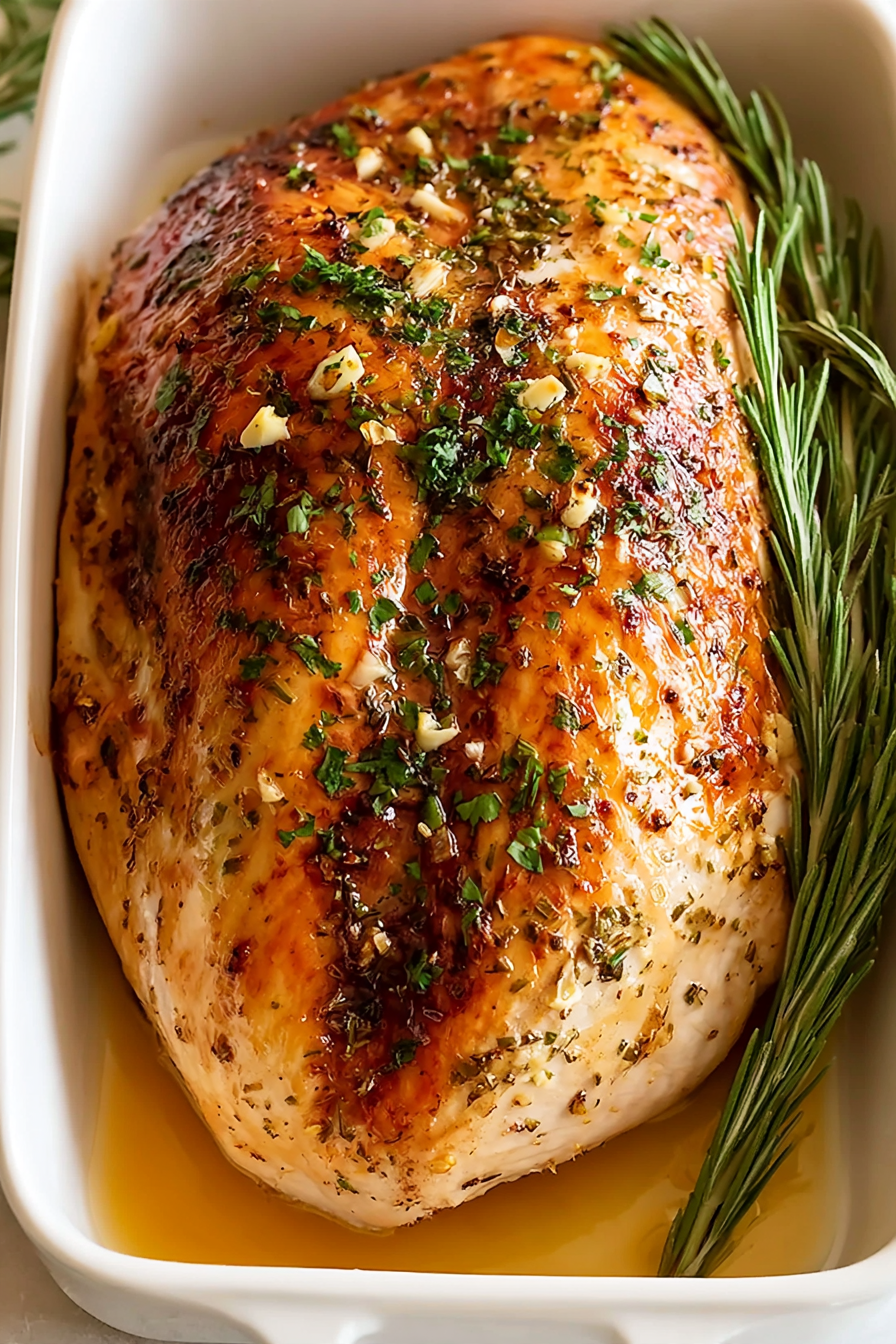
The initial 450°F roasting period helps the butter-coated skin develop color quickly. Lowering the temperature to 350°F afterward gives the thick breast more time to cook through without exposing the exterior to intense heat for the entire roasting period.
This approach is particularly useful with bone-in turkey breast because the center requires considerably more cooking time than the skin needs for browning.
Should I baste the turkey breast while it cooks?
Basting is optional, but spooning the pan juices over the turkey about every 25 to 30 minutes can add flavor and moisture to the surface. Work quickly whenever you open the oven so you do not lose too much heat.
There is no need to baste constantly. The herb butter already provides plenty of richness and seasoning.
How can I tell when turkey breast is done?
Use a meat thermometer rather than judging by the color of the juices or the outside of the turkey. Check the thickest section of the breast without touching the bone.
After the turkey comes out of the oven, let it rest and verify that the internal temperature reaches at least 165°F before carving. This also gives the meat a few minutes to settle so less juice escapes onto the cutting board.
Helpful Tips
- Soften the butter first. Room-temperature butter mixes with the herbs more evenly and is much easier to spread beneath delicate turkey skin.
- Loosen the skin carefully. Slide your fingers underneath it gradually rather than pulling upward. Keeping the skin intact helps hold the herb butter against the meat while creating an attractive roasted surface.
- Use temperature as your guide. A 6-pound breast may take around 1 hour 30 to 35 minutes, but oven performance and the thickness of the turkey can change the exact timing.
Keeping Leftovers Fresh
Allow leftover turkey to cool before transferring it to an airtight container. Refrigerate carved meat within two hours of serving and use it within 3 to 4 days.
For freezing, portion the turkey into airtight freezer containers or freezer-safe bags. Adding a spoonful of pan juices can help protect sliced meat from drying out. For best quality, use frozen cooked turkey within about 2 to 3 months.
To reheat refrigerated turkey, place the slices in a covered baking dish with a small amount of pan juices, broth, or water. Warm at about 325°F until heated through. Covering the dish reduces moisture loss, which is especially helpful with lean turkey breast.
Smaller portions can also be reheated gently in the microwave. Arrange the slices in a single layer, cover them, and heat in short intervals rather than using one long cooking cycle.
With its garlic butter, fresh sage, rosemary, thyme, and parsley, this roasted turkey breast delivers the flavors people expect from a traditional holiday centerpiece in a smaller, more manageable format. The combination of butter under the skin, two-stage roasting, careful temperature checking, and a short rest helps produce flavorful slices with a golden exterior and tender center.
Garlic Herb Roasted Turkey Breast
Ingredients
For the Turkey
- One 6-pound bone-in turkey breast preferably a half breast for easier roasting
- Nonstick cooking spray such as original Pam
- Fresh rosemary sprigs optional, for finishing and garnish
For the Herb Butter
- 2 tablespoons finely minced fresh parsley
- 5 tablespoons unsalted or regular butter brought to room temperature until soft
- 1 tablespoon finely minced fresh thyme leaves
- 1 teaspoon finely chopped fresh garlic
- 1/2 teaspoon freshly ground black pepper
- 1 tablespoon chopped fresh sage
- 1 teaspoon salt
- 1 1/2 teaspoons finely minced fresh rosemary
Instructions
- Preheat the oven to 450°F (232°C). Thoroughly mist a baking dish with cooking spray to help prevent the turkey from adhering during roasting.
- Place the softened butter in a bowl with the garlic, sage, rosemary, thyme, parsley, salt, and black pepper. Mix until the herbs and seasonings are evenly dispersed throughout the butter.
- Carefully separate the skin from the turkey breast meat while keeping the skin attached. Spread approximately half of the herb butter directly over the meat beneath the loosened skin.
- Distribute the remaining herb butter evenly across the outside of the turkey skin.
- Set the seasoned turkey breast into the prepared baking dish. Roast at 450°F (232°C) for 15–20 minutes, stopping when the skin begins to develop a golden-brown color.
- Reduce the oven temperature to 350°F (177°C). Continue roasting for approximately 1 hour and 15 minutes, occasionally spooning the accumulated pan juices over the turkey.
- Begin checking the internal temperature after roughly 1 hour. Insert a meat thermometer into the thickest portion of the breast without resting it against the bone.
- Remove the turkey from the oven once the internal temperature reaches at least 160°F (71°C).
- Loosely cover the roasted turkey breast with foil and allow it to rest for 5–10 minutes, or until the internal temperature reaches at least 165°F (74°C). Resting allows the juices to redistribute throughout the meat before carving.
- Transfer the rested turkey breast to a serving platter. Add fresh rosemary sprigs as a garnish, if desired, then carve the turkey into slices and serve.
Notes
- Fresh herbs provide the brightest flavor. When substituting dried herbs, use approximately one-third of the stated quantity for each fresh herb.
- For added moisture during roasting, baste the turkey with the pan juices approximately every 25–30 minutes.
- Allowing roasted poultry to rest before slicing helps retain its juices and produces more succulent portions.