
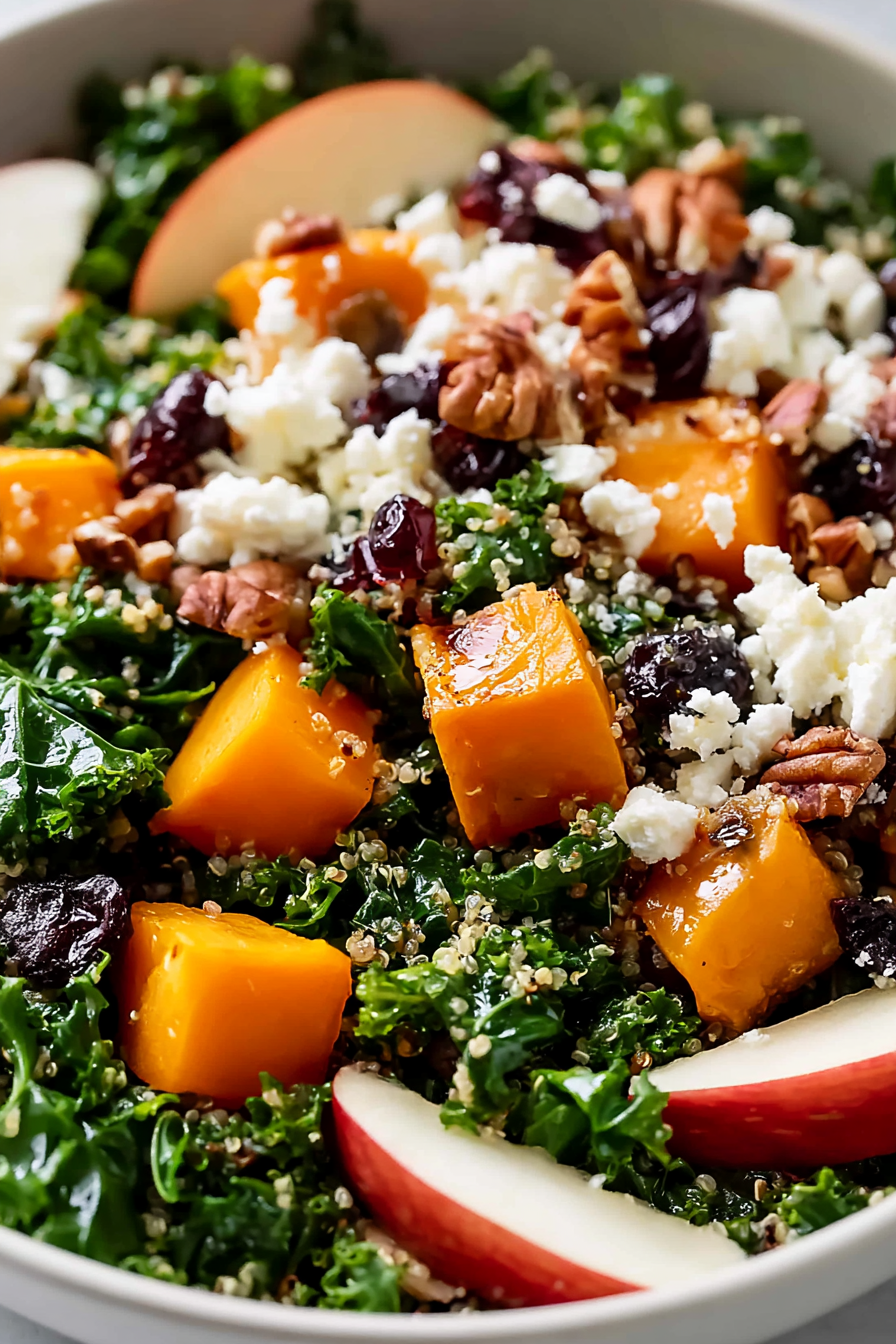
This colorful fall salad brings together roasted butternut squash, hearty quinoa, tender kale, fresh autumn fruit, dried cranberries, feta, and crunchy pecans with a sweet-tangy maple Dijon vinaigrette. It is hearty enough to feel satisfying while still working beautifully as a seasonal side dish.

When you want something fresh for an autumn lunch, holiday table, or weeknight dinner, this salad gives you plenty of texture without being complicated. The warm sweetness of roasted squash pairs especially well with tart fruit, salty feta, and chewy cranberries.
The recipe also works because each component is prepared with texture in mind. The squash and quinoa cool before they meet the greens, the kale gets a quick massage with dressing, and the nuts are added at the end so they stay pleasantly crisp.
You can use apples, pears, or fresh figs depending on what looks good at the market. Each choice gives the salad a slightly different personality while keeping the combination firmly rooted in fall flavors.
Fall Salad Ingredients
Butternut squash: Roast peeled cubes until tender and lightly browned. Squash gives the salad its naturally sweet, substantial base.
Neutral oil: A small amount helps the squash brown without introducing a strong competing flavor.
Salt and black pepper: Simple seasoning is all the squash needs before roasting.
Kale: Remove the tough stems and chop the leaves before massaging them with vinaigrette. This softens the greens while helping them absorb more flavor.
Quinoa or rice: Quinoa adds a pleasantly hearty texture, although cooked rice can be substituted if that is what you have available.
Apples, pears, or figs: Fresh seasonal fruit brings sweetness and juiciness that contrast with the roasted squash and greens.
Dried cranberries: These contribute chewy texture and a concentrated sweet-tart flavor.
Feta cheese: Crumbled feta provides a salty, creamy contrast to the sweeter ingredients.
Pecans: Roughly chopped pecans give the finished salad its signature autumn crunch.
Mixed nuts or seeds: An optional extra topping when you want even more texture.
Extra-virgin olive oil: Forms the rich base of the homemade vinaigrette.
Apple cider vinegar: Adds brightness and acidity that balance the squash, fruit, and maple syrup.
Maple syrup or honey: A small amount rounds out the sharp vinegar and mustard. Maple syrup is particularly well suited to the fall ingredients.
Dijon mustard: Adds savory depth while helping the vinaigrette stay blended.
Garlic: Finely minced fresh garlic gives the dressing a subtle savory bite.

Cooking Steps
STEP 1: Heat your oven to 400°F. Spread the prepared butternut squash cubes across a baking sheet, drizzle them with the neutral oil, and season lightly with salt and pepper. Toss well and keep the pieces in one layer so they roast rather than steam.
STEP 2: Roast the squash for about 16 minutes, stirring or turning the cubes around the halfway point. They should be tender when pierced and have a little golden color around the edges. Move the cooked squash to a plate so it can cool.
STEP 3: While the squash cooks, rinse and prepare the quinoa according to the package directions, usually about 15 minutes. Once tender, fluff it gently and leave it uncovered to cool. Prepare rice in the same way if you are using that instead.
STEP 4: Remove the firm stems from the kale and roughly chop the leaves into manageable pieces. Dice your apples, pears, or figs, chop the pecans, and finely mince the garlic so everything is ready for assembly.
STEP 5: Combine the olive oil, apple cider vinegar, maple syrup or honey, Dijon mustard, and garlic in a small jar with a secure lid. Shake for about 30 seconds, until the dressing looks smooth and evenly blended.
STEP 6: Place the chopped kale in a large bowl and add roughly half of the dressing. Massage the leaves with clean hands for 1–2 minutes. You should notice the kale becoming softer, darker, and slightly reduced in volume. Add the rest of the dressing and toss again.
STEP 7: Add the cooled quinoa, roasted squash, and diced fruit to the dressed kale. Fold everything together gently so the squash keeps its shape. Let the mixture sit for a few minutes, then finish with dried cranberries, feta, pecans, and any optional nuts or seeds just before serving.
What to Serve with Fall Salad
This salad is substantial enough for a light lunch, but it also fits naturally beside warmer autumn dishes.
- Roasted chicken or turkey: The maple-Dijon dressing and cranberries make this an especially good side for roasted poultry, including a Thanksgiving-style meal.
- Butternut or vegetable soup: Pairing the salad with a warm soup creates a cozy lunch while keeping plenty of fresh texture on the plate.
- Baked potatoes or roasted root vegetables: A simple vegetable-based main or side works well when you want an entirely comforting, produce-focused meal.
Can I prepare this salad ahead of time?
Yes, although it is best to keep some of the components separate. Roast the squash, cook the quinoa, chop the kale, and prepare the vinaigrette up to a day ahead. Refrigerate everything separately, then dress the greens and assemble the salad closer to serving time.
The squash and quinoa should be fully cooled before storage. Keeping the pecans and other crunchy toppings separate prevents them from softening in the refrigerator.
Do I really need to massage the kale?
Massaging is worth the extra minute or two. Raw kale can be quite firm, especially when the stems have only recently been removed. Working some of the vinaigrette into the leaves helps soften their texture and makes the salad more pleasant to eat.
You do not need to aggressively squeeze the greens. Gently rub and toss them until the leaves become noticeably more tender.
Which fruit works best in this salad?
Apples are an excellent choice when you want crisp texture, while pears provide a softer, sweeter bite. Fresh figs make the salad feel particularly seasonal and bring a delicate jam-like sweetness.
Whichever fruit you choose, cut it shortly before assembly so it stays fresh. Firm fruit is generally easier to toss without becoming crushed.
Can I use rice instead of quinoa?
Yes. Cooked rice can replace quinoa without requiring other major changes. Choose a rice variety that remains pleasantly separate after cooking rather than becoming overly sticky.
Make sure the rice has cooled before combining it with the dressed kale. Adding very hot grains can wilt the greens more than intended and make the finished salad feel heavier.
How can I keep the pecans crunchy?
Add the pecans immediately before serving rather than mixing them into the salad far in advance. The vinaigrette will eventually soften nuts and seeds, especially once the salad has been refrigerated.
The same rule applies to any optional mixed nuts or seeds you decide to include.
Helpful Tips
- Cool the warm ingredients first. Both the quinoa and roasted squash should reach at least room temperature before you add them to the kale. This keeps the greens from wilting and helps preserve the contrast between tender squash and fresh leaves.
- Give the squash enough space. A crowded baking sheet traps steam. Spread the cubes into a single layer so they can develop better color during their short roasting time.
- Save the crunchy toppings for last. Feta can be added shortly before serving, but pecans, seeds, and other nuts are especially good when scattered over the finished bowl at the last moment.
Keeping Leftovers Fresh
Transfer leftover salad to an airtight container and refrigerate it promptly. Once completely assembled and dressed, it is best eaten within about 2–3 days. The flavors will continue to blend, although the pecans and fruit naturally become softer over time.
For meal prep, store the roasted squash and cooked quinoa in separate containers for up to 3–4 days in the refrigerator. Keep the vinaigrette in a tightly sealed jar, and store chopped nuts or seeds at room temperature in a dry container. Assemble individual portions as needed.
Freezing the finished salad is not recommended. Kale, fresh fruit, feta, and vinaigrette do not retain their original textures well after freezing and thawing. The cooked quinoa can be frozen separately if necessary, but for this salad the components are at their best when freshly refrigerated.
There is usually no need to reheat this dish. It is designed to be served cool or at room temperature. If you prefer the squash slightly warm, gently warm only the squash separately, then allow it to cool briefly before adding it to the greens. This keeps the salad fresh while still giving you a touch of comforting roasted warmth.
Fall Salad
Ingredients
Roasted Squash
- 1/2 tablespoon neutral-flavored oil such as canola or grapeseed
- Fine salt and ground black pepper to taste
- 1 butternut squash peeled, seeds removed, and cut into roughly 3/4-inch cubes
Salad
- 1/4 cup dried cranberries
- 2 cups kale leaves stems removed and greens chopped
- 1/4 cup pecans roughly cut into approximately 1/4-inch pieces
- 1/2 cup dry quinoa or uncooked rice
- 1/3 cup reduced-fat feta crumbled
- 2 small apples pears, or figs, cut into approximately 1/2-inch pieces
- 2 tablespoons assorted nuts or seeds optional
Vinaigrette
- 2 tablespoons apple cider vinegar
- 1 tablespoon pure maple syrup or honey
- 1 1/2 teaspoons Dijon mustard
- 3 tablespoons extra-virgin olive oil
- 1 garlic clove very finely minced, yielding about 1 teaspoon
Instructions
- Heat the oven to 400°F.
- Place the cubed butternut squash on a baking sheet. Add the neutral oil and season with salt and ground black pepper. Toss until evenly coated, then arrange the pieces in a single layer.
- Roast for 16 minutes, stirring the squash halfway through the cooking time to promote even browning.
- Once the cubes are tender and golden, transfer them to a plate and allow them to cool completely while the remaining ingredients are prepared.
- While the squash is roasting, rinse the quinoa and cook it according to the package instructions, which generally requires about 15 minutes. Set the cooked quinoa aside until cooled. If using rice instead, prepare it according to its package directions.
- Remove the tough stems from the kale by holding each leaf and pulling the leafy portion away from the stem. Roughly chop the tender greens.
- Cut the apples, pears, or figs into approximately 1/2-inch pieces. Roughly chop the pecans into pieces measuring about 1/4 inch, and finely mince the garlic.
- Add the extra-virgin olive oil, apple cider vinegar, maple syrup or honey, Dijon mustard, and minced garlic to a jar.
- Secure the lid and shake vigorously for approximately 30 seconds, or until the mixture becomes thoroughly blended and emulsified. The Dijon mustard helps the oil and vinegar combine into a cohesive dressing.
- Transfer the chopped kale to a large mixing bowl and drizzle approximately half of the prepared vinaigrette over the leaves.
- Massage the kale with your hands for 1–2 minutes, working the dressing into the greens until they begin to soften.
- Pour in the remaining vinaigrette and toss thoroughly so the kale is evenly coated.
- Add the cooled quinoa, cooled roasted butternut squash, and diced apples, pears, or figs to the dressed kale.
- Toss gently until all components are evenly distributed and coated with the vinaigrette.
- Allow the combined salad to rest for a few minutes so the flavors can mingle before adding the final toppings.
- Transfer the finished salad to a serving bowl or divide it among individual plates.
- Scatter the dried cranberries, chopped pecans, crumbled reduced-fat feta, and optional mixed nuts or seeds over the top immediately before serving so the crunchy ingredients retain their texture.
Notes
- Pure maple syrup provides a deeper sweetness that pairs particularly well with the autumn ingredients, although honey may be used in its place.
- Allow the roasted squash and cooked quinoa to cool before combining them with the kale to help preserve the texture of the greens.
- The optional mixed nuts or seeds contribute additional crunch and nutritional variety.