
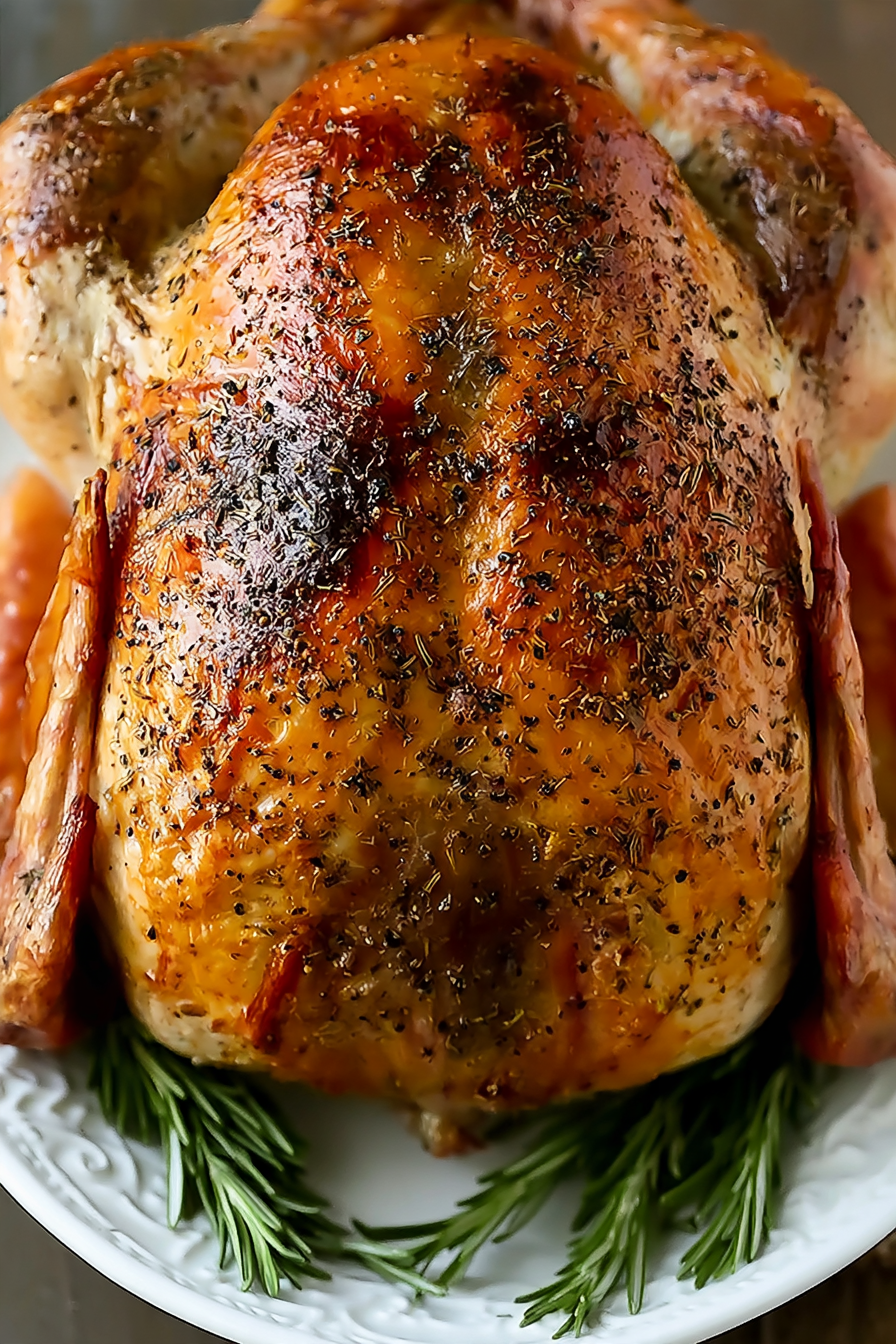
This dry rub roasted turkey gives you crisp, deeply seasoned skin and tender meat with a simple sage, rosemary, and thyme coating. It is a reliable centerpiece for Thanksgiving, Christmas, or any special family dinner.

A whole turkey can feel like a big cooking project, but this method keeps the process straightforward. Olive oil helps the savory herb seasoning cling to the bird while encouraging the exterior to brown beautifully in the oven.
The combination of dried sage, rosemary, thyme, kosher salt, and black pepper delivers the familiar herb-forward flavor you expect from a classic holiday turkey. Fresh thyme and quartered onion tucked inside the cavities add another subtle layer of aroma as the turkey roasts.
Starting the bird at a higher oven temperature also gives the skin a head start on browning. The temperature is then reduced so the meat can finish roasting more gently without the outside becoming overly dark.
Dry Rub Roasted Turkey Ingredients
You only need a short list of ingredients for this turkey, so each one plays an important role in the finished flavor.
- Whole turkey: A fully thawed 10 to 12-pound turkey is a manageable size for even roasting and works especially well with this two-temperature method.
- Extra-virgin olive oil: About 3 tablespoons coat the skin, help the herbs adhere, and encourage attractive browning during roasting.
- Kosher salt: The foundation of the dry rub, seasoning the exterior while bringing out the savory flavor of the turkey.
- Dried rubbed sage: Gives the turkey that unmistakable traditional holiday aroma and earthy flavor.
- Dried rosemary: Adds a fragrant, woodsy note that complements both sage and poultry.
- Dried thyme: Rounds out the herb mixture with a slightly floral, savory character.
- Ground black pepper: Provides gentle warmth and balances the herbs without making the turkey spicy.
- Fresh thyme sprigs: Placed in the cavity to perfume the turkey while it cooks.
- Onion: Quartered onion adds savory aroma from inside the bird without requiring a separate stuffing mixture.
Cooking Steps
STEP 1: Remove the neck and giblets from both cavities and trim away any obvious excess fat or remaining pinfeathers. There is no need to rinse raw turkey, since washing poultry can spread bacteria around your sink and work surfaces. Instead, pat the entire turkey very dry with paper towels. A dry exterior also helps the skin roast more effectively.
STEP 2: Combine the kosher salt, black pepper, dried sage, rosemary, and dried thyme in a small bowl. Mix well so the stronger herbs and salt are evenly distributed. Breaking up any clumps of rubbed sage with your fingers will make the seasoning easier to spread evenly over the turkey.
STEP 3: Preheat the oven to 375°F. Position the turkey breast-side up on a rack set inside a sturdy roasting pan. Rub the olive oil over the skin, covering the breast, legs, wings, and exposed sides. The surface should be lightly but evenly coated rather than dripping with oil.
STEP 4: Place the onion quarters in the neck cavity and fold the loose skin back over them. Add the fresh thyme sprigs to the main cavity along with a small portion of the dry seasoning. Press the remaining herb mixture over the exterior of the turkey, paying particular attention to the breast, thighs, and drumsticks.
STEP 5: Tuck the wing tips beneath the turkey so they are less likely to burn. Tie the legs loosely together with kitchen twine if your turkey does not already have a built-in leg holder. Roast at 375°F for the first 30 minutes without repeatedly opening the oven.
STEP 6: Reduce the oven temperature to 325°F and continue roasting for roughly 2 to 2½ hours. You can spoon some of the pan juices over the turkey once or twice if desired, although frequent basting is unnecessary and can slow cooking by releasing oven heat.
STEP 7: Begin checking the turkey toward the lower end of the cooking range. Insert an instant-read thermometer into the thickest areas without touching bone. The breast, innermost thigh, and wing area should reach at least 165°F. Once cooked, transfer the turkey from the oven and let it rest uncovered for about 20 minutes before carving.
Helpful Tips
- Dry the skin thoroughly. Surface moisture works against browning, so take an extra minute to pat around the wings, legs, breast, and cavity openings before adding the olive oil.
- Use temperature rather than time alone. Turkey size, oven accuracy, pan material, and the bird’s starting temperature can all affect roasting time. A reliable meat thermometer gives you a much better indication of doneness.
- Avoid carving immediately. Resting for about 20 minutes allows the juices inside the meat to settle, making the turkey easier to carve while helping the slices remain moist.
How do I know when roasted turkey is done?
A thermometer is the most dependable way to check. Insert it into the thickest part of the breast and the innermost areas of the thigh and wing without touching bone. The turkey is ready when the meat reaches a safe internal temperature of at least 165°F.
Do not rely only on the color of the skin or juices, since a beautifully browned bird can still need additional roasting time.
Can I apply the dry rub ahead of time?
Yes. You can season the prepared turkey in advance and refrigerate it until you are ready to roast. Keeping the seasoned bird uncovered in the refrigerator for several hours can also help dry the skin, which is useful when you want a nicely browned exterior.
If preparing it ahead, keep the turkey properly refrigerated until roasting time.
Should I baste the turkey while it roasts?
Basting is optional for this method. The olive oil coating already helps the surface brown, and opening the oven repeatedly allows heat to escape.
If you enjoy basting, spoon a little of the accumulated roasting liquid over the turkey once or twice during the lower-temperature portion of cooking rather than doing it every few minutes.
Why does the oven temperature change during roasting?
The initial 375°F roasting period encourages browning and helps start developing the seasoned exterior. Reducing the temperature to 325°F allows the larger bird to continue cooking more gradually.
This two-stage approach is especially useful for a whole turkey because the interior needs significantly more cooking time than the skin needs to become golden.
Can I use fresh herbs in the dry rub?
Dried herbs work particularly well on the exterior because they blend easily with the salt and cling to the olive-oil-coated skin. Fresh thyme is already used inside the cavity for aroma.
If you substitute fresh herbs on the exterior, chop them very finely and remember that their moisture and flavor concentration differ from dried herbs.
What to Serve with Dry Rub Roasted Turkey
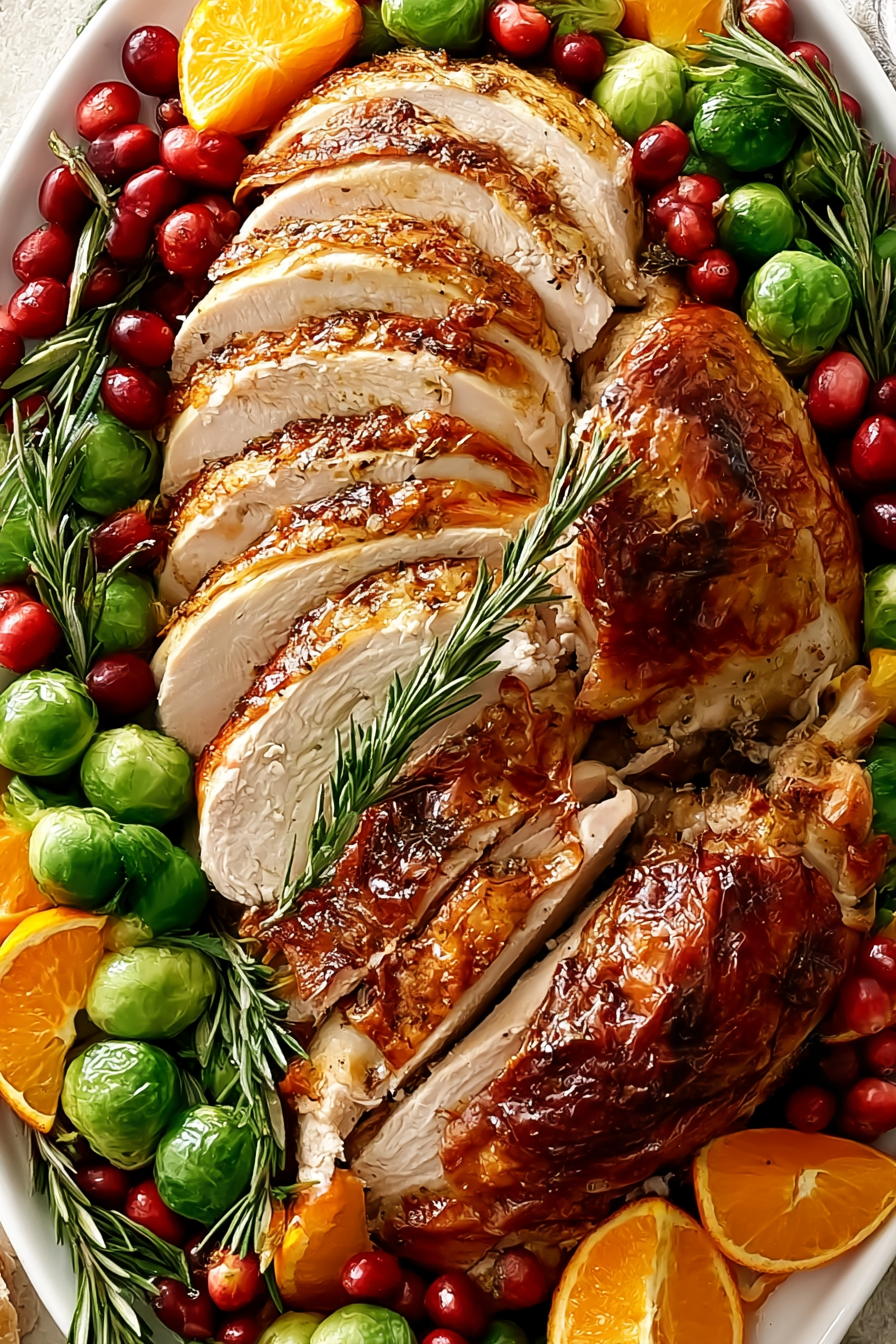
A savory herb-roasted turkey pairs naturally with familiar holiday side dishes. Creamy mashed potatoes are especially useful because they complement both the turkey and any pan gravy you prepare.
Roasted vegetables also work well, particularly carrots, Brussels sprouts, squash, or green beans. Their caramelized edges add a pleasant contrast to the tender roasted meat.
For a more traditional holiday plate, add bread stuffing or dressing. The sage, rosemary, and thyme in the turkey naturally complement the herbs commonly used in stuffing.
How to Store & Reheat
Remove leftover meat from the turkey carcass once the meal is finished and transfer it to shallow airtight containers. Refrigerate cooked turkey promptly and use it within 3 to 4 days.
For longer storage, portion the cooled turkey into freezer-safe containers or bags. Cooked turkey can be frozen for several months, although the texture and flavor are best when it is used within about 3 to 4 months.
To reheat, place sliced turkey in a covered baking dish with a small splash of broth or reserved pan juices to keep it from drying out. Warm it in a moderate oven until heated completely through and the meat reaches 165°F.
Smaller portions can also be reheated gently on the stovetop or in the microwave. Keeping the meat covered and adding a little moisture is the key to reheating leftover turkey without turning the slices dry or tough.
With its simple herb coating and dependable roasting method, this turkey works especially well when you want a traditional centerpiece without complicated marinades or elaborate preparation. The savory dry rub provides plenty of flavor, while the fresh thyme, onion, and patient resting time help you bring a well-seasoned, carveable turkey to the table.
Dry Rub Roasted Turkey
Ingredients
Turkey
- 1 fresh whole turkey weighing 10–12 lb, fully thawed
- Several fresh thyme sprigs
- 3 tablespoons extra-virgin olive oil
- 1 onion quartered
Herb Dry Rub
- 1 tablespoon dried rubbed sage
- 1 teaspoon dried rosemary
- ½ teaspoon ground black pepper preferably freshly ground
- 1½ tablespoons kosher salt
- 1 teaspoon dried thyme
Instructions
- Remove the neck and giblets from the turkey cavities. Trim off excess fat and remove any remaining pinfeathers.
- Rinse the turkey thoroughly with cold water, both inside and outside, then dry it completely with paper towels. Removing surface moisture helps the skin become crisp during roasting.
- Place the kosher salt, black pepper, dried sage, rosemary, and dried thyme in a small bowl.
- Stir thoroughly until all of the herbs and seasonings are evenly incorporated.
- Heat the oven to 375°F (190°C).
- Set the prepared turkey breast-side up on a roasting rack positioned inside a deep roasting pan.
- Spread the olive oil evenly over the entire exterior of the turkey, making sure all areas of the skin are well coated.
- Place the quartered onion inside the neck cavity. Fold the loose neck skin over the onion to help hold it securely in place.
- Arrange the fresh thyme sprigs inside the main body cavity, then scatter a portion of the prepared seasoning mixture inside the cavity.
- Press the remaining dry rub evenly over the outside of the turkey so the entire surface is thoroughly seasoned.
- Fold the wing tips underneath the turkey to protect them from excessive browning.
- Secure the legs together with kitchen twine unless the turkey already has an attached leg holder.
- Place the turkey in the preheated 375°F (190°C) oven and roast undisturbed for 30 minutes without opening the oven door.
- After the initial 30 minutes, lower the oven temperature to 325°F (165°C).
- Continue roasting for an additional 2 to 2½ hours. If desired, spoon the accumulated pan juices over the turkey once or twice during this stage to help keep the meat moist.
- Check doneness with a food thermometer inserted into the innermost portion of the thigh and wing as well as the thickest section of the breast. The turkey is fully cooked when these areas reach an internal temperature of 165°F (74°C).
- Remove the roasted turkey from the oven and allow it to rest uncovered for 20 minutes before carving.
- The resting period gives the juices time to redistribute throughout the meat and helps produce cleaner slices.
Notes
- Freshly ground black pepper may be used for a more pronounced pepper flavor.
- Extra-virgin olive oil is suitable for coating the turkey before the dry rub is applied.
- Basting the turkey once or twice with its own roasting juices is optional and may contribute to a juicier finished turkey.