
Dehydrated Caramelized Onions turn slowly cooked onions into a concentrated, crisp pantry staple that is convenient to store and simple to use. Keep them as brittle onion pieces or grind them into a fine powder for soups, sauces, seasonings, and everyday cooking.
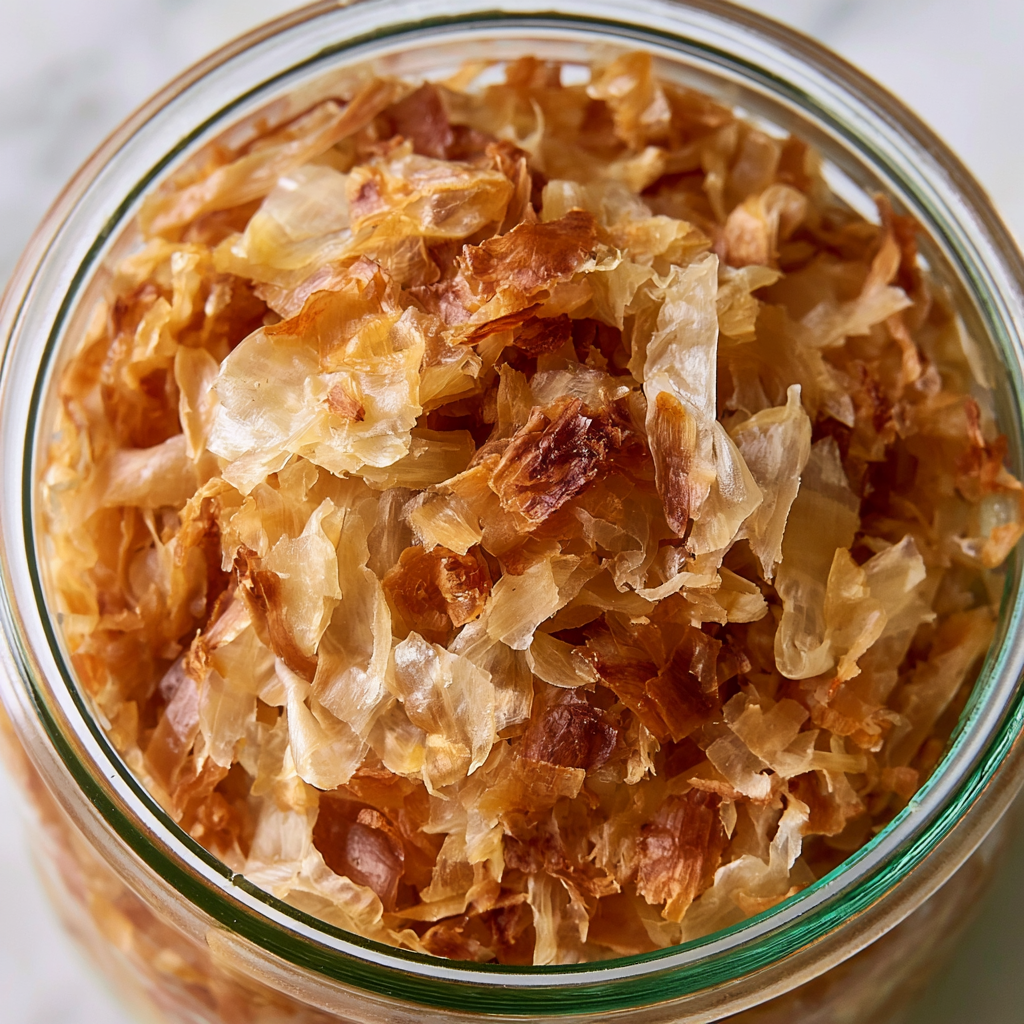
If you regularly use onions to build flavor in savory dishes, this is a practical way to prepare a large batch at once. Slow cooking softens the onions and concentrates their natural flavor before the dehydrator removes the remaining moisture.
The process takes time, but most of that time is hands-off. Careful drying and conditioning are the important parts because the finished onions need to be completely dry before they go into long-term storage.
You can leave the dried pieces whole for adding to cooked dishes or turn them into homemade onion powder. Redrying the ground powder gives you an extra opportunity to remove moisture and helps create a more dependable pantry ingredient.
What You Need to Make Dehydrated Onions
Yellow onions: About 3 to 4 pounds per dehydrator tray works well for preparing a substantial batch. Other onion varieties can also be used if you prefer their flavor.
Arrowroot powder: A very small amount can be mixed into finished onion powder to help reduce clumping while it is stored.
The ingredient list is intentionally simple. The concentrated flavor comes from gradually cooking and drying the onions rather than adding additional seasonings.
Cooking Steps
STEP 1: Peel the onions and slice or dice them according to how you plan to use the finished product. Smaller, relatively uniform pieces will generally dry more evenly. Transfer the prepared onions to a slow cooker and spread them out as evenly as possible.
STEP 2: Cook the onions on low for approximately 4 to 6 hours. Larger batches or thicker pieces may need additional time. They should become very soft and translucent as they slowly release moisture and develop a more concentrated onion flavor.
STEP 3: Drain away the liquid that has accumulated in the slow cooker. Do not press or mash the onions unnecessarily. If you want to avoid wasting the flavorful cooking liquid, refrigerate it promptly and use it in a soup, broth, gravy, or stew.
STEP 4: Arrange the drained onions across the dehydrator trays in a thin, even layer. Avoid creating thick piles because good airflow is essential for consistent drying. Set the dehydrator to 125°F (52°C) and allow the onions to dry for roughly 8 to 12 hours.
STEP 5: Check several pieces rather than relying on just one when testing for doneness. Properly dehydrated onions should be crisp and brittle enough to snap when broken. If they bend, feel leathery, or contain any soft areas, continue dehydrating them.
STEP 6: Cool the onions completely before placing them in a clean, dry jar for conditioning. Keep the jar loosely filled and shake it once a day for several days. Watch carefully for condensation or pieces that appear softer than they were when first removed from the dehydrator. Any sign of moisture means the onions need additional drying.
STEP 7: Once the onions pass the conditioning stage, store them as dried pieces or process them into powder. For onion powder, pulse the dried pieces in a grinder or blender before blending them finely. Sift if desired, regrind larger particles, then spread the powder thinly on a dehydrator tray and dry it again. Cool completely before transferring it to an airtight container with a small amount of arrowroot powder if desired.

Helpful Tips
- Check more than one piece for dryness. Onion pieces can dry at slightly different rates depending on thickness and position on the dehydrator tray.
- Never package warm dried onions. Cooling them fully before sealing reduces the risk of trapped condensation forming inside the container.
- Condition before long-term storage. Shaking the jar daily for several days helps reveal any remaining moisture before the onions are packed away.
Can I make onion powder from the dried onions?
Yes. Once the onion pieces are completely dry, brittle, and successfully conditioned, place them in a dry grinder or blender and process them until finely powdered.
For an especially fine texture, sift the powder and return larger pieces to the grinder. Drying the powder again afterward helps remove moisture that may have been introduced or released during grinding.
Why are my dehydrated onions still flexible?
Flexible onions usually contain too much residual moisture. Properly finished pieces should feel dry and brittle and should snap rather than bend.
Return any flexible pieces to the dehydrator at 125°F (52°C) and continue drying. Check several areas of each tray because thicker pieces may require longer than thinner ones.
Do dehydrated onions need to be conditioned?
Conditioning is a useful final check before long-term storage. After the dried onions cool, place them in a jar for several days and shake the container daily.
If condensation develops or some pieces become softer, moisture is still present. Put the entire batch back into the dehydrator until it is thoroughly dry again.
Can I use another type of onion?
Yes. Yellow onions are a dependable choice, but the same basic method can be used with other onion varieties.
The final flavor may vary depending on the onion you choose, and drying time can change slightly depending on moisture content, thickness, and how densely the dehydrator trays are filled.
What should I do with the onion cooking liquid?
The liquid released during slow cooking contains plenty of onion flavor, so it does not have to be discarded. Once cooled and handled safely, it can be incorporated into soups, stews, sauces, gravies, or other savory dishes that benefit from additional onion flavor.
Serving Ideas for Dehydrated Caramelized Onions
Use the dried onion pieces directly in dishes with enough liquid to soften them as they cook. Soups and stews are particularly convenient because the onions can rehydrate while simmering.
Ground onion powder is useful when you want concentrated flavor without noticeable onion pieces. Stir a small amount into sauces, gravies, casseroles, savory seasoning blends, or cooked vegetables.
You can also crush the dried onions into smaller flakes rather than grinding them completely. These work well in dishes where you want a little more texture than powder provides but do not need full-size onion pieces.

Keeping Leftovers Fresh
The most important storage rule is to keep dehydrated onions completely dry. After conditioning, transfer the brittle pieces to a clean airtight container and store them in a cool, dark, dry pantry away from heat and direct sunlight. For the strongest aroma and flavor, rotate homemade dried onions regularly rather than leaving opened containers in storage indefinitely.
Onion powder should also be completely cool and dry before packaging. A small amount of arrowroot powder may be mixed through the finished powder to discourage clumping, but it cannot compensate for onions that were packaged while moisture was still present.
Refrigeration is generally unnecessary for properly dehydrated onions. If you choose to refrigerate or freeze them for extended storage, use a tightly sealed moisture-resistant container. Allow the sealed container to return to room temperature before opening it so humid air does not immediately condense on the cold dried onions.
There is no need to reheat dried onions before using them. Add the pieces directly to moist recipes and allow them to rehydrate during cooking, or soak them briefly in warm water when you need softened onions before adding them to a dish.
Always examine stored onions before use. If you notice condensation, unusual softness, visible moisture, mold, or an unexpected odor, do not treat the batch as properly dried. Thorough dehydration, careful conditioning, and protection from moisture are what make this simple pantry ingredient work reliably.
Dehydrated Caramelized Onions
Ingredients
- Approximately 3–4 pounds yellow onions per dehydrator tray or another preferred onion variety
- A small amount of arrowroot powder for storage and clump prevention
Instructions
- Slice or dice the onions to the desired size, then transfer them to a slow cooker. Cook on the low setting for 4 to 6 hours, or longer if necessary, until the onions have softened and become translucent. The prolonged cooking concentrates their flavor while beginning to reduce their moisture content.
- Pour away the liquid released during cooking. If desired, reserve this flavorful liquid for later use in soups or stews. Arrange the drained onions evenly over the dehydrator trays, keeping them in a single layer so air can circulate around the pieces consistently.
- Set the dehydrator to 125°F (52°C) and dry the onions for approximately 8 to 12 hours. Continue dehydrating until the pieces are fully dry and brittle. Test several pieces by breaking them in half; properly dried onions should snap cleanly rather than bend.
- Remove the dried onions from the dehydrator and allow them to cool completely. Transfer them to a jar and condition them for several days, shaking the container daily while checking carefully for moisture. If condensation appears inside the jar, place the onions back into the dehydrator and continue drying.
- Once the conditioned onions are confirmed to be thoroughly dry, they may be sealed in an airtight container for storage. To prepare onion powder, place the dried onions in a grinder or blender. Pulse several times to break up the pieces, then blend continuously until a fine powder develops. For a smoother consistency, sift the powder and grind any remaining coarse particles again.
- Spread the freshly ground powder in a thin layer on a suitable dehydrator tray. Return it to the dehydrator and dry again until any remaining moisture has been removed completely.
- After the onion powder has finished redrying, transfer it to an airtight container. Mix in a small quantity of arrowroot powder before sealing to help minimize clumping during storage.