
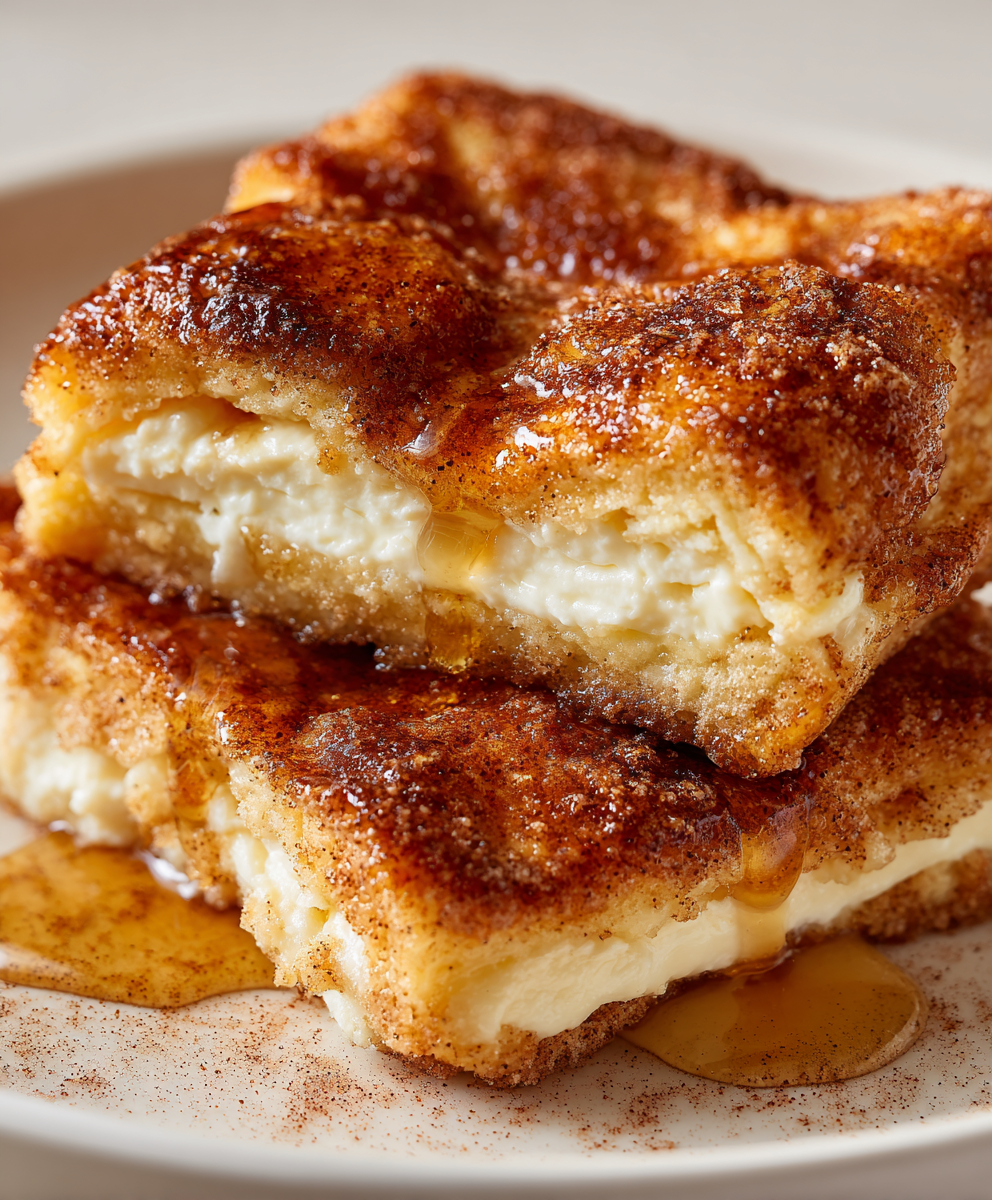
Cream Cheese Crescent Roll Pastries bake buttery layers around tangy-sweet cream cheese, finished with cinnamon sugar—quick enough for dessert, decadent enough for breakfast.

There’s a special kind of hush that happens when warm, cinnamon-dusted pastry hits the table. These bars—built from refrigerated crescent dough—deliver that moment without demanding a bakery degree. The filling is simple cream cheese, sugar, and vanilla, spread between two thin sheets of dough so it bakes into a tender, cheesecake-like layer.
You’ll press seams together (a key move), brush with butter, shower with cinnamon sugar, and bake until the top turns blistered and shiny. After a short cool, the slab slices into tidy squares that keep beautifully and reheat like a dream. Keep honey nearby for drizzling if you’re feeling extra.
What Goes Into These Cream Cheese Crescent Roll Pastries
- Refrigerated crescent rolls — The flaky base and lid; press seams together for a continuous sheet that bakes crisp and layers cleanly.
- Cream cheese (room temp) — Tangy, silky center that sets softly without eggs; room temperature ensures a lump-free mixture.
- Granulated sugar — Sweetens the filling and helps it bake glossy and smooth.
- Vanilla extract — Adds warm aroma that makes the simple filling taste bakery-bound.
- Melted butter — Brushed on top for golden color and a delicate, crackly finish.
- Cinnamon sugar — A quick mix for the classic bakery sparkle and spiced aroma.
- Honey (optional) — Drizzle over warm slices for a sticky-sweet finish that echoes the cinnamon.
Step-by-Step Cream Cheese Crescent Roll Pastries
STEP 1: Heat the oven to 350°F (175°C). Lightly grease an 8×8-inch baking pan. Unroll half the crescent dough, press seams together into a single sheet, and fit it snugly into the bottom of the pan.
STEP 2: In a medium bowl, stir softened cream cheese, sugar, and vanilla until completely smooth and creamy—no lumps. A wooden spoon works fine; if you prefer ultra-silky, give it a brief whisk.
STEP 3: Spread the cream cheese mixture evenly over the dough, nudging it to the corners without tearing the base. Keep the layer level so it bakes into a uniform, cheesecake-like center.
STEP 4: Unroll the remaining dough, press seams together, and lay it gently over the filling. If pieces resist joining, pinch with fingertips or roll lightly with a pin to seal.
STEP 5: Brush the top with melted butter, making sure to reach the edges. Stir cinnamon and sugar together, then sprinkle evenly over the buttered surface for even color and crunch.
STEP 6: Bake 20–30 minutes, until the top looks bubbly and lightly browned and the edges are set. The center should no longer look wet; a few small blisters on top are perfect.
STEP 7: Cool in the pan until just warm, then slice into bars or squares. Serve as-is, or drizzle with honey for extra gloss. For tidier cuts, cool completely before slicing and wipe the knife between cuts.

Pro Tips for Cream Cheese Crescent Roll Pastries
- Press, then chill: After pressing seams, pop the top sheet of dough into the fridge while you make the filling. Cooler dough is easier to lift and place without stretching or tearing.
- Avoid greasy bottoms: Don’t overdo the butter; a light brush on top is enough. If using a glass pan, line with parchment for easy lift-and-slice and cleaner bottoms.
- Neat layers: Spread the filling to ¼-inch of the edges so it doesn’t ooze; the heat will naturally push it outward during baking.
Serving Ideas for Cream Cheese Crescent Roll Pastries
- Breakfast board: Pair squares with fresh berries, bacon, and hot coffee for a sweet-savory spread.
- Dessert plate: Dust with powdered sugar and serve with sliced peaches or strawberries for a quick dinner-party finish.
- Café style: Warm a square and add a small scoop of vanilla or cinnamon ice cream; the contrast is irresistible.
Can I use reduced-fat cream cheese?
Yes, but expect a slightly softer set. For the best texture, use full-fat cream cheese or blend half full-fat with half reduced-fat. Avoid whipped tubs—they’re airier and can make the center collapse.
Can I swap in puff pastry?
You can, but the character changes: puff pastry is flakier and taller, and it browns faster. Keep the filling layer thin and bake on the lower-middle rack, watching closely near the end so the top doesn’t overbrown.

How do I keep the seams from separating?
Pinch firmly and roll seams lightly with a pin. Press the bottom crust up the sides a smidge to create a shallow rim. The butter-and-sugar topping will glue tiny gaps as it bakes, but good seam work helps most.
Can I flavor the filling?
Absolutely. Add a teaspoon of lemon zest, almond extract instead of vanilla, or fold in a handful of mini chocolate chips. Keep additions modest so the filling stays spreadable and bakes evenly.
Can I assemble ahead?
Yes. Assemble fully, cover, and refrigerate up to 12 hours. Bake straight from cold, adding a few minutes. For serving later, bake, cool, and chill; reheat slices at 300°F (150°C) for 5–10 minutes to re-crisp the top.
Storage & Reheating
Let pastries cool completely, then cover and refrigerate for 3–5 days. To keep the top crisp, store on parchment in an airtight container, leaving a tiny vent for excess moisture for the first hour before sealing. For freezer-friendly treats, chill until firm, wrap individual squares tightly, and freeze up to 2 months. Thaw overnight in the refrigerator.
To reheat, warm in a regular or toaster oven at 300°F (150°C) for 5–10 minutes until the edges re-crisp and the filling loosens slightly. Avoid microwaving; it softens the pastry and can make the filling weep. If you’re serving to a crowd, reheat the whole pan covered for 8 minutes, then uncover for 3–5 minutes to restore the cinnamon-sugar crust.
Cream Cheese Crescent Roll Pastries
Ingredients
- 1 cup granulated sugar divided
- ¼ cup unsalted butter fully melted
- 6 oz cream cheese softened to room temperature
- 8 oz pre-packaged crescent dough such as store-bought refrigerated rolls
- 2 tsp ground cinnamon
- 1½ tsp pure vanilla extract
- Optional: honey for drizzling upon serving
- 2 tbsp granulated sugar for topping
Instructions
- Begin by setting your oven to preheat at 350°F (175°C).
- Separate the crescent roll dough into halves. Lay the first portion (four triangles) into the bottom of an 8×8-inch baking dish, gently pressing the perforations together to form a uniform layer.
- In a medium-sized mixing bowl, thoroughly blend the room-temperature cream cheese with 1 cup of sugar and the vanilla extract. Stir until the mixture is completely smooth and homogeneous.
- Spread the prepared cream cheese filling evenly over the layer of dough in the pan.
- Unroll the second half of the crescent dough and repeat the process of sealing the seams. Carefully place this layer over the cream cheese spread, aligning the edges with the bottom crust.
- Evenly pour the melted butter across the surface of the top dough layer.
- In a small bowl, combine 2 tablespoons of sugar with the ground cinnamon. Sprinkle this cinnamon-sugar mixture over the buttered dough.
- Bake the dish for approximately 20 to 30 minutes, or until the top is lightly golden and the filling is bubbly.
- Once out of the oven, allow the pastries to cool slightly. Cut into squares and serve as is, or optionally finish with a light drizzle of honey.