
Christmas Cookies with Egg Whites are light, crisp, and beautifully festive, with a delicate vanilla flavor and colorful sprinkles. They use just a handful of ingredients, hold their piped shape well, and are perfect for holiday cookie trays or make-ahead Christmas treats.
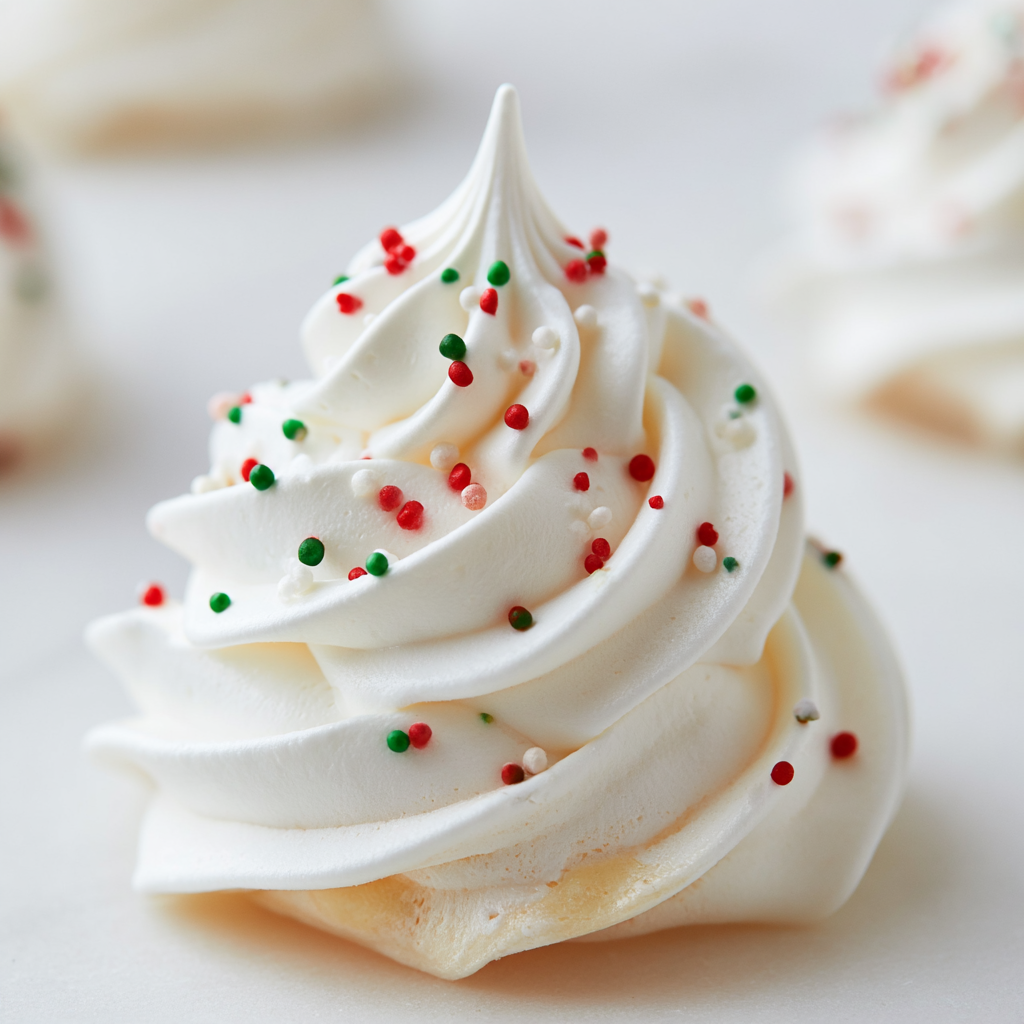
If you want a Christmas cookie that feels a little different from the usual butter cookies and sugar cookies, these meringue trees are a fun choice. Their airy texture practically dissolves as you bite into them, while the crisp exterior gives them that classic meringue finish.
The technique is simple, but patience matters. Slowly adding the sugar creates a smooth, stable meringue, while the low oven temperature dries the cookies without encouraging much browning. Once you get the hang of piping the little trees, they make an impressive addition to holiday dessert platters without requiring complicated decorating.
Christmas Meringue Cookie Ingredients
You only need five basic ingredients for these festive cookies, so the quality and handling of each one can make a noticeable difference.
- Egg whites: Room-temperature egg whites whip more readily and can achieve greater volume, creating the light foundation of the meringue.
- Granulated sugar: Sweetens the cookies while also helping create the firm, glossy structure necessary for piping.
- Cream of tartar: Stabilizes the whipped egg whites and helps the meringue maintain its shape as you add sugar and pipe the cookies.
- Vanilla extract: Adds a gentle vanilla flavor that complements the sweet meringue without overpowering it.
- Holiday sprinkles: Give the piped Christmas trees their colorful seasonal finish.
One important detail is keeping the mixing bowl and beaters completely clean and free from grease. Even a small amount of fat or egg yolk can prevent egg whites from whipping properly.

How to Make These Christmas Meringues
STEP 1: Preheat your oven to 225°F (110°C) and line two baking sheets with parchment paper. The parchment keeps the delicate cookies from sticking and makes them easier to lift once they have completely cooled.
STEP 2: Place the room-temperature egg whites in a clean electric mixer bowl. Begin beating until the whites become frothy. Add the cream of tartar, then continue whipping until soft peaks form when you lift the whisk.
STEP 3: Increase the mixer toward medium-high speed and begin adding the granulated sugar about one tablespoon at a time. Avoid pouring all the sugar in at once. Giving each addition time to dissolve helps produce a smoother, more stable meringue.
STEP 4: Continue beating until the meringue becomes thick and glossy and forms stiff peaks. When the whisk is lifted, the peak should stand upright rather than folding over. Beat in the vanilla just until evenly incorporated.
STEP 5: Transfer the finished mixture to a piping bag fitted with a star tip. Pipe each Christmas tree by creating a wider circular base first, then adding progressively smaller layers above it. Finish with a small pointed peak at the top.
STEP 6: Add holiday sprinkles while the meringue is still freshly piped so they adhere to the surface. Transfer the trays to the oven and bake for approximately 1 1/2 to 2 hours. They should dry gradually without developing significant brown color.
STEP 7: Turn off the oven once the meringues are dry. Leave the oven door slightly open and allow the cookies to cool slowly inside until they reach room temperature. Once completely cool, carefully remove them from the parchment and store them somewhere dry.
Serving Ideas for Christmas Meringues
These little meringue trees work especially well as part of a mixed Christmas cookie platter. Their light, airy texture provides a nice contrast alongside richer cookies such as chocolate cookies, shortbread, or buttery cutout cookies.
They are also pretty enough to serve on their own after a holiday meal. Arrange them on a cake stand or dessert tray with other seasonal sweets for a simple Christmas dessert display.
For gifting, carefully arrange completely cooled meringues in a container with parchment between layers. Because they are fragile, avoid packing them tightly against heavier cookies that could crush their delicate shapes.
Why Is My Meringue Not Forming Stiff Peaks?
Several small issues can keep egg whites from whipping correctly. Make sure your bowl and mixer attachments are completely clean and dry, and avoid getting any egg yolk into the whites.
The sugar should also be added gradually rather than all at once. Continue whipping until the mixture becomes glossy and the peaks remain upright when the whisk is lifted.
Room-temperature egg whites can also make the whipping process easier because they generally expand more readily than very cold whites.
How Do I Know When Meringue Cookies Are Finished Baking?
Properly baked meringues should feel dry and light rather than soft or wet on the surface. They should also release fairly easily from the parchment once they are finished and cooled.
Because these cookies bake at only 225°F, they are really drying more than they are browning. Avoid increasing the oven temperature just to speed things up, as higher heat can cause unwanted color or cracking.
Why Did My Meringue Cookies Turn Brown?
Browning generally means the meringues were exposed to too much heat or baked longer than necessary for your particular oven.
Oven temperatures can vary, so begin watching the cookies toward the lower end of the baking range. The goal is a pale, crisp meringue rather than a deeply colored cookie.
Keeping the temperature low is particularly important when making Christmas tree meringues because their light appearance makes the colorful sprinkles stand out.

Can I Make Meringue Cookies Ahead of Christmas?
Yes. Meringue cookies are a convenient make-ahead holiday dessert because they do not need to be served warm or freshly baked.
Prepare them ahead, allow them to cool completely, and transfer them promptly to an airtight container. Their biggest enemy is moisture, so choose a cool, dry storage location rather than somewhere humid.
Why Do Meringue Cookies Become Sticky?
Moisture is usually responsible. Sugar in meringue readily attracts moisture from the surrounding air, which can make the formerly crisp surface feel sticky or soft.
Always cool the cookies completely before storing them, then seal them in an airtight container. Avoid leaving finished meringues uncovered for long periods, particularly in a humid kitchen.
Helpful Tips
- Add the sugar gradually. Slowly incorporating one tablespoon at a time gives the sugar an opportunity to dissolve and helps produce a smoother, stronger meringue.
- Check for true stiff peaks. Your mixture should be glossy and sturdy enough that the peak remains standing when the whisk is lifted. This consistency is important for clearly defined Christmas tree shapes.
- Keep everything dry. Moisture can soften finished meringues, so allow them to cool thoroughly before transferring them to storage.
How to Store & Reheat
Meringue cookies should be completely cool before storage. Place them in an airtight container and keep them at room temperature in a cool, dry area. When properly protected from moisture, they can remain crisp for several days and are well suited to advance holiday baking.
Avoid refrigerating them unless absolutely necessary. Refrigerators contain moisture, and condensation can quickly soften their delicate texture.
Freezing is possible when the cookies are carefully protected from moisture and breakage. Arrange them in a rigid freezer-safe container with parchment between layers rather than placing them loosely in a freezer bag. Thaw them inside the closed container before opening it so condensation is less likely to settle directly on the cookies.
These cookies do not normally require reheating. They are meant to be enjoyed dry and crisp at room temperature. If they become slightly soft from humidity, placing them briefly in a very low oven may help dry them again, but watch closely so they do not brown.
With their crisp texture, gentle vanilla flavor, and festive piped shape, these Christmas meringues are especially useful when you want something light to balance a holiday dessert spread. The ingredients are simple, and most of the preparation comes down to whipping the egg whites properly, adding the sugar patiently, and giving the cookies plenty of time to dry and cool.
Christmas Cookies with Egg Whites
Ingredients
- 1 cup white granulated sugar
- 1/2 teaspoon pure vanilla extract
- 4 large egg whites brought to room temperature for optimal volume
- Holiday sprinkles as needed for decorating
- 1/4 teaspoon cream of tartar for stabilizing the whipped egg whites
Instructions
- Heat the oven to 225°F (110°C). Cover two baking sheets with parchment paper to keep the meringues from adhering and promote consistent baking.
- Place the room-temperature egg whites in the bowl of an electric mixer and beat until foamy and frothy.
- Add the cream of tartar and continue whipping until the egg whites reach the soft-peak stage. Gradually raise the mixer speed to medium-high.
- Add the granulated sugar slowly, approximately one tablespoon at a time. Allow each portion of sugar to dissolve thoroughly before adding the next.
- Continue beating the mixture until firm, stiff peaks develop. Add the vanilla extract and beat briefly until it is evenly distributed throughout the meringue.
- Transfer the prepared meringue into a piping bag equipped with a star-shaped piping tip.
- For Christmas tree shapes, begin at the center and pipe a circular foundation. Pipe two additional concentric layers above the base, gradually narrowing the shape and ending with a pointed top.
- Scatter holiday sprinkles over the freshly piped meringues for decoration.
- Place the baking sheets in the preheated oven and bake the meringue trees for 1 1/2 to 2 hours.
- Monitor the cookies carefully so they do not begin to brown, modifying the baking duration when necessary. The gentle oven temperature allows the meringues to dry gradually while preserving their light color.
- When the meringues have finished baking, switch off the oven and leave the oven door slightly ajar.
- Allow the cookies to cool gradually inside the oven until they reach room temperature. This slow cooling process helps reduce the likelihood of cracking.
- Once completely cooled, transfer the Christmas meringue cookies to an airtight container. Keep them away from warmth and humidity so they remain dry and crisp.
Notes
- Room-temperature egg whites generally whip to a greater volume than cold egg whites.
- Cream of tartar helps stabilize the whipped egg whites and supports the meringue structure.
- Avoid exposing finished meringues to moisture, as humidity can soften their crisp texture.