
Christmas cookies with almond paste are soft, chewy, and deeply almond flavored, with a lightly golden exterior and crisp sliced-almond coating. They’re naturally festive, simple to shape, and ideal for gluten-free holiday baking.
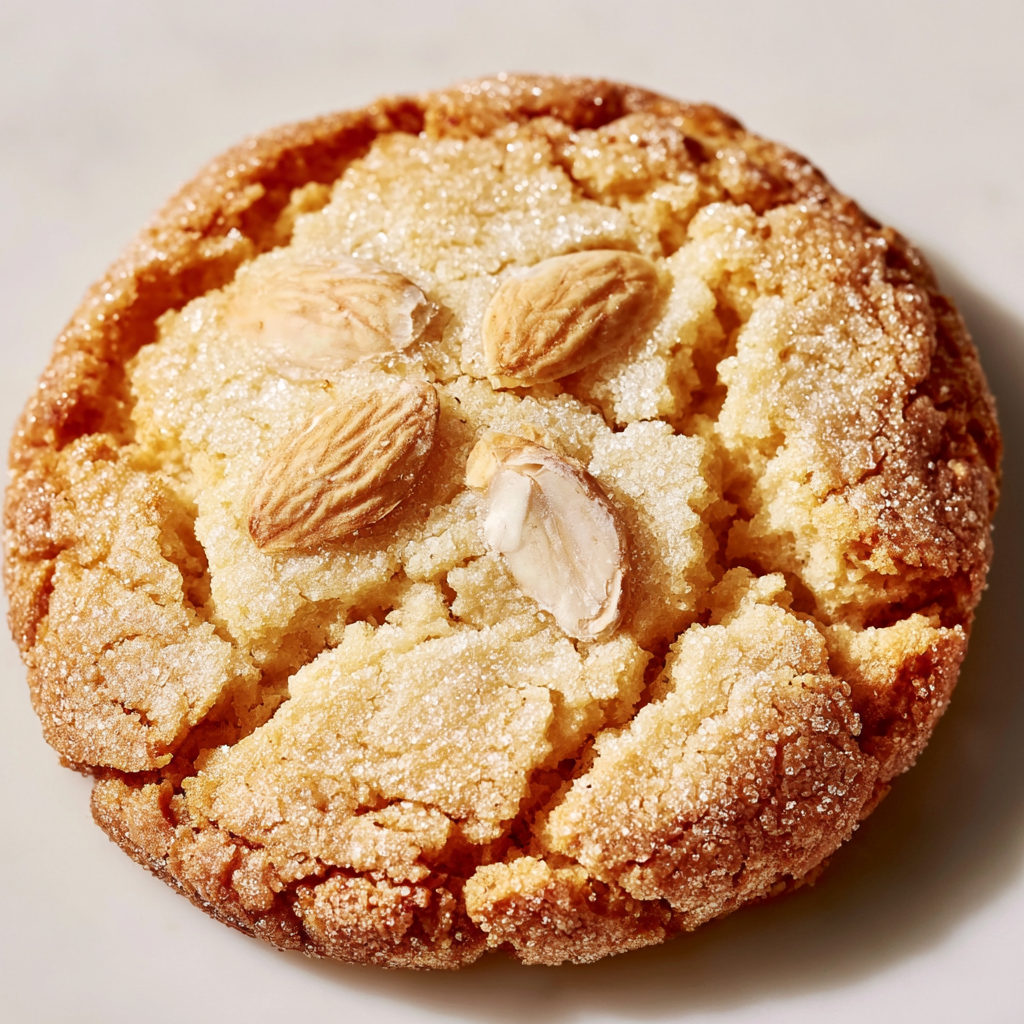
These almond cookies are a lovely choice when you want something a little different from the usual frosted sugar cookies. Almond paste gives the centers a dense, tender chew, while the sliced almonds on the outside add just enough crunch to make every bite interesting.
The dough comes together with a short ingredient list, and there is no complicated rolling, cutting, or decorating involved. Once the cookies are shaped into balls, they simply get pressed into sliced almonds and baked until their bottoms are lightly golden.
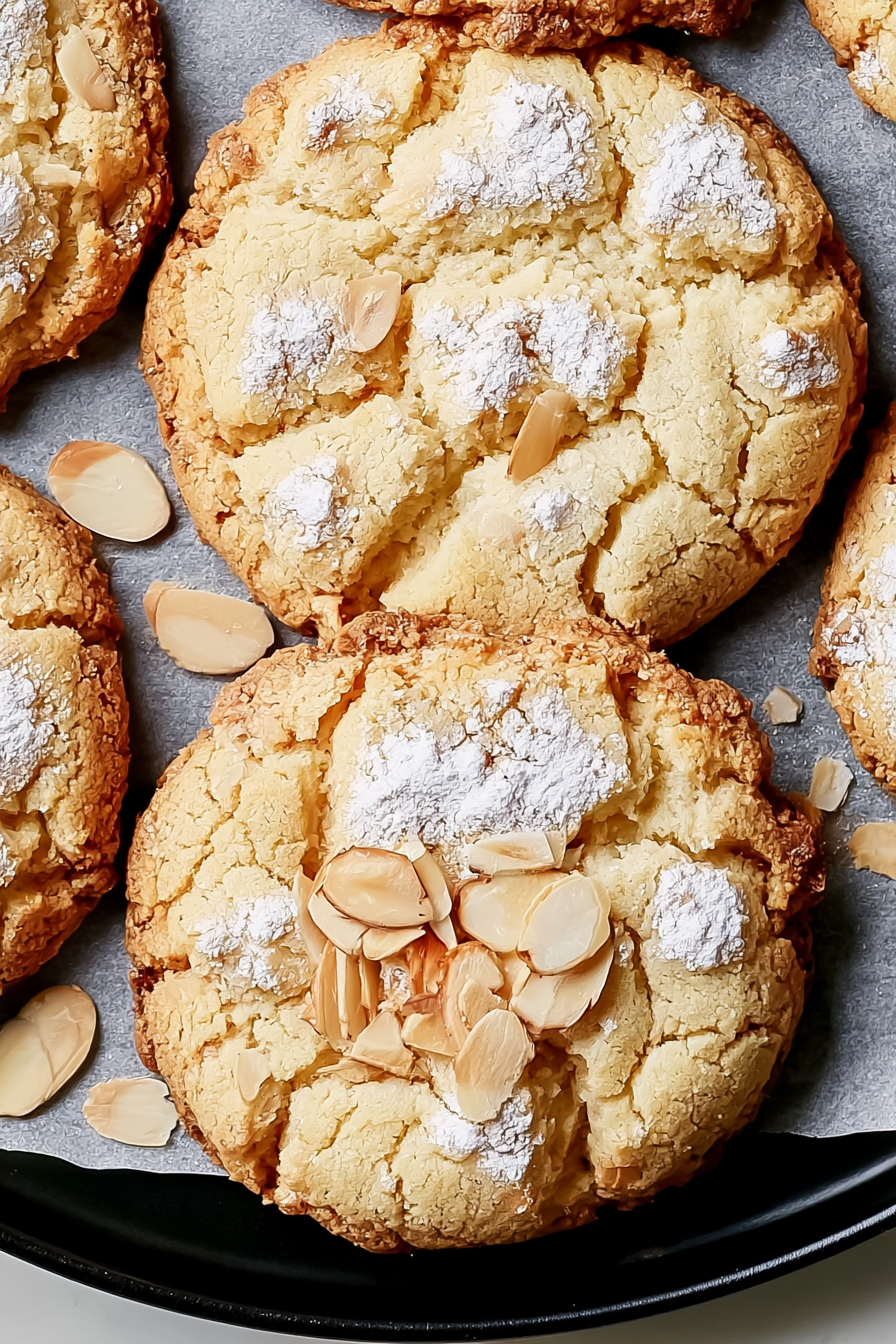
They also fit beautifully into a holiday cookie assortment. Their pale golden color and rustic almond coating make them look special without requiring icing, sprinkles, or extra finishing work.
Christmas Cookies with Almond Paste Ingredients
Almond paste: The main source of almond flavor and the ingredient responsible for the cookies’ rich, pleasantly chewy texture.
Granulated sugar: Sweetens the dough while helping balance the concentrated almond paste.
Confectioners’ sugar: Adds sweetness and blends smoothly into the almond mixture. Sifting it first helps prevent small lumps.
Egg whites: Bind the dough together and add enough moisture to create a tender cookie without weighing down the almond flavor.
Gluten-free all-purpose flour: Gives the dough additional structure so the cookies hold their rounded shape during baking. Use a certified gluten-free flour when gluten-free preparation is important.
Almond extract: Reinforces the almond flavor already present in the paste. Only a small amount is needed because the flavor is concentrated.
Fine salt: Balances the sweetness and keeps the cookies from tasting flat.
Sliced almonds: Form the crisp exterior coating and give the finished cookies their distinctive holiday-cookie appearance.
Step-by-Step Almond Paste Christmas Cookies
STEP 1: Heat your oven to 350°F (175°C) and line a large baking sheet with parchment paper. The parchment is especially useful with this dough because the cookies are naturally sweet and can become sticky as they bake.
STEP 2: Add the almond paste, granulated sugar, and sifted confectioners’ sugar to the bowl of a stand mixer. Mix until the almond paste begins breaking down and the sugars are evenly incorporated. You want a consistent mixture without large pieces of almond paste remaining.
STEP 3: Turn the mixer to low speed and add the gluten-free flour, fine salt, almond extract, and room-temperature egg whites. Continue mixing just until a cohesive dough develops. Stop once everything is evenly incorporated rather than continuing to beat the mixture.
STEP 4: Scoop portions of dough using an ice cream scoop or similar portioning tool. Gently roll each portion between your hands to create a round cookie. The dough may feel softer than a standard sugar-cookie dough, so work gently rather than compressing it tightly.
STEP 5: Place the sliced almonds in a shallow bowl or on a plate. Roll each dough ball through the almonds, pressing lightly so the slices stick around the outside. A few uncovered areas are fine, but aim for a fairly even coating.
STEP 6: Transfer the almond-covered balls to the prepared baking sheet, leaving some room between them for heat to circulate. Repeat the shaping and coating process until all of the dough has been portioned.
STEP 7: Bake for 15 to 20 minutes. Start checking toward the shorter end of the baking range. The bottoms should be turning golden brown, but the cookies themselves should not become dark. Slightly lighter cookies will retain the soft, chewy center that makes almond paste cookies so appealing.
STEP 8: Remove the baking sheet from the oven and leave the cookies in place while they cool. They will be delicate when freshly baked and become easier to handle as they set. Once cool, transfer them to a serving plate or storage container.
Can I make the cookie dough ahead of time?
Yes. You can prepare the dough in advance and keep it tightly covered in the refrigerator for about one day. If it becomes firm when chilled, let it sit briefly at room temperature until it is soft enough to scoop and roll without forcing it.
For the freshest-looking almond coating, it is helpful to wait until you are ready to bake before rolling the dough balls in the sliced almonds.
Helpful Tips
- Use room-temperature egg whites. They blend more readily into the almond paste mixture and help the dough come together evenly.
- Watch the bottoms closely. Almond-based cookies can move from lightly golden to overly browned quickly near the end of baking, so begin checking them around 15 minutes.
- Avoid overmixing. Once the flour and egg whites have formed a uniform dough, stop the mixer. Extra mixing is unnecessary and can make the preparation harder to control.
Why are my almond paste cookies spreading?
Some spreading is normal, but excessive spreading can happen if the dough becomes especially warm before baking or if ingredient proportions are changed. Portion and shape the dough promptly after mixing, and avoid adding extra egg white beyond the amount called for.
If your kitchen is particularly warm and the dough feels difficult to shape, a brief chill can make portioning easier.
Serving Ideas for Almond Cookies
These cookies need very little embellishment because the sliced-almond crust already gives them plenty of texture and visual appeal.
Serve them alongside coffee or tea for an afternoon holiday treat. Their concentrated almond flavor works especially well with simple drinks that do not compete with the cookies.
For Christmas gatherings, arrange them on a platter with contrasting cookies such as chocolate cookies or lightly colored sugar cookies. They also work nicely as part of a homemade cookie box because they look distinct from traditional cut-out varieties.
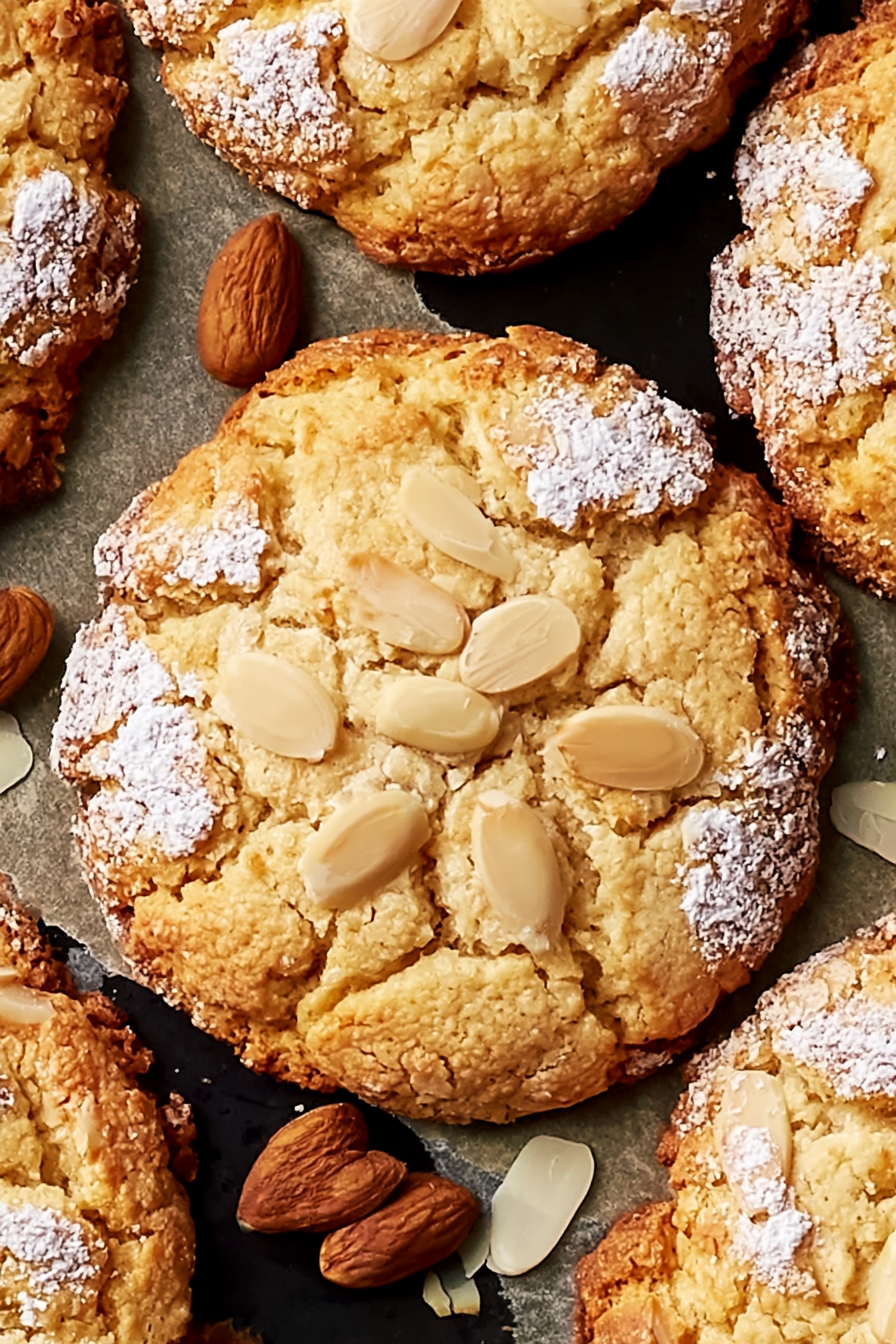
A light dusting of confectioners’ sugar can be added just before serving if you want a snowy finish, although the cookies are flavorful and festive enough without it.
How do I know when almond paste cookies are done?
Look at the lower edges and bottoms rather than waiting for the entire cookie to become golden brown. They should show a light golden color after roughly 15 to 20 minutes at 350°F.
The centers can still seem slightly soft when the pan first comes out of the oven. They continue setting as they cool, which helps preserve their characteristic chewy texture.
Keeping Leftovers Fresh
Once completely cooled, place the cookies in an airtight container. They can generally be kept at room temperature for about 3 to 4 days in a cool, dry kitchen. Separating layers with parchment paper helps protect the sliced almonds and keeps the cookies looking neat.
For longer storage, refrigerate them in a tightly sealed container for about a week. Bring chilled cookies closer to room temperature before serving so the almond paste center can soften again.
The baked cookies can also be frozen. Arrange fully cooled cookies in a freezer-safe container with parchment between layers and freeze for up to 2 months. Thaw them in the refrigerator or at room temperature while still covered to reduce condensation on the surface.
These cookies do not usually need reheating, but if you prefer them slightly warm, give an individual cookie only a few seconds of gentle warming. Too much heat can dry out the soft center and over-toast the delicate almond slices.
Can these almond paste cookies be frozen before baking?
Yes, although freezing the baked cookies is usually the simplest option. If you want to freeze the dough, portion it into balls first and freeze them until firm before transferring them to a freezer-safe container.
For a fresher almond coating, add the sliced almonds after the dough balls have thawed enough for the almonds to adhere properly.
Are these cookies gluten-free?
They can be gluten-free because the recipe uses gluten-free all-purpose flour rather than standard wheat flour. However, every ingredient should be checked individually when preparing the cookies for someone who needs a strictly gluten-free dessert.
Use certified gluten-free flour and verify that the almond paste, sugars, almond extract, and other packaged ingredients meet your dietary requirements.
Christmas Cookies with Almond Paste
Ingredients
- 1 cup sliced almonds
- 16 ounces almond paste
- ½ teaspoon fine salt
- ¾ cup gluten-free all-purpose flour
- 1 cup confectioners’ sugar sifted to promote a smoother texture
- 4 large egg whites brought to room temperature, approximately 70°F, for easier incorporation
- ½ teaspoon almond extract or almond flavoring such as McCormick Almond Extract
- 1 cup granulated white sugar
Instructions
- Prepare the baking pan. Preheat the oven to 350°F (175°C). Cover a large baking sheet with parchment paper to minimize sticking and simplify cleanup.
- Begin the cookie dough. Place the almond paste, granulated sugar, and sifted confectioners’ sugar in the bowl of a stand mixer. Cream the ingredients together until thoroughly blended.
- Incorporate the remaining ingredients. Reduce the mixer to its lowest speed. Add the gluten-free flour, salt, almond extract, and room-temperature egg whites. Mix only until everything comes together and a cohesive dough forms; avoid excessive mixing.
- Shape the cookies. Portion the dough with an ice cream scoop. Using your hands, gently shape each portion into a ball.
- Coat with almonds. Roll every dough ball in the sliced almonds, pressing lightly as needed so the almond pieces adhere evenly around the surface.
- Arrange on the baking sheet. Set the almond-covered dough balls onto the parchment-lined baking sheet. Continue portioning, shaping, and coating until all of the dough has been used.
- Bake. Transfer the baking sheet to the preheated oven and bake for 15–20 minutes. The cookies are ready when the lower portions begin developing a golden-brown color. Monitor them closely toward the end of baking to prevent overbrowning.
- Cool and serve. Remove the cookies from the oven and allow them to cool directly on the baking sheet. Once cooled, transfer them to a serving plate.