
Chicken Breast with Cream Sauce is a comforting skillet dinner with golden chicken, a rich garlic-Parmesan sauce, and simple ingredients. It is creamy, reliable, and ready in about 45 minutes for an impressive weeknight meal.
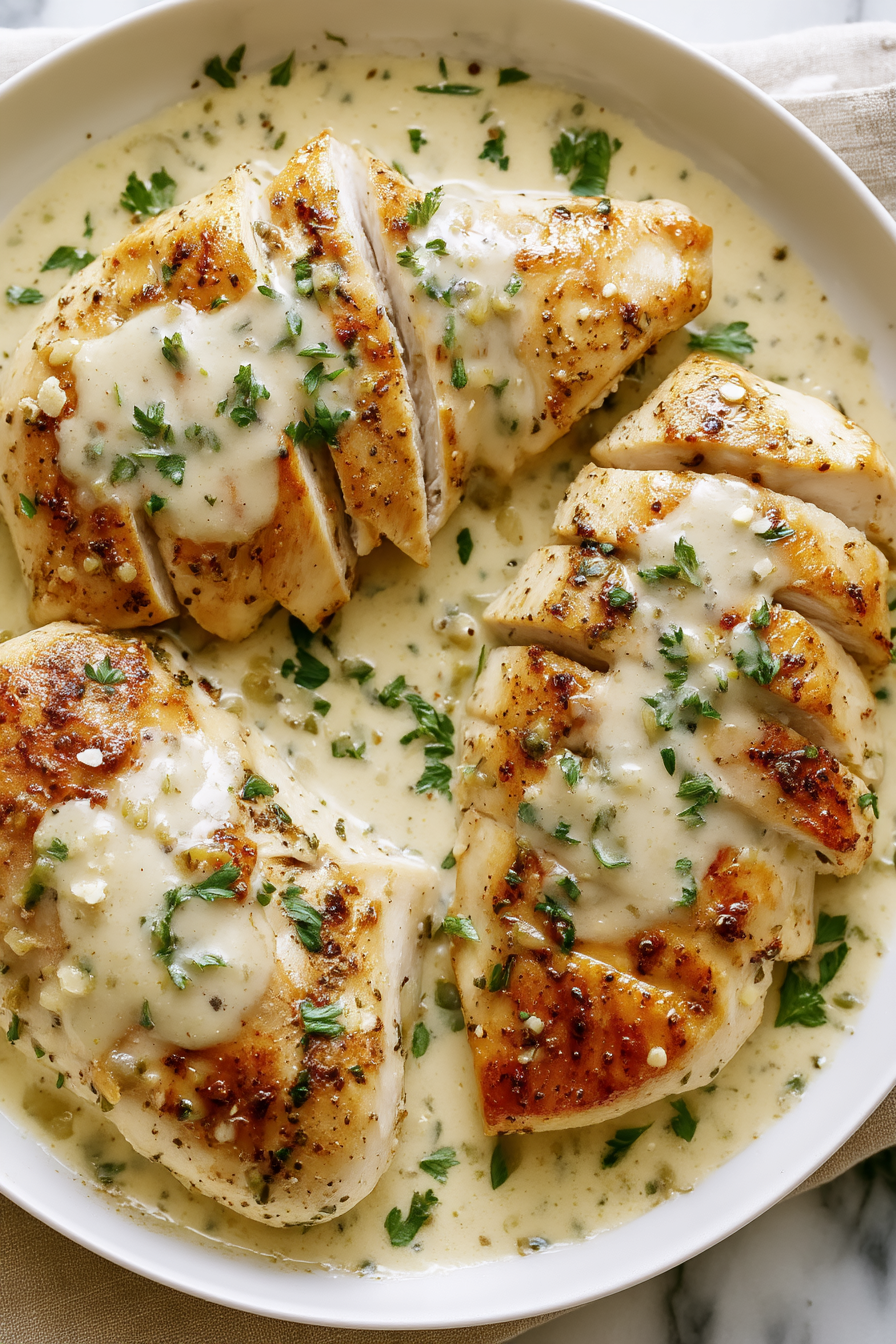
When you need a dinner that feels a little special without turning into an all-evening cooking project, this creamy chicken is a great one to keep in your rotation. The chicken gets a lightly crisp, savory Parmesan coating before being finished right in the same skillet with the sauce.
Garlic, onion, chicken broth, heavy cream, and Parmesan create a sauce that is rich without needing a complicated technique. Reducing the broth first concentrates the savory flavor, while adding the cream over gentler heat keeps the finished sauce smooth.
It is also an especially useful main course when you want flexibility at the table. Spoon that creamy pan sauce over pasta, fluffy rice, mashed potatoes, cauliflower mash, or zucchini noodles and you have a complete, satisfying dinner.
Chicken Breast with Cream Sauce Ingredients
Boneless chicken breasts: Use about 1½ pounds of skinless chicken breast. Similar-sized portions will cook more evenly in the skillet.
All-purpose flour: Creates a light coating around the chicken and encourages a nicely browned exterior.
Parmesan cheese: Used in both the dredging mixture and the sauce for savory, salty flavor and extra body.
Garlic powder: Seasons the chicken evenly before it reaches the pan.
Salt and black pepper: Essential for seasoning both the chicken and the finished cream sauce.
Olive oil: Helps the chicken brown while providing enough cooking fat for sautéing the aromatics.
Unsalted butter: Adds richness to the skillet and complements the Parmesan cream sauce.
Onion: Finely diced onion cooks down into the sauce, adding a subtle sweetness and savory base.
Fresh garlic: Gives the sauce its strongest aromatic flavor. Let it cook gently so it becomes fragrant without burning.
Chicken broth: Deglazes the skillet and captures all of the flavorful browned bits left from searing the chicken.
Heavy cream: Forms the smooth, rich base of the finished sauce. Full-fat cream gives the most consistent texture.
Fresh parsley: Adds freshness and a little color just before serving.
Cooking Steps
STEP 1: Season the chicken evenly with salt, garlic powder, and black pepper. In a shallow dish, combine the flour with the Parmesan intended for the coating, then dredge the chicken on both sides. Shake away excess flour so the coating stays light rather than becoming heavy or pasty.
STEP 2: Heat part of the olive oil with a tablespoon of butter in a large skillet over medium-high heat. Add the chicken without overcrowding the pan. Cook for roughly 4–5 minutes on each side, adjusting slightly for thickness, until deeply golden and cooked through. Work in batches when necessary.
STEP 3: Transfer the cooked chicken to a plate and keep it nearby. Reduce the skillet to medium heat. Carefully remove any excessively dark flour residue if needed, while keeping the flavorful browned bits that will help season the sauce.
STEP 4: Add the finely diced onion and cook until tender. Stir in the remaining olive oil as needed, followed by the crushed or minced garlic. Let the garlic cook for about 2–3 minutes, stirring regularly, just until fragrant.
STEP 5: Pour in the chicken broth and scrape across the bottom of the skillet to release the browned pieces left behind from the chicken. Let the broth simmer for approximately 5 minutes, or until it has reduced by about half. This reduction is important because it prevents the finished sauce from becoming watery.
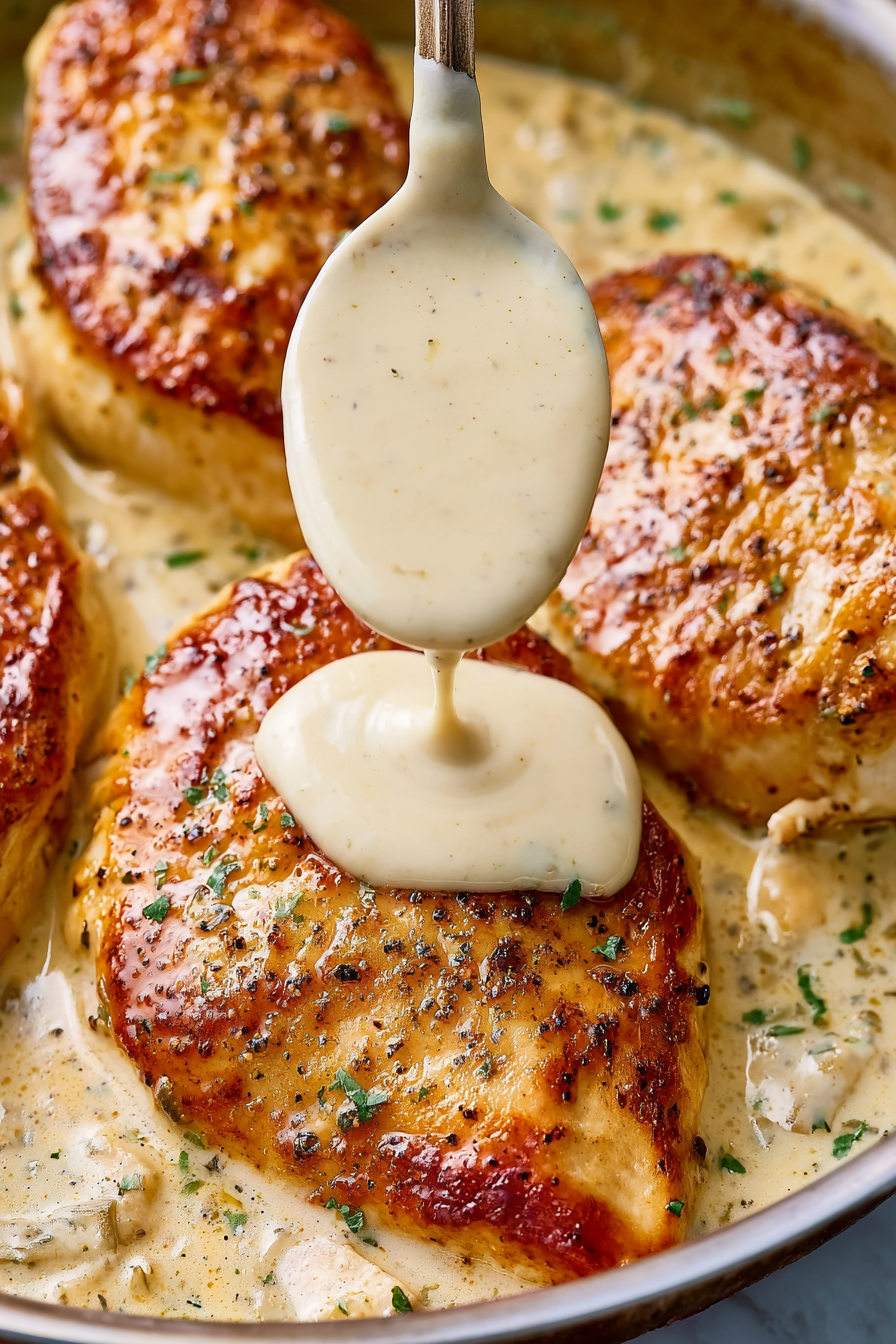
STEP 6: Turn the heat down to medium-low and slowly stir in the heavy cream. Let it reach a gentle simmer rather than a rapid boil. Cook for a few minutes, then add the grated Parmesan and stir until it has melted completely and the sauce looks smooth.
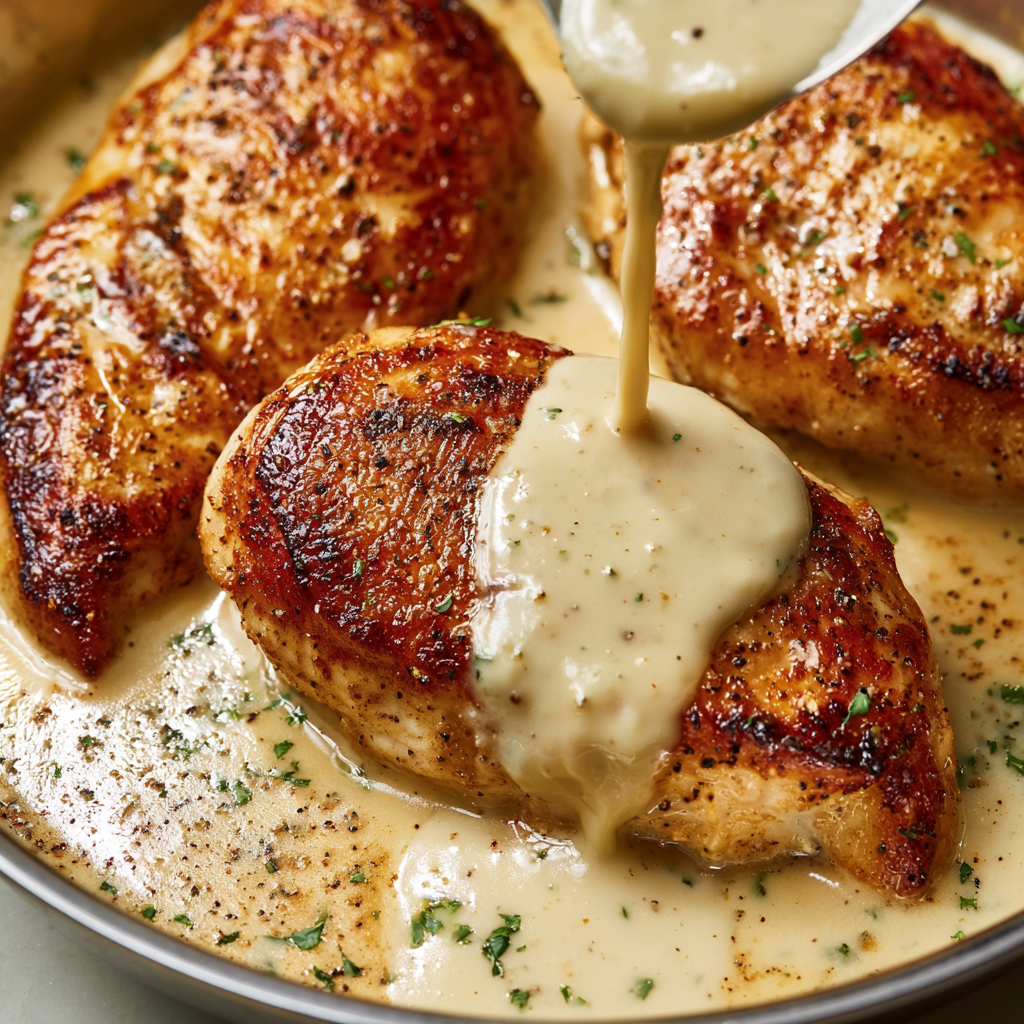
STEP 7: Taste the sauce and adjust the salt and pepper if necessary. Return the chicken to the skillet and spoon sauce over each piece. Simmer gently for another 2–3 minutes, allowing the sauce to thicken slightly and the chicken to warm through before finishing with chopped parsley.
Serving Ideas for Chicken Breast with Cream Sauce
For a classic comfort-food dinner, serve the chicken over mashed potatoes. They soak up the garlic-Parmesan sauce especially well and make the dish feel hearty without requiring another complicated side.
Pasta or rice are equally useful choices when you want something simple. Spoon plenty of sauce over the starch rather than serving it only over the chicken.
For a lighter pairing, try cauliflower mash or zucchini noodles. Both give you a mild base that lets the creamy garlic sauce stay at the center of the meal.
How do I know when the chicken is cooked?
Cooking time depends heavily on the thickness of the chicken breasts. The outside should be golden and the center should no longer be pink. For the most reliable result, check the thickest portion with a meat thermometer and cook until it reaches 165°F or 74°C.
Helpful Tips
- Keep the coating light. Shake off loose flour and Parmesan before searing. Too much dredging mixture can fall into the pan and burn while the chicken cooks.
- Reduce the broth before adding cream. Giving the broth several minutes to concentrate creates a more flavorful sauce and helps it reach a creamy consistency faster.
- Use gentle heat after adding dairy. Once the heavy cream and Parmesan go into the skillet, avoid aggressive boiling. A mild simmer makes it easier to keep the sauce smooth.
Why is my cream sauce too thin?
The broth may not have reduced enough before the cream was added. Letting it simmer until its volume decreases considerably gives you a stronger starting point for the sauce. If necessary, simmer the finished sauce gently for a few additional minutes before serving.
Remember that Parmesan also helps the sauce thicken as it melts, and the cream sauce will continue to become slightly thicker as it cools on the plate.
Can I make the sauce without overcooking the chicken?
Yes. Cook the chicken first, remove it from the skillet, and prepare the sauce separately in the same pan. Return the chicken only during the final few minutes of cooking. This gives the sauce enough time to reduce while protecting the chicken from spending too long over the heat.
If your chicken breasts are particularly thick, slicing them into thinner portions before cooking can also make timing easier.
Can I prepare this creamy chicken ahead?
You can prepare it ahead, although freshly cooked chicken and cream sauce will have the smoothest texture. If making it in advance, cool the chicken and sauce promptly and refrigerate them together in a covered container.
When reheating, use lower heat and stir or spoon the sauce frequently. High heat can make cream sauces reduce too quickly or become oily.
What if the Parmesan sauce becomes too thick?
A thick sauce is easy to loosen. Add a small splash of chicken broth and stir over low heat until the sauce reaches the consistency you prefer.
Add only a little liquid at a time. It is much easier to thin a concentrated cream sauce gradually than to correct one that has become watery.
Storage & Reheating
Transfer leftovers to an airtight container after they have cooled and refrigerate them for up to 3–4 days. Keeping the chicken stored directly in the sauce helps protect it from drying out.
For reheating on the stovetop, place the chicken and sauce in a skillet over low to medium-low heat. Add a small splash of chicken broth if the sauce has thickened considerably in the refrigerator. Covering the pan briefly can help the chicken warm through without requiring excessive heat.
You can also reheat individual servings in the microwave using shorter intervals, stirring the sauce between each one whenever possible.
Cream-based sauces can change slightly in texture after freezing, so refrigeration is preferable when you expect to eat the leftovers within a few days. If freezing is necessary, store the cooled chicken and sauce in a freezer-safe container for up to 2 months. Thaw it overnight in the refrigerator and reheat gently, adding a little broth or cream as needed to bring the sauce back together.
Whether you serve it over pasta for a cozy dinner or pair it with vegetables and cauliflower mash, this skillet chicken is especially useful when you want something creamy and satisfying without relying on a long ingredient list. Browning the chicken well, reducing the broth properly, and keeping the cream sauce at a gentle simmer are the three simple details that make the finished dish work consistently.
Chicken Breast with Cream Sauce
Ingredients
For the Chicken
- 2 –3 large skinless boneless chicken breasts, approximately 1½ pounds in total
For the Dredging Mixture
- 4 tablespoons finely grated Parmesan cheese
- 1 teaspoon garlic powder
- 4 tablespoons plain all-purpose flour
- 2 teaspoons salt preferably kosher salt
- ½ teaspoon ground black pepper
For the Pan and Cream Sauce
- 1¼ cups full-fat heavy cream
- 2 tablespoons unsalted butter
- 1 small onion finely diced
- ½ cup grated Parmesan cheese
- 5 tablespoons olive oil
- 1¼ cups chicken broth
- 1 head garlic minced, approximately 4–5 cloves
- 2 tablespoons finely chopped fresh parsley for finishing
Instructions
- Season the chicken breasts evenly with the salt, garlic powder, and black pepper.
- Combine the all-purpose flour and grated Parmesan in a shallow dish. Coat each chicken breast thoroughly in the flour-Parmesan mixture, then gently shake away any loose excess.
- Warm 2 tablespoons of the olive oil together with 1 tablespoon of butter in a large skillet set over medium-high heat. Swirl the skillet so the fat coats the cooking surface evenly.
- Cook 2–3 chicken breasts at a time for approximately 4–5 minutes per side, depending on their thickness. Continue cooking until both sides are golden, the centers are fully cooked, and no pink remains.
- Move the cooked chicken to a warm plate. If additional chicken remains, repeat the cooking process, adding more oil and butter when necessary. Place all finished chicken breasts together on the plate and reserve.
- Lower the heat to medium and carefully wipe the skillet with a sheet of paper towel.
- Add the diced onion to the remaining oil and pan juices. Sauté until the onion becomes tender and softened.
- Using the blunt side of a knife, crush 6 whole garlic cloves. Add the remaining olive oil to the skillet and stir it through the onions.
- Add the crushed garlic, along with any additional whole garlic cloves, and sauté for approximately 2–3 minutes, or until aromatic.
- Pour the chicken broth into the skillet to deglaze the pan. Scrape the browned pieces from the bottom so they become incorporated into the sauce.
- Allow the broth mixture to simmer until its volume has reduced by roughly half, approximately 5 minutes.
- Lower the heat to medium-low and add the heavy cream. Bring the sauce to a mild simmer and cook for approximately 2–3 minutes so the ingredients and flavors combine.
- Stir in the grated Parmesan cheese. Continue cooking gently for another 2–3 minutes, stirring from time to time, until the cheese has completely melted into the sauce.
- Taste the cream sauce and adjust with additional salt and black pepper as desired.
- Return the cooked chicken breasts to the skillet. Simmer them in the cream sauce for a further 2–3 minutes, allowing the chicken to absorb the sauce while the mixture thickens to the preferred consistency.
- Transfer the creamy chicken to a serving platter once the sauce has thickened and thoroughly coated the chicken.
- Finish with the chopped fresh parsley and a light scattering of freshly cracked black pepper. Serve with pasta, cauliflower mash, zucchini noodles, rice, or mashed potatoes.