
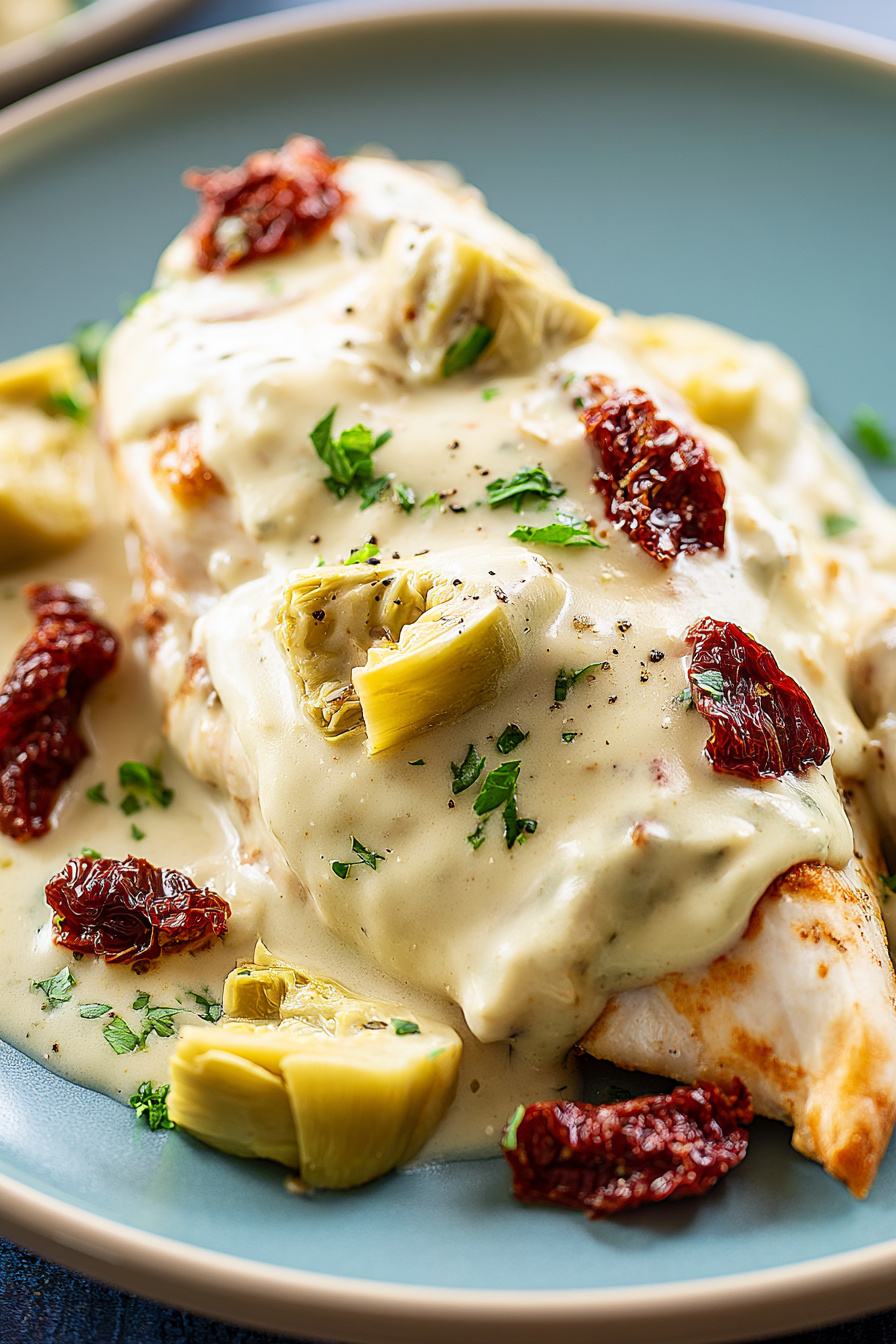
Chicken Breast with Artichoke Hearts is a quick, creamy skillet dinner with golden chicken, tender artichokes, sun-dried tomatoes, and a smooth cream cheese sauce. It comes together in about 30 minutes and works especially well for busy weeknight meals.

When you want something comforting without committing to a long ingredient list or an hour at the stove, this chicken dish is a great choice. The chicken breasts are browned first, giving them plenty of savory flavor before the sauce comes together in the same skillet.
Artichoke hearts add a tender, slightly tangy bite that keeps the rich cream cheese sauce from feeling too heavy. Sun-dried tomatoes bring concentrated flavor, while garlic and parsley add just enough freshness to balance everything.
The method is also wonderfully straightforward. Browning the chicken separately gives you control over its doneness, and whisking cream cheese into simmering broth creates a creamy sauce without needing a separate roux or complicated preparation.
Chicken and Artichoke Ingredients
Chicken breasts: About 2 pounds of boneless chicken breasts form the hearty base of the dish. Similar-sized pieces will cook more evenly.
Olive oil: Used for searing the chicken and developing a golden exterior before the sauce is prepared.
Sea salt and ground pepper: Simple seasoning that enhances the chicken without competing with the creamy artichoke sauce.
Artichoke hearts: One 15-ounce can of drained, non-marinated artichokes gives the sauce its distinctive flavor and tender texture.
Cream cheese: Eight ounces of full-fat cream cheese creates the smooth, rich consistency of the skillet sauce.
Chicken broth: About 1¼ cups loosen the cream cheese and provide a savory foundation for the sauce. Low-sodium broth makes seasoning easier to control.
Sun-dried tomatoes: A small amount of oil-packed, julienned tomatoes adds concentrated tomato flavor and a pleasant contrast to the mild cream sauce.
Garlic: One freshly minced clove gives the sauce an aromatic savory note.
Fresh parsley: About ¼ cup adds freshness and color just before the chicken returns to the skillet.

Step-by-Step Artichoke Chicken
STEP 1: Pat the chicken breasts dry and season both sides with sea salt and ground pepper. If some pieces are noticeably thicker than others, lightly pound the thickest portions so the chicken cooks more evenly.
STEP 2: Heat the olive oil in a large skillet over medium-high heat. Add the chicken once the oil is hot and sear for roughly 5 to 6 minutes per side. The outside should be nicely golden and the center should reach a safe internal temperature of 165°F. Transfer the chicken to a plate.
STEP 3: Reduce the heat to medium-low. Add the minced garlic and strips of sun-dried tomato to the same skillet. Cook for about one minute, stirring regularly so the garlic becomes fragrant without browning too deeply.
STEP 4: Pour in the chicken broth and stir, scraping the bottom of the skillet to incorporate the flavorful browned bits left from searing. Bring the broth to a gentle simmer and let it cook for approximately 5 minutes.
STEP 5: Add the softened cream cheese a little at a time. Whisk as it melts into the warm broth until the sauce looks smooth and creamy. Keeping the heat moderate will help the sauce stay cohesive instead of boiling aggressively.
STEP 6: Stir the drained, roughly chopped artichoke hearts into the sauce. Add the parsley, then taste before adding any additional salt or pepper since both the broth and cream cheese already contribute seasoning.
STEP 7: Return the seared chicken breasts to the skillet and spoon plenty of sauce, artichokes, and sun-dried tomatoes over the top. Cook gently for another couple of minutes, just long enough to heat the chicken completely and allow the flavors to come together. Serve while the sauce is warm and creamy.
Serving Ideas for Artichoke Chicken
This creamy skillet chicken works especially well with simple sides that can catch the extra sauce.
- Pasta or egg noodles: A mild pasta gives the cream cheese and artichoke sauce somewhere to go and turns the skillet into a particularly satisfying dinner.
- Mashed potatoes: Creamy potatoes pair naturally with the savory sauce and make the meal especially comforting.
- Steamed vegetables: Broccoli, green beans, or asparagus offer a lighter contrast to the rich chicken and sauce.
How do I keep the cream cheese sauce smooth?
Use softened cream cheese and add it while the broth is gently simmering rather than rapidly boiling. Whisk steadily until it is fully incorporated. Once the sauce is creamy, keep the heat fairly low. Excessive heat can cause a cream cheese-based sauce to become less smooth.
Helpful Tips
- Watch the chicken thickness. Thick chicken breasts can take longer to cook than the suggested searing time. Use an instant-read thermometer when possible and cook to 165°F in the thickest section.
- Drain the artichokes thoroughly. Excess liquid can thin the sauce, especially when using canned artichoke hearts packed in water.
- Season at the end. Chicken broth and cream cheese both contain salt, so tasting the completed sauce before adding more helps prevent over-seasoning.
Can I use marinated artichoke hearts?
Plain canned artichoke hearts are preferable because the sauce is designed around their mild flavor. Marinated artichokes contain oil, vinegar, herbs, and seasonings that can significantly change the flavor of the cream sauce. If they are your only option, drain them extremely well before using them.
Can I prepare this chicken ahead of time?
Yes. You can cook the entire dish ahead and refrigerate it once cooled. Because cream cheese sauces thicken considerably when chilled, expect to add a small splash of chicken broth while reheating. Warm it slowly rather than bringing the sauce to a hard boil.
What if my sauce becomes too thick?
Stir in additional chicken broth a tablespoon or two at a time until the sauce returns to the consistency you prefer. This is particularly useful after the dish has rested for several minutes, since the cream cheese sauce naturally becomes thicker as it cools.
Can I cut the chicken into smaller pieces?
Yes. Cutting the breasts into thinner cutlets or bite-sized pieces can shorten the cooking time and makes the finished dish convenient for serving over pasta or rice. Just reduce the searing time accordingly and make sure the chicken reaches 165°F before serving.
Keeping Leftovers Fresh
Allow leftover chicken and sauce to cool before transferring them to a tightly covered container. Refrigerate for up to 3 to 4 days.
For reheating, a skillet over low to medium-low heat gives you the most control. Add a splash of chicken broth and stir the sauce gently as it warms. This helps loosen the cream cheese and restores a smoother consistency. Individual portions can also be reheated in the microwave at reduced power, stirring the sauce periodically.
The chicken can be frozen with the sauce for about 1 to 2 months, although cream cheese sauces can become slightly grainy or separated after freezing and thawing. For the best texture, refrigerating leftovers is preferable. If you do freeze the dish, thaw it overnight in the refrigerator and reheat slowly with a little extra broth, whisking or stirring the sauce until it becomes creamy again.
Chicken Breast with Artichoke Hearts
Ingredients
For the Chicken
- 1½ tablespoons olive oil
- 2 pounds boneless chicken breasts
- Ground pepper as needed
- Sea salt to taste
For the Sauce
- 15 ounces canned artichoke hearts drained and roughly chopped; use non-marinated artichokes
- 1¼ cups chicken broth preferably low-sodium
- ¼ cup fresh parsley finely chopped
- 8 ounces full-fat cream cheese for a rich and creamy consistency
- 1 garlic clove finely minced
- 1 ounce oil-packed sun-dried tomatoes cut into julienne strips
- Salt and ground pepper as needed for seasoning
Instructions
- Season the chicken breasts evenly with sea salt and ground pepper.
- Warm the olive oil in a large skillet over medium-high heat. When the oil is hot, place the seasoned chicken breasts in the pan.
- Cook the chicken for 5–6 minutes on each side, allowing the exterior to develop a golden-brown color while cooking the meat completely through.
- Transfer the cooked chicken to a plate and set aside.
- Lower the skillet heat to medium-low.
- Add the minced garlic and julienned sun-dried tomatoes to the same skillet. Sauté for approximately 1 minute, just until the garlic becomes aromatic.
- Pour the chicken broth into the skillet and bring it to a gentle simmer. Cook for 5 minutes, stirring from time to time.
- Add the cream cheese. Whisk thoroughly as it softens and incorporates into the broth, continuing until the mixture develops a smooth, creamy consistency.
- Fold the chopped artichoke hearts into the sauce. Taste and add a small amount of salt and ground pepper if necessary.
- Stir in the finely chopped parsley until evenly distributed throughout the sauce.
- Place the cooked chicken breasts back into the skillet.
- Spoon the creamy artichoke sauce generously over each piece of chicken, ensuring the breasts are well coated.
- Continue cooking for another couple of minutes, until the chicken is thoroughly reheated and surrounded by the sauce.
- Remove the skillet from the heat.
- Scatter additional fresh parsley over the chicken and creamy sauce, if desired for the final garnish. Serve while hot.