
Chicken Alfredo is a weeknight luxury that feels restaurant-worthy yet stays wonderfully simple. Tender pan-seared cutlets crown ribbons of fettuccine, all glossed in a silky sauce of cream, olive oil, and Parmigiano Reggiano.
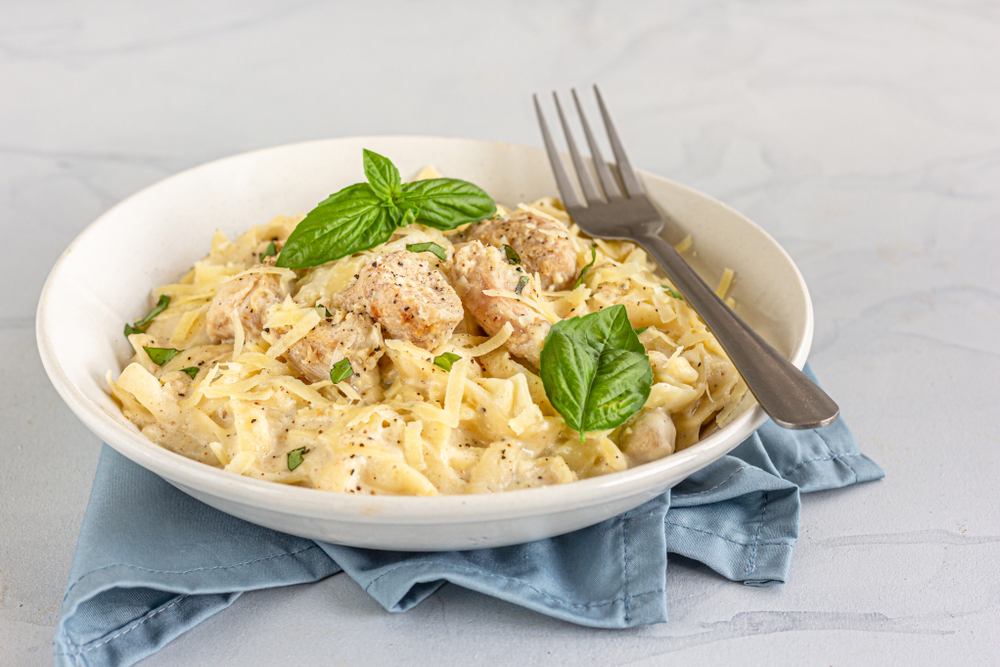
It’s indulgent without fuss. It’s comforting, aromatic, and ready for twirl-after-twirl satisfaction.
This version keeps technique front and center. Use thin-sliced chicken for quick browning and juiciness.
Warm the cream gently so the cheese melts smoothly. Add a splash of pasta water to bind everything.
With minimal ingredients and a smart sequence, you get a rich, clingy sauce that coats every strand. Expect no clumps, no dryness, just pure creamy balance.
What You’ll Need for Chicken Alfredo
- Boneless skinless chicken breasts – sliced into thin cutlets for fast cooking and juicy bites.
- Olive oil – high-heat sear and subtle fruitiness to anchor the sauce.
- Garlic – aromatic backbone that perfumes every forkful.
- Shallot – gentle sweetness that rounds the savory notes.
- Heavy whipping cream – lush body and that classic Alfredo silk.
- Parmigiano Reggiano – salty depth and natural thickening power.
- Fettuccine – broad strands that catch and hold the sauce.
- Coarse salt & freshly cracked pepper – simple, essential seasoning.
- Pasta water – starchy “glue” for a glossy emulsion.
Thin Cutlets and Hot Sear Keep Chicken Juicy
Slice each breast horizontally into thin, even cutlets so heat penetrates quickly without drying the center.
Pat dry, season well, and preheat oil until it’s just shimmering or lightly smoking. Contact with a hot surface jump-starts browning and locks in moisture.
Sear 4–5 minutes per side, then rest five minutes before slicing to let juices redistribute.
If topping the pasta, slice against the grain for tender pieces. If folding in, keep chunks bite-sized so they warm gently in the sauce without overcooking.
How to Make Chicken Alfredo (In Brief)
- Sear seasoned chicken cutlets in hot olive oil until golden and cooked through; rest.
- Soften garlic and shallot briefly in the same pan.
- Warm cream; reduce heat, then gradually melt in Parmigiano Reggiano.
- Boil fettuccine in well-salted water; reserve some pasta water.
- Toss pasta in sauce, loosening with splashes of pasta water until it clings; top with sliced chicken.
Starchy Pasta Water Builds a Glossy, Clinging Sauce
That milky pasta water is loaded with surface starch, which helps the cheese-and-cream base emulsify and adhere to noodles.
Add it in small increments (start with 2–4 tablespoons) while tossing vigorously until the sauce looks shiny and fluid but not watery.
Aim for a texture that lightly coats the back of a spoon and leaves a faint trail when you swipe.
If the sauce tightens as it sits, another small splash brings it back. Keep heat moderate; hard boiling can cause separation and graininess.

Pro Tips & Weeknight Tweaks
Keep the chicken moving only when it releases easily. Forcing a flip tears the crust and leaks juices.
Salt your pasta water generously so the noodles carry seasoning into the sauce.
The shallot is optional but lovely. If you prefer a classic vibe, whisk in a tablespoon of butter off the heat for extra gloss.
Add-ins like sautéed mushrooms, peas, or a whisper of lemon zest play well without overwhelming the creamy base.
For a peppery kick, finish with cracked black pepper or a pinch of red pepper flakes.
Freshly Grated Parmesan Prevents Grit and Clumps
Pre-grated cheeses often contain anti-caking agents that resist melting.
Finely grate Parmigiano Reggiano just before cooking, lower the heat, and add it by small handfuls while whisking.
Gentle heat (barely simmering) lets the cheese dissolve into the cream rather than seize.
If you see threads or clumps, pull the pan off heat and whisk in a spoonful of warm cream to relax the proteins. Return to low heat and continue whisking.
How to Store Leftovers Without the Sauce Breaking
Leftover pasta and chicken keep well for up to three days in the refrigerator.
If possible, store the chicken separately to preserve its texture. Keep a few tablespoons of pasta water or plain water in a small container for reheating.
Alfredo sauces don’t freeze gracefully—the dairy tends to separate and turn grainy—so enjoy within the week.
When reheating, go low and slow on the stovetop, stirring as you loosen the sauce to a silky sheen.
Low Heat and a Splash of Liquid Restore Creaminess
Cream sauces tighten when chilled, so gentle reheating is everything.
Warm leftovers over low heat with a small splash of water, milk, or cream, stirring constantly as the starches and fats re-emulsify.
Add liquid gradually until the sauce slides rather than sits.
Avoid high microwaving, which can overheat pockets of cheese and break the emulsion.
If the sauce still looks split, whisk in a tablespoon of cold cream off heat, then return briefly to low heat to finish smoothing.

Frequently Asked Questions (FAQ)
Can I use milk instead of heavy cream?
Whole milk alone won’t give the same body and may curdle under heat. If you’re lightening things up, use half-and-half and add a bit more cheese, keeping the heat low to maintain a stable sauce.
What pasta shape works if I don’t have fettuccine?
Linguine, tagliatelle, or even pappardelle are great. Short shapes like rigatoni can work but won’t mimic the classic twirl or surface area of fettuccine.
Can I substitute rotisserie chicken?
Yes—shred or slice it and warm it briefly in the finished sauce off heat. Skip additional salting until you taste, since rotisserie birds can be seasoned assertively.
How can I make it more “restaurant rich”?
Finish with a tablespoon of butter and an extra sprinkle of Parmigiano Reggiano off heat. A tiny squeeze of lemon brightens without thinning the sauce.
Chicken Alfredo
Ingredients
- Approximately 1 pound of fettuccine noodles
- Two boneless skinless chicken breasts (weighing around 10–12 oz each)
- Three tablespoons of extra virgin olive oil divided
- One and a half cups of full-fat heavy cream
- One small shallot peeled and finely diced
- Two cloves of garlic minced to a fine texture
- One cup of finely grated Parmigiano-Reggiano cheese
- Salt to taste
- Cracked black pepper to taste
- Reserved pasta cooking liquid as needed
Instructions
- Slice each chicken breast horizontally into thin cutlets.
- Sprinkle both sides of the chicken slices generously with salt and freshly cracked pepper.
- Warm two tablespoons of olive oil in a large high-sided sauté pan or rondeau over high heat until the oil begins to shimmer and emits a light smoke.
- Carefully lay the chicken pieces in the hot pan and sear for 4 to 5 minutes. Turn them over and continue cooking over medium heat for another 4 to 5 minutes, or until both sides are richly browned and the interior is cooked through. Remove the chicken from the pan and keep aside.
- Into the same pan, pour in the remaining tablespoon of olive oil and stir in the minced garlic and diced shallot. Sauté over medium heat for 30 to 45 seconds until fragrant.
- Lower the heat slightly and pour in the heavy cream. Let the cream warm through for 2 to 3 minutes without boiling. Then, gradually stir in the Parmigiano-Reggiano until it melts completely and the sauce thickens, about 3 to 4 minutes. Season the sauce with salt and black pepper, adjusting to taste. Set aside over low heat.
- Meanwhile, in a separate large pot of vigorously boiling salted water, cook the fettuccine following the package guidelines until al dente, stirring occasionally to prevent sticking.
- Once cooked, drain the pasta but reserve about a cup of the starchy water. Add the drained fettuccine to the pan with the Alfredo sauce, tossing gently to coat all strands evenly. If the sauce appears too thick, mix in a ladle or two of the reserved pasta water to loosen it to the desired consistency.
- Slice the reserved chicken and serve it over the sauced fettuccine.