
Cheesy Broccoli Pasta is a quick, comforting dinner that combines tender penne, bite-size broccoli, and a smooth cheddar-Parmesan sauce. It is creamy, family-friendly, and prepared in one saucepan with simple ingredients.
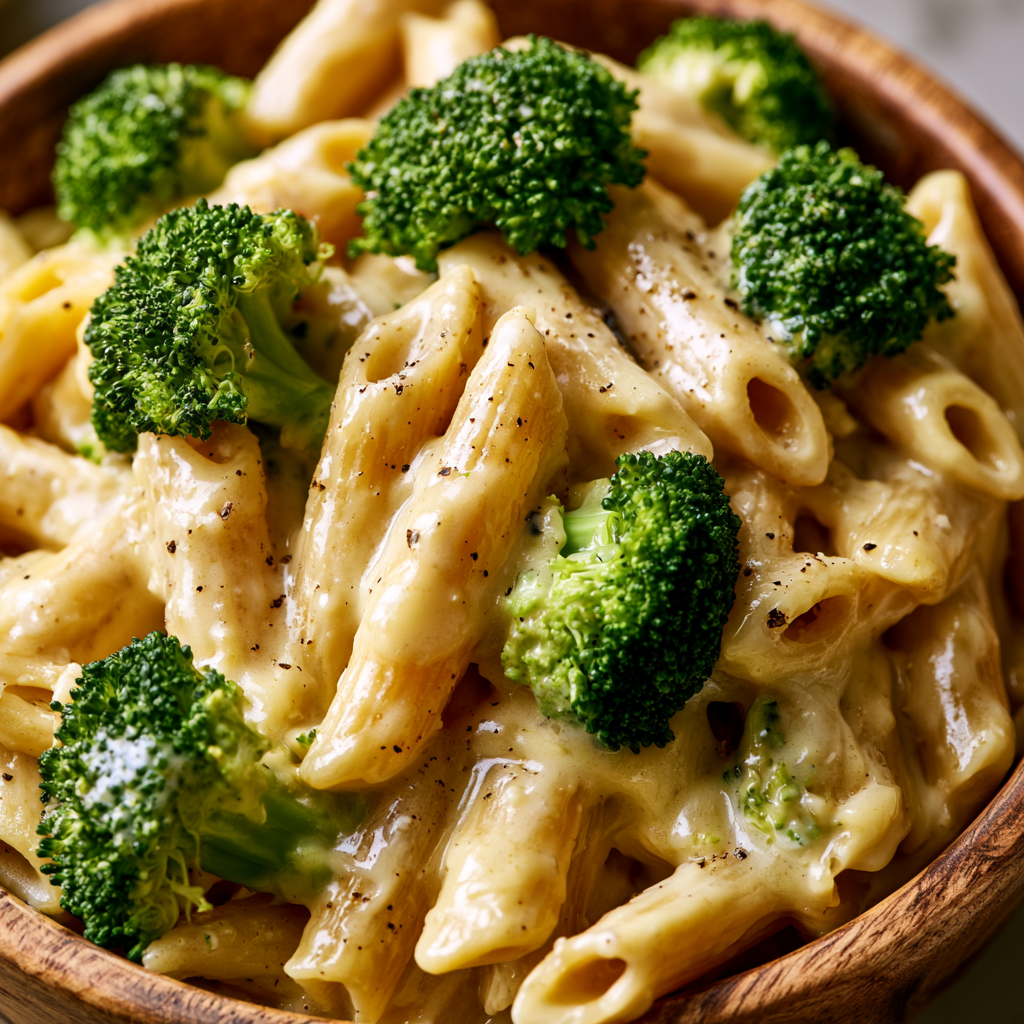
This is the kind of pasta you can turn to when you need something warm and satisfying without creating a pile of dishes. The broccoli cooks alongside the pasta, while the sauce comes together in the same saucepan after everything is drained.
Sharp cheddar gives the dish its bold, familiar flavor, and Parmesan adds a salty, savory finish. Half-and-half keeps the sauce creamy without making it excessively heavy, while chicken broth adds more depth than milk alone.
The method is also dependable. A simple cornstarch slurry thickens the liquid before the cheese is added, helping the sauce cling evenly to every piece of pasta and broccoli. Serve it straight from the stove for the smoothest, creamiest texture.
Broccoli Cheddar Pasta Ingredients
Medium dried pasta: Penne and rotini are especially useful because their ridges and curves collect plenty of cheese sauce. Other medium pasta shapes can also work.
Broccoli florets: Fresh or frozen broccoli adds color, texture, and a mild vegetable flavor that pairs naturally with cheddar. Cut large florets into bite-size pieces so they cook evenly.
Sharp cheddar cheese: This is the primary cheese in the sauce. Sharp cheddar creates a fuller flavor, so you do not need an excessive amount to make the pasta taste rich.
Parmesan cheese: A smaller amount of finely shredded Parmesan strengthens the savory flavor and balances the creaminess of the cheddar.
Half-and-half: This creates a smooth, creamy base while remaining lighter than a sauce made entirely with heavy cream.
Chicken broth: Broth loosens the dairy base and gives the sauce a more seasoned, rounded flavor. Use regular broth rather than an intensely concentrated variety.
Cornstarch and cold water: These are combined to make a slurry that thickens the broth and half-and-half without requiring a flour-and-butter roux.
Onion powder and garlic salt: These convenient seasonings blend directly into the sauce and provide a gentle aromatic background.
Salt and black pepper: Add these after the cheeses have melted so you can season accurately. The broth, cheddar, Parmesan, and garlic salt already contribute saltiness.
Helpful Tips
- Shred the cheddar from a block whenever possible. Freshly grated cheese melts more smoothly and is less likely to create a grainy or stringy sauce.
- Remove the saucepan from the heat before adding the cheeses. Excessive heat can cause the dairy and cheese to separate instead of melting into a creamy sauce.
- Have the cheese grated and the slurry prepared before draining the pasta. The final stages move quickly, and the dish is at its best when served immediately.

Cooking Steps
STEP 1: Bring a large saucepan of generously salted water to a rolling boil. Add the dried pasta and cook it according to the package directions, stopping when it is pleasantly firm and al dente.
STEP 2: Add the bite-size broccoli florets during the final four minutes of cooking. This allows the pasta and broccoli to finish at approximately the same time without requiring a second pot.
STEP 3: Check the broccoli before draining. It should be tender enough to pierce with a fork but should still hold its shape. Drain the pasta and broccoli thoroughly, then set them aside without rinsing. The starch remaining on the pasta helps the sauce adhere.
STEP 4: Stir the cornstarch and cold water together in a small bowl until completely smooth. Make sure no dry lumps remain, as they can become difficult to dissolve once the mixture is heated.
STEP 5: Return the empty saucepan to the stove. Add the chicken broth, half-and-half, cornstarch slurry, onion powder, and garlic salt. Whisk continuously over medium heat as the mixture warms and begins to simmer.
STEP 6: Continue cooking and whisking until the sauce reaches a gentle boil and thickens enough to lightly coat the whisk. Remove the saucepan from the heat as soon as the base becomes smooth and creamy.
STEP 7: Add the freshly grated cheddar and finely shredded Parmesan. Stir until both cheeses have fully melted and the sauce looks uniform. Return the drained pasta and broccoli to the saucepan, then gently toss until everything is evenly coated.
STEP 8: Taste the finished dish and season it with salt and freshly ground black pepper as needed. Spoon it into bowls immediately, adding extra cracked pepper over each serving for a stronger, slightly spicy finish.
What to Serve with Broccoli Cheese Pasta
A crisp green salad is an excellent pairing because its fresh texture balances the creamy sauce. Try mixed greens, sliced cucumber, and a simple vinaigrette with enough acidity to cut through the cheese.
Garlic bread or toasted sourdough is ideal when you want a more substantial comfort-food dinner. The crisp edges are perfect for collecting any sauce left at the bottom of the bowl.
For a protein-rich meal, serve the pasta alongside baked chicken breast, roasted chicken thighs, or simply seasoned grilled chicken. Keep the seasoning straightforward so it complements rather than overpowers the cheddar and broccoli.
Can frozen broccoli be used?
Yes. Frozen broccoli can be added directly to the boiling pasta water without thawing it first. Because frozen florets may soften more quickly than fresh ones, add them during the final three to four minutes and check their texture before draining.
Why did my cheese sauce become grainy?
A cheese sauce can become grainy when the cheese is exposed to excessive heat or boiled after it has been added. Remove the thickened cream mixture from the heat first, then stir in freshly grated cheese gradually until smooth.
Pre-shredded cheese may also melt less evenly because it is often coated with ingredients that prevent the shreds from clumping in the package.
Can I use milk instead of half-and-half?
Whole milk can be substituted, although the sauce will taste slightly lighter and may not feel quite as rich. Allow the cornstarch mixture to thicken fully before adding the cheese. Lower-fat milk is more likely to produce a thin sauce and is not the strongest choice for this dish.
What other pasta shapes work well?
Short shapes that can hold sauce are the most practical. Rotini, shells, cavatappi, bow ties, and rigatoni are all suitable alternatives to penne. Avoid very delicate pasta shapes, which can break while being tossed with the broccoli and thick cheese sauce.

How can I keep the sauce creamy?
Serve the pasta soon after combining it with the sauce. As the dish sits, the pasta continues absorbing moisture and the cheese sauce becomes thicker.
When reheating or loosening a pan that has rested for several minutes, stir in a small splash of broth, milk, or half-and-half over low heat. Add only a little at a time so the sauce does not become watery.
Keeping Leftovers Fresh
Transfer cooled leftovers to an airtight container and refrigerate them for up to three days. Avoid leaving the pasta at room temperature for more than two hours.
The finished dish can technically be frozen, but freezing is not ideal. Dairy-based cheese sauces may separate after thawing, and the broccoli can become noticeably softer. For the most pleasant texture, prepare only the amount you expect to eat within a few days.
Reheat refrigerated pasta in a saucepan over low heat. Add a splash of milk, half-and-half, or chicken broth and stir gently until the sauce loosens and the pasta is heated through. Do not bring it to a vigorous boil, as high heat may cause the cheese sauce to separate.
Individual portions can also be reheated in the microwave. Cover the bowl loosely, add a small spoonful of liquid, and warm in short intervals, stirring between each interval. Finish with freshly cracked black pepper and a light sprinkle of Parmesan before serving.
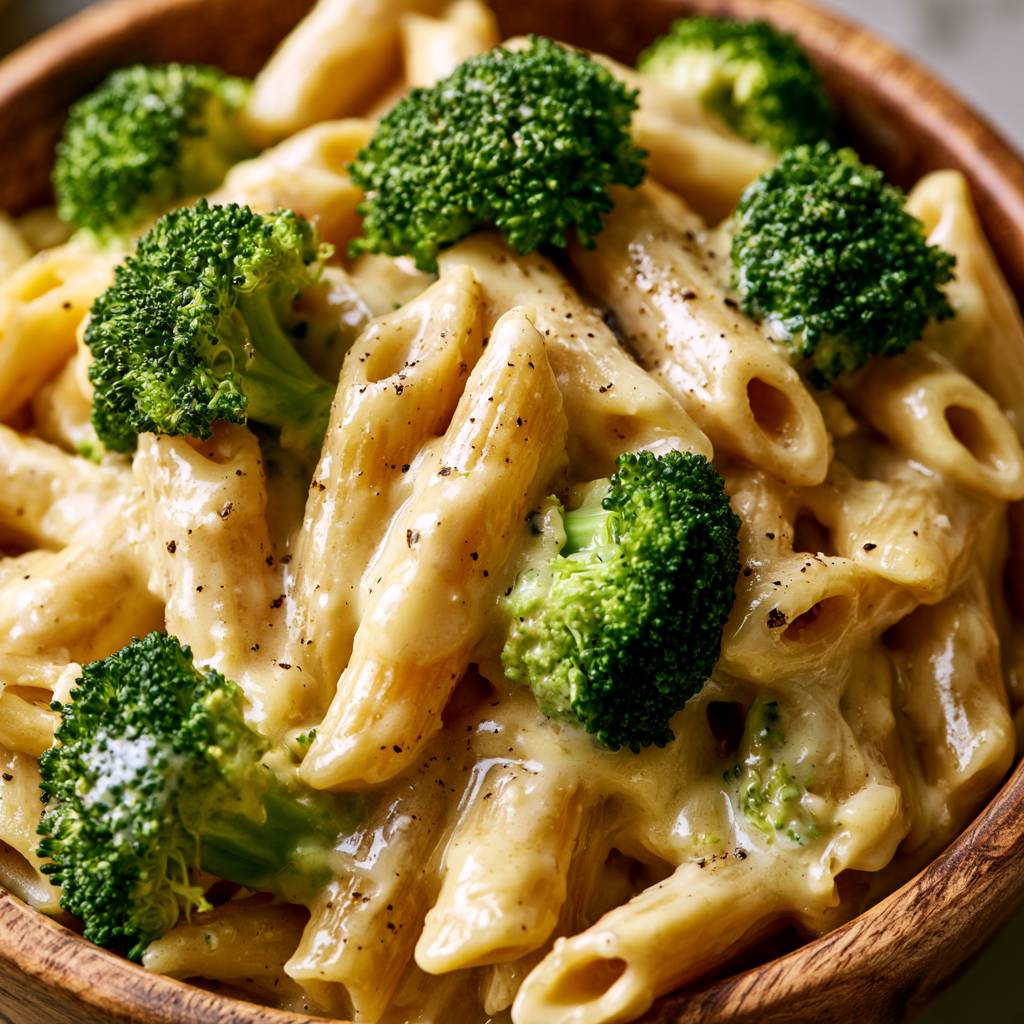
Cheesy Broccoli Pasta
Ingredients
- 4 cups fresh or frozen broccoli florets cut into bite-size pieces
- 1 cup freshly grated sharp cheddar cheese
- 1 cup regular chicken broth
- ¼ teaspoon freshly ground black pepper plus additional pepper as desired
- 8 ounces medium-size dried pasta such as penne or rotini
- ½ teaspoon onion powder
- ¼ cup finely shredded Parmesan cheese
- 1 cup half-and-half or light cream
- ¼ teaspoon garlic salt
- ¼ teaspoon salt with more added according to taste
- 2 tablespoons plus 1 teaspoon cornstarch
- 2 tablespoons cold water for combining with the cornstarch
Instructions
- Fill a large saucepan with salted water and bring it to a rolling boil.
- Add the dried pasta and cook according to the package instructions until it reaches an al dente texture.
- Place the broccoli florets into the boiling water during the final 4 minutes of the pasta’s cooking time.
- When both the pasta and broccoli are tender, drain them thoroughly and set them aside. Do not rinse the pasta.
- In a small bowl, blend the cornstarch with 2 tablespoons of cold water until a smooth slurry forms.
- Using the same saucepan, combine the chicken broth, half-and-half, cornstarch slurry, onion powder, and garlic salt.
- Whisk the ingredients together over medium heat. Bring the mixture to a simmer, continuing to whisk until it begins to boil and develops a thick, creamy consistency.
- Remove the saucepan from the heat once the sauce has thickened.
- Stir the sharp cheddar and Parmesan into the hot sauce until the cheeses are fully melted and the mixture is uniformly smooth.
- Return the drained pasta and broccoli to the saucepan.
- Gently toss everything together until the pasta and broccoli are evenly coated with the cheese sauce.
- Season with the salt and ground black pepper, adjusting the quantities to taste.
- Serve immediately to preserve the smooth texture of the sauce.