
Butterscotch Pudding Cookies are soft, chewy, and quick to prepare, with deep caramel flavor, melty morsels, and a light sea-salt finish. A boxed cookie base and instant pudding make every batch tender and dependable.
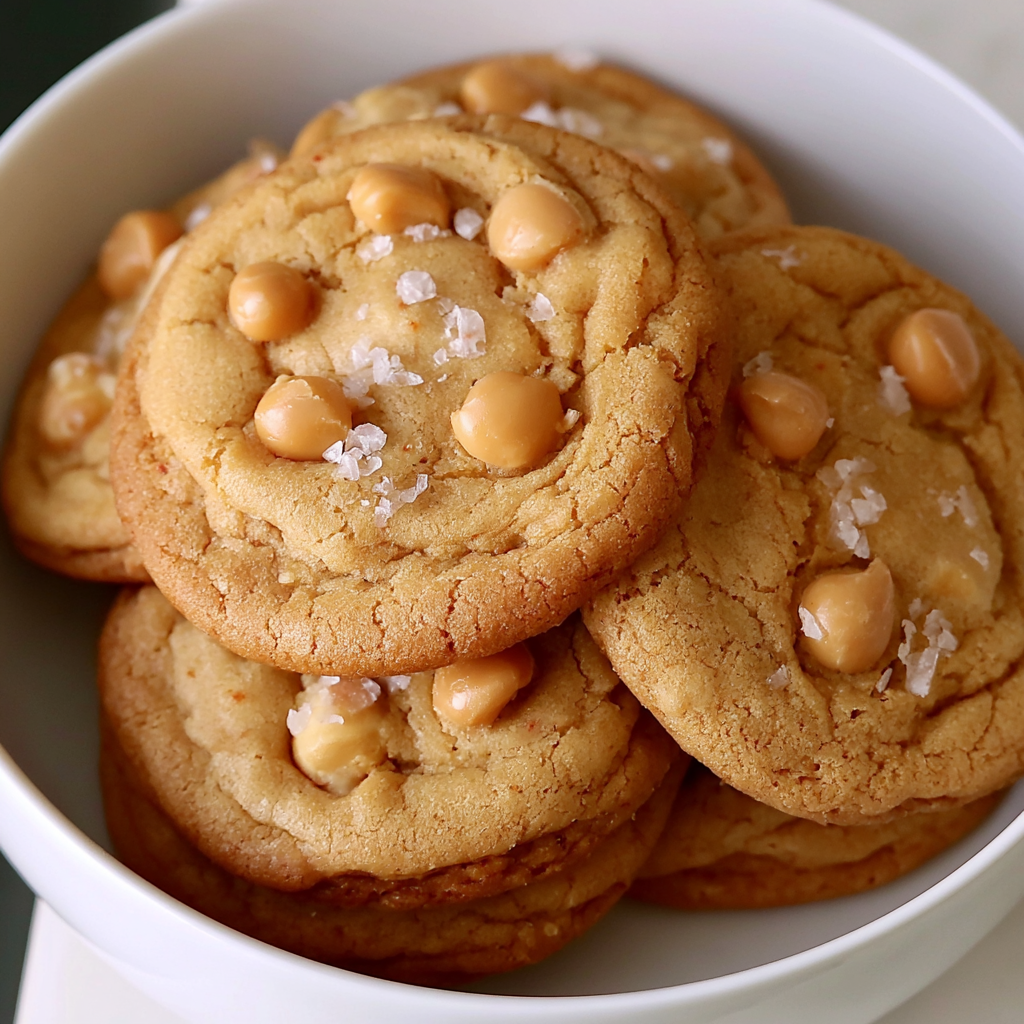
These cookies are a smart choice when you need a warm dessert without measuring a long list of dry ingredients. The dough comes together in one bowl, requires no chilling, and can move from the mixing bowl to the oven in just a few minutes.
The combination of butterscotch pudding and butterscotch morsels gives each cookie a rich, buttery sweetness. A small sprinkle of coarse salt keeps that sweetness balanced and makes the caramel-like flavor taste even fuller.
They are especially useful for bake sales, holiday cookie trays, casual gatherings, or a last-minute treat for your family. Since the centers stay soft after baking, the cookies remain pleasantly chewy once cooled and stored.
Ingredients
Sugar cookie mix: Provides the flour, sugar, and leavening needed for a convenient and reliable cookie dough.
Instant butterscotch pudding mix: Adds concentrated butterscotch flavor while helping the cookies bake with softer, more tender centers.
Unsalted butter: Melted butter brings richness and makes the dough simple to stir by hand. Let it cool before mixing so it does not warm the egg.
Egg: Binds the ingredients together and helps the cookies hold their shape as they bake.
Water: Supplies just enough moisture to bring the cookie mix and pudding powder together into a soft dough.
Butterscotch morsels: Create sweet, creamy pockets throughout each cookie and reinforce the signature caramel-like flavor.
Coarse sea salt: Adds a delicate salty contrast and should be scattered over the cookies while they are still hot.
Cooking Steps
STEP 1: Heat the oven to 350°F (175°C). Set out ungreased cookie sheets so the dough can be portioned as soon as it is mixed. There is no need to grease the pans because the butter in the dough provides enough richness.
STEP 2: Pour the melted butter into a large mixing bowl and make sure it has cooled enough that it no longer feels hot. Add the sugar cookie mix, dry instant pudding powder, water, and egg.
STEP 3: Stir everything with a sturdy spoon until a soft dough forms. Stop mixing as soon as no obvious dry patches remain. Working the dough by hand gives you better control and helps prevent the finished cookies from becoming firm.
STEP 4: Fold in the butterscotch morsels with a few gentle turns. Try to distribute them throughout the dough without repeatedly stirring, pressing, or overworking the mixture.
STEP 5: Scoop rounded tablespoon portions onto the prepared cookie sheets. Leave approximately 2 inches between each mound because the cookies will spread as they bake. Keep the portions similar in size so they finish baking at the same time.
STEP 6: Bake each batch for 8–11 minutes. Begin checking at 8 minutes and remove the cookies when the edges look set but the centers still appear soft. They will continue to firm as they rest on the hot pan.
STEP 7: Sprinkle a small amount of coarse sea salt over the cookies immediately after they come out of the oven. Let them cool on the baking sheet for about 2 minutes, then move them carefully to a wire rack for approximately 20 minutes.

How to Store and Reheat
Let the cookies cool completely before placing them in a storage container. Trapping warmth inside the container can create excess moisture and make the surfaces sticky. Once cool, arrange the cookies in an airtight container, separating the layers with parchment paper when necessary.
At room temperature, the cookies should maintain their soft texture for about 4–5 days. Keep the container away from direct sunlight, heat, and excessive humidity.
For slightly longer storage, refrigerate them for up to one week. Refrigeration can make their texture firmer, so let the cookies return to room temperature before serving.
For freezer storage, place the fully cooled cookies in a freezer-safe container or resealable bag and freeze them for up to 2 months. Remove as much excess air as possible to protect their flavor and texture.
Thaw frozen cookies at room temperature while they are still covered. Keeping them covered during thawing allows condensation to form on the container rather than directly on the cookies.
To restore a warm, freshly baked texture, microwave one cookie for about 8–10 seconds. You can also arrange several cookies on a baking sheet and heat them in a 275°F oven for 3–5 minutes. Avoid overheating them, which can dry the centers or cause the morsels to melt excessively.
Why Does Pudding Mix Make Cookies Softer?
Instant pudding contains starches that hold onto moisture as the cookies bake. In this dough, the pudding helps create a tender interior and prevents the cookies from drying out as quickly after cooling.
The dry mix also supplies concentrated butterscotch flavor without introducing extra liquid that could make the cookies spread too much.
Can I Prepare the Dough Ahead of Time?
Yes. Cover the mixed dough tightly and refrigerate it for up to 24 hours. Chilled dough may become noticeably firmer, so let it stand at room temperature for 10–15 minutes if it is difficult to scoop.
Cookies baked from cold dough may spread slightly less than those baked immediately after mixing. Watch the first batch carefully and adjust the baking time if needed.
How Do I Know When the Cookies Are Done?
Look at the edges rather than waiting for the centers to appear completely baked. The edges should look set, while the middle should remain soft and slightly underdone.
Leaving the cookies on the hot baking sheet for 2 minutes allows gentle carryover cooking to finish the centers. Waiting until the entire cookie looks firm in the oven can lead to a dry or crumbly texture after cooling.
Can I Freeze the Unbaked Cookie Dough?
Yes. Portion the dough onto a parchment-lined tray and freeze the scoops until solid. Transfer the frozen dough portions to a freezer-safe bag or container and keep them frozen for up to 2 months.
Bake the portions directly from frozen, adding approximately 1–2 minutes to the normal baking time. Watch the edges closely and remove the cookies while their centers still look soft.
Add the coarse sea salt after baking rather than before freezing the dough.
Why Should the Salt Be Added After Baking?
Coarse salt adheres best while the cookies are hot and their surfaces are still slightly soft. Adding it immediately after baking also keeps the salt visible and provides small, distinct bursts of flavor.
When salt is mixed completely into a sweet dough, its flavor becomes more evenly dispersed. A finishing sprinkle creates a stronger contrast that balances the sweetness of the pudding and morsels without making the entire cookie taste salty.
Helpful Tips
- Cool the melted butter before combining it with the egg. Hot butter can affect the consistency of the dough and may cause uneven baking.
- Use a cookie scoop to create evenly sized portions. Consistent cookies spread and bake at a similar rate, making it easier to preserve their soft centers.
- Pull the cookies from the oven early rather than late. Their centers should still look soft because they continue cooking during the brief rest on the baking sheet.

Serving Ideas for Butterscotch Cookies
Serve these cookies with cold milk, hot coffee, or black tea to balance their buttery sweetness. They are particularly enjoyable when the centers are still slightly warm and the butterscotch morsels remain soft.
For a more indulgent dessert, place a warm cookie beside a scoop of vanilla ice cream. The cool, creamy ice cream contrasts nicely with the chewy texture and salted butterscotch flavor.
These cookies can also be added to a holiday or party dessert platter. Pair them with a less-sweet option, such as a crisp spice cookie or simple shortbread, to create variety without overwhelming the plate with similar flavors.
For an autumn-inspired dessert board, serve them with fresh apple slices and toasted pecans or walnuts. The fruit adds freshness, while the nuts complement the caramel-like notes of the butterscotch.
Whether you prepare them for a gathering or keep a batch in your kitchen for an afternoon treat, these cookies deliver dependable results with very little preparation. Careful mixing, brief baking, and a timely sprinkle of sea salt are all you need to produce soft, flavorful cookies with an appealing balance of sweetness and salt.
Butterscotch Pudding Cookies
Ingredients
- 1 large egg
- 1 cup butterscotch baking morsels
- 2 tablespoons water
- 1 teaspoon coarse or flaky sea salt
- One 17.5-ounce pouch sugar cookie mix such as Betty Crocker
- 1/2 cup unsalted butter melted and cooled
- One 3.4-ounce box instant butterscotch pudding mix
Instructions
- Preheat the oven to 350°F (175°C). Leave the cookie sheets ungreased.
- Place the sugar cookie mix, dry butterscotch pudding powder, cooled melted butter, water, and egg in a large mixing bowl. Stir with a spoon only until the ingredients come together and form a soft dough.
- Fold the butterscotch morsels gently into the dough, distributing them as evenly as possible without overmixing.
- Scoop rounded tablespoonfuls of dough onto the ungreased cookie sheets, leaving approximately 2 inches of space between each portion.
- Bake for 8–11 minutes. Remove the cookies when their edges appear set but the centers remain soft. Begin checking at the 8-minute point to reduce the chance of overbaking.
- Immediately after removing the cookies from the oven, lightly scatter the coarse sea salt over their surfaces.
- Allow the cookies to rest on the baking sheets for about 2 minutes. Transfer them carefully to wire cooling racks and leave them for approximately 20 minutes, or until completely cooled.